
Reviewed · BIRD WATCHING TOURS
Oamaru: Penguins Evening Viewing Ticket
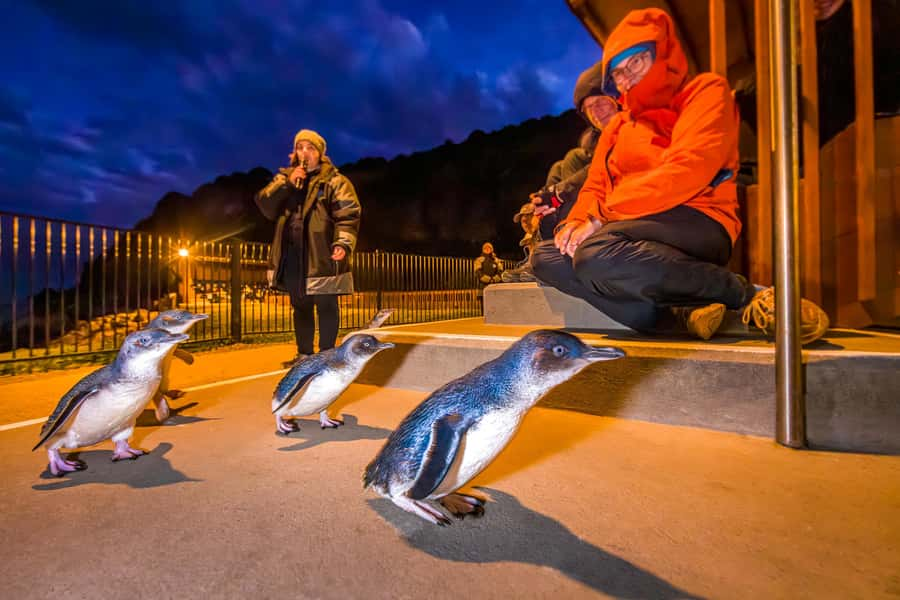
The best part of this Ōamaru evening is the moment tiny blue heads appear beyond the beach, followed by a cautious parade toward the colony. You watch wild penguins return from the sea, not birds performing on cue. The close viewing distance is a real treat, with the general seating area about 10 to 15 metres from the nesting route.
I like two things here: the guides explain what you are seeing, and your ticket helps fund the colony’s conservation and research work. I also like the strict no-photo rule, once you accept it. You are more likely to watch properly when your phone stays away.
The catch is simple: it can be very cold, and you may sit quietly for a long time before the penguins arrive. Numbers also change sharply with the season, from fewer than 30 in winter to more than 200 in summer. This is a wildlife viewing experience, so the timing and size of the arrival are never fixed.
Key points to know before booking
- Penguins arrive after sunset: Summer viewing can begin as late as 9 PM, while winter arrivals may start around 5:30 PM.
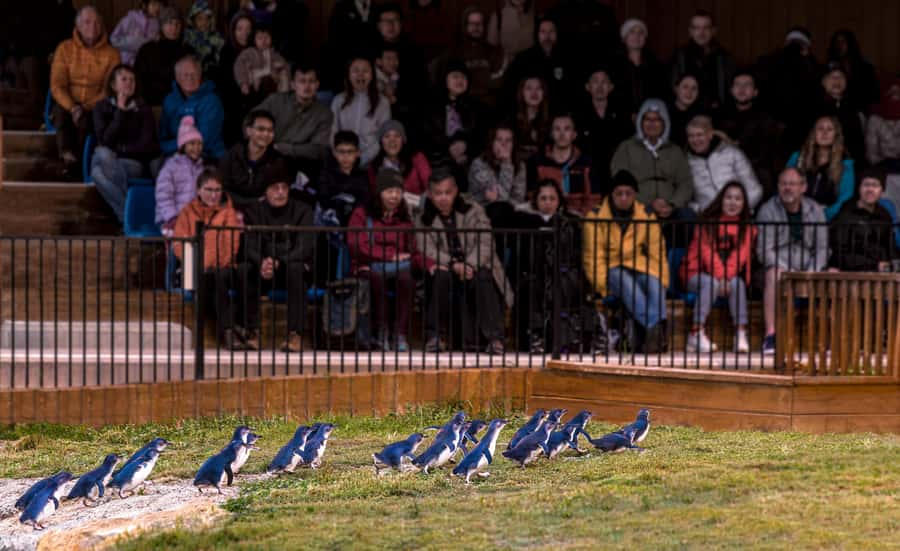
- You watch from close range: General admission places you roughly 10 to 15 metres from the beach and nesting area.
- The numbers vary widely: Some evenings bring fewer than 30 penguins, while other nights have produced more than 400.
- No cameras or phones in the seating area: Flash and artificial light can harm the penguins’ eyes.
- Premium seating may be worth considering: It can give you a closer angle and, according to the experience details, may include access through the nesting area when leaving.
- Warm clothing matters: Bring enclosed shoes, long trousers, a jacket, a hat, and extra layers.
Watching Ōamaru’s smallest penguins come home
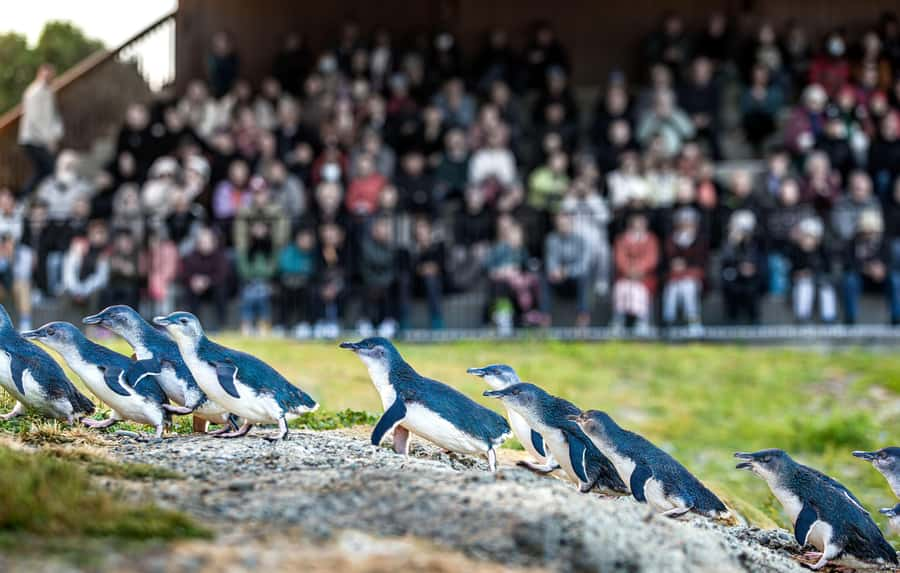
The little blue penguin, also known as the kororā, is the world’s smallest penguin. At Ōamaru, the evening viewing focuses on a very specific part of its day: the return from fishing.
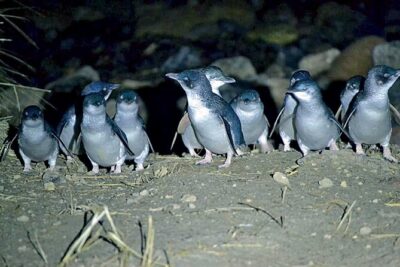
The penguins gather offshore before making their way onto the beach. You may first spot a few small shapes near the water, then watch them climb a stony ramp and move toward the colony. They can pause, bunch together, or wait for one bird to lead the way. That hesitant group movement is part of the charm.
The route ends at specially made nesting boxes. The penguins cross into the colony, then head toward their individual nesting areas. You are not watching a single dramatic entrance. You are watching a stream of small, fast-moving birds make the same trip in loose groups.
This makes the experience feel more natural than a standard animal display. The arrival is not timed for your convenience, and the number of penguins is never guaranteed. One evening may bring under 30 birds, while another can bring 150, 230, 330, or even more than 400.
That variation matters when you decide how to judge the $28 price. You are paying for access to a protected viewing area, local interpretation, and a contribution to conservation, not a guaranteed head count.
More bird watching tours in New Zealand:
- Gannet Safaris Overland tour to Cape Kidnappers Gannet Colony
★ 5.0 · 942 reviews - Rotorua: The National Kiwi Hatchery Kiwi Encounter Tour
★ 4.7 · 671 reviews - Guided Evening Penguin Viewing Otago Peninsula, Dunedin, New Zealand
★ 5.0 · 471 reviews
A 90-minute evening at the Blue Penguin Colony
You should arrive at the Oamaru Blue Penguin Colony on Waterfront Road about 10 minutes before your scheduled time. The staff check you in, then direct you to the viewing area.
Allow a little extra time if you want to see the small exhibition and Discovery Centre before sitting down. This indoor display helps explain the penguins and the colony’s work before the main event begins. It is a useful start, especially if you know little about the birds.
After check-in, you are guided to your seating area. The general admission section is approximately 10 to 15 metres from the point where the penguins come up the beach and enter the nesting area. The seats give you a set place to watch, rather than leaving you to gather along the shoreline.
The viewing itself lasts as part of a 90-minute experience. Much of that time may be spent waiting. The guides fill the early part with information about penguin biology, ecology, breeding habits, and the threats faced by these small birds.
Once the penguins begin to arrive, the tone changes. The guides quieten down so you can hear the birds and watch their movement. You are expected to stay seated, keep quiet, and avoid sudden distractions.
That rule is not a minor courtesy. Noise and movement can make the penguins stop or turn back. The staff also enforce the ban on photography and video, which protects the birds from flashes and phone screens.
What the guide commentary adds
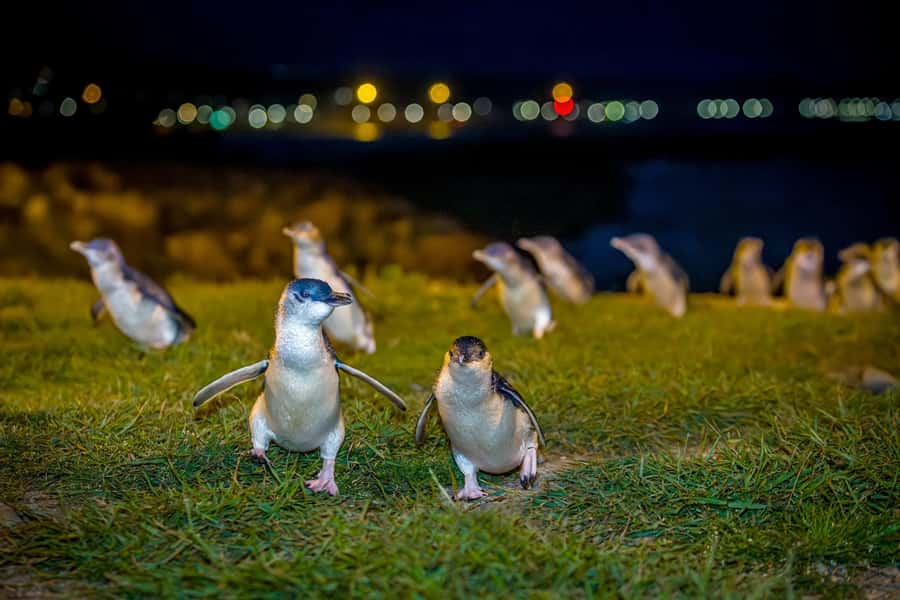
The commentary gives the evening shape. Without it, you would still see cute penguins coming ashore, but you might miss the meaning behind their behaviour.
The local team explains how the penguins live, breed, and use the nesting boxes. You also learn why the colony protects this part of the coast and how research supports the birds. The guides speak in English and Chinese, and multilingual commentary is available during the experience.
Some of the strongest moments come when the guides stop talking. After explaining what to expect, they allow the natural sounds to take over. You may hear calls from the colony, movement near the nesting boxes, and the small rush of birds heading home.
The quality of the microphone can vary from seat to seat, and one useful improvement would be clearer sound for everyone. If you have hearing needs, tell the team at check-in. One guide prepared a written version of the commentary for a deaf visitor, which shows that practical communication can be arranged when staff know what you need.
The staff also keep control of the audience. That matters because some people will try to film or talk during the arrival. A quiet viewing is better for the birds and for everyone sitting nearby.
General seating or premium viewing?
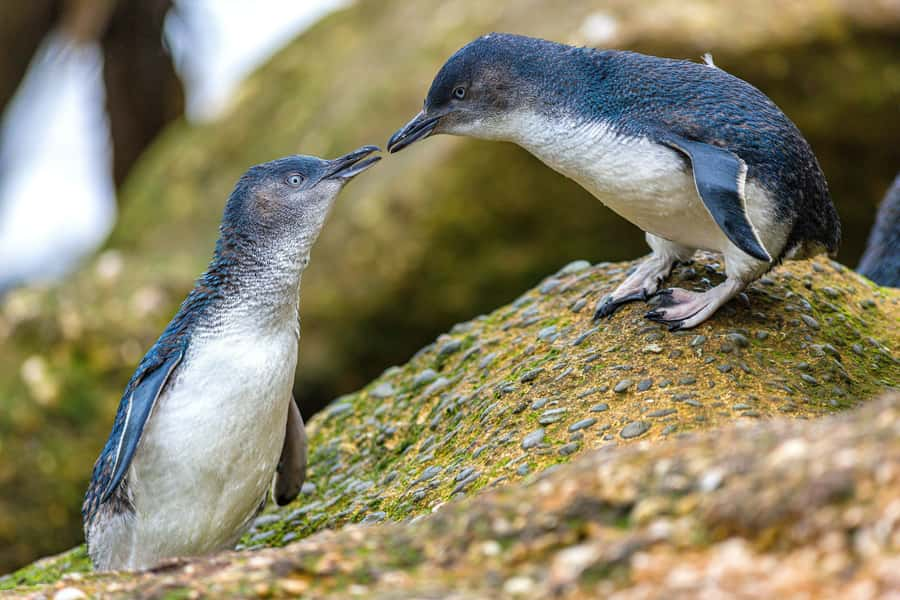
The $28 ticket described here is for general admission. It provides a close view, but the angle and route of the penguins can vary depending on where the birds choose to walk.
Some penguins may cross near the central seating area. Others may use a route closer to another section. You can still see the arrival from the general area, but the experience is not identical for every seat.
Premium seating is a separate consideration. The exact upgrade price is not provided here, but several details make it appealing. Premium seats can place you closer to the penguins and may offer a stronger view of birds moving toward the colony. The seating itself may also be more comfortable.
A further benefit reported for premium access is the chance to walk through the colony area when leaving. This can bring you nearer to nesting boxes and let you see and hear penguins at close range, though you must still remain quiet and follow staff directions.
There is one caution. Premium seating does not guarantee the best view of every part of the route. One seating angle may put you close to the penguins but make it harder to see them climbing over the rocks. If your main goal is to watch the beach approach, ask the staff which area gives the clearest view that evening.
For a one-time visit, I would consider premium seating if the upgrade fits your budget. General admission remains a good choice if you mainly want to support the colony and see the return without paying extra.
A few more New Zealand trips worth a look
- Twilight Glowworm Kayak Tour – Lake Karapiro
★ 5.0 · 493 reviews - Tauranga: Evening Glowworm Kayak Tour
★ 5.0 · 311 reviews - Tauranga: Evening Glowworm Kayak Tour
★ 4.8 · 206 reviews - Te Puia: Te Pō Evening Hāngī Buffet and Cultural Experience
★ 4.7 · 189 reviews
Cold air, late nights, and the right clothing
The most common practical mistake is underdressing. You are outdoors near the coast, sitting still in the evening, and waiting for the birds to arrive. Even if the weather looks mild earlier in the day, the viewing area can feel cold once the sun goes down.
Wear:
- A warm jacket
- Long trousers
- Enclosed footwear
- A hat or woollen cap
- Extra layers for the wait
A neck scarf is also a sensible addition. The viewing area offers shelter from rain, but shelter does not remove the chill. One particularly cold evening kept people outside until close to 11 PM, so check the expected start time and dress for the whole wait.
Season changes the schedule. In summer, the penguins may not arrive until as late as 9 PM. In winter, they can return as early as 5:30 PM. A late summer start may affect dinner plans and transport, so leave room in your evening.
The winter numbers can be lower, with fewer than 30 penguins possible. Summer arrivals can rise above 200. If seeing a large group is your top goal, the supplied information suggests summer offers better odds, but no season promises a particular number.
Seals and seabirds add a second wildlife show
The penguins are the main event, but keep watching the water and nearby rocks. New Zealand fur seals may be resting near the entrance, and their presence can change the penguins’ route.
A seal lying across the way can make a whole group stop. The penguins may stand still, watch it, and wait for one brave bird to pass. Once the first bird moves, the others can follow quickly.
This is an excellent reminder that the viewing is not staged. The penguins respond to real conditions around them, and the guides cannot make them hurry.
You might also see Otago shags on a nearby wharf, along with other seabirds. Wildlife sightings beyond the penguins are not guaranteed, but the setting gives you more to watch during the wait.
Why the no-photo rule is worth respecting
You cannot bring cameras into the viewing experience, and photography and video are strictly prohibited. You should also keep your phone away while seated.
The reason is clear: flashes and bright screens can disturb the penguins’ eyes. Phones also encourage people to shift, stand, or make noise at the exact moment the birds approach.
At first, this may feel like a loss. You will not leave with a penguin photo for your phone. Yet the rule changes the way you watch. You notice the pauses, the calls, the movement of the group, and the way individual penguins preen themselves after arriving.
The staff are quick to remind people who ignore the rule. That can feel strict, but it protects the colony and prevents one person from spoiling the view for everyone else.
Bring the memory home instead of a picture. Here, that is not just a slogan. It is part of responsible wildlife watching.
Is $28 good value?
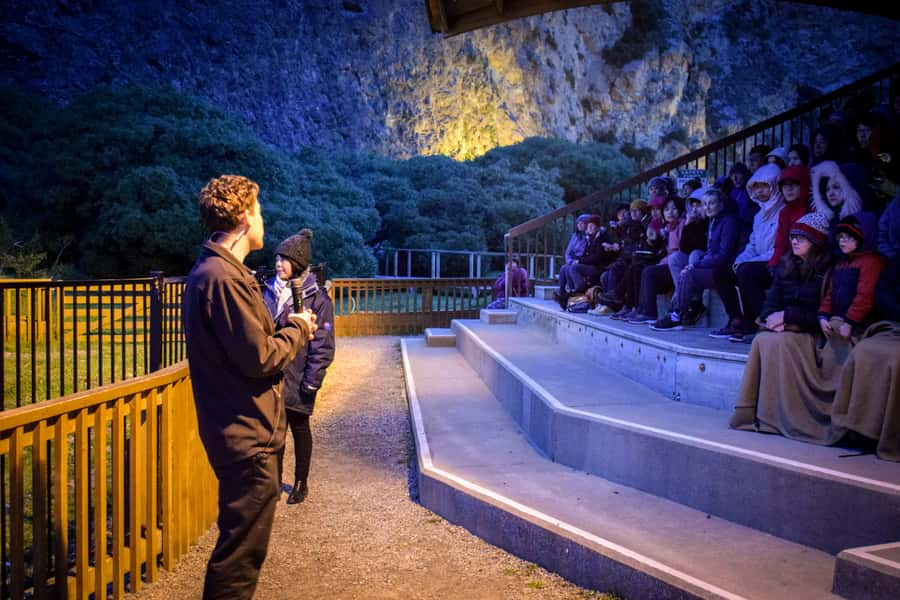
At $28 per person, the general evening ticket is fairly priced for a 90-minute wildlife experience with local commentary. The cost also supports the colony’s conservation and research work, which gives the admission a purpose beyond entertainment.
Value depends on your expectations. If you need a guaranteed large penguin count, this may feel uncertain. Winter can bring fewer than 30 birds, and the arrival time can vary. The penguins are wild, so poor weather or natural changes may affect what you see.
If you care about seeing animals in a protected setting and learning how the colony is managed, the price makes more sense. You are paying for staff, viewing infrastructure, protection work, and a controlled setting that limits disturbance.
The experience may also appeal to families, but young children can struggle with the cold, the long wait, and the need to stay quiet. Older children who can sit patiently should get more from it. Adults who enjoy wildlife and conservation will likely appreciate the quiet focus.
The ticket is wheelchair accessible, and the fixed seating makes the visit easier to plan for people with mobility needs. Tell the team about any requirements before the viewing begins.
Who should book this evening?
I would book this if you are visiting Oamaru, care about wildlife, and can accept that nature sets the timetable. The penguins are tiny, but the close viewing distance makes their return easy to follow. The expert commentary also gives the evening more substance than simply watching a crowd of birds pass by.
I would think twice if you dislike cold evenings, cannot sit quietly, or need a guaranteed event time. Families with very young children should consider the late hours and the strict quiet rule.
If you book, arrive early for the exhibition, dress more warmly than you think necessary, and keep your camera and phone packed away. General admission offers good value. Premium seating is worth considering if you want a closer angle and the possible walk through the nesting area afterward.
For a responsible, memorable wildlife stop on the South Island, this is a strong choice. Just remember that the best part is also the least predictable: waiting for the penguins to decide it is time to come home.
FAQ
How long does the penguin viewing experience last?
The experience lasts 90 minutes.
How much does the general admission ticket cost?
The general admission evening viewing ticket costs $28 per person.
Where does the experience take place?
It takes place at the Oamaru Blue Penguin Colony on Waterfront Road, South Hill, Oamaru 9400, New Zealand.
How close can I get to the penguins?
General admission seating is approximately 10 to 15 metres from the area where the penguins come up the beach and enter the nesting colony.
Can I take photos or videos?
No. Photography and video are strictly prohibited, and you should keep cameras and phones away in the seating area because flashes and light can harm the penguins’ eyes.
What should I wear?
Bring warm clothing, including enclosed footwear, long trousers, and a jacket. A hat and extra layers are also useful because the evening viewing can be very cold.
Are penguins guaranteed to arrive in large numbers?
No. Arrival numbers vary by season and evening. The colony may see fewer than 30 penguins in winter and more than 200 in summer, but no specific number is guaranteed.
Just added around New Zealand
- Cruise, Walk, and Sail in Abel Tasman National Park★ 4.5 · 29 reviews
- Half Day Sightseeing and Taste Tour★ 5.0 · 35 reviews
- Heli-Picnic Alpine Lake Kahurangi National Park★ 5.0 · 4 reviews
- Small group – Napier Premium Winery , Beer & Cider + 5.5h to 6h.★ 5.0 · 43 reviews
- Wine Tour and Tastings in Hawkes Bay★ 5.0 · 67 reviews
- Taste Hawke’s Bay – A Sweet treat food Tour★ 5.0 · 3 reviews
- National Aquarium of New Zealand in Napier General Admission★ 4.0 · 41 reviews
- Napier and Hawkes Bay Scenic and Art Deco Tour by VW Kombi★ 5.0 · 21 reviews
Bird Watching Tours, compared.
Gannet Safaris Overland tour to Cape Kidnappers Gannet Colony
Read our review →
Guided Evening Penguin Viewing Otago Peninsula, Dunedin, New Zealand
Read our review →
Cape Kidnappers Gannet, Nature & Sightseeing Tour
Read our review →
National Kiwi Hatchery – Kiwi Encounter Guided Tour
Read our review →
Albatross, seals, and sea birds-Wildlife Cruise
Read our review →
Browse the lists this tour appears in