
Reviewed · WILDLIFE
Albatross, seals, and sea birds-Wildlife Cruise
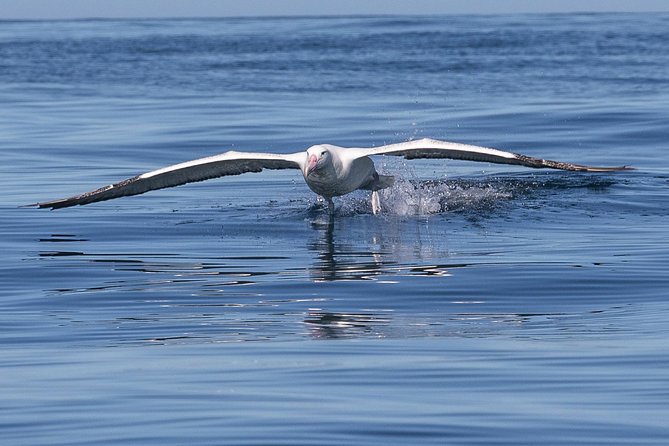
The great draw here is the chance to see royal albatross and New Zealand fur seals from a small boat on Otago Harbour. Rachel handles the vessel and points out birds that are easy to miss, from shags and wading birds to blue penguins riding the waves.
I like the small group of no more than 14 people, which gives you room to shift between the warm cabin and open deck. I also like the useful binoculars, bird sheets, and steady commentary. The trade-off is simple: wildlife is wild, and wind can make the ride choppy or keep albatross close to shore.
Key points to know before you book
- Royal albatross are the headline sight: On a good day, you may see several species, sometimes close to the boat.
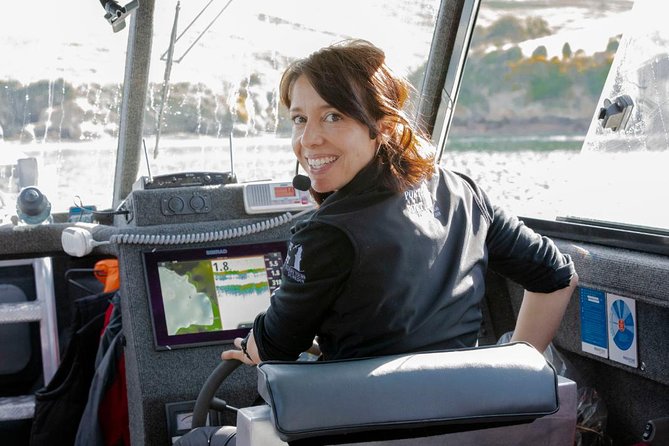
- Rachel is both skipper and guide: Her sharp eye helps you spot birds and marine animals while she explains the harbor and its past.
- The boat takes up to 14 people: This is a more personal outing than a large harbor excursion.
- You get two viewing options: Use the heated enclosed cabin or head outside for photos and a closer sense of the sea.
- Port Chalmers access is easy for cruise passengers: The meeting point is described as a short walk from the cruise ship dock.
- Conditions affect the experience: Sea spray, wind, and changing wildlife activity are part of the deal, so dress warmly.
Why the albatross make this Port Chalmers cruise special
Otago Harbour is not just a pleasant stretch of water beside Dunedin. It is the approach to Taiaroa Head, one of the key places in the region for seabirds and marine life. The waterway lets you reach wildlife areas without spending hours walking across the Otago Peninsula.
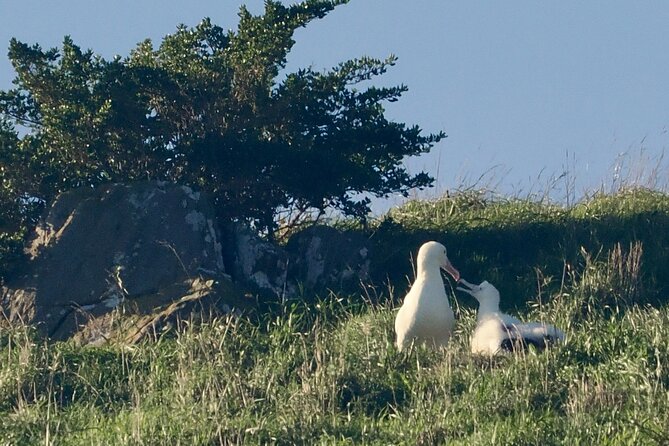
The royal albatross is the prize. These birds have enormous wingspans, and their flight looks almost effortless when the wind is right. You may see them gliding overhead, banking across the water, or sitting on the sea. Several different albatross species have been seen on this cruise, including northern albatross.
That variety matters. You are not simply heading out to tick off one famous bird. You are watching how different seabirds use the harbor and coastal waters. Some feed, some rest, and some pass through at a distance. Rachel helps explain what you are looking at, which makes a quick glimpse more meaningful.
The timing and wind can change everything. Calm weather may make the ride comfortable, but albatross often need stronger air currents to glide. On a quieter day, you might see them take off or land rather than soar above the boat. That is still worthwhile, but you should not treat a sighting as guaranteed.
More Boat Tours in Dunedin
- Cruise Dunedin City and Castle Tour
★ 5.0 · 142 reviews - Dunedin Wildlife Cruise-Albatross, seals and harbour
★ 5.0 · 115 reviews - Dunedin: Monarch – One Hour Wildlife Cruise
★ 4.5 · 48 reviews
Leaving Port Chalmers and entering Otago Harbour
The cruise begins near Port Chalmers, a working port with a mix of fishing boats, workboats, dredges, and larger ships. This opening section gives you more than a scenic departure. It shows how commercial activity and wildlife share the same harbor.
As the boat moves out, you pass Carey’s Bay and see the port from the water. The perspective changes quickly. Warehouses, wharves, boats, and hills fit together in a way that is hard to grasp from the road.
Rachel provides commentary throughout the trip. She covers the harbor’s history, points out notable buildings, and explains what you are seeing rather than leaving you to guess. The commentary includes historic pilot houses, a searchlight, gun emplacements, old quarantine stations, and shipwrecks.
This part suits anyone who likes a little context with their scenery. You are not getting a separate history lecture, but the details help connect the working port to the natural areas farther out. It also gives you something to watch while the boat reaches the bird and seal locations.
Quarantine stations, shipwrecks, and the working port
The old quarantine stations are among the more unusual sights along the route. Their presence adds a reminder that Otago Harbour once served practical and sometimes difficult roles beyond shipping and fishing.
You also pass old wrecks and historic defenses. From a boat, you can see these features from angles unavailable on a normal drive around the peninsula. The trip therefore works as both a wildlife outing and a compact harbor tour.
The working boats are part of the appeal. Fishing vessels, dredges, and port equipment make this feel like a lived-in waterway rather than a protected scenic reserve designed only for sightseeing. If you enjoy watching boats and how ports function, the first part of the cruise will hold your attention.
The drawback is that the harbor can look busy and industrial in places. That is not a flaw, but it may surprise anyone expecting an entirely wild setting from the moment they leave the dock. The route gradually shifts from port activity to bird roosts, feeding areas, rock formations, and open water.
Bird watching with binoculars and Rachel’s commentary
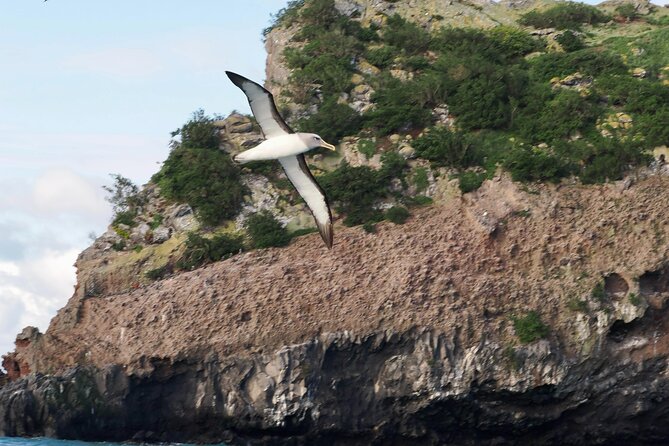
This is an active search rather than a wildlife display. You will need to look, listen, and follow Rachel’s directions. The supplied binoculars help, particularly when birds sit on distant rocks or move across the water.
Identification sheets are also available. They are useful for comparing species after Rachel points them out. You might see shags, cormorants, wading birds, and other seabirds, along with the larger albatross species.
The equipment makes a real difference for a short cruise. You do not need to bring specialist birding gear to take part, though your own camera or binoculars can still be useful. For photos, the open deck offers the best angle, but the boat may move and the birds may keep their distance.
Rachel’s role is central. She captains the vessel, watches the water, and identifies animals while giving background on the harbor. Her seamanship is especially important when the wind picks up. Several outings have involved rougher water, and the experience depends partly on how comfortably she can position the boat and keep everyone informed.
If you are new to bird watching, do not worry about knowing species names in advance. The point is to learn what you are seeing as the trip unfolds. If you already enjoy birds, the small group gives you more time to stay with a sighting instead of being rushed past it.
More Wildlife Tours in Dunedin
- Dunedin: Wildlife and Penguin Tour
★ 4.6 · 239 reviews - Dunedin City to Sea Wildlife Cruise + Peninsula Bus Tour
★ 5.0 · 38 reviews - Private Guided Tour of Dunedin City Heritage and Unique Wildlife and Scenery
★ 5.0 · 36 reviews - Wildlife and Penguin Tour
★ 5.0 · 27 reviews
Seals, sea lions, penguins, and coastal rocks
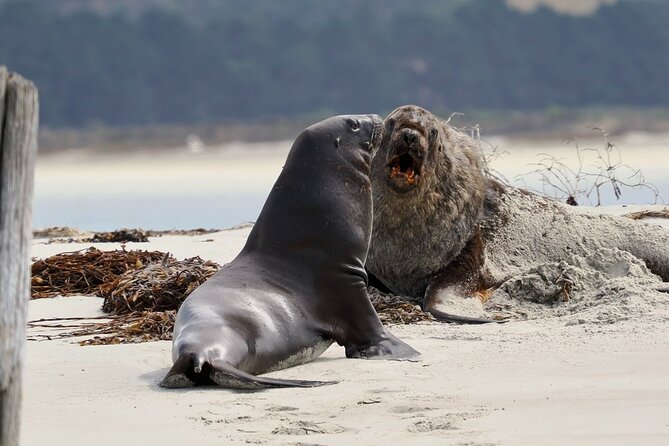
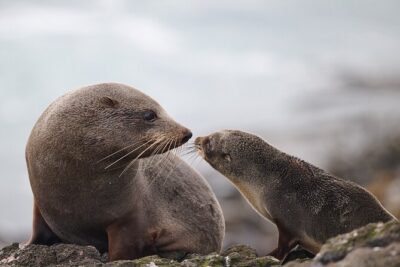
The route can produce a broad mix of marine life. New Zealand fur seals may rest on rocks, and you might see adults with pups. Sea lions are another possible sight, along with blue penguins moving through the water.
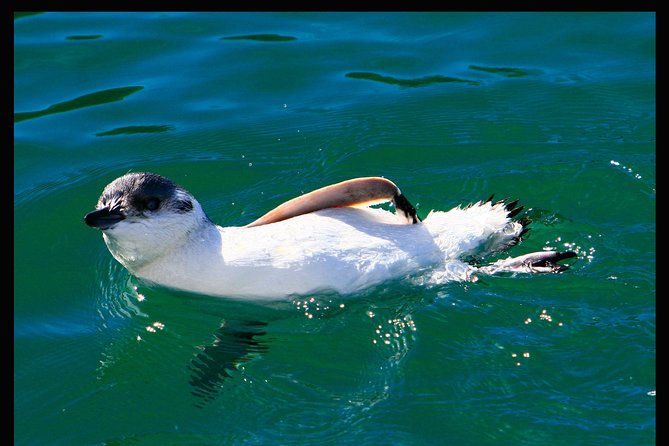
Blue penguins are small and easy to miss from land. From the boat, you may catch them bobbing or swimming close to the vessel. That can be one of the most memorable moments of the trip, but it is also a good example of why you should avoid expecting a guaranteed close encounter.
The boat passes roosting and feeding areas where birds gather. Rachel looks for movement on the water and along the rock formations, then brings your attention to the animal before it disappears behind a swell or rock.
Dolphins are also possible. They are not promised, and whales are not presented as a regular sight. This is an important point if you have taken marine cruises elsewhere with very large concentrations of animals. Otago Harbour can offer excellent sightings, but some departures produce only a few birds and seals.
That natural uncertainty is not a reason to skip the cruise. It is a reason to book it for the setting, guidance, and range of possible wildlife rather than for one fixed checklist.
A small boat with a warm cabin and open deck
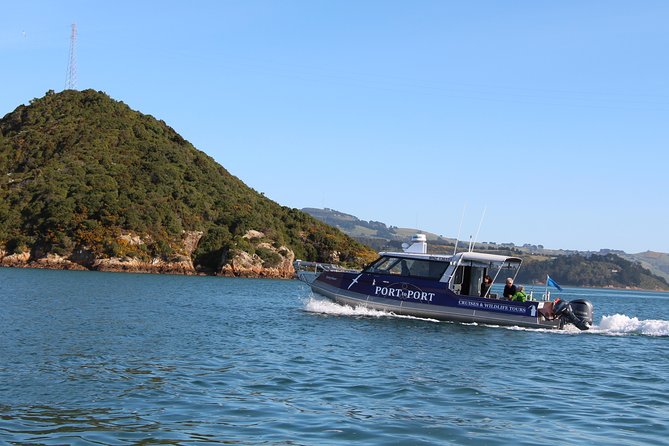
The custom-built vessel offers two useful spaces. The heated enclosed cabin gives you shelter when the wind is cold or sea spray reaches the boat. The open outer deck is better for photographs and for feeling the movement of the harbor.
You should dress warmly even if the weather looks calm at the dock. Sea spray is possible, and the temperature on the water can feel lower than it does on shore. Layers are the practical choice, with a waterproof outer layer if the forecast looks unsettled.
The boat carries a maximum of 14 people. That keeps the group more manageable than a large sightseeing vessel. You can hear the commentary more easily, ask questions, and shift your attention between the water and the shore without fighting for every viewing spot.
Small boats also have limits. If the harbor is choppy, you will feel the motion more clearly than you would on a large ship. One outing may be smooth and sunny, while another feels bumpy even when the weather is otherwise fine. Anyone prone to motion sickness should prepare accordingly.
The boat has received positive feedback for comfort and safety in rougher conditions, but no skipper can remove all movement from an open-water trip. If you need a completely still ride, this is not the right format.
How long the trip takes from each departure point
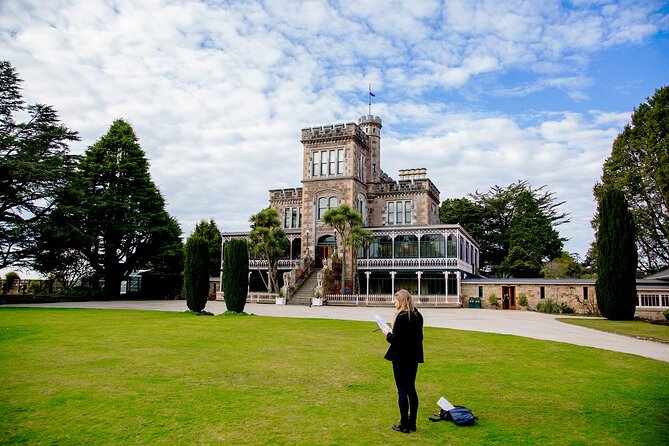
From Port Chalmers, the cruise normally lasts about 1.5 hours. From Portobello, allow about 2 hours. Check your departure point carefully when booking because the extra travel time changes how much room you have in a busy day.
For cruise ship passengers, the Port Chalmers departure is especially practical. The meeting point is described as an easy walk from the ship dock, and clear directions are provided. That removes the need to arrange a separate transfer for the cruise itself, though you should still allow a sensible margin for returning to your ship.
The shorter Port Chalmers version is a good fit for a port day. You get wildlife, harbor scenery, and local history without giving up the whole day. It also leaves time to explore Port Chalmers afterward if your ship schedule allows.
Pickup is offered, but the exact arrangement depends on the booking. Confirm the meeting point and departure time rather than assuming pickup will occur at your accommodation or directly beside the ship.
Is $105.50 good value?
At $105.50 per person, this is not the cheapest way to see Otago Harbour. You are paying for a small boat, a limited group size, a heated cabin, wildlife equipment, and a skipper who also provides detailed commentary.
The value is strongest if you care about birds and prefer a personal outing. A larger vessel may offer more space, but it may not give you the same ability to hear the guide, adjust the pace, or focus on a particular sighting. Here, the small scale is part of what you are buying.
It is also good value for a cruise passenger who wants a focused shore excursion. The Port Chalmers departure takes around 90 minutes, and the easy access from the dock helps keep the day simple. You do not need to spend several hours on a peninsula road trip to get a taste of the region’s wildlife.
The price is harder to justify if your main goal is a guaranteed close view of albatross, dolphins, or seals. No wildlife cruise can promise that, and conditions can limit what you see. Think of the fare as payment for time on the water with an experienced local guide, not as a fee for a guaranteed animal encounter.
Who will enjoy this cruise most
I would recommend this outing to bird lovers, photographers, families, and cruise passengers who want something more specific than a general harbor ride. Children can enjoy the changing search for penguins, seals, and birds, especially because the boat offers a clear sense of movement and discovery.
It also suits visitors who prefer a shorter activity. The trip is long enough to reach wildlife areas but compact enough to fit around a port visit. You can return with time to look around Port Chalmers if your schedule permits.
People with mobility needs should ask about the exact boarding arrangements before booking. The operation has supported people with disabilities, and service animals are allowed, but the supplied information does not give full details about ramp access, seating, or onboard facilities.
The cruise is less suitable if you dislike small boats, cannot tolerate motion, or want a guaranteed large animal spectacle. It is also not ideal for anyone who expects the harbor to be warm and calm throughout. Wind, spray, and changing sea conditions are part of the experience.
Weather, cancellations, and practical preparation
The cruise requires suitable weather. If poor conditions force a cancellation, you are offered another date or a full refund. The same applies if the minimum number of people is not reached and the operator cancels.
You can cancel for a full refund up to 24 hours before the start time. Changes or cancellations inside that period are not accepted for a refund, so keep your port schedule in mind before booking.
Most people can participate, and the activity is near public transportation. If you have recently been unwell, the operator asks you to wear a face mask. That is a small courtesy in a warm enclosed cabin and a sensible step on a close-quarters boat.
Bring warm layers and prepare for spray. If you want photographs, keep your camera protected until you are ready to use it. The open deck is best for views, while the cabin is the sensible retreat when the wind rises.
Should you book the Port Chalmers wildlife cruise?
Book it if you want a small, well-guided trip focused on Otago Harbour’s birds and marine life. Rachel’s ability to combine boat handling, wildlife spotting, and local stories gives the outing more substance than a simple ride around the bay.
The strongest reason to go is the chance of seeing albatross close to the boat, perhaps alongside fur seals, sea lions, penguins, dolphins, and a long list of seabirds. The strongest reason to hesitate is the lack of certainty. Some departures will be packed with sightings, while others may offer only a handful.
For a cruise ship day, the 1.5-hour Port Chalmers version is particularly easy to fit in. Dress warmly, keep your expectations flexible, and book this for the whole harbor experience rather than one promised animal. If that sounds right to you, the $105.50 fare is fair for a small-group wildlife outing with useful equipment and strong local guidance.
FAQ
How long does the wildlife cruise last?
The cruise lasts about 1.5 hours when joining from Port Chalmers. The trip takes about 2 hours when joining from Portobello.
Where does the cruise operate?
The cruise travels through Otago Harbour from Port Chalmers toward Taiaroa Head and the Otago Peninsula. It also passes Carey’s Bay and historic harbor features.
What wildlife might I see?
Possible sightings include royal and other albatross species, New Zealand fur seals, sea lions, blue penguins, dolphins, shags, cormorants, wading birds, and other seabirds. Sightings depend on weather and natural conditions.
Is the boat heated?
Yes. The vessel has a warm enclosed cabin as well as an open outer deck for views and photographs.
How many people can join the cruise?
The maximum group size is 14 people.
Are binoculars provided?
Yes. Binoculars and wildlife identification sheets are available during the cruise.
Can I cancel for a refund?
You can cancel up to 24 hours before the experience start time for a full refund. Cancellations or changes made less than 24 hours in advance are not refunded.
What happens if bad weather cancels the cruise?
If poor weather causes a cancellation, you are offered a different date or a full refund. If the minimum number of participants is not reached, the operator offers a different date or experience, or a full refund.
More Wildlife Tours in Port Chalmers
- Clearwater Wildlife Tours (small group 10max) Otago Peninsula
★ 5.0 · 531 reviews - Wildlife Sea Kayaking Tour – Kaikoura
★ 5.0 · 467 reviews - Milford Sound: 2-Hour Wildlife & Nature Cruise
★ 4.6 · 418 reviews - Kaikoura: Half-Day Wildlife Kayaking Tour
★ 4.6 · 390 reviews
More Bird Watching Tours in Port Chalmers
- Dunedin City Highlights, Otago Peninsula Scenery & a Guided Penguin Reserve Tour
★ 4.5 · 77 reviews - Gannet Safaris Overland tour to Cape Kidnappers Gannet Colony
★ 5.0 · 942 reviews - Oamaru: Penguins Evening Viewing Ticket
★ 4.5 · 682 reviews - Rotorua: The National Kiwi Hatchery Kiwi Encounter Tour
★ 4.7 · 671 reviews
Just added around Port Chalmers
- From Port Chalmers: Small Group Castle, Coast & City Tour★ 4.8 · 22 reviews
- Shore Excursion: Dunedin City, Otago Peninsula, Castle Gardens & Olveston Tour★ 5.0 · 81 reviews
- Water Taxi and Shuttle to Larnach Castle★ 5.0 · 100 reviews
- Dunedin Nature & City Tour – Full Day Cruise Excursion★ 4.5 · 87 reviews
- Castle, Coast & City Tour – 8 pax max – Castle Entrance Included★ 5.0 · 102 reviews
- Iconic Shore Excursion: Dunedin City Highlights Tour★ 5.0 · 131 reviews
- Garden and City tour★ 4.5 · 197 reviews
- Iconic Shore Excursion: Iconic Larnach Castle Tour★ 5.0 · 93 reviews
Wildlife, compared.
Clearwater Wildlife Tours (small group 10max) Otago Peninsula
Read our review →
6 Ziplines, Swing-Bridges & Wildlife Encounters
Read our review →
Sea Life Kelly Tarlton’s Aquarium General Admission
Read our review →
Browse the lists this tour appears in