Reviewed · GLACIER TOURS
Mount Cook: 3-Hour Tasman Glacier Helicopter Ride and Hike
The best part of this Mount Cook experience is not simply seeing the Tasman Glacier from above. You land on it, strap on crampons, and follow a guide through ice formations that may include blue caves, moulins, tunnels, and crevasses. The glacier changes constantly, so each outing has its own route.
I like the combination of two helicopter flights and real time on the ice. I also like the careful preparation: leather boots, wool socks, crampons, walking poles, and waterproof clothing are provided. The main drawback is the weather. Cloud, wind, or poor visibility can cancel the flight, and one delayed group may lose time exploring the caves.
Key points to know before booking
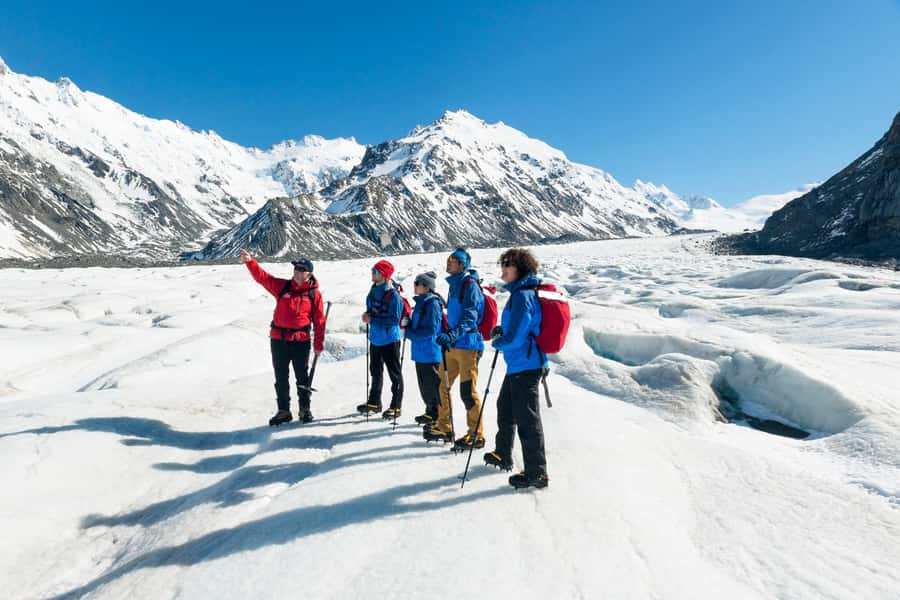
- Up to two hours on Tasman Glacier: The walking section is the heart of the trip, not a quick photo stop.
- Two 15-minute helicopter flights: You fly in and out, with mountain views on both legs.
- Ice caves and moulins can change: Guides may lead you through newly formed features, but no exact route is guaranteed.
- Small group of up to 11 people: This keeps the outing manageable, though you still need to follow instructions closely.
- Strong guide service: Hunter, Anna, Tori, Rich, and other guides have been praised for safety, photos, and clear explanations.
- Weather controls the day: Leave room in your Mount Cook plans in case the trip is moved or cancelled.
What the Tasman Glacier helicopter hike is really like
At $537 per person, this is an expensive three-hour outing. You are paying for helicopter access to a remote section of New Zealand’s largest glacier, two scenic flights, specialist equipment, pilots, and a trained glacier guide. That makes the price easier to understand than a simple sightseeing flight, though it is still a major part of a South Island travel budget.
I would think of this as a special Mount Cook splurge rather than a casual half-day activity. If you want only aerial views, a scenic flight may be enough. If you want to walk on ice and see the glacier from ground level, this trip gives you far more than a flyover.
The experience begins inside Mount Cook Airport, where you look for the Mt Cook Glacier Guiding desk. You can choose between an 8:45 AM and a 10:45 AM start, subject to availability. The morning timing may suit you if you want the rest of the day free, while the later departure gives you more flexibility at the start of your day.
The group is limited to 11 people. That is small enough for a guide to keep an eye on everyone, answer questions, and help with equipment. You still need to stay with the group. On one outing, slow progress from a difficult group meant there was not enough time for the planned cave walk, so the pace of your group can affect how much you see.
More Glacier Tours in Mount Cook
- Mount Cook, Lake Tekapo and Tasman Glacier Tour from Christchurch
★ 5.0 · 353 reviews - From Queenstown: Mt Cook & Tasman Glacier Viewpoint Day Tour
★ 4.8 · 329 reviews - Mount Cook: Ski Plane and Helicopter Glacier Combo Flight
★ 4.6 · 271 reviews
The 45-minute briefing at Mount Cook Airport
The first part may feel long compared with the excitement of the flight, but it matters. You receive a safety briefing and an introduction to the trip before heading to the helicopter. Staff explain what to expect, how to behave around the aircraft, and how the glacier walk will work.
This is also when you get your clothing and equipment. The package includes leather boots, wool socks, crampons, a walking pole, and a waterproof jacket. Some outings also provided warm shells, rain gear, pants, backpacks, or other layers, according to the conditions and available equipment.
Bring warm clothing even if the weather looks mild at the airport. Add sunglasses and a hat. You are heading onto exposed ice, and the temperature can feel very different from the terminal.
The briefing is useful for another reason: it sets realistic expectations. The route is not a normal walking track. Your guide may cut steps into the glacier, lead you over uneven ice, or ask you to move carefully through tight formations. This is not a technical mountaineering trip, but you do need reasonable balance and mobility.
The first 15-minute flight to the ice
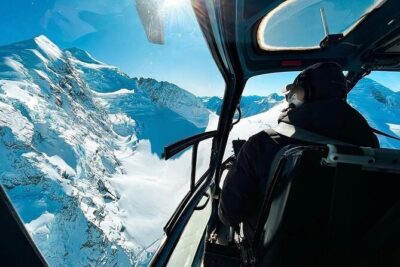
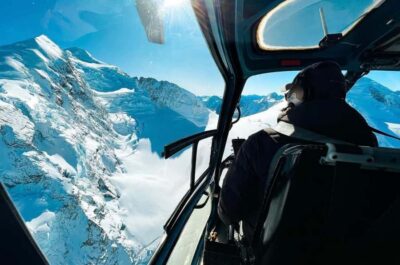
The first helicopter flight takes about 15 minutes. Rather than treating it as a simple transfer, use it as the opening view of the Mount Cook region. You get a sense of the glacier’s scale from the air, along with views toward Aoraki/Mount Cook and surrounding ice-covered peaks when visibility allows.
The flight itself is one of the most praised parts of the outing. Pilots have pointed out landmarks and other glaciers along the way, and clear days have produced smooth flights with wide views. In poor conditions, though, the flight may not operate at all. This is a genuine safety decision, not a minor change to the schedule.
Your landing point is on a remote part of the Tasman Glacier. That remote setting is important. You are not walking on an easy public path beside a visitor center. The helicopter puts you in a place that would be difficult to reach on foot during a short holiday.
The helicopter seating can vary with the aircraft and group. Some groups have reported good window views, and a six-person helicopter arrangement was praised for giving everyone a chance to look out. Do not assume you will have the same seat on every flight, but the route itself offers plenty to watch.
Two hours among blue ice, moulins, and tunnels
Once on the glacier, your guide helps you fit the crampons and checks that everyone is ready. The walking route is shaped by the glacier’s condition. Ice shifts, cracks open, and formations disappear, so your guide chooses what is safe and interesting on that particular day.
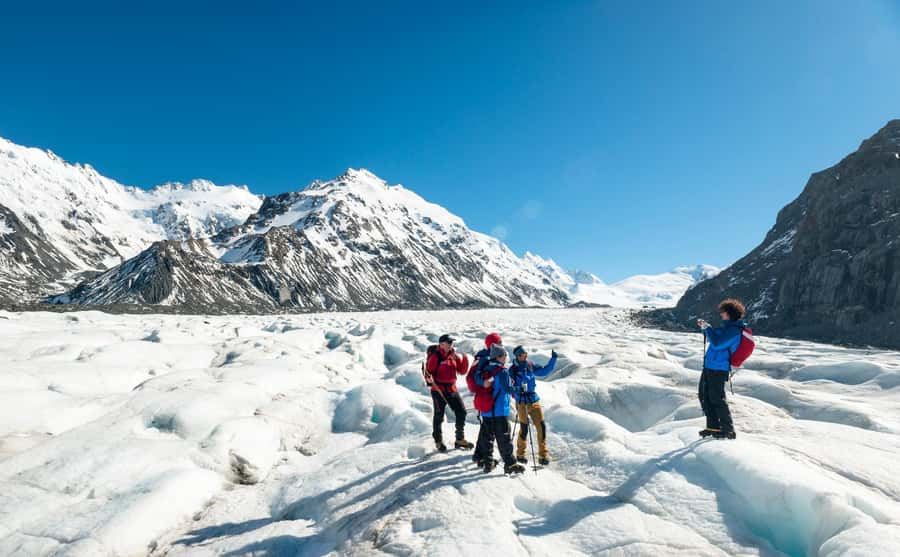
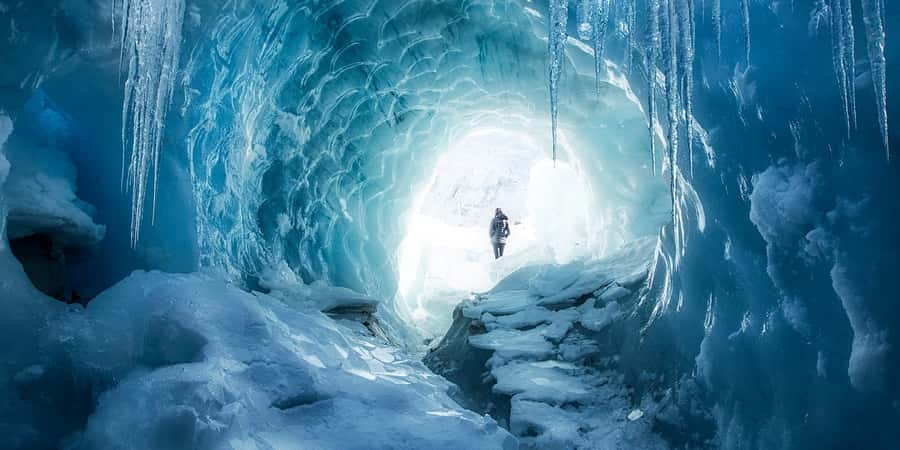
This is where the experience earns its price. You are not merely standing on a flat patch of snow for a photograph. You may walk through blue ice, crawl into a tunnel, look down into a moulin, or enter a cave that has recently formed. Some groups have seen waterfalls beside ice caves, while others have explored several tunnels during the same outing.
The blue color is especially striking. Ice can look white from a distance, but inside a dense glacier it may take on deep blue tones. Your guide can explain how the ice forms and changes, and you will hear the glacier as well as see it. One particularly memorable detail from the outings is the sound of ice boulders cracking and groaning in the quiet.
Your guide may cut steps into the ice to make sections safer to cross. Crampons give you grip, but you still need to place your feet carefully. The walking is not described as difficult for every skill level, yet it is not suitable for people with limited mobility. Children under nine cannot join.
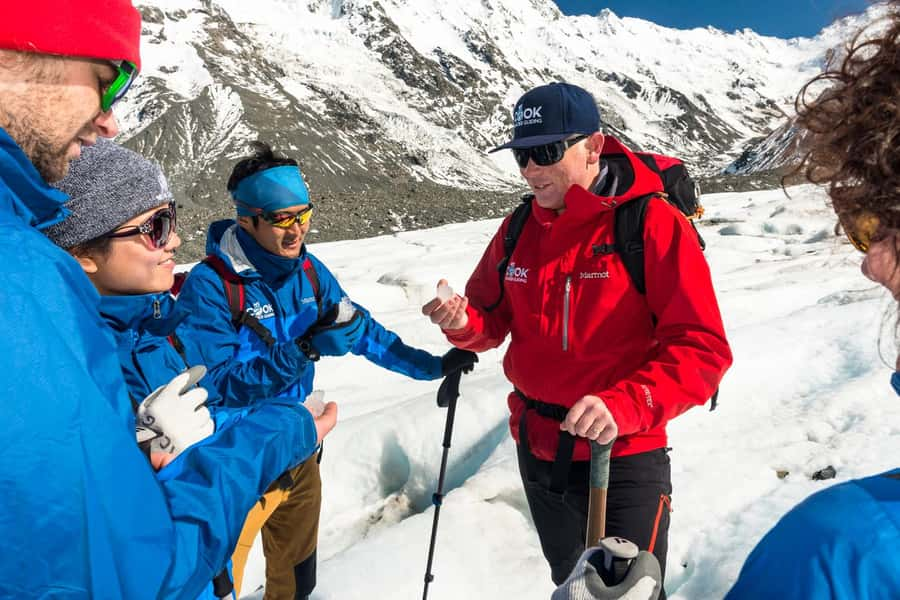
A strong guide makes a real difference here. Hunter has been praised for explaining the terrain, taking group photographs, and answering questions about geology. Anna has been singled out for adjusting to different needs and helping solo participants get good photos. Tori has received similar praise for clear explanations, safety, and friendly support. Rich has taken groups through newly forming tunnels and caves, while guides such as Kristen, Liam, Bia, and Sky have also been praised for caring for the whole group.
These names matter because the guide is more than a person who leads the way. The route is not fixed, and the guide decides what you can safely see. A good guide also keeps the group together, watches footing, explains the glacier, and helps with photographs without turning the whole outing into a photo session.
More Helicopter Tours in Mount Cook
- Mount Cook: Scenic Helicopter Flight with Alpine Landing
★ 4.8 · 442 reviews - Mount Cook and The Glaciers 55-Minute Helicopter Flight
★ 4.5 · 133 reviews - 45-Minute Mount Cook Ski Plane and Helicopter Combo Tour
★ 4.5 · 107 reviews - 45-Minute Glacier Highlights Helicopter Tour from Mount Cook
★ 5.0 · 57 reviews
Why the glacier changes the experience every time
Aoraki/Mount Cook is the headline view, but the glacier itself supplies the surprises. The ice is always moving and reshaping. That means you should not book this expecting a guaranteed ice cave, moulin, or particular photo spot.
You might see an ice cave with bright blue walls. You might squeeze through a narrow tunnel. You might walk beside a newly opened channel or look into a deep hole in the ice. You might see none of those exact features if conditions change. This uncertainty is a drawback for anyone wanting a fixed checklist, but it is also what makes the outing feel like an actual glacier trip rather than a staged attraction.
Some groups have seen avalanches on distant mountain faces. That does not mean an avalanche is part of the program, and you should never expect one. It does show how active the mountain environment can be. Your guide and pilot choose safe routes and viewing positions, and safety instructions are not optional.
Stay close to the guide, listen when instructions are given, and avoid wandering off for a better photograph. One outing was slowed by people ignoring safety directions. On ice, that behavior affects everyone, not just the person taking the risk.
The return flight and final 10 minutes
After up to two hours on the glacier, you return to the helicopter for another 15-minute scenic flight. The views can feel different on the way back because you now understand the ice below you. Features that looked like abstract white lines on the outward journey may make more sense after walking among them.
Pilots have pointed out mountain features and distant glaciers during these flights. On a clear day, the return can be as impressive as the first leg. Cloud and wind may limit the view, so again, the quality of the flight depends heavily on the weather window.
Back at Mount Cook, allow about 10 minutes for a break before returning to the airport. Equipment is collected and the tour ends where it began. You do not receive food or drinks, so eat before the activity or bring something for afterward if your schedule allows.
The timing is compact. You have a 45-minute briefing, two 15-minute flights, up to two hours on the ice, and a short break. There is little spare time if the helicopter is delayed or the group moves slowly. Keep later plans flexible, especially if you have a long drive from Mount Cook.
Weather, cancellations, and practical planning
Weather is the biggest practical issue. The trip can be cancelled or moved if the conditions are unsuitable, even in summer. One group had its first attempt cancelled and was offered an afternoon departure or a place the next day. Another group got a short clear-weather window between cloud and cancellations.
For that reason, I would book this near the beginning of your Mount Cook stay if your schedule allows. That gives you a better chance to move the outing to another time. The booking terms allow free cancellation up to 24 hours in advance, and you can reserve now and pay later, which helps if your South Island plans are still taking shape.
Do not make a tight connection, long drive, or fixed dinner reservation immediately after the tour. The listed duration is three hours, but mountain weather can affect operations. You should also keep the day’s clothing simple and warm. Sunglasses help with glare from the ice, and a hat is useful even when the air at the airport feels comfortable.
This is not suitable for people with mobility impairments. The surface is uneven, the group may climb or crouch through formations, and crampons require careful foot placement. The minimum age is nine.
Is $537 good value for you?
The cost makes sense if you value access, not just scenery. You receive two helicopter flights, specialist gear, a guide, and up to two hours walking on the Tasman Glacier. You also get a small group rather than a large coach-style outing.
The value is weaker if you are mainly interested in seeing Aoraki/Mount Cook from the air. In that case, paying for glacier equipment and a guided ice walk may be more than you need. You also need to accept the possibility of cancellation, a shorter route, or fewer ice features than expected.
I think the price is fair for someone who sees this as a once-only Mount Cook experience. The combination of flight access and time on the ice is difficult to duplicate during an ordinary visit. The strongest part is not the transport. It is the chance to feel the glacier under your boots and see its changing interior at close range.
Who should book this Mount Cook adventure?
You should book it if you want an active experience, enjoy mountain scenery, and are happy to let the guide choose the route. It suits couples, families with children aged nine or older, solo visitors, and anyone who wants a memorable way to experience Aoraki/Mount Cook.
Solo visitors can benefit from the guide’s help with photographs. Several guides have taken photos for people traveling alone, which is a small but useful touch when you are carrying gloves and a walking pole.
You should skip it if you need a fully predictable schedule, dislike helicopters, have limited mobility, or cannot keep plans flexible for weather. You should also think twice if the price would crowd out other important parts of your New Zealand trip.
For me, this is worth booking when the Tasman Glacier is one of your main reasons for visiting Mount Cook. The helicopter flight gets you there, but the guided walk makes the memory. Just allow flexibility, listen carefully, and come prepared for the glacier you actually find, not the one you imagined.
FAQ
Where does the tour begin?
It begins inside the terminal at Mount Cook Airport. Look for the Mt Cook Glacier Guiding desk.
How long does the experience last?
The activity lasts three hours. This includes the briefing, two helicopter flights, up to two hours on the glacier, and a short break.
What time can I start?
The available time slots are 8:45 AM and 10:45 AM. You should check availability when booking.
What equipment is included?
The tour includes leather boots, wool socks, crampons, a walking pole, and a waterproof jacket. Warm clothing, sunglasses, and a hat are recommended.
Is food or drink included?
No. Food and drinks are not included.
Can children join the tour?
Children under nine cannot join. The tour is also not suitable for people with mobility impairments.
What happens if the weather is poor?
The trip is weather dependent and may be cancelled or moved. You can cancel up to 24 hours in advance for a full refund, and the reserve-now, pay-later option keeps your plans flexible.
More 3-Hour Experiences in Mount Cook
- Mount Cook: 3-Hour Tasman Glacier Heli-Hike
★ 4.5 · 29 reviews - Queenstown: 3-Hour Zipline Adventure with 6-Lines
★ 4.8 · 485 reviews - Fox Glacier: Up to 3 Hours Hike with Helicopter Transfer
★ 4.9 · 309 reviews - Discover Wellington 3 hour City Tour
★ 5.0 · 213 reviews
More Hiking Tours in Mount Cook
- Mount Cook: 3 Hour Heli Hike to the Tasman Glacier
★ 4.7 · 218 reviews - The Adventurer: Tasman Glacier Heli-hike
★ 5.0 · 92 reviews - Tasman Glacier Heli-Hike Tour from Queenstown
★ 5.0 · 70 reviews - Glentanner High Country Heli Hike
★ 5.0 · 52 reviews
Just added around Mount Cook
- Skydive Mt. Cook – 20+ Seconds of Freefall from 10,000ft★ 5.0 · 5 reviews
- Skydive Mt. Cook – 70+ Seconds of Freefall from 16,500ft★ 5.0 · 5 reviews
- Mt Cook to Christchurch One-Way Small Group Tour via Lake Tekapo★ 5.0 · 16 reviews
- Mt Cook to Queenstown Small Group Tour (One-Way)★ 4.5 · 25 reviews
- Mt Cook & Lake Tekapo 2-Day Small Group Tour from Queenstown★ 5.0 · 15 reviews
- Mount Cook: Mountains High 40-Minute Helicopter Flight★ 5.0 · 53 reviews
- Mount Cook Scenic 35 Minute Helicopter Flight★ 5.0 · 6 reviews
- Mount Cook Alpine Explorer Helicopter Flight with Alpine Landing★ 4.0 · 22 reviews
Glacier Tours, compared.
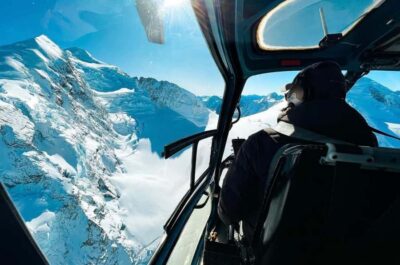
Franz Josef Glacier: Helicopter Flight & Alpine Landing
Read our review →
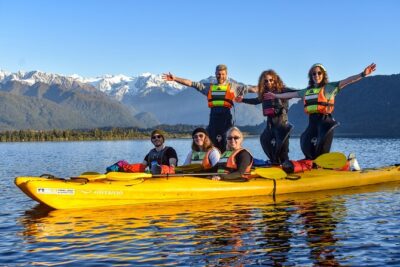
Small-Group Kayak Adventure from Franz Josef Glacier
Read our review →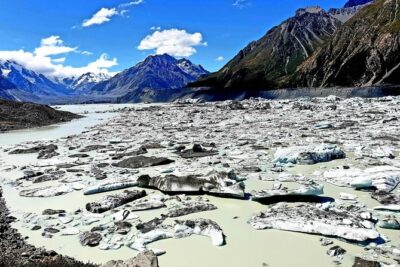
Mount Cook, Lake Tekapo and Tasman Glacier Tour from Christchurch
Read our review →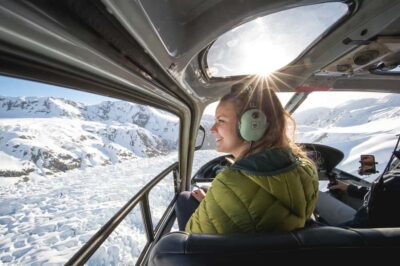
Franz Josef & Fox Glaciers Helicopter Flight & Snow Landing
Read our review →