
Reviewed · GLACIER TOURS
Mount Cook: Ski Plane and Helicopter Glacier Combo Flight
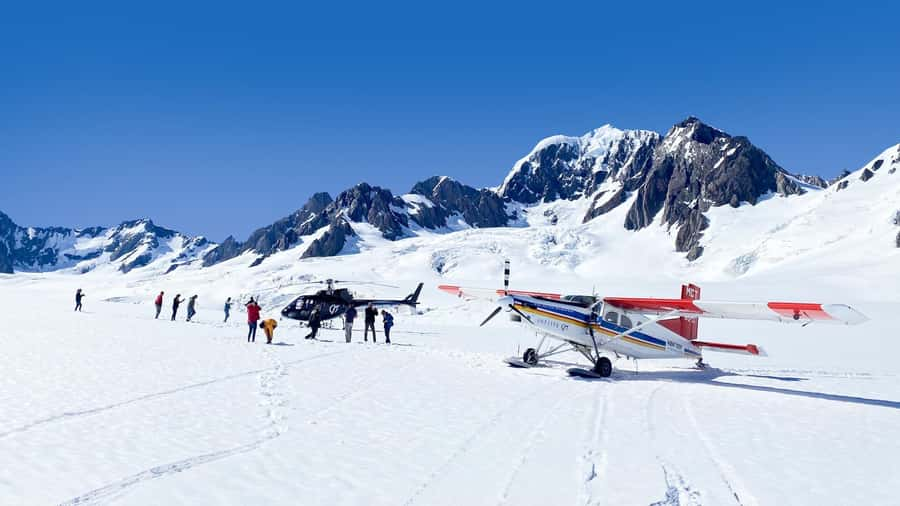
The best part of this Mount Cook flight is the glacier landing. You fly above the Tasman Valley, pass the blue glacier lake and Hochstetter Icefall, then step out onto the upper snowfields of New Zealand’s longest glacier. The aircraft shuts down, leaving you with a short stretch of quiet among snow and rock.
I like two things here: you get both a ski plane and helicopter, and the flight gives you more than a quick mountain flyover. You see Tasman Terminal Lake, Grand Plateau, Plateau Hut, the full length of the Tasman Glacier, and Aoraki Mount Cook from the air. The main catch is weather. Wind and cloud can cancel the planned combination, and seating in the aircraft can affect your views.
Key points
- Land on the Tasman Glacier: Step onto an upper snowfield where snow and ice remain year-round.
- Ride two types of aircraft: The ski plane and helicopter offer different views and different sensations.
- See Aoraki Mount Cook up close: The route includes the Hochstetter Icefall, Grand Plateau, Plateau Hut, and the mountain’s upper slopes.
- Expect weather changes: Flights may be delayed, rescheduled, shortened, or changed to another glacier or helicopter flight.
- Pack very lightly: Bags, food, drinks, drones, and selfie sticks are not allowed on the aircraft.
- Allow time before departure: Check-in closes 45 minutes before your flight, and full names and weights are required when booking.
A 45-minute flight above Aoraki Mount Cook
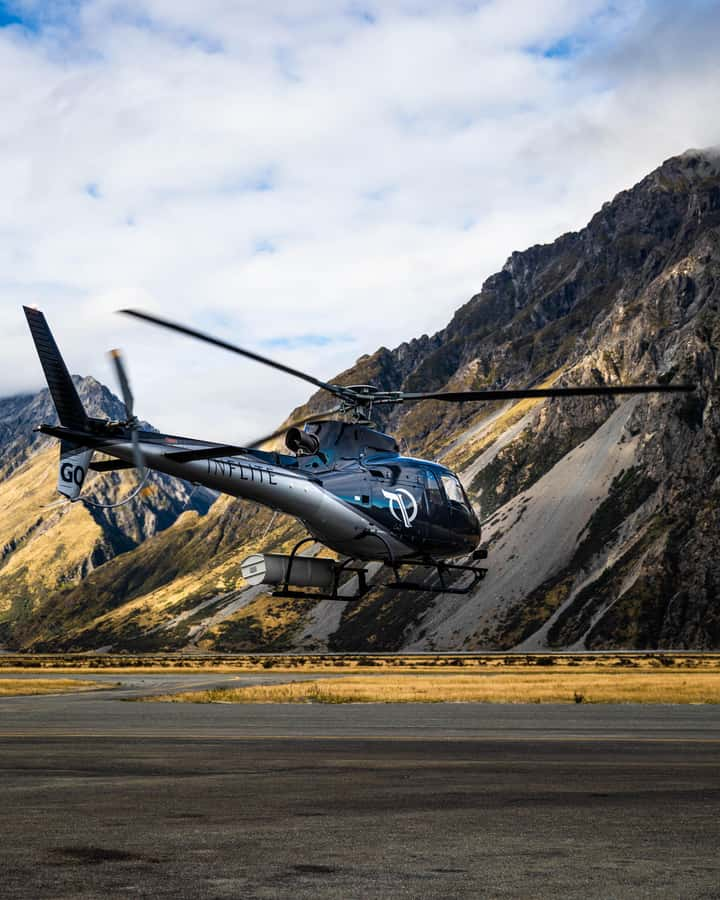
The Mount Cook Ski Plane and Helicopter Glacier Combo Flight costs $328 per person and lasts 45 minutes. It begins at Mount Cook Aerodrome in Aoraki Mount Cook National Park, with free parking and Wi-Fi at the airport.
This is not simply an aircraft tour with a glacier visible in the distance. The plane or helicopter lands on the Tasman Glacier, and you get time on the snow. That short landing changes the feel of the trip. You are not only looking at the Southern Alps through a window. You are standing in the alpine environment itself.
The route takes you over the Tasman Valley and toward the upper Tasman Glacier. From above, you can see the Tasman Terminal Lake, the long sweep of the glacier, Grand Plateau, and Plateau Hut. Aoraki Mount Cook rises above the surrounding peaks, while the Hochstetter Icefall provides one of the route’s most dramatic frozen features.
The 45 minutes includes takeoff, the scenic flight, the landing, time on the glacier, the aircraft change, and the return to the airport. This is a compact outing, so do not expect a long walk or a full glacier expedition. The attraction is access: you reach a remote snowfield quickly, safely, and without a demanding climb.
More Glacier Tours in Mount Cook
- Mount Cook, Lake Tekapo and Tasman Glacier Tour from Christchurch
★ 5.0 · 353 reviews - From Queenstown: Mt Cook & Tasman Glacier Viewpoint Day Tour
★ 4.8 · 329 reviews - Mount Cook: 3-Hour Tasman Glacier Helicopter Ride and Hike
★ 4.9 · 235 reviews
What the ski plane adds to the trip
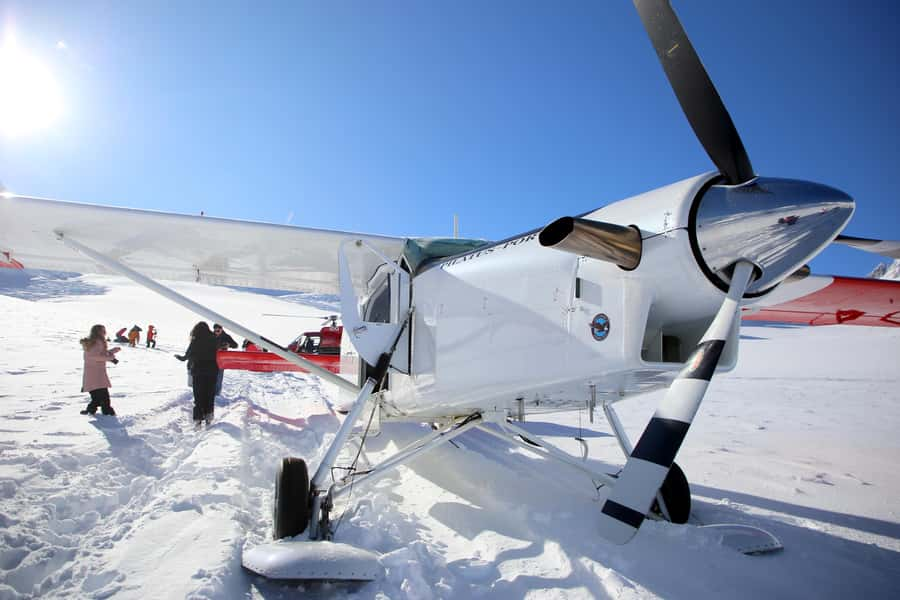
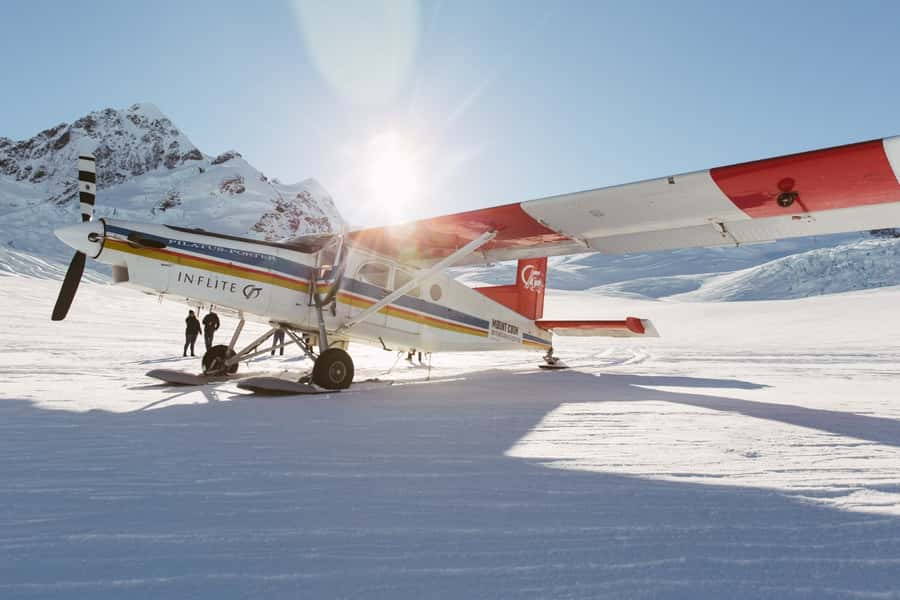
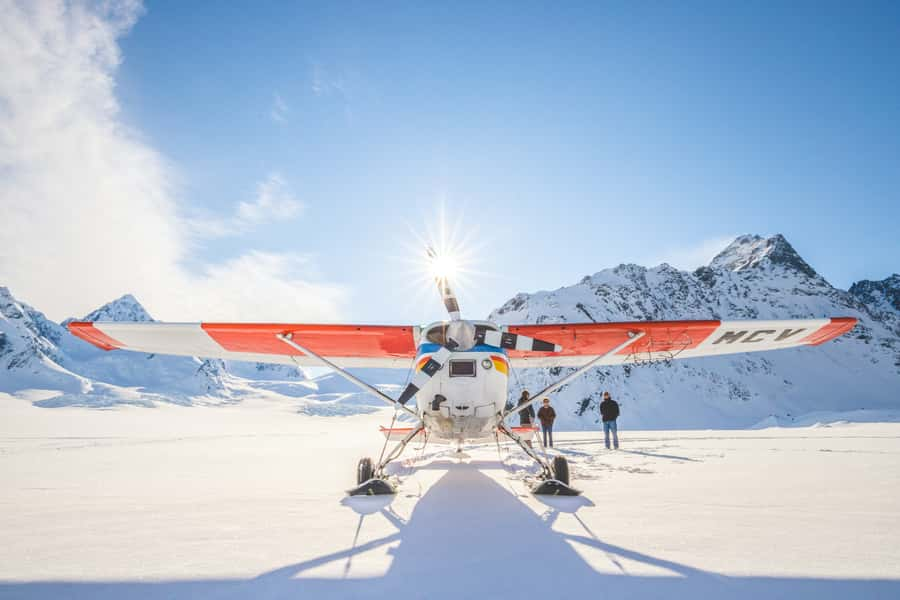
A ski plane gives you a distinctly alpine way to reach the glacier. Instead of landing on a normal runway, it touches down on snow. That is the moment many people remember most, especially when the plane comes to a stop on a broad white snowfield surrounded by peaks.
The aircraft’s wings can block some side views, depending on where you sit. One passenger specifically found a middle seat in the back row of the helicopter limited the outward view, and the plane can have a similar issue. You should still see plenty, but your position matters when the scenery is the main reason you booked.
The ski plane also makes the glacier landing feel physical. You hear the aircraft work its way across the snow, then the engine stops and the high alpine setting takes over. If conditions are right, you can take photographs, walk around the landing area, and enjoy the snow before the return flight.
The plane does not always operate as planned. Strong wind, cloud, or maintenance can lead to a helicopter-only trip or another arrangement. If the ski plane is unavailable, the operator has sometimes substituted a helicopter flight or offered a different glacier landing. That can still be a fine outing, but it is worth understanding that the exact aircraft combination is not guaranteed.
What the helicopter adds
The helicopter gives you a more open view of the mountains. It can fly close to steep rock and ice, and passengers often find the wide windows useful for seeing the glacier and Aoraki Mount Cook without as much obstruction.
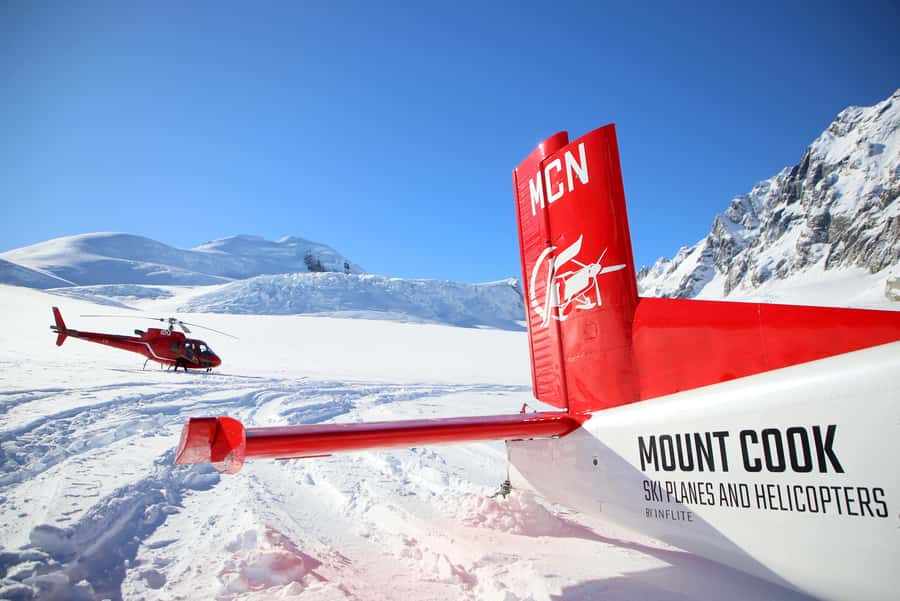
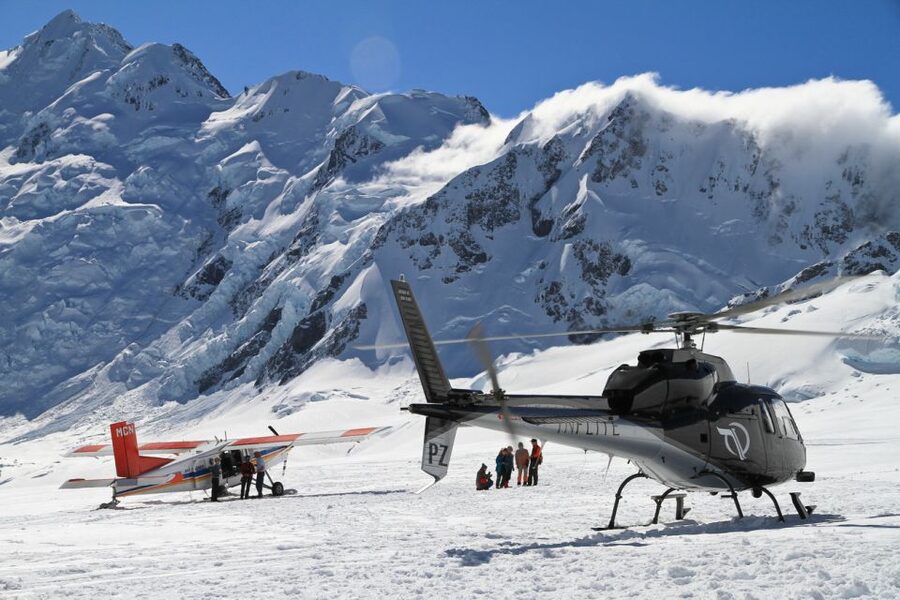
The flight may go up by helicopter and return by ski plane, or go up by plane and return by helicopter. The aircraft order depends on the day’s operation. Either way, changing aircraft at the glacier is the special feature. You step from one kind of flying into another, with the snow landing between them.
A helicopter can feel steadier to some passengers, while others prefer the excitement of the ski plane. One passenger found the helicopter more stable and easier for viewing, while another wanted more time in the helicopter. The 45-minute schedule means neither aircraft gets a long, separate flight, so book this for variety rather than for an extended helicopter ride.
Pilot commentary also varies. Pilots such as Mark, Ben, Jordan, and Greg have been praised for friendly service and useful information on different flights. Some passengers felt they would have liked more explanation, especially during the scenic portions. If you want detailed interpretation of every peak, ask questions when you can, and keep your headset volume high enough to hear the pilot.
The Tasman Glacier landing
The glacier landing is the heart of the outing. The Tasman Glacier is New Zealand’s longest glacier, and the aircraft lands on its upper snowfields rather than at the terminal lake. Here, the glacier is a world of snow, ice, mountain walls, and broad open space.
The aircraft fully shuts down after landing. That pause matters. Instead of stepping out beside a running engine, you get a quiet interval to look around and take photographs. The silence, broken only by the natural alpine surroundings, can be more striking than the flight itself.
Snow conditions change through the year. In one January flight, children had enough snow for a snowball fight, while another passenger found fresh snow without footprints. You may find firm snow, soft snow, or deeper patches. The supplied guidance calls for closed-toe shoes, and that is the minimum sensible choice. Wear footwear you can walk in comfortably and expect cold, wet, or uneven ground.
The landing area is not a marked walking trail. You are visiting a remote snowfield for a short time, under the direction of the pilot and ground team. Follow instructions, stay near the designated area, and do not wander toward crevasses or steep edges.
More Helicopter Tours in Mount Cook
- Mount Cook: Scenic Helicopter Flight with Alpine Landing
★ 4.8 · 442 reviews - Mount Cook and The Glaciers 55-Minute Helicopter Flight
★ 4.5 · 133 reviews - 45-Minute Mount Cook Ski Plane and Helicopter Combo Tour
★ 4.5 · 107 reviews - 45-Minute Glacier Highlights Helicopter Tour from Mount Cook
★ 5.0 · 57 reviews
The views from Tasman Valley to Aoraki Mount Cook
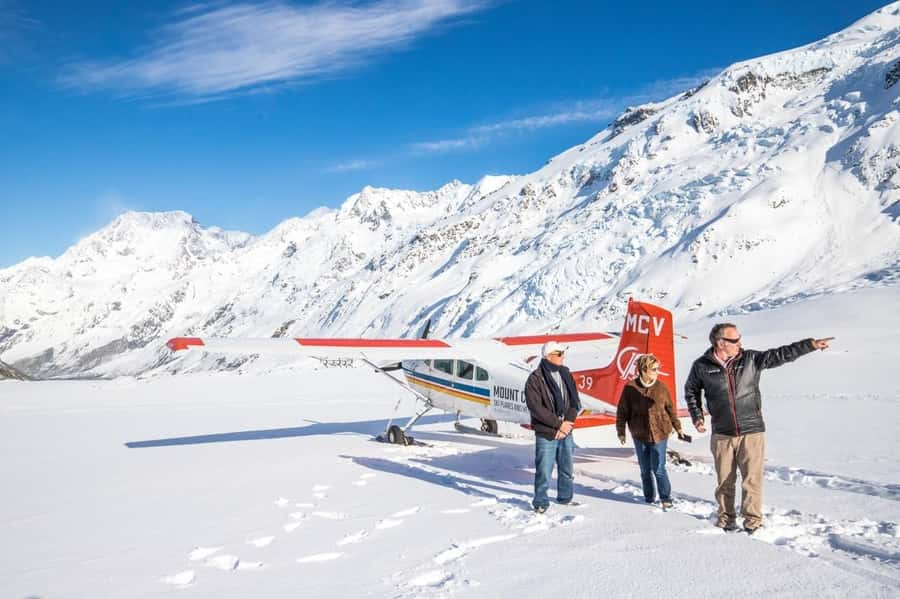
From the air, the Tasman Glacier is easier to understand than it is from a single viewpoint. You see the glacier’s full length, the blue Tasman Terminal Lake, the upper snowfields, and the ice flowing between the mountains. The scale is the point: what appears like a strip of ice from the valley becomes a vast alpine route from above.
The Hochstetter Icefall is another highlight. Ice drops through a steep section below the high peaks, giving the route a rough, broken texture. Grand Plateau and Plateau Hut add context to the upper glacier, showing how mountaineers use this high country.
Aoraki Mount Cook can dominate the flight when clouds stay clear. One pilot brought the helicopter close enough to the summit area for passengers to grasp the mountain’s size. That close view is especially useful because photographs often flatten distance and make the peak seem smaller than it is.
Weather decides how much of this you see. Clear skies can produce broad views of the glacier, lakes, and peaks. Cloud may hide Aoraki Mount Cook or force a different route. On one flight, incoming cloud led the pilots to Franz Josef Glacier instead of the Tasman Glacier. The change preserved the alpine landing, but it did not deliver the exact route advertised here.
Weather is part of the decision
Mount Cook weather can change quickly, and this is the most important practical issue. Several bookings were canceled or threatened by cloud and wind before being moved to the next day or a later flight. On other days, the weather cleared at the last moment and the trip went ahead.
Build some flexibility into your Mount Cook plans. If this is the only activity you have scheduled on a tight itinerary, a cancellation may be difficult to absorb. If you can stay an extra day, your chances of flying improve because the operator can try to find a suitable weather window.
The operator offers a full refund when weather causes a cancellation and will try to reschedule the flight around your plans. A rescheduled flight may be shorter or may use a different aircraft. That is not the same as receiving the exact original combination, so ask what is available before accepting a change.
Strong winds can prevent the ski plane from flying even when a helicopter trip is possible. Cloud can also shift the destination. The right attitude is to treat the glacier landing as the priority and the exact aircraft and route as weather-dependent.
Timing, check-in, and what to bring
Check-in closes 45 minutes before the scheduled flight. Do not arrive at the last moment. One passenger had a road delay and was moved to a later flight after contacting the company, but you should not rely on that kind of flexibility.
You must provide every passenger’s full name and weight when booking. Weight and balance limits apply to all aircraft. If the combined passenger weight reaches the aircraft’s safety limit, the flight time may be rescheduled.
Only phones and cameras are allowed on the aircraft. Bags, food, drinks, drones, and selfie sticks are not permitted. This keeps the cabin clear and avoids loose items in a small aircraft, but it also means you should leave extra equipment in your vehicle or at the airport as instructed.
Bring closed-toe shoes. Cameras and phones can be used during the flights, so have them ready before takeoff and keep a secure grip when photographing. The glacier landing is short, and you will not want to spend the whole stop sorting through gear.
English is the tour language, and an English audio guide is included. The pilots often provide commentary, but the amount of explanation can vary. If you care about learning the names and features along the route, listen through the headset and ask the pilot about what you are seeing.
Is $328 good value?
At $328 per person, this is an expensive 45 minutes. You are paying for aircraft operation, mountain access, pilot expertise, fuel, airport handling, and a glacier landing in a place that is otherwise difficult to reach. The cost makes sense if stepping onto the Tasman Glacier is high on your New Zealand wish list.
The value is stronger than a standard scenic flight because you get two aircraft and time on the snow. It is also more efficient than arranging separate flights, since the ski plane and helicopter are combined in one outing.
Still, the price does not guarantee perfect views or the exact itinerary. Weather may shorten or change the trip, and a plane or helicopter maintenance issue may affect the aircraft combination. One passenger felt the outing was not worth the money, even while describing it as a fantastic trip. That is a fair warning: you should book this for the rare access and glacier landing, not because every minute will be packed with commentary or because it is a cheap activity.
If the flight is canceled for weather, the refund policy reduces the financial risk. But the bigger risk is time. You may need to alter another booking or return to the aerodrome on a different day.
Who will enjoy this most
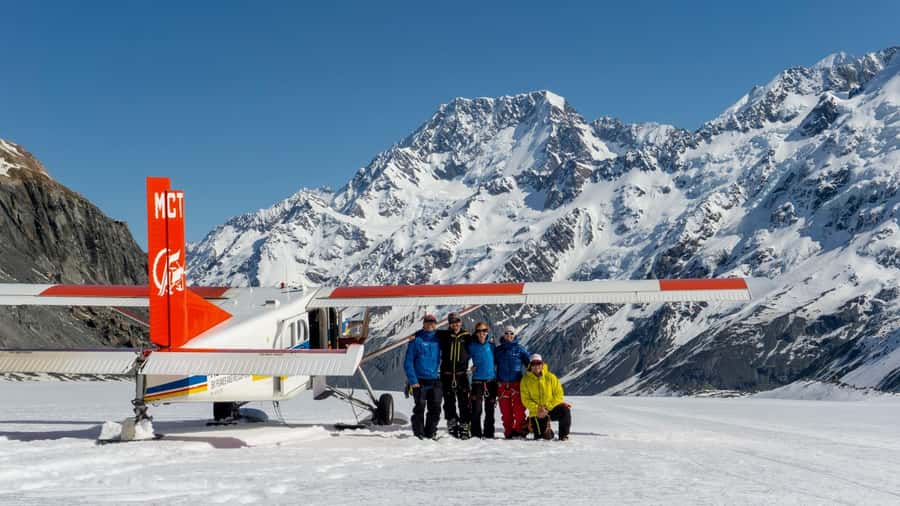
I would recommend this to you if you want a high-impact Mount Cook activity without a long hike. It suits families, photographers, couples, and anyone who wants to see the Tasman Glacier from above and stand on the snow.
It is also a good choice if you value variety. The ski plane feels different from the helicopter, and the changeover makes the trip more memorable than a single aircraft loop.
You may want to think twice if you dislike small aircraft, have no flexibility for weather, or need a guaranteed route. You should also consider your seat. The helicopter has four rear passenger seats and two front passenger seats, so some positions offer better views than others. The operator controls the seating, and a middle rear seat may limit what you can see.
Should you book the Mount Cook glacier combo?
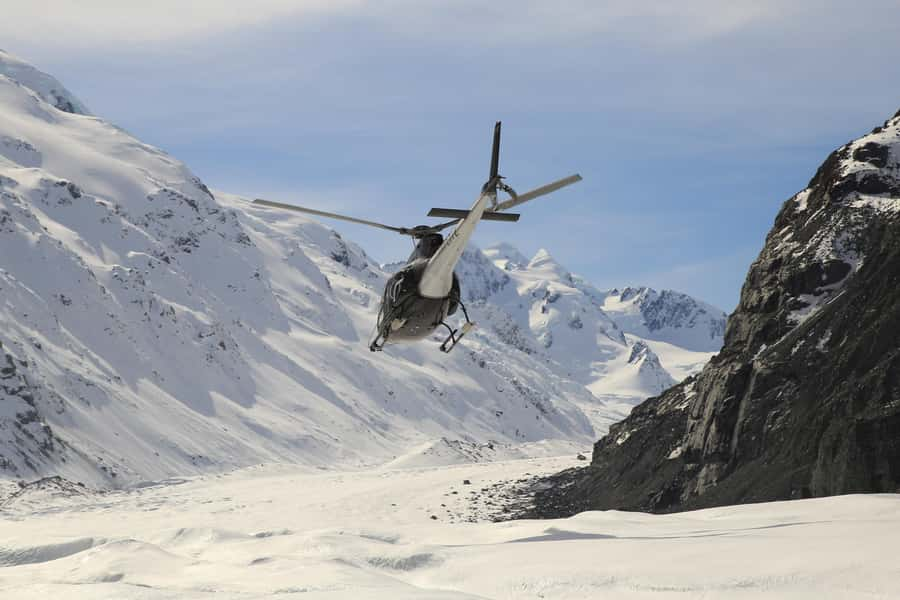
Book it if your budget allows and you can leave room in your schedule for weather. The Tasman Glacier landing, the quiet after the aircraft shuts down, and the chance to see Aoraki Mount Cook from both a ski plane and helicopter make this one of the strongest short activities in the national park.
Go in with realistic expectations. The flight may be rescheduled, the order of the aircraft may change, commentary may be brief, and your seat may not give a perfect view in every direction. If you accept those limits, this is a memorable and practical way to reach the high snowfields without a mountaineering expedition.
FAQ
Where does the Mount Cook ski plane and helicopter flight depart from?
The activity departs from Mount Cook Aerodrome in Mount Cook National Park, New Zealand.
How long does the flight last?
The advertised duration is 45 minutes, including the scenic flying, glacier landing, aircraft change, and return to Mount Cook Airport.
Which aircraft will I fly in first?
The order can vary. You may fly up by ski plane and return by helicopter, or go up by helicopter and return by ski plane.
Will the aircraft land on the Tasman Glacier?
The planned experience includes a snow landing on the upper snowfields of the Tasman Glacier. Weather and operating conditions can lead to a different glacier or an alternate helicopter flight.
What should I bring?
Bring closed-toe shoes. Phones and cameras are allowed during the flights.
Can I bring a bag, food, or a drone?
No. Bags, food, drinks, drones, and selfie sticks are not allowed on the aircraft.
How early should I check in?
Check-in closes 45 minutes before your scheduled flight time.
What happens if the weather cancels the flight?
Weather cancellations are refundable, and the operator will try to reschedule the flight to suit your plans. A rescheduled trip may be shorter or use a different aircraft.
More Scenic Flights in Mount Cook
- Lake Tekapo: 50-Minute Mount Cook and Beyond Scenic Flight
★ 4.9 · 103 reviews - Franz Josef: 30-min Flight Franz Josef & Tasman Glaciers
★ 4.8 · 54 reviews - Mount Cook: Mountains High 40-Minute Helicopter Flight
★ 5.0 · 53 reviews - 25-Minute Helicopter flight including an alpine landing
★ 4.5 · 49 reviews
Just added around Mount Cook
- Skydive Mt. Cook – 70+ Seconds of Freefall from 16,500ft★ 5.0 · 5 reviews
- Skydive Mt. Cook – 20+ Seconds of Freefall from 10,000ft★ 5.0 · 5 reviews
- Mt Cook to Christchurch One-Way Small Group Tour via Lake Tekapo★ 5.0 · 16 reviews
- Mt Cook to Queenstown Small Group Tour (One-Way)★ 4.5 · 25 reviews
- Mt Cook & Lake Tekapo 2-Day Small Group Tour from Queenstown★ 5.0 · 15 reviews
- Mount Cook: Mountains High 40-Minute Helicopter Flight★ 5.0 · 53 reviews
- Mount Cook Scenic 35 Minute Helicopter Flight★ 5.0 · 6 reviews
- Mount Cook Alpine Explorer Helicopter Flight with Alpine Landing★ 4.0 · 22 reviews
Glacier Tours, compared.
Franz Josef Glacier: Helicopter Flight & Alpine Landing
Read our review →
Small-Group Kayak Adventure from Franz Josef Glacier
Read our review →
Mount Cook, Lake Tekapo and Tasman Glacier Tour from Christchurch
Read our review →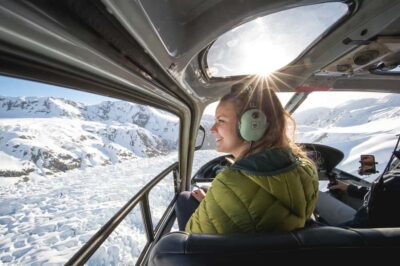
Franz Josef & Fox Glaciers Helicopter Flight & Snow Landing
Read our review →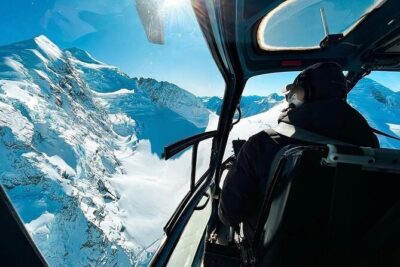
Pilot’s Choice: 2 Glaciers & Snow Landing – 35min
Read our review →Browse the lists this tour appears in