
Reviewed · HELICOPTER TOURS
Mount Cook: Mountains High 40-Minute Helicopter Flight
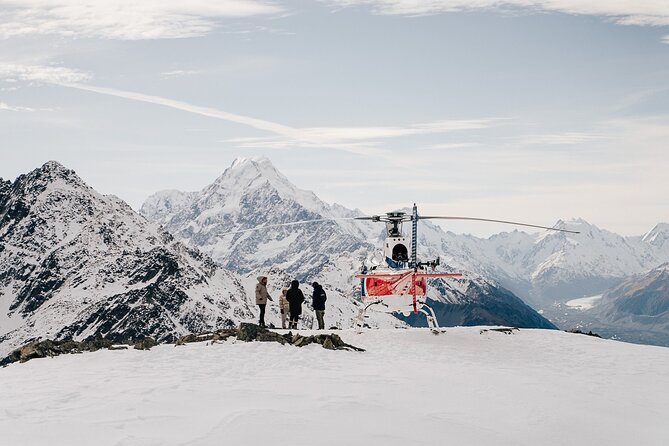
A snow landing high above Tasman Glacier is the main event here. In about 40 minutes, you fly past the Hochstetter Icefall, rise over the upper glacier, step onto an alpine snowfield, then cross the Burnett Mountains and Mackenzie Basin. It is a lot of New Zealand scenery in a short flight.
I especially like the close view of Aoraki/Mt. Cook from the glacier and the change of scenery after takeoff. You go from ice and sharp peaks to broad, dry Mackenzie Basin country, with sparkling waterways below. The main catch is important: a snow landing cannot always be guaranteed, especially in warmer seasons or when snow cover is poor.
Key points to know before booking
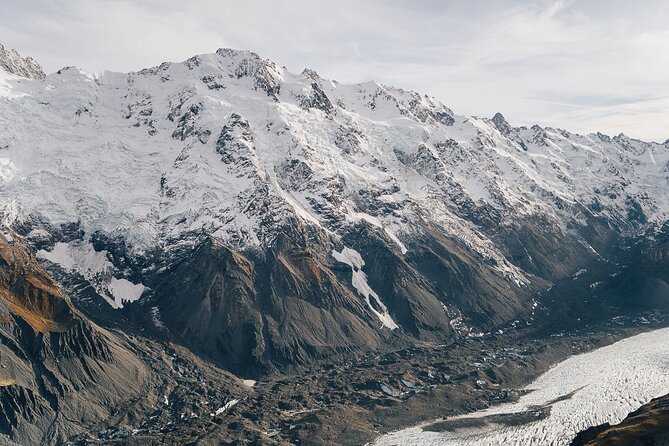
- A 5 to 10-minute snow landing gives you time to step out, feel the cold, and take photographs above Tasman Glacier.
- Aoraki/Mt. Cook reaches 12,217 feet, and the flight brings you close to New Zealand’s highest peak.
- The route covers two very different regions, from glacier ice and alpine peaks to the wide Mackenzie Basin.
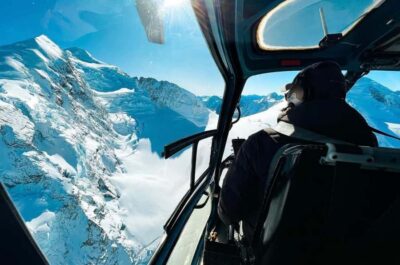
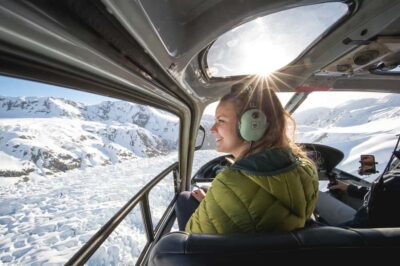
- The helicopter carries up to six people, with an open-plan cabin designed for sightseeing.
- Pilot commentary adds useful context, with past flights led by pilots including Gillie, Richard, and Marcus. Your pilot may be different.
- Weather and snow conditions control the day, and poor weather can lead to a new date or a full refund.
What the 40-minute route actually gives you
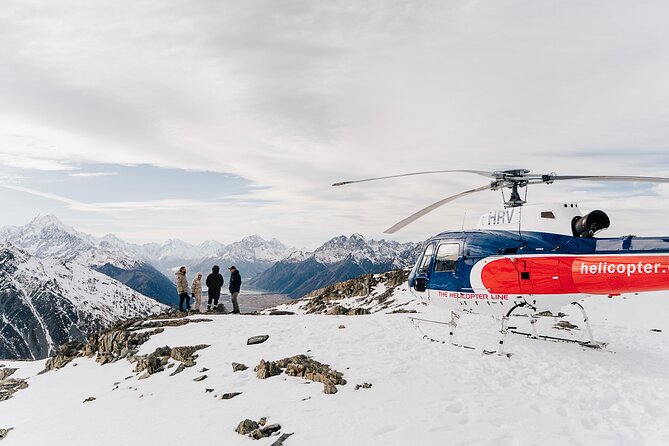
This is not a long helicopter expedition. It is a carefully packed scenic flight that uses the time well. You leave from The Helicopter Line base at Glentanner Park, fly toward Aoraki/Mt. Cook and Tasman Glacier, land briefly on snow, then return by a broader route over the Burnett Mountains and Mackenzie Basin.
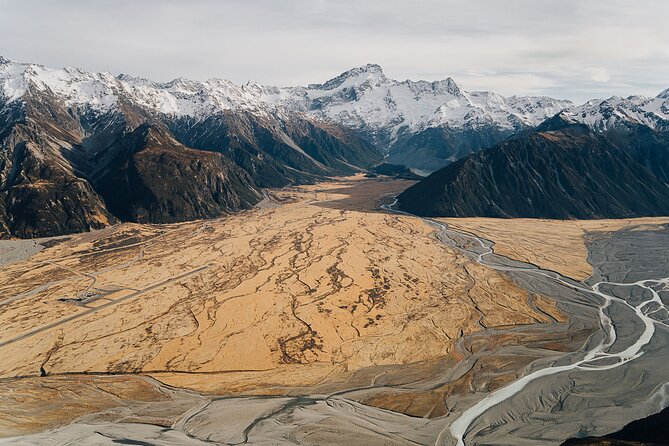
That route matters. A short flight focused only on the glacier would give you a close look at ice and peaks, but this one also shows how quickly the South Island changes. From the air, the Mackenzie Basin spreads out below as a wide, open area of dry pasture and waterways, a strong contrast to the frozen heights.
The helicopter has an open-plan cabin for up to six people. That means a small group and good viewing, though your exact view depends on your seat. One practical point deserves attention: seating arrangements may change after the snow landing so more people can enjoy the front view. Make sure the crew explains this clearly before departure, and be polite but firm if the rotation is not being followed.
More Helicopter Tours in Mount Cook
- Mount Cook: Scenic Helicopter Flight with Alpine Landing
★ 4.8 · 442 reviews - Mount Cook: Ski Plane and Helicopter Glacier Combo Flight
★ 4.6 · 271 reviews - Mount Cook: 3-Hour Tasman Glacier Helicopter Ride and Hike
★ 4.9 · 235 reviews
Leaving Glentanner Park for the Southern Alps
You make your own way to The Helicopter Line base at Glentanner Park on State Highway 80. The activity ends at the same meeting point, so you do not need to arrange a separate return transfer.
At the base, expect the usual flight checks and a briefing before boarding. Your pilot is also your guide in the air. Commentary is part of the experience, not an extra feature, since it helps you understand the glaciers, peaks, waterways, and history of the area as they pass below.
Past flights have been led by pilots named Gillie, Richard, and Marcus, all praised for clear explanations and a calm approach. You cannot select one of them from the information provided, but the flight is designed around pilot commentary. Check your headset as soon as you sit down. Some passengers have had trouble hearing the pilot, and that can take away from the sense of place.
The cabin is compact, so warm clothing and sturdy footwear are sensible choices. The air may feel cold even if the weather is pleasant at the base, and you will be stepping onto snow if conditions allow the planned landing.
Hochstetter Icefall and the upper Tasman Glacier
The first major part of the route takes you toward the upper Tasman Glacier and past the Hochstetter Icefall. From ground level, a glacier can seem like a distant white strip between mountains. From a helicopter, its scale becomes easier to understand.
The icefall is a striking section of broken, steep glacier ice. It gives the route some drama before the landing, as the helicopter passes over a part of Aoraki/Mt. Cook’s high alpine world that is difficult to reach on foot during a short holiday.
The pilot may point out natural features as you fly. Keep listening, but also watch the windows. The best view can change quickly as the helicopter banks or moves past a ridge. If photography matters to you, take a few wide shots rather than trying to record the entire flight. Glare, reflections, and the short flight time make it easy to spend the whole trip looking at a screen.
This is also the point where the route may differ from what you imagined if you have seen other helicopter products in the wider South Island. The supplied itinerary focuses on Hochstetter Icefall, upper Tasman Glacier, the Burnett Mountains, and Mackenzie Basin. It does not promise a trip to Fox Glacier or Franz Josef Glacier, so confirm the exact route if another page has suggested those destinations.
The snow landing above Tasman Glacier
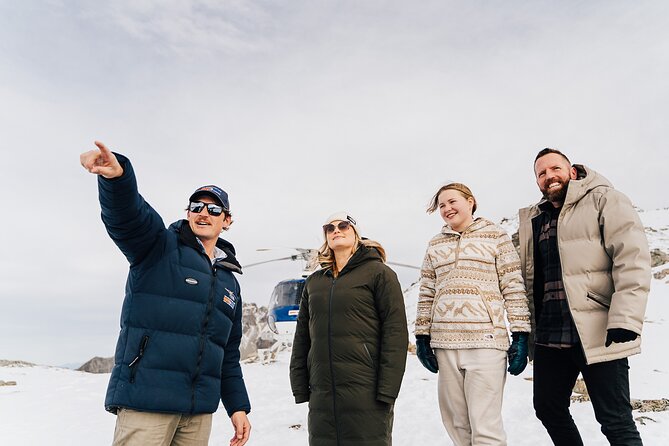
The landing is the feature that makes this more than a standard scenic flight. The helicopter touches down on an alpine snowfield, usually for about 5 to 10 minutes, giving you time to leave the cabin and stand in the cold mountain air.
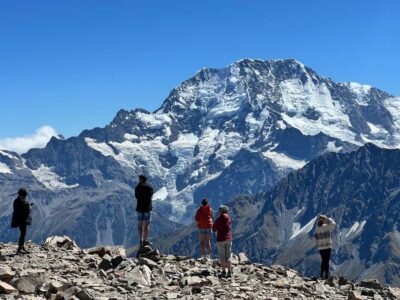
The view from this point is the payoff. Aoraki/Mt. Cook rises above the glacier, reaching 12,217 feet, while the surrounding peaks and ice fields create a setting that is difficult to match from a roadside lookout. You get a close view without committing to a demanding mountaineering trip.
Use the landing time well. Take photographs, look around without a camera, and listen to the pilot’s instructions. The snow stop is brief, so you should not expect a walk or a long exploration. It is a photo stop and a chance to experience the height and remoteness of the alpine zone.
Here is the necessary caution. The tour is described with a snow landing, but snow conditions can change. Warm weather, limited winter snowfall, and seasonal conditions have caused flights to land on ice or another suitable alpine field instead. A modified landing can still provide a memorable flight, but if standing on fresh snow is the single reason you are booking, understand that the experience is weather dependent.
Children must be accompanied by an adult. Most people can take part, but the helicopter has a total passenger weight limit of 331 pounds per passenger. The supplied information does not give detailed accessibility arrangements. If you need lifting help or special assistance, contact the operator before booking. One past flight included a passenger with a physical disability, with family members using a small step stool and lifting assistance, but you should not assume that arrangement will always be available.
More Scenic Flights in Mount Cook
- Mount Cook and The Glaciers 55-Minute Helicopter Flight
★ 4.5 · 133 reviews - 45-Minute Mount Cook Ski Plane and Helicopter Combo Tour
★ 4.5 · 107 reviews - Lake Tekapo: 50-Minute Mount Cook and Beyond Scenic Flight
★ 4.9 · 103 reviews - Franz Josef: 30-min Flight Franz Josef & Tasman Glaciers
★ 4.8 · 54 reviews
From Burnett Mountains to Mackenzie Basin
After the alpine landing, the flight takes a different turn. The helicopter crosses the Burnett Mountains, an area that feels remote even when viewed from above. Here, the appeal is not one famous viewpoint. It is the sense of distance, the broken ridges, and the way the mountains connect the high glacier country with the basin below.
The Mackenzie Basin then opens out beneath you. Its broad, dry appearance contrasts sharply with the glacier route. Waterways sparkle as they run toward the native rainforests of the West Coast, giving the return flight a useful geographic story: you are seeing how ice, mountains, pasture, and water fit together across the South Island.
This variety is one of the strongest reasons to choose the Mountains High route rather than a flight that only circles Aoraki/Mt. Cook. You see more than a single peak. You get a short aerial lesson in the region’s geography, with the pilot explaining landmarks along the way.
That said, a 40-minute flight cannot show every glacier or every major peak in detail. If you want a long flight across several separate glacier systems, you need to check another product. This experience is best understood as a compact route with one major landing and a wide return circuit.
How good is the commentary?
The pilot commentary can make the difference between a beautiful flight and a meaningful one. Several pilots have been praised for explaining the area, the glaciers, and local history, while also reassuring passengers when the ride becomes bumpy.
The open cabin and headset system let you see while listening, but headset performance is worth checking. Some passengers have struggled to understand the pilot, and others found that not every headset worked properly. Tell the crew immediately if the sound is unclear. Do not spend the whole flight politely missing the explanation.
The pilot may also adjust the flight slightly for conditions. Strong mountain winds have led to altered routes and different landing spots. That flexibility is sensible in alpine flying, even if it means the flight does not match every detail you pictured when booking.
Weather, cancellations, and the best time to go
This activity requires good weather. If the operator cancels because of poor conditions, you are offered another date or a full refund. That policy is reassuring, but you should avoid placing the flight on the final few hours of your New Zealand trip. Give yourself room to reschedule.
You should provide your preferred flight time when booking, but the exact departure remains subject to operating conditions. Clear weather can reveal the major peaks and glaciers, while cloud can hide the very sights you are paying to see. A clear day can make the difference between a good flight and an outstanding one.
Snow cover is a separate concern from flight weather. A day can be safe for flying but still lack the snow needed for the advertised landing. Ask about current snow conditions when confirming your booking, especially during warmer months.
The cancellation rule is straightforward: cancel at least 24 hours before the local start time for a full refund. Within 24 hours, changes and refunds are not accepted unless the operator cancels the flight.
Is $416.90 a fair price?
At $416.90 per person, this is a major expense. You are paying for a 40-minute flight, a pilot guide, a snow landing, and access to views that would otherwise require much more time, fitness, equipment, and alpine experience.
The value depends on what you want from your South Island visit. If your priority is simply seeing Aoraki/Mt. Cook from a viewpoint, the price will feel high. You can enjoy excellent mountain views around Aoraki/Mt. Cook Village without booking a helicopter.
If you want a close view from Tasman Glacier, a brief step onto an alpine snowfield, and an aerial route over the Burnett Mountains and Mackenzie Basin, the price becomes easier to justify. The small group size also matters. With a maximum of six people, this is not a large sightseeing aircraft where you compete for a window.
I would treat the flight as a centerpiece activity rather than a casual add-on. It works best when you have already planned enough time in the Mount Cook area to appreciate what you are seeing, and enough flexibility to handle a weather delay.
Who will enjoy this flight most?
This is a strong choice if you want a high-impact view of the Southern Alps without a long hike. It suits photographers, couples, families with older children, and anyone marking a special occasion. One passenger described it as a honeymoon highlight, and that makes sense: the snow landing gives the trip a clear sense of occasion.
It also suits people who have never taken a helicopter flight. The aircraft itself adds to the excitement, while the route provides more than a quick loop around one mountain.
You should think twice if you dislike flying, need guaranteed snow, or find the price difficult to absorb. You may also prefer a ground-based visit if you want time to walk, pause, and study the peaks at your own pace.
Wear warm clothes and suitable shoes. Keep your camera ready, but do not let photography replace the few quiet minutes you get on the snow. Most important, listen to the safety briefing and ask about the route, headset, seating rotation, and current landing conditions before takeoff.
My verdict on the Mountains High flight
I would book this flight if the budget allows and the weather forecast gives you flexibility. The strongest parts are the snow landing, the close view of Aoraki/Mt. Cook, the small group size, and the changing scenery from glacier to basin.
I would not book it on the assumption that a snow landing or a particular glacier route is guaranteed. Conditions can alter the landing, and the supplied route is centered on Tasman Glacier and the Mount Cook region, not every famous glacier on the South Island.
For a once-in-a-trip look at the Southern Alps, this is a compelling use of 40 minutes. Just build in a backup day, check your headset, and treat the snow landing as a possibility controlled by nature rather than a promise carved in ice.
FAQ
Where does the helicopter flight start and finish?
The flight starts and finishes at The Helicopter Line at Glentanner Park, State Highway 80, Glentanner 7999, New Zealand. You make your own way to the base.
How long is the experience?
The flight lasts approximately 40 minutes. The snow landing itself lasts about 5 to 10 minutes.
What places does the route include?
The route passes the Hochstetter Icefall and upper Tasman Glacier, then includes an alpine landing before crossing the Burnett Mountains and Mackenzie Basin.
Is the snow landing guaranteed?
No. The flight requires suitable snow and weather conditions. Previous flights have used an ice field or another alpine landing area when snow conditions were not suitable.
How many people can take part?
The helicopter flight has a maximum of six travelers.
What should I wear?
Warm clothing and suitable footwear are recommended because temperatures are cold, particularly at the alpine landing site.
What happens if bad weather cancels the flight?
You will be offered a different date or a full refund if the experience is canceled because of poor weather. You can also cancel for a full refund if you do so at least 24 hours before the experience start time.
Just added around Mount Cook
- Skydive Mt. Cook – 20+ Seconds of Freefall from 10,000ft★ 5.0 · 5 reviews
- Skydive Mt. Cook – 70+ Seconds of Freefall from 16,500ft★ 5.0 · 5 reviews
- Mt Cook to Christchurch One-Way Small Group Tour via Lake Tekapo★ 5.0 · 16 reviews
- Mt Cook to Queenstown Small Group Tour (One-Way)★ 4.5 · 25 reviews
- Mt Cook & Lake Tekapo 2-Day Small Group Tour from Queenstown★ 5.0 · 15 reviews
- Mount Cook Scenic 35 Minute Helicopter Flight★ 5.0 · 6 reviews
- Mount Cook Alpine Explorer Helicopter Flight with Alpine Landing★ 4.0 · 22 reviews
- Mount Cook: Alpine Vista Helicopter Flight with Alpine Landing★ 4.5 · 39 reviews
Helicopter Tours, compared.
Franz Josef Glacier: Helicopter Flight & Alpine Landing
Read our review →
Franz Josef & Fox Glaciers Helicopter Flight & Snow Landing
Read our review →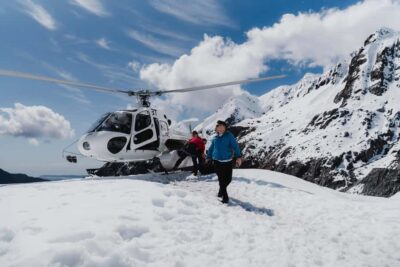
2.5 Hour Glacier Hike with Helicopter Transfer
Read our review →
Fox Glacier: Up to 3 Hours Hike with Helicopter Transfer
Read our review →
Pilot’s Choice Helicopter Tour & Alpine Landing
Read our review →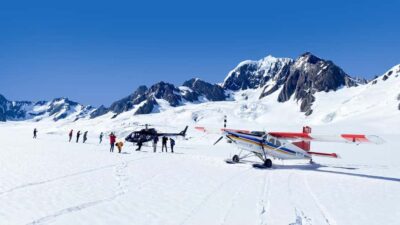
Browse the lists this tour appears in