
Reviewed · WHALE WATCHING
Auckland: Whale and Dolphin Watching Half-Day Eco Cruise
Auckland’s best wildlife trip is less about ticking off a whale and more about seeing how much life moves through the Hauraki Gulf. From a 65-foot catamaran, you may watch dolphins race beside the hull, gannets plunge from above, or scientists pause to collect plankton samples. The city, Rangitoto Island, and North Head provide a fine backdrop while the crew searches the open water.
I like the small-to-medium boat feel, which gives people a fair chance to see over the rail, and I like that the trip supports marine research and conservation. Guides such as Emily, Sanaa, John, Joseph, and Toni have been praised for clear explanations and real enthusiasm. The main drawback is simple: wildlife follows its own timetable, so you may see no whales, or even no marine mammals at all, although a free return cruise softens that risk.
Key points to know before you book
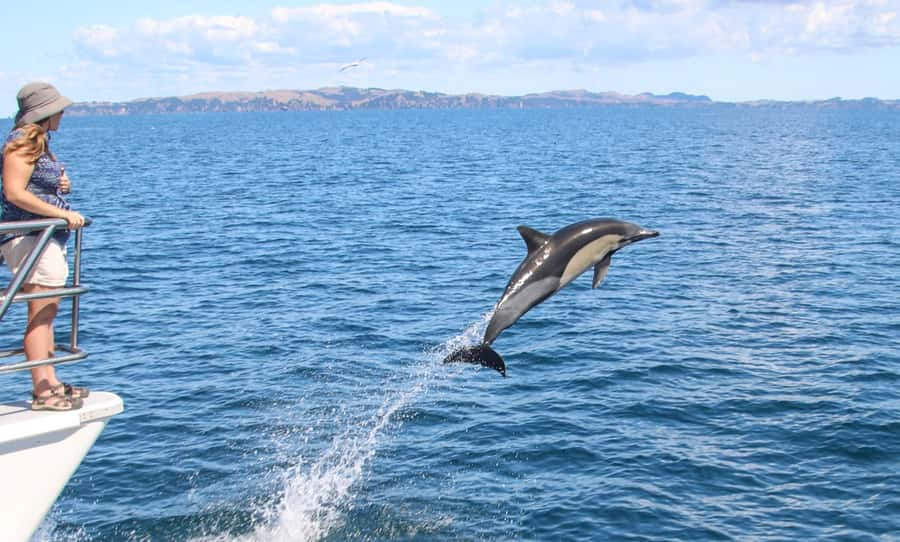
- Dolphins are the most dependable highlight: Several trips have seen large pods, including young dolphins swimming close to the boat.
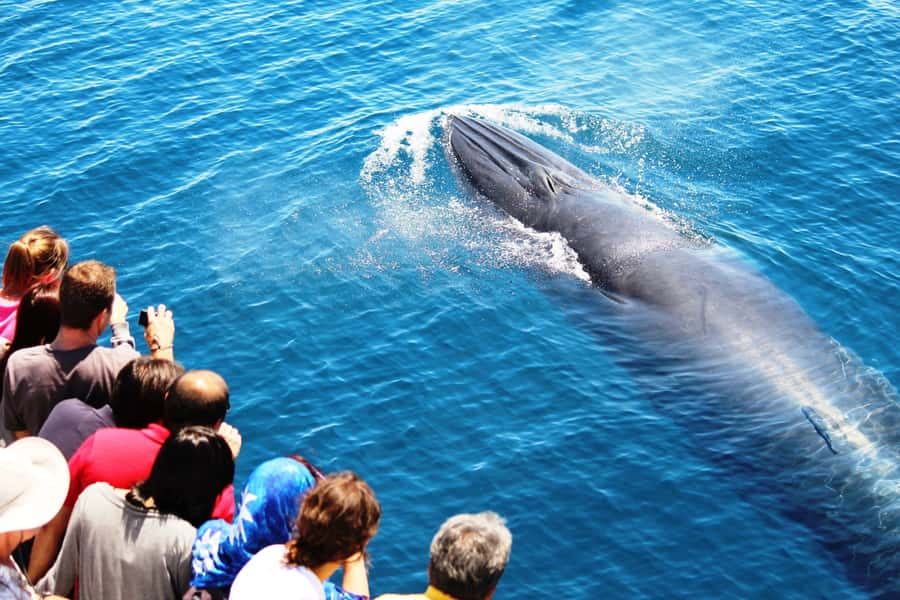
- Whales are possible, not promised: Bryde’s whales have appeared, sometimes at a distance, but some cruises see none.
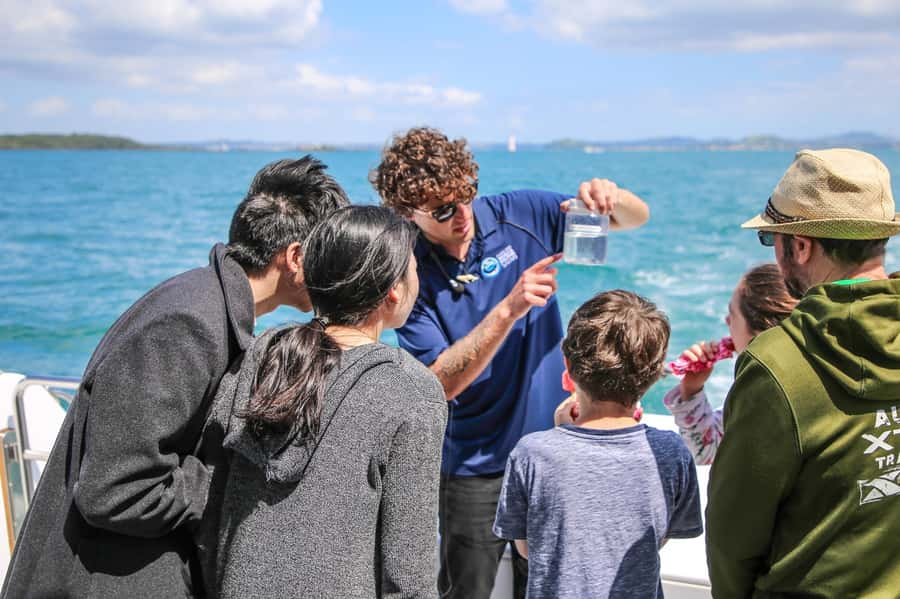
- The cruise is also a working research trip: The team may collect plankton samples and explain how marine mammals are tracked.
- Rangitoto and North Head add real scenery: The outward journey gives you a fresh view of Auckland from the Gulf.
- The boat is comfortable but exposed: Bring warm layers, a showerproof jacket, sunscreen, and seasickness medicine.
- No-sighting protection matters: If you see no marine mammals, you can take the cruise again for free.
Auckland’s marine safari starts in the city
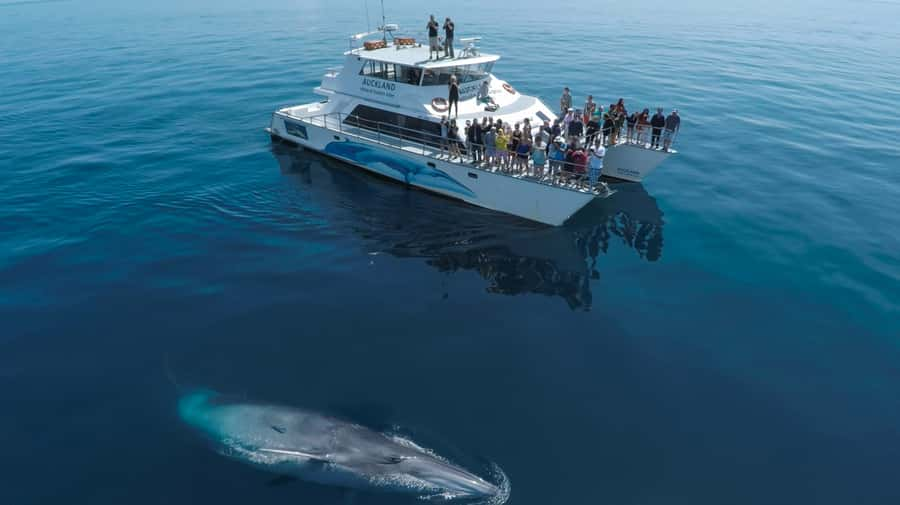
The Dolphin Explorer leaves from Berth 9 at Eastern Viaduct Marina, opposite the Maritime Museum. That location is useful if you are staying in central Auckland, since you can reach the boat without arranging a separate transfer.
Plan to arrive 30 minutes before departure. The crew checks you in at the top of the boarding ramp, and check-in closes 15 minutes before the scheduled departure. That deadline is worth taking seriously. The marina sits at the western end of Quay Street, and allowing a little extra time helps if you are walking from a hotel, ferry terminal, or nearby attraction.
Once aboard, you get the unusual pleasure of seeing Auckland from the water before the wildlife search really begins. North Head and Devonport frame the harbour entrance, while Rangitoto Island grows more impressive as the catamaran moves into the Gulf. These early views give the trip a sense of place instead of making it feel like a generic boat ride.
The boat carries seating options and open viewing areas. A number of people have appreciated its size because it is not so large that everyone gets scattered far from the action. Still, wildlife viewing means moving around, and the best position can change quickly. If you see a group gathering at one side of the boat, follow the crew’s instructions and move carefully.
More Boat Tours in Auckland
- Auckland Dolphin and Whale Watching Eco-Safari Cruise
★ 4.5 · 1,790 reviews - Auckland Harbour Sailboat Cruise Including Three Course Dinner
★ 4.5 · 476 reviews - America’s Cup 2-Hour Sailing Experience Waitemata Harbour
★ 4.8 · 370 reviews
Four and a half hours on the Hauraki Gulf
The advertised duration is 270 minutes, or 4.5 hours. That is a substantial part of your Auckland day, but the length is necessary. Marine mammals are wild animals, not scheduled performers, and the crew may need to cover a wide area before finding signs of activity.
The trip usually develops in stages. First comes the harbour and island scenery. Then the crew watches for feeding birds, surface movement, and other clues that can point toward larger animals. Workups, where seabirds gather over concentrated food, can help the team locate marine life. Gannets, shearwaters, penguins, and other seabirds become part of the search rather than a side attraction.
The long run is one of the strengths of the experience, but it can also be tiring. The Gulf may be calm and smooth, or it may feel windy with a noticeable swell. One trip continued after a weather warning and produced excellent sightings, while other departures were delayed or offered a refund or new date because conditions were not suitable. The operator can cancel for safety when wind, weather, or sea conditions make the trip unwise.
You should treat the boat ride as an outdoor activity, not a sheltered sightseeing cruise. Warm clothes matter even on a sunny Auckland morning. Pack a showerproof jacket, a hat, sunscreen, personal medication, and binoculars if you have them. Seasickness medication should be taken before departure, not after you begin feeling unwell.
Dolphins, whales, and the luck of the day
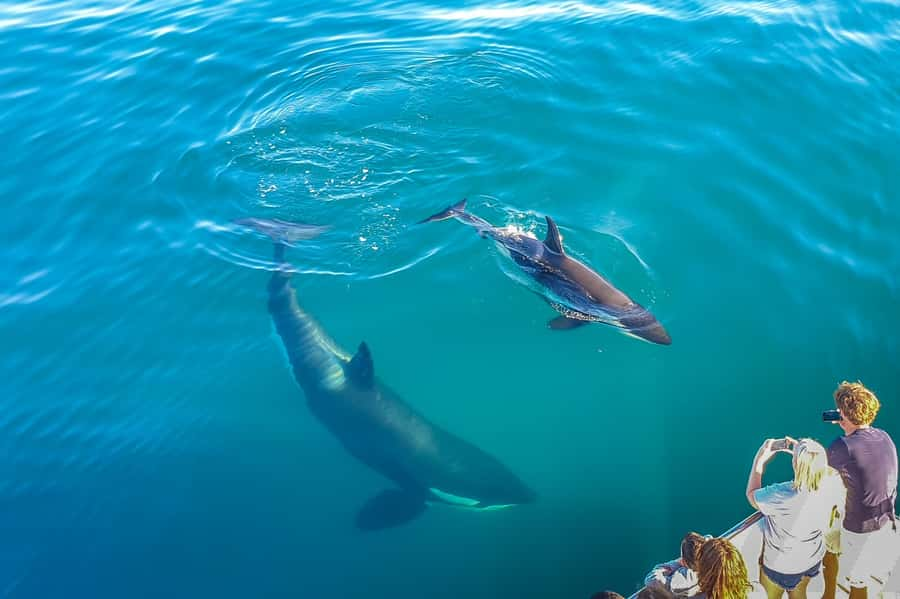
The strongest reason to book is the chance to see common dolphins close to the boat. Some trips have watched pods for around 30 minutes, with dolphins swimming beside or beneath the catamaran. Young dolphins have been seen leaping near adults, and large groups numbering more than 100 animals have appeared on especially good outings.
That kind of close viewing can be memorable because you are not looking at a distant fin through a crowded city harbour. The crew gives the animals room and allows time for observation. The boat’s ability to get relatively close, compared with whale cruises in some other places, is a clear advantage, though the crew still keeps animal welfare first.
Orcas and bottlenose dolphins are among the species you might find near Auckland. Bryde’s whales have also been seen, sometimes in pairs or groups. Some people have watched several whales, while others have spotted only a distant blow or no whales at all. The Gulf is large, and the animal you most want may be elsewhere on the day you sail.
That uncertainty is not a flaw in the tour. It is the basic condition of wildlife watching. The important question is how the company handles a quiet day. If no marine mammals are seen, you receive the option to cruise again for free. On some less successful trips, the crew has issued return vouchers even after a late dolphin sighting because it felt the outing could have offered more.
This policy gives the $130 price a useful safety net. You are not guaranteed a whale, but you are given another chance if the main target of the trip never appears. If you have only one day in Auckland, though, a second cruise may not fit your schedule, so you should still book with realistic expectations.
A working research vessel, not just a sightseeing boat
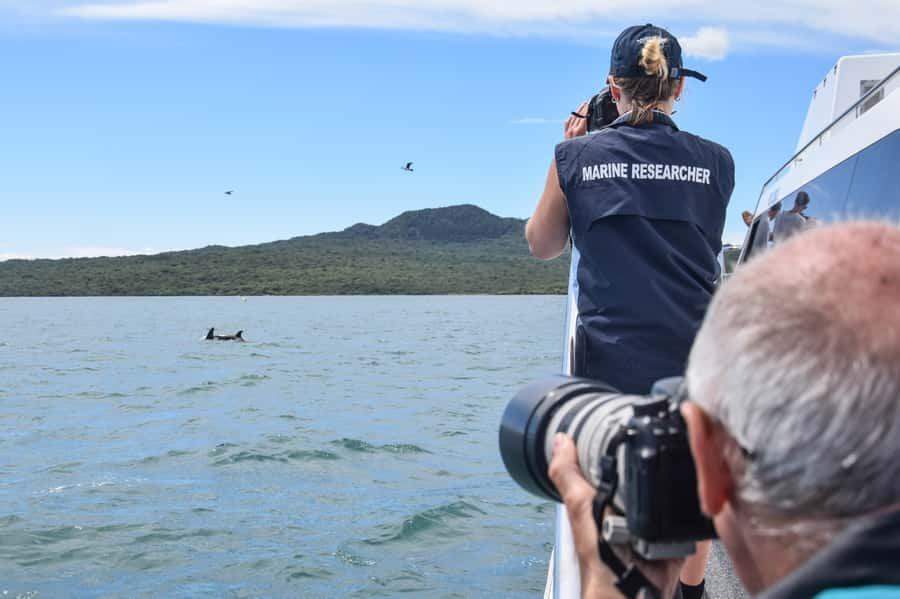
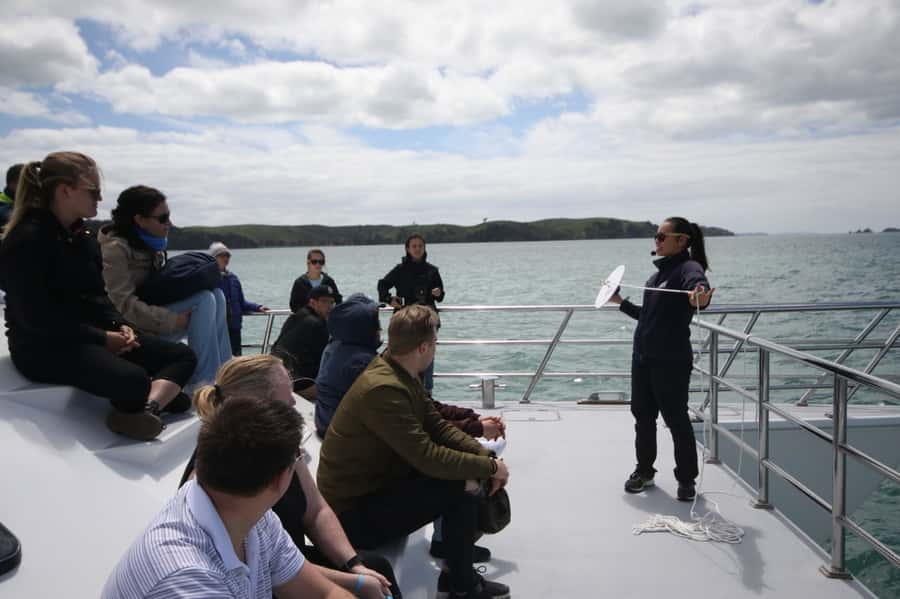
The most distinctive part of this cruise is the scientific work. The team includes marine scientists and biologists who explain animal behaviour, bird activity, plankton, geography, and the wider condition of the Gulf. At points during the trip, you may see the crew collect samples or carry out other research tasks.
That changes the tone of the outing. You are not simply waiting for a fin to break the surface. You learn how the crew reads feeding activity, bird movement, and other signs in the water. The commentary also helps you appreciate small forms of marine life that are easy to miss when your attention is fixed on whales.
The guides have been praised for their energy and clear explanations. Emily, Sanaa, John, Joseph, Toni, George, Brittany, Jo, and other crew members have been singled out on different departures. The crew list can change, but the pattern is consistent: guides take questions, explain what they are doing, and keep people informed when an animal is found.
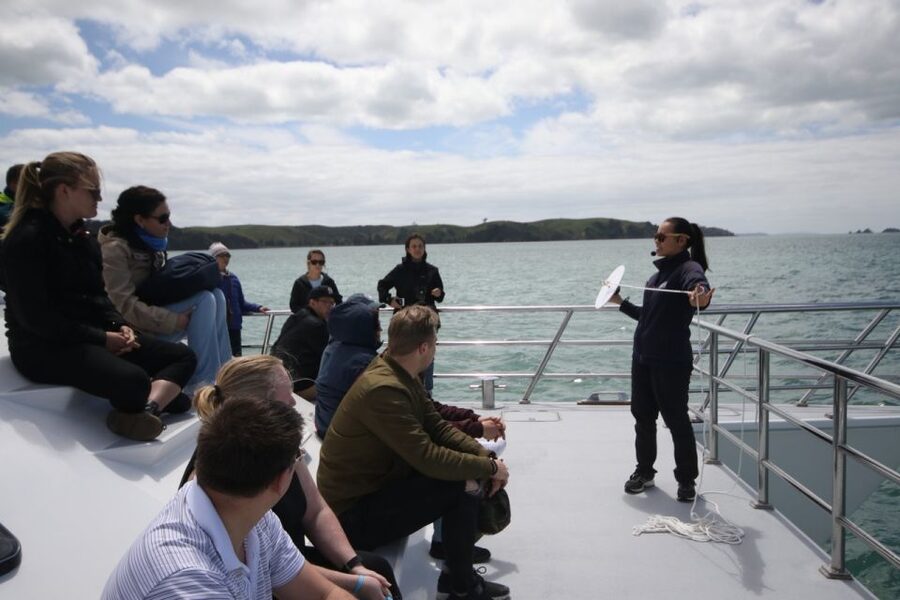
A presentation on the return journey may pull the day together. It can be especially useful after a quiet wildlife search because you still leave with a better understanding of the marine environment. One dollar from every ticket goes to the Hauraki Gulf Guardians fund, so your fare contributes directly to protection and regeneration work.
More whale watching in Auckland:
- Auckland: Tikapa Moana Whales, Dolphins and Islands Cruise
★ 3.9 · 292 reviews - Auckland: Tikapa Moana Dolphin, Whale and Island Cruise
★ 4.0 · 17 reviews - Kaikoura: Whale Watching Cruise
★ 4.6 · 3,089 reviews - Whale Watching in Kaikoura by Boat
★ 4.5 · 2,906 reviews
Birds, sharks, and the life between whale sightings
If whales do not appear, the Gulf can still keep you busy. Australasian gannets are a frequent highlight, especially when several birds gather over food and drop from the sky in quick succession. Blue penguins and shearwaters have also been spotted, along with other seabirds.
Sharks have appeared on some trips, including blue sharks and a hammerhead. These sightings are not guaranteed, but they show why it pays to listen to the crew and keep scanning after the main animal has disappeared. A whale may be the headline, but the wider mix of life often makes the outing feel fuller.
This is also a good trip for anyone interested in animal behaviour rather than photography alone. The crew may explain why dolphins travel in pods, how whales are identified, or how seabirds reveal what is happening below the surface. You will get more from the cruise if you put your camera down from time to time and watch the water directly.
Photography can be rewarding, but conditions make it tricky. The boat may move, the light may change, and animals can surface without warning. A fast camera helps, but no equipment can guarantee a perfect shot. Bring your camera, but do not let it keep you from the experience.
How the $130 fare measures up
At $130 per person, this is not a cheap harbour cruise. You are paying for 4.5 hours on the water, a specialist crew, marine research activity, fuel, and the chance to see free-ranging animals close to Auckland. The conservation contribution and no-mammal return option add genuine value.
The fare makes the most sense if you want wildlife and science, not just a short scenic ride. A basic harbour cruise may cost less and provide city views, but it will not give you the same time searching the Gulf or the same chance of seeing dolphins, whales, penguins, and gannets.
I would be more cautious if your schedule is tight or if you need a guaranteed sight. The trip takes most of a morning or afternoon, and nature may give you seabirds and scenery rather than whales. You should also budget for snacks and drinks if you want them, since food is not included. A small selection of snacks, hot food, soft drinks, beer, and wine is sold aboard.
The conservation angle is meaningful, but it should not be used to pretend the wildlife outcome is certain. You are supporting a worthwhile purpose while taking a chance on nature. For many people, that is a fair trade. For others, especially those with one fixed afternoon in Auckland, it may feel expensive if the sea stays empty.
Who will enjoy this cruise most
I would recommend it to families with older children, couples, solo visitors, photographers, and anyone curious about marine science. Children under five may join only with close supervision, and unaccompanied minors are not permitted. The trip is not suitable for heavily pregnant women.
It is also a good choice for people who prefer an ethical wildlife experience. The crew keeps attention on animal behaviour and research, rather than treating every sighting as a chase. The chance to see scientists work on the same vessel gives the outing more substance than a simple sightseeing run.
You need to be comfortable with stairs, narrow doorways, wind, and some movement at sea. The vessel is not wheelchair accessible. If you are prone to seasickness, prepare before boarding and choose warm, practical clothing over fashion.
The experience suits a flexible Auckland itinerary best. If you can return on another day, the no-sighting policy is valuable. If you leave the city immediately after the cruise, you lose that advantage.
Booking details that can save you trouble
Book the time that fits your day, then check the forecast before leaving your accommodation. The company may cancel because of wind, swell, or other sea conditions, and weather-related changes have been handled with refund or rebooking options.
Arrive at Berth 9 30 minutes before departure. Check-in closes 15 minutes before the cruise, and late arrival could mean missing the boat. The meeting point is opposite the Maritime Museum at Eastern Viaduct Marina.
Cancellation is free up to 24 hours before departure, with a full refund. You can also reserve now and pay later, which helps if your Auckland plans may shift.
English is the tour language. Food and drinks cost extra. Bring sunscreen even on a cool day, since glare from the water can be strong. A jacket is just as important because conditions can change once the boat leaves the shelter of the harbour.
Should you book the Auckland Whale and Dolphin Safari?
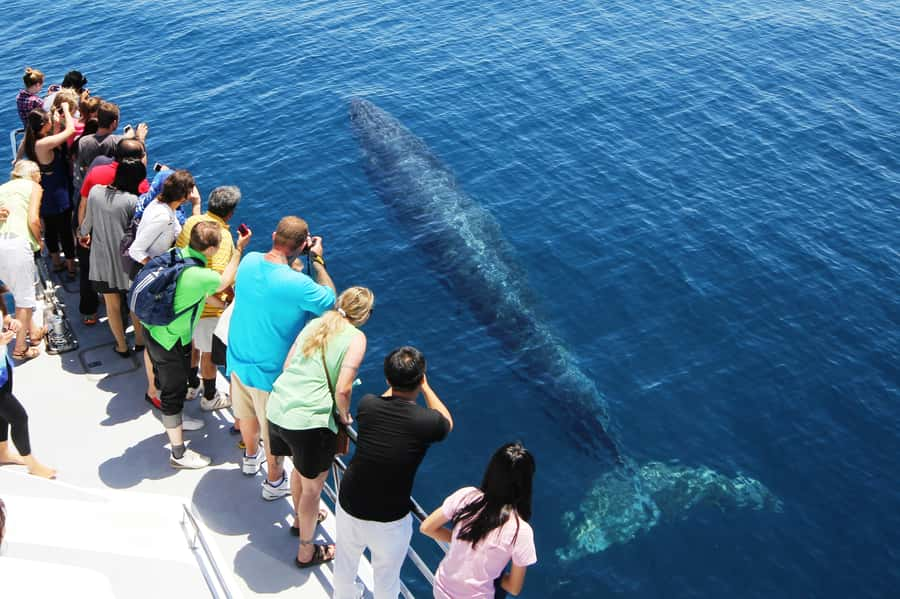
I would book this cruise if you want the best chance of seeing dolphins near Auckland and you value the research and conservation work behind the outing. The crew’s marine science focus, strong birdlife, comfortable catamaran, and return option after a no-mammal trip make the $130 fare defensible.
I would not book it expecting a guaranteed whale photograph. Choose it for the full Gulf experience: Rangitoto, North Head, seabirds, plankton research, dolphins, and the possibility of whales. If you can accept nature’s uncertainty and dress for the weather, this is one of Auckland’s more worthwhile half-day activities.
FAQ
Where does the Auckland Whale and Dolphin Safari depart from?
The boat departs from Berth 9 at Eastern Viaduct Marina, opposite the Maritime Museum. The marina is reached from the western end of Quay Street.
How early should I arrive?
Arrive 30 minutes before departure to check in at the top of the boarding ramp. Check-in closes 15 minutes before the scheduled departure.
How long is the cruise?
The eco-cruise lasts 270 minutes, or 4.5 hours.
What animals might I see?
You might see orcas, bottlenose dolphins, common dolphins, Bryde’s whales, blue penguins, Australasian gannets, shearwaters, sharks, and other seabirds. Sightings depend on sea and wildlife conditions.
Are whale sightings guaranteed?
No. Whales are wild animals and may not appear. Some cruises see dolphins and birds but no whales.
What happens if I see no marine mammals?
You can take the cruise again for free if no marine mammals are seen.
Is food included?
No. A small range of snacks, hot food, and drinks is available to purchase aboard, including beer and wine.
What should I bring?
Bring warm clothes, a showerproof jacket, sun protection, a camera, binoculars if you have them, personal medication, and seasickness medication if needed.
Can young children join?
Children under five are permitted only when closely supervised by a parent or guardian. Unaccompanied minors are not allowed.
Is the vessel wheelchair accessible?
No. The vessel has stairs and narrow doorways, so it is not wheelchair accessible.
Can the cruise be cancelled because of weather?
Yes. The operator may cancel a trip because of wind, weather, or sea conditions. Cancellation up to 24 hours before departure is available for a full refund, and weather-related changes may include rebooking options.
More Dolphin Watching in Auckland
- Akaroa Dolphins ~ Harbour Nature Cruise
★ 5.0 · 2,143 reviews - Akaroa: Dolphin Nature Cruise
★ 4.9 · 440 reviews - Swimming with Wild Dolphins in Akaroa
★ 4.5 · 261 reviews - Akaroa Harbour 2-Hour Dolphin Nature Cruise
★ 4.7 · 235 reviews
Just added around Auckland
- Auckland’s Wild West Coast & Black Sand Beaches Tour inc Lunch★ 5.0 · 12 reviews
- Kumeu Wine Region Shuttle from Auckland★ 4.5 · 19 reviews
- Auckland Airport Private One-Way or Round-Trip Transfer★ 4.5 · 14 reviews
- West Coast Discovery – Piha Beach or Muriwai Beach from Auckland★ 3.5 · 6 reviews
- West Coast Discovery Tour★ 5.0 · 37 reviews
- Wētā Workshop Unleashed – Intro to Scars and Scrapes Workshop★ 5.0 · 5 reviews
- West Coast Discovery Piha Beach Private Tour★ 5.0 · 14 reviews
- Ultimate Auckland Experience Full Day Tour with Brewery Lunch★ 5.0 · 6 reviews
Whale Watching, compared.
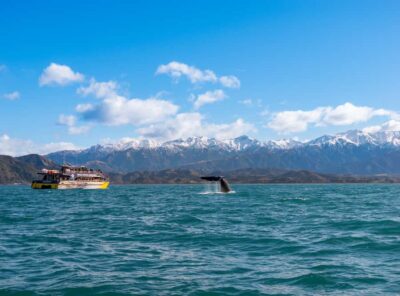
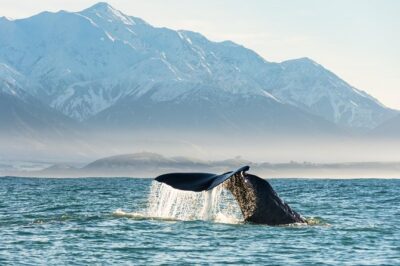
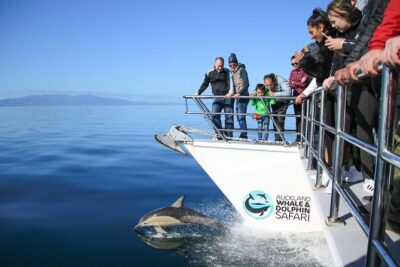
Auckland Dolphin and Whale Watching Eco-Safari Cruise
Read our review →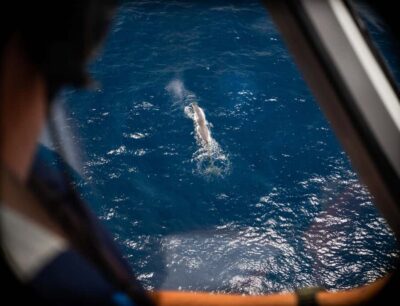
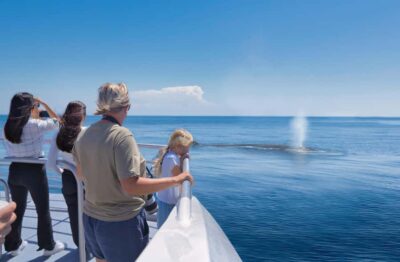
Tikapa Moana Whales, Dolphins and Islands Cruise
Read our review →
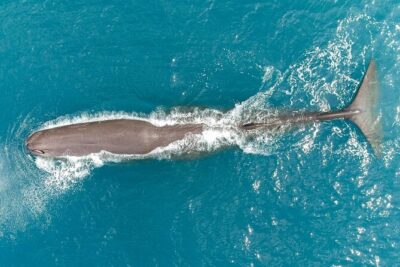
Kaikōura Whale Watching Scenic Flight (40 Minutes)
Read our review →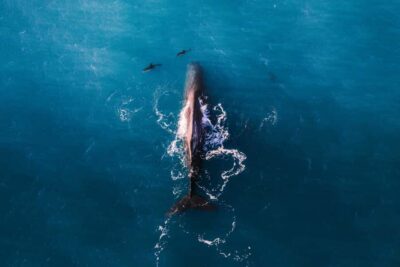
Browse the lists this tour appears in