
Reviewed · WHALE WATCHING
Kaikoura: Whale Watching Cruise
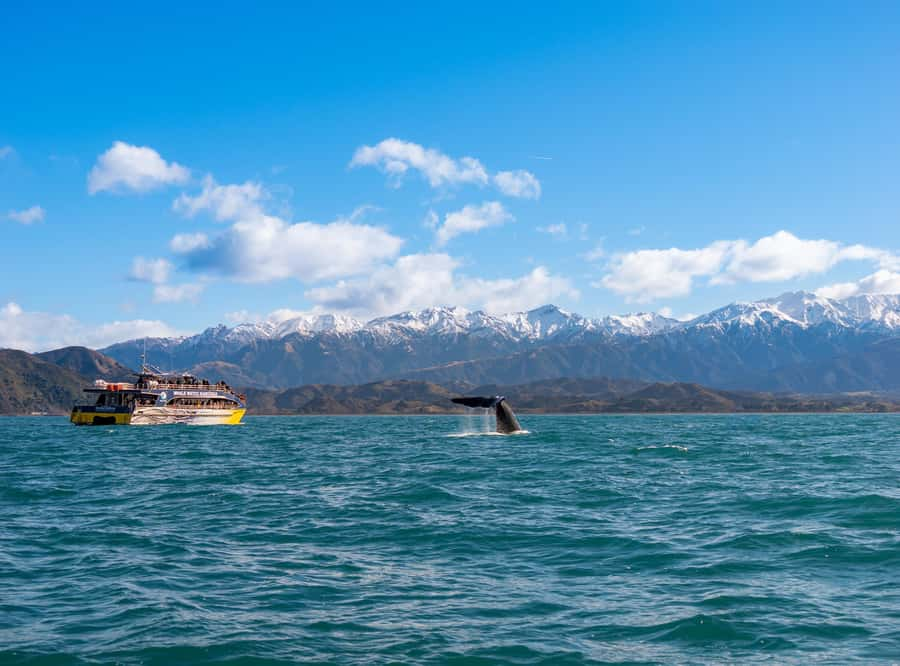
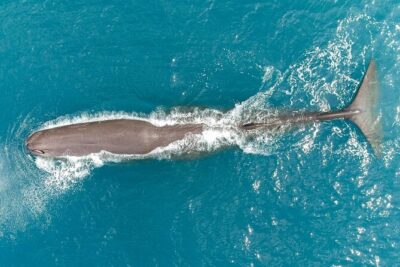
Kaikoura’s giant sperm whales live close to shore, thanks to the deep underwater canyon just off the coast. That makes this one of New Zealand’s most rewarding wildlife trips, with a real chance to see the world’s largest toothed predator surface, breathe, and raise its tail before heading back below.
I like the well-run setup, from the short bus transfer to the modern catamaran and clear safety briefing. I also like the wildlife mix: a sperm whale may be the main event, but dusky dolphins, fur seals, albatross, or even orcas can turn the ride into a full marine safari. The catch is rough water. Seasickness can be serious, so take precautions before you arrive.
Key points to know
- Sperm whales are the main attraction: Their regular presence near Kaikoura gives this cruise a strong chance of a sighting, though nature never guarantees a show.
- The cruise lasts just over two hours: Allow 3 hours and 15 minutes from check-in through the return transfer.
- The catamaran has outdoor decks and an air-conditioned cabin: You can move around for views or sit inside with screens showing marine animations.
- The wildlife list can be surprisingly broad: Dolphins, seals, albatross, penguins, orcas, and other whales have all appeared on recent outings.
- The crew adds science and Māori knowledge: Commentary covers animal behavior, habitat, conservation, and the local connection to the sea.
- Weather matters: Trips can be delayed, moved, or canceled when conditions are poor, and the operator confirms the exact departure time by email.
Why Kaikoura is such a good place for whales
Kaikoura is not simply a scenic seaside town with a whale boat attached. The water just offshore drops into a deep marine canyon, creating conditions that bring sperm whales close to the coast. That is the key reason this cruise can spend its time looking for whales rather than making a long journey to distant waters.
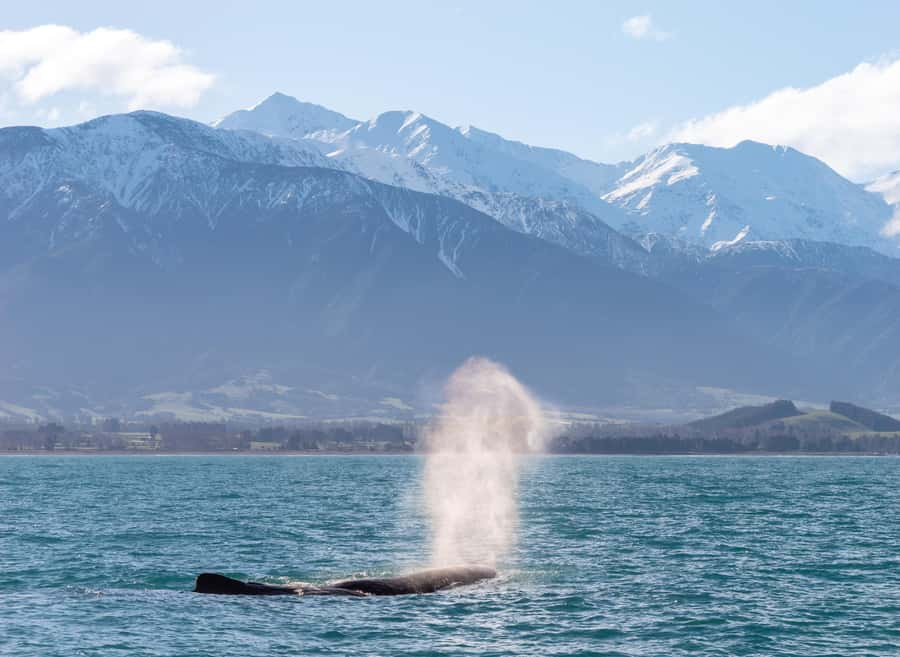
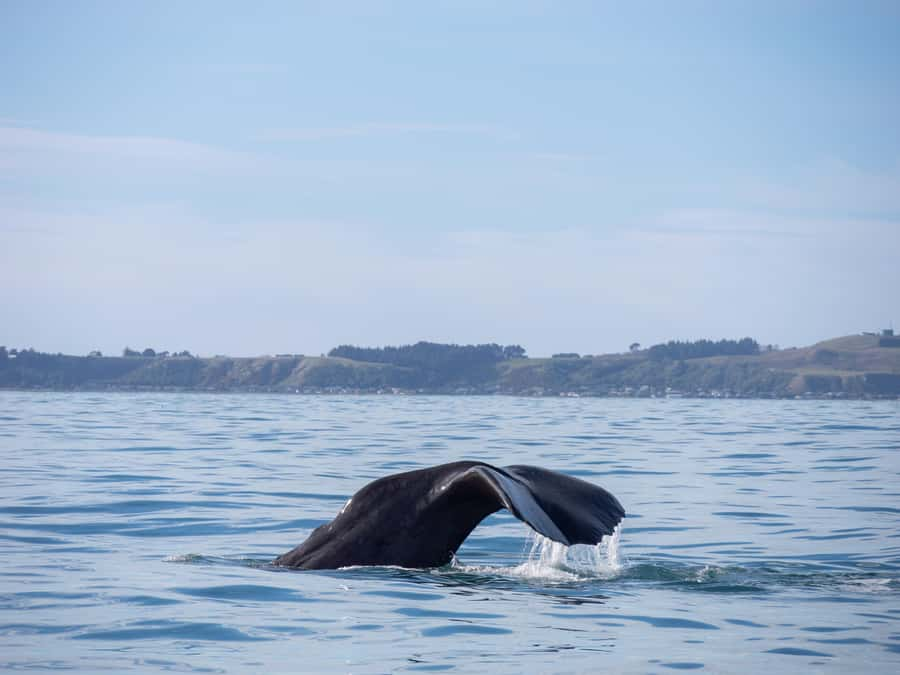
Sperm whales are the regular stars here. They often spend several minutes at the surface, breathing before making a long, graceful descent. The moment to watch for is the tail rising above the water. It is brief, so listen closely to the crew and keep your camera ready, but do not spend the whole trip staring at a screen.
The coastline adds plenty to the outing. On the way out, you get views back toward Kaikoura’s mountains, while the open water gives you a sense of how quickly the shore drops away. The scenery matters because whale watching involves waiting. Even during a quiet spell, you are not sitting in a featureless harbor.
More whale watching in Kaikoura:
- Whale Watching in Kaikoura by Boat
★ 4.5 · 2,906 reviews - Kaikoura: Whale Watching Flight with Commentary
★ 4.6 · 823 reviews - From Christchurch: Kaikōura Day Tour with Whale Watching
★ 4.5 · 224 reviews
Check-in, transfer, and the first minutes aboard
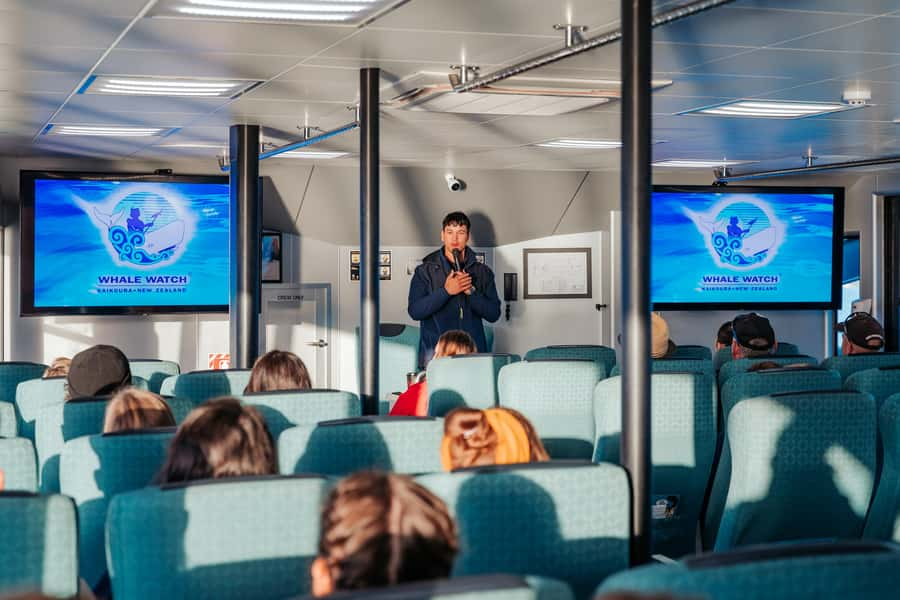
The experience begins at the Whale Watch Kaikōura office, not directly at the boat. Check-in, the safety briefing, and a short bus transfer are part of the schedule, so allow about 3 hours and 15 minutes in total rather than treating the advertised 210 minutes as time spent cruising.
The transfer is short, and the process is designed to keep things moving. Staff handle the boarding arrangements, then guide you to the vessel for the briefing and presentation. This organized rhythm is useful when the weather is changeable and departure times can shift.
The exact sailing time may not be the same as the time you request. The operator confirms the final time by email after booking, based on availability and conditions. Check your messages before heading to the office, especially if you are building a tight South Island driving schedule around the cruise.
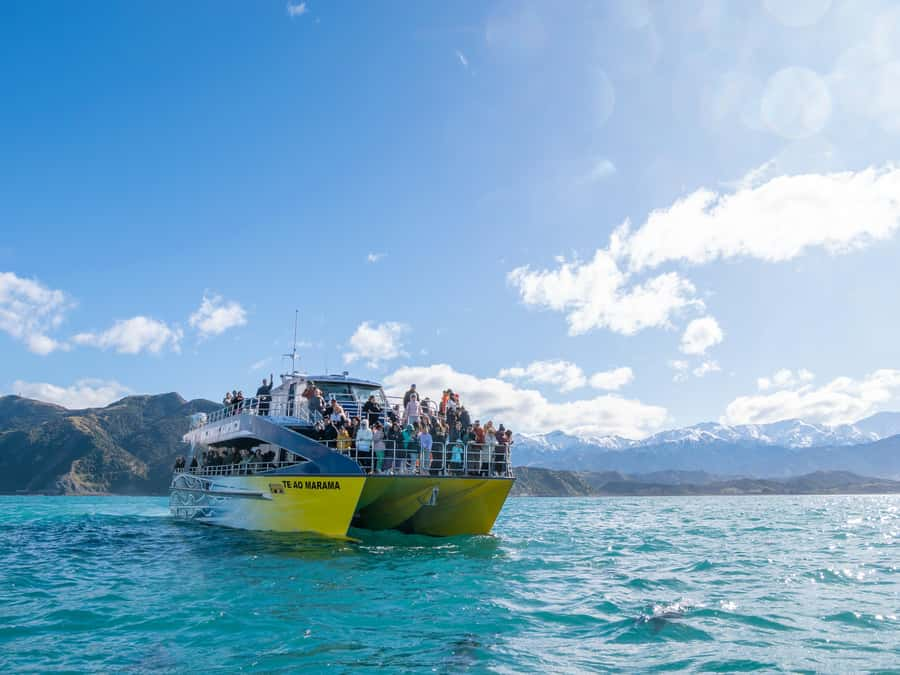
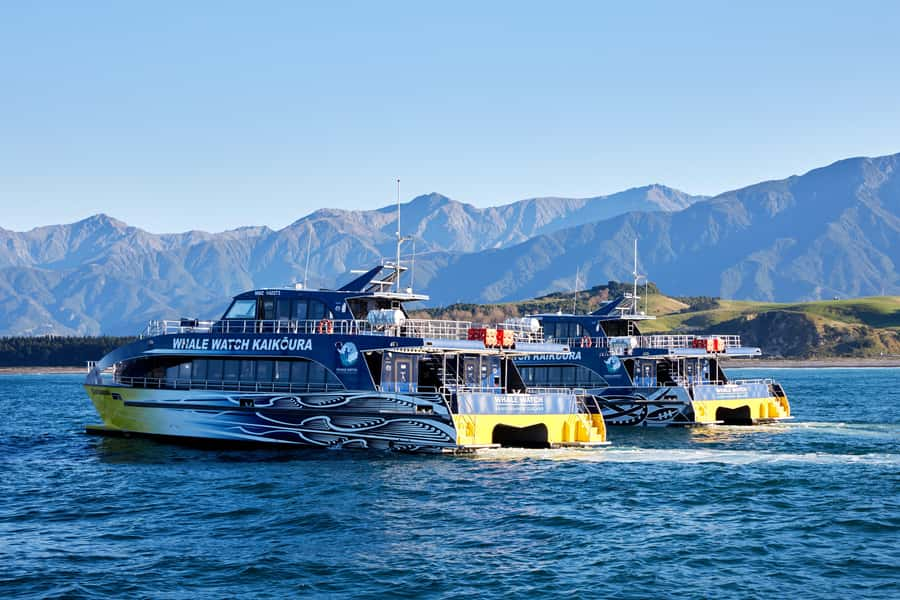
The catamaran is designed with passenger comfort in mind. It has large outdoor viewing areas, comfortable indoor seats, air conditioning, plasma screens, and toilets designed to avoid pollution. Passenger numbers are kept below the vessel’s full capacity, although the boat can still feel busy on a popular departure.
The ride out to the whale grounds
The boat ride is part of the experience, not just transport between two points. The crew provides commentary as you move offshore, explaining the local marine environment and what to watch for. The screens show award-winning animations about marine life, which are useful when the sea is too rough for easy outdoor viewing.
The catamaran has powerful engines and is built to handle wind and waves. That does not mean the ride will be smooth. Several outings have been described as choppy, and some people spent much of the trip feeling sick. If you are prone to motion sickness, take medication before arriving. Tablets are available for purchase at the office, but prevention is better than waiting until you are already offshore.
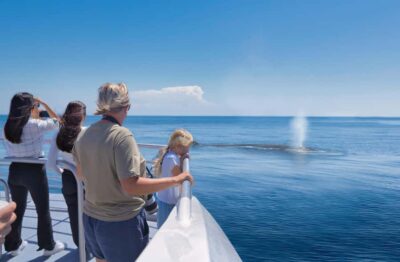
You can choose how to use the boat. The outdoor decks give you the best chance of spotting a blow or a distant fin, while the cabin offers shade, air conditioning, and a steadier place to listen. You may move between both areas as the trip develops. Bring a jacket and dress for changing conditions, but keep your expectations practical: this is an exposed marine outing, not a calm harbor cruise.
Finding a sperm whale and watching the tail
The crew uses experience, observation, and onboard equipment to locate the whales. A hydrophone can pick up whale clicks beneath the surface, helping the crew identify and track animals that cannot yet be seen. That makes the search feel active rather than random.
Once a sperm whale is located, the boat approaches carefully and gives you time to watch its surface behavior. You may see the whale breathing for several minutes, with the blow appearing before the body becomes clear. The crew warns you when a whale is preparing to go down, giving you a chance to focus on the tail.
This is where patience pays off. A whale may surface once, disappear, and then reappear later. You might see one animal twice, or several separate whales during the same trip. Sightings have ranged from a single whale to several sperm whales, but there is no fixed wildlife program. The whale decides the schedule.
Photography is tricky. The boat can move, the sea can rise and fall, and the tail may appear for only a moment. I suggest taking a few photographs, then putting the camera away. You will have a better chance of remembering the whole scene if you watch the whale rather than chasing one perfect image.
More boat tours in Kaikoura:
- Double Boat Dive with Equipment
★ 4.3 · 3 reviews - Premium Milford Sound Small Group Tour & Cruise from Queenstown
★ 5.0 · 3,001 reviews - Cruise Milford NZ Small Boutique Cruise Experience
★ 5.0 · 2,930 reviews - Queenstown: Walter Peak Gourmet BBQ & Lake Whakatipu Cruise
★ 4.8 · 2,713 reviews
Dolphins, seals, birds, and the unexpected sightings
The non-whale wildlife often becomes the surprise highlight. Dusky dolphins are especially entertaining because they travel in large groups and may leap, roll, or race beside the boat. Pods of roughly 100 to 300 dolphins have been seen, with groups staying near the vessel for 15 to 20 minutes.
Fur seals are another regular possibility. They may appear in the water or near the rocky coast, giving you a closer look at an animal that is less dramatic than a whale but often easier to see. Blue penguins have also been spotted, though you should treat any penguin sighting as an extra rather than part of the basic promise.
Birdwatching adds another layer. Wandering albatross and other albatross species can pass over the water, along with Cape petrels and other seabirds. The crew helps identify them, which is useful because many ocean birds look similar when seen briefly from a moving boat.
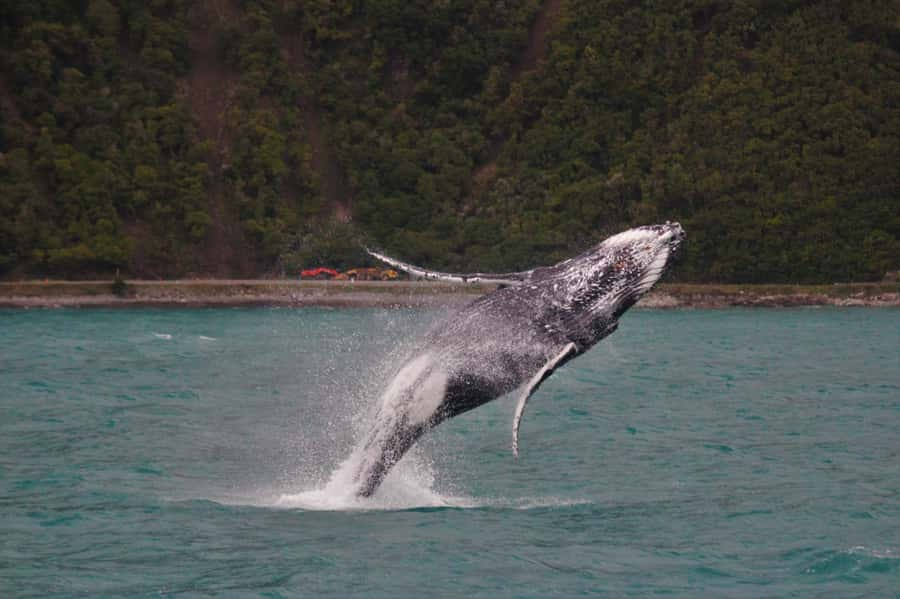
The sightings can be unusually varied. Outings have included pilot whales, humpback whales, orcas, sharks, and different dolphin species. Some cruises see only distant whales, while others produce several species in one morning. That uncertainty is part of the appeal, but it also means you should book this as a wildlife search, not a guaranteed whale performance.
Commentary, Māori knowledge, and animal welfare
The spoken commentary is one of the strongest parts of the cruise. The crew explains sperm whale behavior, the food-rich waters around Kaikoura, and the animals’ role in the marine system. The information continues while the boat travels between sightings, so there is less dead time.
The presentation also includes Māori knowledge and the connection between the local community and the sea. The operator is owned by the Ngāi Tahu iwi, and the trip presents that relationship as part of the experience rather than treating the whales as scenery alone.
You will hear a mixture of scientific information and local understanding. Guides named in recent outings include Caolan, Mikayla, and Captain Jack, though the crew on your departure may be different. Some guides are especially good at mixing clear explanations with humor, and the captain’s skill in locating animals can make a big difference when conditions are difficult.
Animal welfare is important here. The crew’s approach is built around finding animals in their natural environment and giving them room, rather than forcing an encounter. That means the whale may remain distant or disappear before everyone gets a perfect view. It is the right trade-off for a responsible wildlife trip.
The boat, viewing space, and comfort
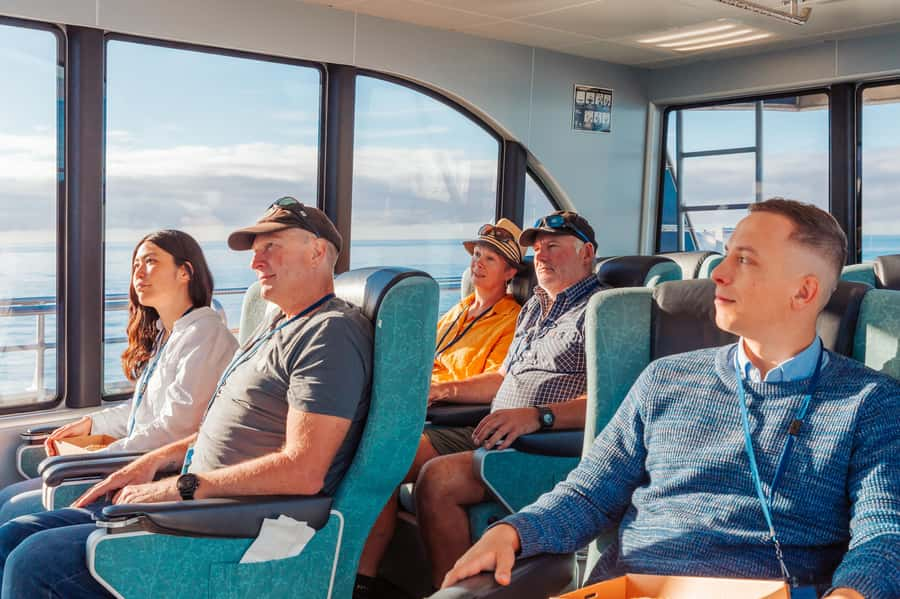
The vessel is modern, clean, and spacious enough to give you more than one viewing position. Outdoor decks are best for fresh air, photographs, and wide views of the sea. The indoor seating works well during the safety briefing, rough patches, or a bright stretch of weather.
Passenger numbers are kept below the boat’s maximum capacity. That does not promise solitude, particularly during busy seasons, but it gives you room to spread out and reach the rail without feeling packed into every available corner.
The vessel is wheelchair accessible, and staff can provide assistance when needed. Ask at the time of booking if you have specific mobility requirements, since the boat transfer and sea conditions still form part of the practical experience.
There is no food or drink included. Plan ahead rather than expecting a café onboard. A full stomach can make rough water worse, but you should not arrive dehydrated either. Keep personal items secure on deck, since wind and spray are part of the setting.
Price, timing, and the value of the outing
At $104 per person, this is not a casual short boat ride. You are paying for a 210-minute experience, with just over two hours on the water, a specialist vessel, crew commentary, wildlife tracking, and the chance to see animals that are difficult to encounter elsewhere.
I think the value is strong if you care about marine life and have enough time in Kaikoura to accept some uncertainty. The trip is longer and more informative than a quick sightseeing cruise, and the combination of whale habitat, mountains, birds, and dolphins gives you several ways to have a worthwhile outing.
The price feels less secure if you need a guaranteed close whale encounter. Sightings can be distant, and a poor-weather day may produce less wildlife. One outing that failed to find a whale received an 80 percent refund, but do not assume that policy will apply in every situation. Ask the operator about the current arrangement before booking if the whale sighting is the sole reason you are going.
I would allow flexibility in your itinerary. Bad weather can delay a cruise or lead to rescheduling the next morning. The operator handles changes by email and offers options when conditions prevent sailing. If your South Island route gives you only one narrow time window, this activity becomes harder to fit in comfortably.
Who should book, and who should think twice
This cruise suits adults, families with children aged three and older, keen photographers, birdwatchers, and anyone who wants a serious wildlife experience rather than a simple scenic ride. Children under three are not permitted, and even the minimum age can change with sea and weather conditions at check-in.
You should think twice if you suffer badly from motion sickness. The boat is capable and well equipped, but the open ocean can be rough enough to affect many people. Take precautions before arriving, and be honest with yourself about how much time you want to spend on a moving vessel.
You should also allow room for nature to disappoint you. The crew can track sounds, read the water, and search known whale areas, but it cannot make a whale surface. If you can enjoy seals, birds, dolphins, and the coastline as well as whales, you will get more from the experience.
Free cancellation is available up to 24 hours before departure, and you can reserve now and pay later. Those options help if your South Island plans are still shifting, but they do not remove the need to watch for weather updates and the final confirmed departure time.
Should you book the Kaikoura whale cruise?
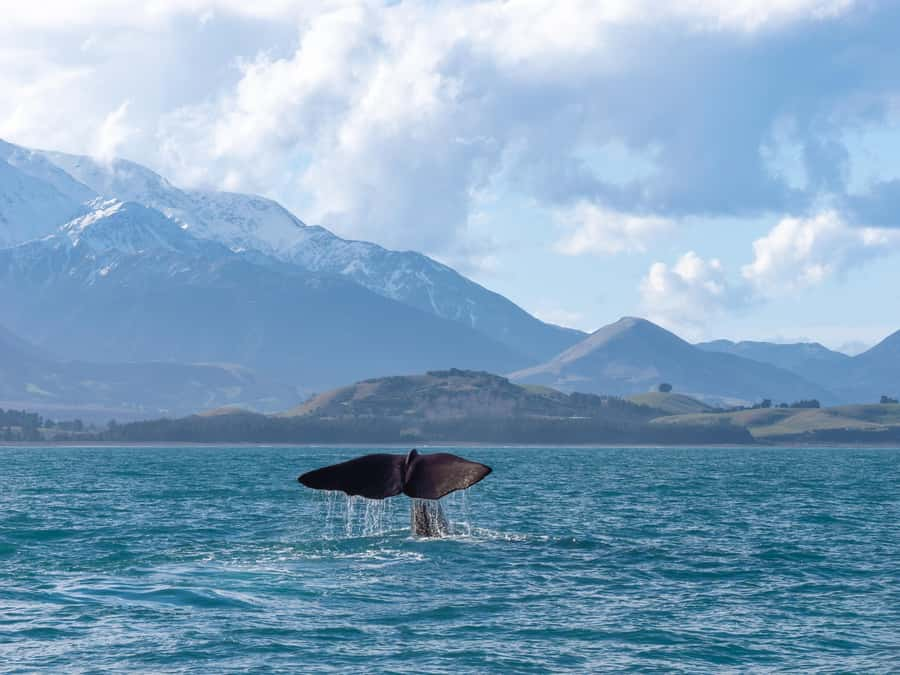
Yes, if you have a reasonable tolerance for rough water and want one of New Zealand’s strongest marine wildlife experiences. The regular sperm whales, excellent commentary, Māori connection, roomy catamaran, and chance of seeing dolphins or albatross make the $104 worthwhile.
Book it with realistic expectations. You may see one whale, several whales, or none, and the best moment may be a dolphin pod racing beside the boat rather than a dramatic tail. Give yourself schedule flexibility, prepare for seasickness, and choose this cruise because you value wild animals behaving freely. That is exactly what makes the experience special.
FAQ
How long does the Kaikoura whale watching experience last?
The full experience takes about 210 minutes, or 3 hours and 15 minutes. This includes check-in, the safety briefing, bus transfers, and just over two hours on the water.
How much does the cruise cost?
The listed price is $104 per person.
Where do I meet for the tour?
You meet at the Whale Watch Kaikōura office. From there, a short bus transfer takes you to the boat.
What animals might I see?
The main target is the giant sperm whale. You may also see fur seals, dolphins, wandering albatross, other seabirds, penguins, orcas, pilot whales, humpback whales, and sharks.
Are whale sightings guaranteed?
No. The cruise is subject to nature and weather conditions, so sightings and distances vary. The crew searches for whales using experience and underwater sounds, but no wildlife encounter can be guaranteed.
Is the cruise suitable for children?
Children must be at least three years old. The minimum age can still depend on sea and weather conditions at check-in.
What should I do if I get seasick?
Take precautions before arriving at the office. Motion sickness tablets are available for purchase there, but the water can still be rough.
Is the boat wheelchair accessible?
Yes, the activity is listed as wheelchair accessible.
Is food included?
No. Food and drinks are not included in the price.
Can I cancel or pay later?
You can cancel up to 24 hours in advance for a full refund. A reserve now and pay later option is also available.
Just added around Kaikoura
- Kaikōura Whale Watching – 1hr 20min Ultimate Adventure★ 5.0 · 8 reviews
- Kaikōura Whale Watching and Scenic Landing – 1hr Premier Tour★ 5.0 · 24 reviews
- Kaikoura Whale Watching – 45 Minute Ocean Safari★ 5.0 · 39 reviews
- Sunset Kayak tour in Kaikoura★ 5.0 · 46 reviews
- Llama Trek (Taster) – Kowhai River Valley and Native Woodland Tour★ 5.0 · 76 reviews
- Sunset Evening Kayaking Tour – Kaikoura★ 4.5 · 81 reviews
- Private Wildlife Kayaking Tour – Kaikoura★ 5.0 · 44 reviews
- Private Seal Kayaking and Wildlife Tour in Kaikoura★ 5.0 · 7 reviews
Whale Watching, compared.
Auckland Dolphin and Whale Watching Eco-Safari Cruise
Read our review →
Whale and Dolphin Watching Half-Day Eco Cruise
Read our review →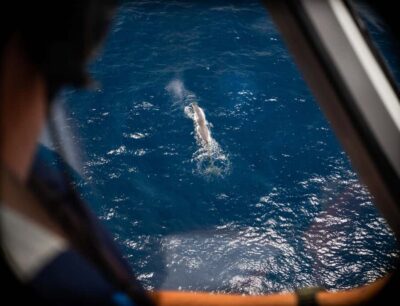
Tikapa Moana Whales, Dolphins and Islands Cruise
Read our review →
Kaikōura Whale Watching Scenic Flight (40 Minutes)
Read our review →
Browse the lists this tour appears in