
Reviewed · WHALE WATCHING
Whale Watching in Kaikoura by Boat
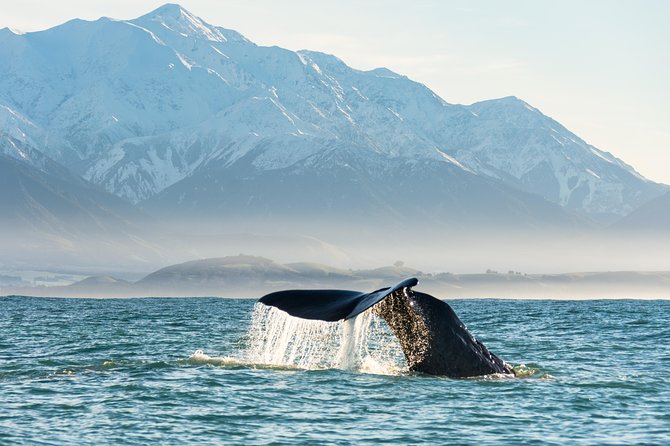
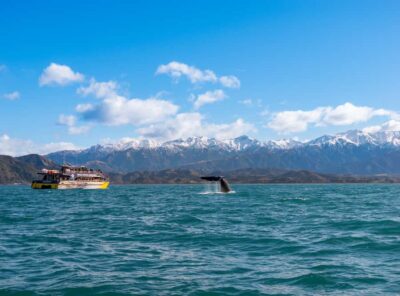
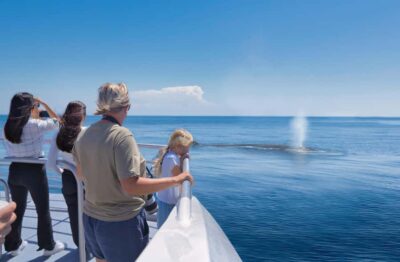
Kaikoura’s marine life is the star here. A speedy catamaran carries you from shore to the deep ocean canyons where sperm whales rest between feeding trips. The best moments can be simple: a whale spouting beside the boat, then lifting its tail before slipping below the surface.
I like the strong sighting record and the useful 80% refund if no whale appears. I also like the live commentary, which explains the whales’ habits, the sea around Kaikoura, and the birds and dolphins you may see along the way.
The main catch is seasickness. The ride can be rough, even when the day looks fine from land, and the boat may feel crowded when a whale surfaces. Take the warning seriously and prepare before you leave the dock.
Key points to know before you go
- Sperm whales are the main event: Kaikoura’s unusual sea conditions make it possible to find these large whales year-round.
- The trip lasts about 3.5 hours: Expect check-in, a safety briefing, bus transfers, and up to 2.5 hours on the water.
- Wildlife can be varied: Sightings may include dusky dolphins, pilot whales, humpback whales, orcas, seals, albatross, and other seabirds.
- The catamarans are built for the job: You get indoor seating, outside decks, and a modern vessel designed for offshore trips.
- Sea conditions matter: Wear warm layers, flat shoes, and light waterproof clothing. Motion-sickness tablets are a smart buy.
- The price is backed by a policy: At about $111.39 per person, the 80% refund for a no-whale trip adds useful protection.
Why Kaikoura is such a good place for whale watching
Kaikoura sits on the eastern coast of New Zealand’s South Island, where mountains rise close to the sea. Offshore, underwater canyons bring deep water close to the coast. Ocean currents meet here, helping create a feeding area for a wide range of marine life.
That geography explains why a whale-watching trip from Kaikoura can feel different from a simple coastal cruise. You are not just scanning a flat horizon for a lucky sighting. The boat heads toward productive offshore water, where sperm whales regularly spend time.
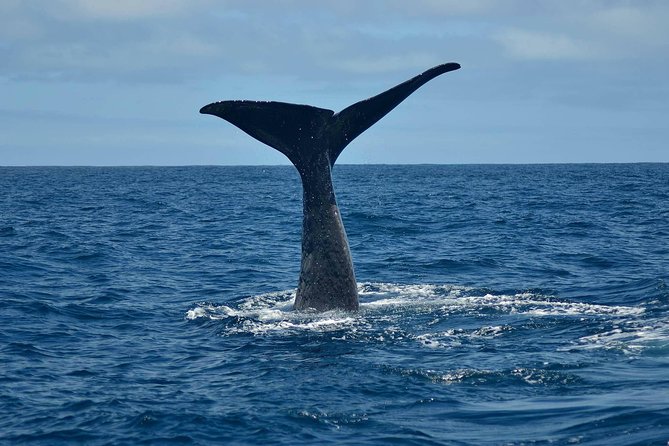
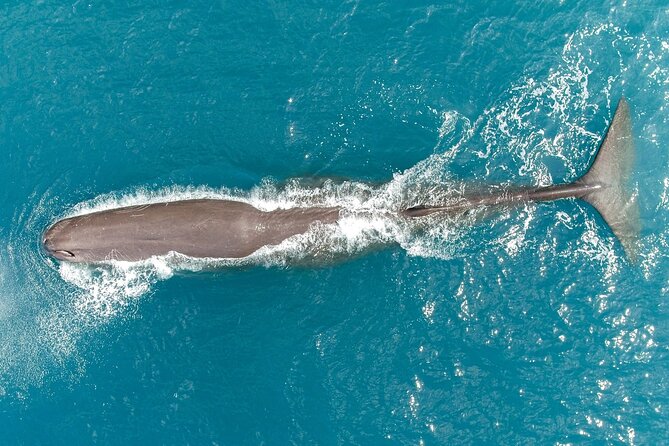
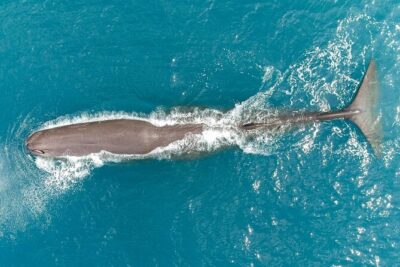
Sperm whales are the main reason to book this trip. They are often seen resting at the surface before making a long trip below for food. You might first notice a burst of breath, then the broad back, and, if the timing is right, the tail rising as the whale heads down.
This is wildlife, not a staged show. A whale may surface close to the catamaran, remain visible for several minutes, and then disappear. You may see only a back and a spout. That is still a real encounter, but you should not expect the constant action or close-up views shown in television programs.
More whale watching in Kaikoura:
- Kaikoura: Whale Watching Cruise
★ 4.6 · 3,089 reviews - Kaikoura: Whale Watching Flight with Commentary
★ 4.6 · 823 reviews - From Christchurch: Kaikōura Day Tour with Whale Watching
★ 4.5 · 224 reviews
From Whaleway Station to the open sea
The tour begins at Whaleway Station Road in Kaikoura. Allow the full 3.5 hours, not just the advertised time on the water. Check-in, the safety briefing, and the bus ride to and from the marina are all part of the schedule.
Several check-in times operate through the year, with additional departures during the November to March period. The listed times are check-in times, so do not arrive much earlier than the time shown for your booking.
A bus takes you between the station and the marina. This keeps the start of the trip simple, especially if you are staying near Kaikoura and do not want to arrange separate transport. The activity finishes back at the meeting point.
Once aboard, the crew gives safety information before the catamaran heads offshore. The vessel has indoor areas, which matter when the wind picks up or the ride turns rough. You can also use the outside decks for better views and photographs, provided conditions allow.
The boats can carry up to 116 people. That is a fairly large group, and it helps explain why the operation can run several departures a day. It also means the best viewing space can become crowded when a whale surfaces. If you prefer a small, quiet boat with plenty of room around the rail, this may not be your ideal trip.
What happens during the 2.5 hours on the water
The actual time at sea can reach about 2.5 hours. The route changes according to weather, sea conditions, and where the crew believes wildlife may be active. This flexible approach is important. The crew can adjust course when a whale moves on or when dolphins appear in another area.
The ride out can be the roughest part. Kaikoura’s open water is not a calm lake, and several people have found the sea much choppier than expected. The crew provides warnings and motion-sickness medication is available for purchase at the retail store, but it works best when taken before you feel ill.
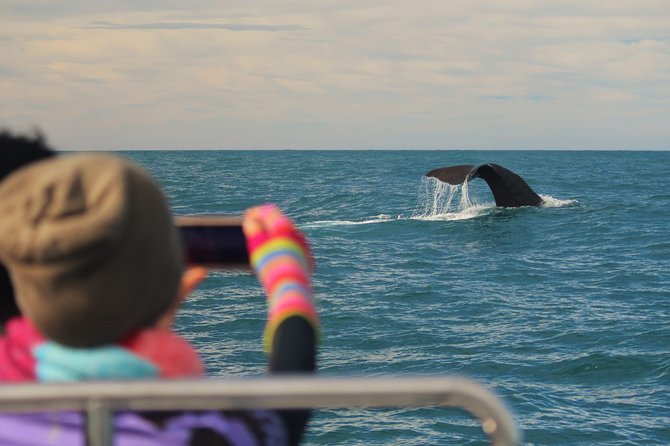
Once the boat reaches the whale area, the crew works to position the catamaran beside a surfacing whale without interfering with its behavior. You may have several minutes to watch, photograph, and wait for the tail movement that signals the whale is heading down.
The commentary continues between sightings. It covers whale habits, life cycles, the underwater canyons, and the wider marine environment. Award-winning onboard animations add visual help, which is useful when you are trying to understand what the animal is doing rather than simply pointing a camera at the sea.
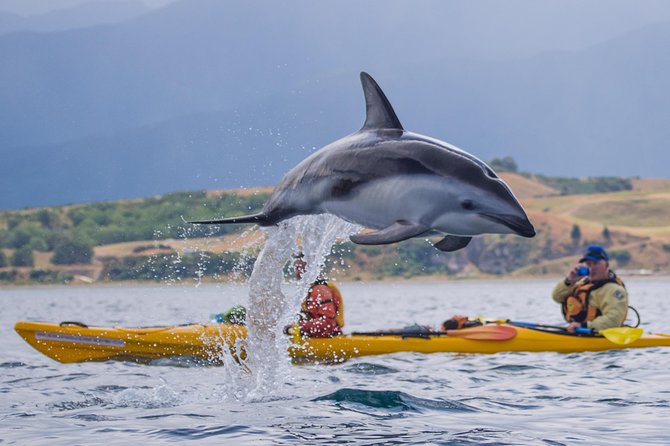
Some trips are especially full. Sightings have included two sperm whales, humpback whales, pilot whales, and orcas within the same outing. Pods of dusky dolphins can number in the hundreds, racing beside the boat and leaping through the wake. You may also see fur seals, albatross, petrels, and other seabirds.
No one can promise that full list. Your trip might produce one sperm whale and a few seabirds. It might produce several whale sightings and a large dolphin pod. The value lies partly in the setting and the information you gain, but the wildlife itself will always be unpredictable.
The wildlife you may see
Sperm whales are the most reliable target. The company gives a 95% success rate and offers an 80% refund if your trip does not see a whale. That is a strong safeguard, although it does not promise a dramatic tail shot or a long encounter.
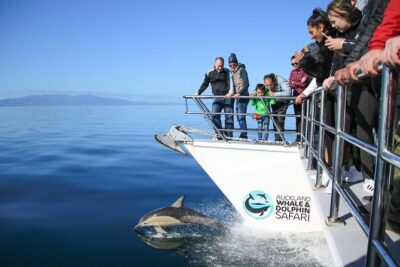
Dolphins are often a highlight in their own right. Dusky dolphins are known for fast, playful movement, and a large pod can change the mood of the whole boat. Watching them race alongside the catamaran may be more exciting than a distant whale spout.
Other whale species have also appeared, including humpback whales, pilot whales, and orcas. A small number of sightings have included unusual animals such as blue whales, although you should treat those as rare surprises rather than part of the standard expectation.
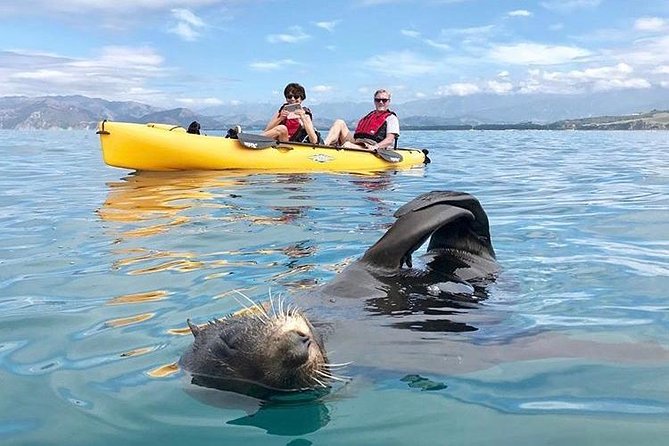
Seabirds add another layer to the trip. Albatross can glide near the boat, while petrels and other birds use the same productive sea. Fur seals may swim near the vessel or appear briefly between sightings.
The crew’s ability to change plans is one of the more valuable parts of the experience. If an animal moves away too quickly to follow, the boat can search another area rather than simply waiting in one spot. That does not guarantee success, but it gives the outing a better chance of finding active marine life.
More boat tours in Kaikoura:
- Double Boat Dive with Equipment
★ 4.3 · 3 reviews - Premium Milford Sound Small Group Tour & Cruise from Queenstown
★ 5.0 · 3,001 reviews - Cruise Milford NZ Small Boutique Cruise Experience
★ 5.0 · 2,930 reviews - Queenstown: Walter Peak Gourmet BBQ & Lake Whakatipu Cruise
★ 4.8 · 2,713 reviews
Commentary that adds more than animal names
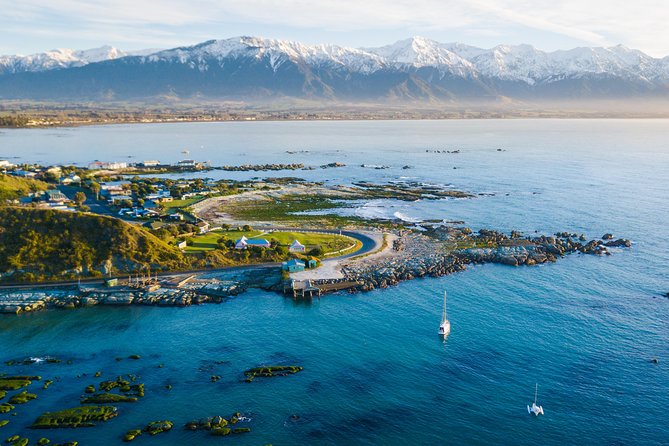
The live narration helps turn waiting time into part of the experience. You learn about the whales’ bodies, feeding patterns, life cycles, and relationship with the sea around Kaikoura.
The story of Paikea also gives the place a strong cultural connection to whales. In Māori tradition, Paikea reached New Zealand with the help of a whale, and his descendants live in Kaikoura today. The whale is not just a wildlife subject here. It is tied to the identity and traditions of the community.
The commentary can also explain what you are seeing when the whale is not fully visible. A spout, a change in posture, a slow roll, or a raised tail can each tell you something about the animal’s next move. That guidance makes a short sighting feel more meaningful.
The onboard animations are useful during gaps between animals. You are not left with only a loud engine and a wide horizon. On some departures, a marine biologist provides especially detailed information about the bay and underwater canyons.
Comfort, clothing, and seasickness
Bring warm layers even if Kaikoura feels mild on shore. The wind offshore can be cold, and you may spend time outside trying to photograph a whale. Flat shoes are required for practical reasons, since the deck can move beneath you.
Light waterproof clothing is sensible. Conditions can change, and spray may reach the outside decks. You can stay indoors during the boat ride, but you may still want to step outside when wildlife appears.
Seasickness deserves serious attention. The ride out and back can be rough, and a calm-looking day does not remove the risk. Buy motion-sickness tablets before departure and follow the product instructions. If you know you are prone to nausea, do not wait until the boat is already rolling.
The company can restrict children or passengers with medical concerns when sea conditions are poor. Children must be at least three years old, although the minimum age may be raised at check-in if conditions are difficult. Call the free phone sea-conditions line on the day if you are unsure about the forecast.
Is $111.39 good value?
At $111.39 per person, this is not a cheap short cruise. The price makes more sense when you count the full operation: a purpose-built catamaran, a bus transfer, trained crew, live commentary, offshore tracking, and up to 2.5 hours at sea.
The 95% whale-sighting rate is the biggest value point. If no whale appears, the 80% refund reduces the financial risk, though it does not compensate for a missed morning in Kaikoura. The policy is still reassuring because wildlife trips cannot honestly promise a sighting every time.
You also get more than a single target. Dolphins, seals, seabirds, and other whales may fill the gaps. A trip with one sperm whale, albatross, and a lively dolphin pod can feel well worth the cost. A rough day with one brief sighting may feel less satisfying, especially if seasickness keeps you indoors.
The group size is the main value limitation. With up to 116 people aboard, this is a polished commercial operation, not an intimate private outing. You pay for a strong chance of seeing whales and an efficient system for finding them, not for solitude.
Booking, weather, and cancellations
The tour runs all year, but every departure depends on suitable weather and sea conditions. If poor weather cancels your trip, you can choose another date or receive a full refund.
You can cancel for a full refund up to 24 hours before the start time. Cancellations or changes made inside that 24-hour window are not refunded or accepted, so keep your plans flexible if you are booking this early in a New Zealand itinerary.
Confirmation is sent within 48 hours, subject to availability. Since departures can fill, especially in the busy season, it is sensible to reserve before you reach Kaikoura if this is a priority activity.
Who will enjoy this trip most?
I would choose this tour if seeing a sperm whale is high on your New Zealand wish list and you are comfortable with a large boat. It also suits anyone who wants helpful narration rather than a silent ride out to sea.
Families can book for children aged three and above, but sea conditions may change the age rules. Parents should prepare young children for a long outing with wind, boat movement, and periods of waiting.
Photographers should bring protection for equipment and accept that wildlife may surface on the wrong side of the boat. The crew gives time for photographs, but no one can control the whale’s position or behavior.
If you are highly prone to seasickness, think carefully. Medication can help, but the open sea remains the central part of the experience. For a calmer day on land, Kaikoura offers seafood, historic buildings, local art, and coastal scenery, but none provides the same chance to see a sperm whale at sea.
Should you book Whale Watching in Kaikoura?
Yes, if you want a well-organized chance to see sperm whales and you understand that the ocean sets the schedule. The strong sighting rate, 80% no-whale refund, modern catamarans, and clear commentary make this a solid choice for a first whale-watching trip.
Book it with warm clothes, motion-sickness tablets, and realistic expectations. You may see a whale’s back and tail rather than a perfect close-up. You may also get dolphins, seals, albatross, or several whale species in one outing.
I would skip it only if rough seas are likely to ruin your day or if you strongly dislike large groups. For most people who can handle the boat, this is one of Kaikoura’s most worthwhile ways to meet the wildlife that makes the town special.
FAQ
How long does the Whale Watching in Kaikoura tour last?
Allow about 3.5 hours in total. This includes check-in, a safety briefing, bus transfers, and up to 2.5 hours on the water.
What animals might I see?
The main target is the sperm whale. You may also see dusky dolphins, fur seals, albatross, petrels, other seabirds, humpback whales, pilot whales, orcas, and occasionally other whale species.
How likely is it that I will see a whale?
The operator states a 95% whale-sighting success rate. If you do not see a whale, you are eligible for an 80% refund.
Where does the tour start?
The meeting point is Whaleway Station Road, Kaikōura 7300, New Zealand. The activity ends back at the same meeting point after the bus transfer from the marina.
What should I wear?
Wear warm clothing and flat shoes. Light waterproof clothing is useful if you plan to spend time on the outside decks.
Is seasickness a concern?
Yes. The sea can be rough, even when conditions look calm from shore. Motion-sickness tablets can be purchased at the retail store before departure.
What is the minimum age for children?
Children must be at least three years old. The operator may raise the age limit at check-in if sea or weather conditions are difficult.
What happens if bad weather cancels the tour?
You can choose an alternative date or receive a full refund if the tour is cancelled because of poor weather or sea conditions.
Just added around Kaikoura
- Kaikōura Whale Watching – 1hr 20min Ultimate Adventure★ 5.0 · 8 reviews
- Kaikōura Whale Watching and Scenic Landing – 1hr Premier Tour★ 5.0 · 24 reviews
- Kaikoura Whale Watching – 45 Minute Ocean Safari★ 5.0 · 39 reviews
- Sunset Kayak tour in Kaikoura★ 5.0 · 46 reviews
- Llama Trek (Taster) – Kowhai River Valley and Native Woodland Tour★ 5.0 · 76 reviews
- Private Wildlife Kayaking Tour – Kaikoura★ 5.0 · 44 reviews
- Private Seal Kayaking and Wildlife Tour in Kaikoura★ 5.0 · 7 reviews
- Sunset Evening Kayaking Tour – Kaikoura★ 4.5 · 81 reviews
Whale Watching, compared.
Auckland Dolphin and Whale Watching Eco-Safari Cruise
Read our review →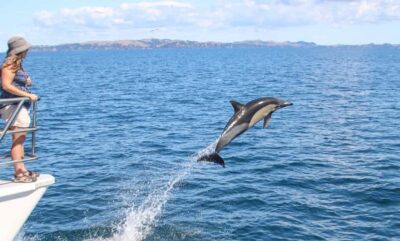
Whale and Dolphin Watching Half-Day Eco Cruise
Read our review →
Tikapa Moana Whales, Dolphins and Islands Cruise
Read our review →
Kaikōura Whale Watching Scenic Flight (40 Minutes)
Read our review →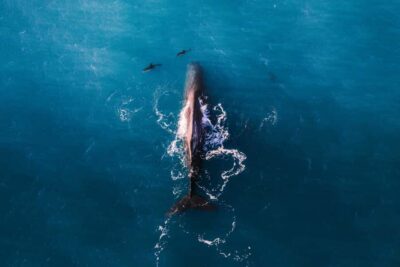
Browse the lists this tour appears in