
Reviewed · WHALE WATCHING
Auckland Dolphin and Whale Watching Eco-Safari Cruise
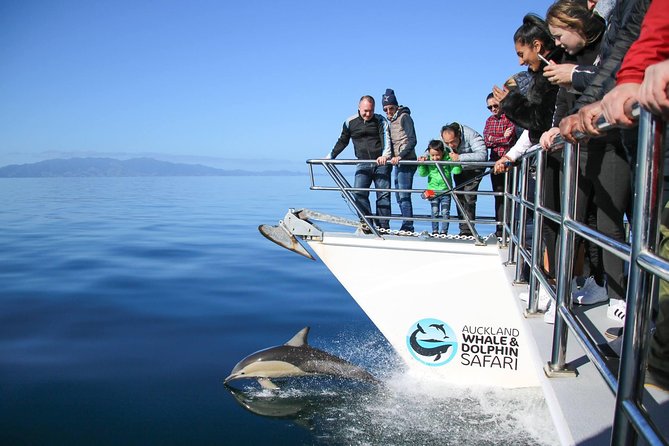
A pod of dolphins racing the bow is the star of this 4.5-hour Hauraki Gulf safari. You may also spot Bryde’s whales, seals, blue penguins, sharks, or rare seabirds, but this is a trip into the animals’ home, not a staged show. The crew works with marine researchers and gives you a real look at how wildlife is tracked and protected.
I like two things here: the strong conservation purpose, since each ticket supports marine mammal conservation, and the setting. You leave downtown Auckland, pass under the Harbour Bridge, and head among Rangitoto, Motutapu, Motuihe, and other island waters. The commentary adds meaning to the views rather than treating the boat ride as a simple sightseeing lap.
The catch is plain: wildlife is never guaranteed. Some trips produce close dolphin encounters and whale sightings, while others bring only a few dolphins or none at all. Rough water, wind, and a nearly full boat can also affect your comfort and your view.
Key points to know before you sail
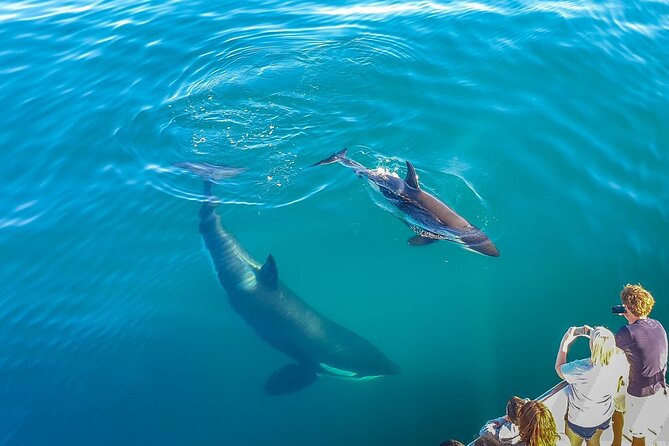
- Dolphins are often the main event: Pods may swim beside the catamaran and play near the bow for long stretches.
- Whales are possible, not promised: Bryde’s whales are native to New Zealand waters, but sightings depend on season, weather, and animal behavior.
- The route is scenic even without mammals: You cruise past the Harbour Bridge, Rangitoto, Motutapu, Motuihe, North Head, and the wider Hauraki Gulf.
- Marine scientists add substance: Onboard experts explain research projects, species identification, and ways to limit disturbance.
- The boat is built for viewing: The 65-foot, 20-meter catamaran has indoor and outdoor areas, toilets, and snacks for sale.
- Dress for changing conditions: Bring warm layers, weatherproof clothing, sunscreen, sunglasses, a secure hat, and flat-soled shoes.
Leaving Auckland from Viaduct Harbour
The meeting point is at the New Zealand Maritime Museum on Auckland’s Eastern Viaduct. This is a useful downtown departure point, especially if you are staying near the waterfront or combining the cruise with time around Viaduct Harbour.
Check-in closes 15 minutes before departure. Take that seriously. A late arrival can mean losing your allocated seat, and the boat will not wait for a last-minute dash along the pier.
You board a custom-built catamaran about 65 feet long. It is large enough to provide indoor and outdoor viewing areas, though the best position can become competitive when the boat is close to marine life. If you move away from your place, someone else may take it, particularly on a busy summer departure.
The catamaran is more stable than a small open boat, but stable does not mean motionless. Wind and swell can make the ride choppy. If you are prone to motion sickness, choose a position with a clear view of the horizon and be prepared for changing conditions. The experience lasts about four and a half hours, so comfort matters.
More Boat Tours in Auckland
- Auckland: Whale and Dolphin Watching Half-Day Eco Cruise
★ 4.5 · 1,072 reviews - Auckland Harbour Sailboat Cruise Including Three Course Dinner
★ 4.5 · 476 reviews - America’s Cup 2-Hour Sailing Experience Waitemata Harbour
★ 4.8 · 370 reviews
The first views: Waitemata Harbour and the Harbour Bridge
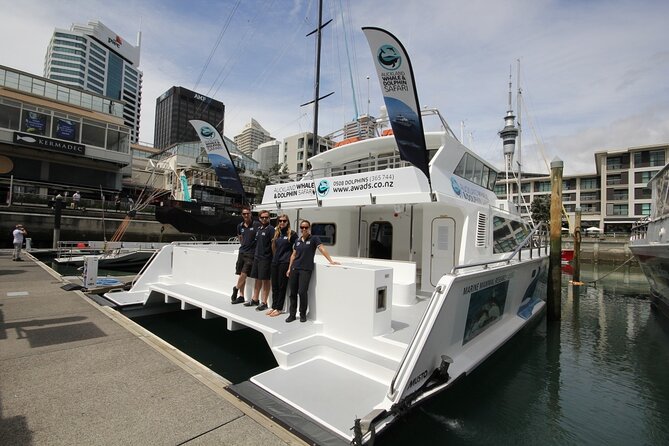
The opening stretch gives you a different view of Auckland. From the water, the city sits behind the working harbor, waterfront buildings, and the Harbour Bridge. This part of the ride also gives the crew time to explain the plan and the marine park ahead.
You are not simply transported straight to a whale location. The journey itself is part of the experience. The crew may point out islands, seabirds, and changing water conditions as the boat leaves the urban harbor.
The harbor section is usually easier for photographs because the scenery is less dependent on fast-moving wildlife. It is also a good time to take a few pictures before the boat reaches more exposed water, where wind and spray may make camera work harder.
Rangitoto and the island waters of the Gulf
Rangitoto is one of Auckland’s most recognizable islands, with its volcanic profile visible from many parts of the city. Seeing it from the water gives you a useful sense of how Auckland’s island geography shapes the Hauraki Gulf.
The route also includes Motuihe and Motutapu. These islands help show the scale of the marine park and the mix of sheltered and open water around Auckland. You may not step ashore at these locations. They function as route landmarks and scenic backdrops while the crew searches for animals.
The Hauraki Gulf Marine Park contains five marine preserves and supports about 23 marine species. That variety is the reason the cruise can offer more than a single target. If whales are absent, the crew may still look for dolphins, seals, penguins, sharks, or seabirds.
That broad search is one of the tour’s strengths. You are not locked into a short viewing window at one site. The crew can adjust the route and timing as conditions change, although no route change can force a wild animal to appear.
Searching the Hauraki Gulf for whales and dolphins
The main wildlife search takes place in the Hauraki Gulf. The crew tracks species that use these waters, including bottlenose dolphins and Bryde’s whales. The trip can also produce sightings of several other whale types, with up to six types possible in the wider area.
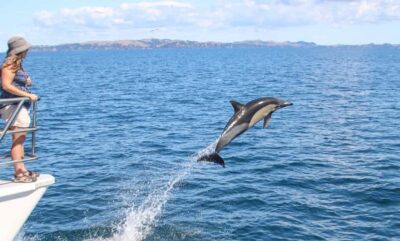
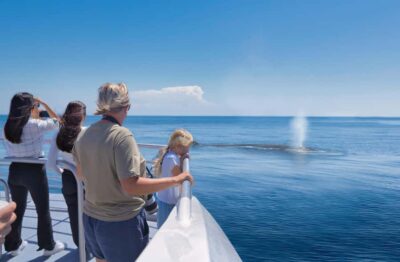
Dolphins are often the most dependable reward. They may travel in pods, surface beside the boat, or move toward the bow. A particularly good encounter can last close to half an hour, with repeated appearances and young dolphins among the group.
Whales are more uncertain. You might see a blow, a back, or a more extended encounter, but you should not book this expecting a guaranteed whale performance. A trip with no whale is not necessarily a failed trip, but it can feel disappointing if that is your main goal.
The crew’s response to this uncertainty matters. They keep searching and may spend extra time looking when conditions allow. Still, the guarantee is limited to the possibility of returning on another day if no marine mammals are seen. That replacement trip is useful for people living in Auckland or staying for several days. It has less practical value if you are visiting New Zealand from overseas and leaving immediately.
More whale watching in Auckland:
- Auckland: Tikapa Moana Whales, Dolphins and Islands Cruise
★ 3.9 · 292 reviews - Auckland: Tikapa Moana Dolphin, Whale and Island Cruise
★ 4.0 · 17 reviews - Kaikoura: Whale Watching Cruise
★ 4.6 · 3,089 reviews - Whale Watching in Kaikoura by Boat
★ 4.5 · 2,906 reviews
Seabirds, penguins, seals, and the surprise sightings
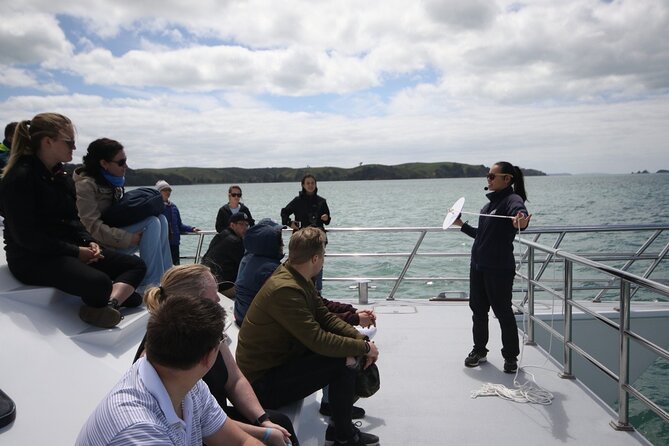
Keep your binoculars ready even when the boat is not near a whale or dolphin. Australasian gannets, petrels, shearwaters, and white-fronted terns may fly above the water or plunge toward the surface.
Blue penguins can appear too. They are small and easy to miss, so avoid packing your attention into one section of the boat. A seal may show itself, and one exceptional outing included hammerhead sharks along with whales and dolphins.
This variety gives the cruise a stronger ecological focus. You are learning how different species share the same marine system, not just waiting for one large animal to break the surface.
A camera with a zoom lens is useful, but do not let it dominate the trip. Wildlife may surface on the opposite side of the boat, and the best moment can pass while you are changing settings. Watch first, photograph second.
Marine research makes the commentary worthwhile
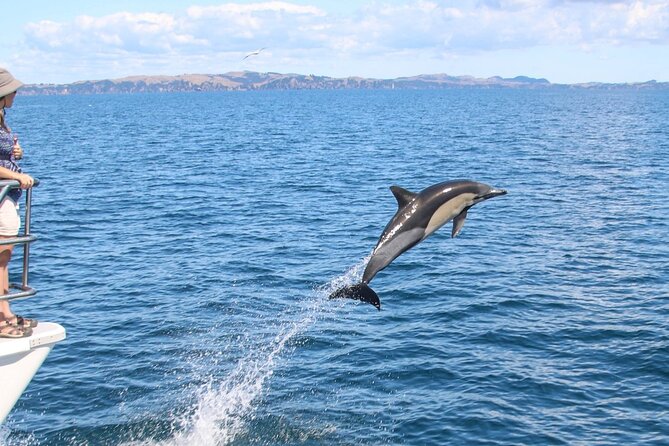
The crew includes onboard marine research scientists who explain the Gulf’s species and the research carried out with local partners. This is more useful than a string of generic facts because you get a sense of how scientists identify animals, track populations, and study behavior.
The conservation element is also direct. Every ticket contributes to marine mammal conservation, so the price supports more than transport and entertainment. The crew also works to give animals space and allow them to decide how close they come to the boat.
That approach is important. A good wildlife cruise should not chase animals into exhaustion or crowd them for photographs. The captain’s handling and the crew’s instructions are part of the experience, especially when several people gather at the rail.
Audio quality can vary when the boat is full or the wind rises. Some passengers have found parts of the commentary difficult to hear from the back deck. If the science interests you, stay near the main speaking area when possible, or ask a crew member to repeat an important point.
Seating, weather, and the realities of a full boat
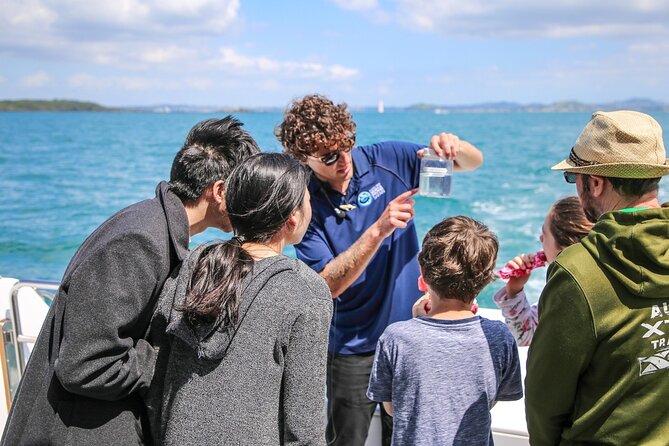
The catamaran offers both inside and outside space, plus toilets and snacks for purchase. That gives you options during a four-and-a-half-hour outing, but capacity can still affect the feel of the trip.
When the boat is near its maximum of 99 people, the outside rail can become crowded during a sighting. Crew members ask people to rotate so everyone gets a look, and you should cooperate. Holding one viewing position for an entire encounter is unfair to the people behind you.
Rain creates another pressure point. People naturally move under cover, which can make indoor and sheltered areas feel tight. On a calm, sunny morning, the same boat may feel roomy and easygoing.
Wear warm layers even if Auckland looks mild from the dock. Wind on open water can make the temperature feel much lower. Add weatherproof outerwear, sturdy flat-soled shoes, sunglasses, and sunscreen. A hat with a chin strap is a smart choice, since an ordinary loose hat can quickly become marine litter.
What the $135.91 price buys you
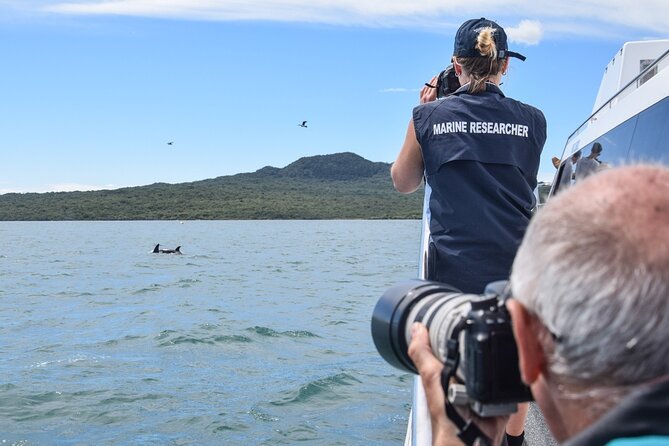
At $135.91 per person, this is not the cheapest way to see Auckland from the water. The value depends on what you want from the outing.
If your goal is a guaranteed whale photograph, the price will feel risky because no wild animal can be promised. If you treat it as a full marine ecology trip, the value improves. You receive about 4.5 hours on the Gulf, an experienced crew, research commentary, island scenery, and the chance to see several types of wildlife.
The conservation contribution also matters. You are helping support marine mammal work rather than paying only for a scenic cruise. That will appeal to you if responsible wildlife viewing is part of your travel budget.
The best value comes when you can be flexible. Stay in Auckland long enough to use the return option if your trip produces no marine mammals. If you have only one day in the city, you are paying for a worthwhile possibility, not certainty.
Who will enjoy this eco-safari most
I would recommend this cruise to anyone who enjoys being on the water and can accept an unpredictable result. Families can do well here, especially if children are interested in animals, boats, and seabirds rather than only whales.
It also suits visitors who want a half-day break from city streets. The island views, fresh air, and research focus give the outing more substance than a simple harbor cruise.
You should think twice if you dislike open water, struggle with motion, or need a guaranteed schedule of animal sightings. Four and a half hours is a long time if you are uncomfortable on a moving boat.
Wildlife photographers may enjoy the opportunities but should expect crowded rail space and fast, irregular sightings. Bring patience. The best moment may last only seconds.
Booking, cancellation, and practical details
The cruise begins and ends at the Eastern Viaduct near the New Zealand Maritime Museum. Hotel pickup and drop-off are not included, so plan your own way to central Auckland.
Food and drinks are available to buy onboard, but they are not included in the ticket. Bring water and a snack if you prefer to manage your own supplies.
Most people can take part, and service animals are allowed. The activity requires suitable weather and a minimum number of participants. If poor weather or low bookings cancel the trip, you will be offered another date or a full refund.
You can cancel for a full refund up to 24 hours before departure. Changes or cancellations inside that 24-hour window are not accepted for a refund.
Should you book the Auckland Dolphin and Whale Safari?
Book it if you want a serious wildlife outing with a conservation purpose, not a guaranteed whale show. The dolphins can be spectacular, the island views are excellent, and the marine research commentary gives the cruise a useful sense of purpose.
I would schedule it early in your Auckland stay when possible. That gives you a chance to use the free return option if the boat sees no marine mammals, and it leaves room to adjust around weather.
If you have limited time, accept the gamble before paying. You might spend 4.5 hours with dolphins, whales, penguins, seals, and seabirds. You might instead get beautiful Gulf scenery, a few distant sightings, and a thoughtful lesson in how difficult wild-animal watching can be. For many people, that honest version of nature is still worth the fare.
FAQ
Where does the Auckland Dolphin and Whale Safari depart?
It departs from the Eastern Viaduct beside the New Zealand Maritime Museum in Auckland Central, near Viaduct Harbour.
How long does the cruise last?
The cruise lasts about 4 hours and 30 minutes.
What animals might I see?
Possible sightings include whales, bottlenose dolphins, seals, blue penguins, sharks, and seabirds such as Australasian gannets, petrels, shearwaters, and white-fronted terns.
Are whale and dolphin sightings guaranteed?
No. Wildlife sightings cannot be guaranteed. If you do not see any marine mammals, you can take the trip again on another day at no extra charge.
What kind of boat is used?
The cruise uses a custom-built 65-foot, 20-meter catamaran with indoor and outdoor viewing areas.
Is food included?
No. Food and drinks are not included, but snacks and drinks are available to purchase onboard.
What should I wear and bring?
Wear warm layers, weatherproof clothing, and flat-soled shoes. Bring sunscreen, sunglasses, a secure sun hat, a camera, and binoculars if you have them.
How early should I arrive?
Check-in closes 15 minutes before the stated departure time. Arriving late may mean losing your allocated seat.
More Dolphin Watching in Auckland
- Akaroa Dolphins ~ Harbour Nature Cruise
★ 5.0 · 2,143 reviews - Akaroa: Dolphin Nature Cruise
★ 4.9 · 440 reviews - Swimming with Wild Dolphins in Akaroa
★ 4.5 · 261 reviews - Akaroa Harbour 2-Hour Dolphin Nature Cruise
★ 4.7 · 235 reviews
Just added around Auckland
- Auckland’s Wild West Coast & Black Sand Beaches Tour inc Lunch★ 5.0 · 12 reviews
- Kumeu Wine Region Shuttle from Auckland★ 4.5 · 19 reviews
- Auckland Airport Private One-Way or Round-Trip Transfer★ 4.5 · 14 reviews
- West Coast Discovery – Piha Beach or Muriwai Beach from Auckland★ 3.5 · 6 reviews
- West Coast Discovery Tour★ 5.0 · 37 reviews
- Wētā Workshop Unleashed – Intro to Scars and Scrapes Workshop★ 5.0 · 5 reviews
- West Coast Discovery Piha Beach Private Tour★ 5.0 · 14 reviews
- Ultimate Auckland Experience Full Day Tour with Brewery Lunch★ 5.0 · 6 reviews
Whale Watching, compared.
Whale and Dolphin Watching Half-Day Eco Cruise
Read our review →
Tikapa Moana Whales, Dolphins and Islands Cruise
Read our review →
Kaikōura Whale Watching Scenic Flight (40 Minutes)
Read our review →
Browse the lists this tour appears in