
Reviewed · HELICOPTER TOURS
Mt Cook: 55-Minute Scenic Flight in Helicopter or Ski Plane
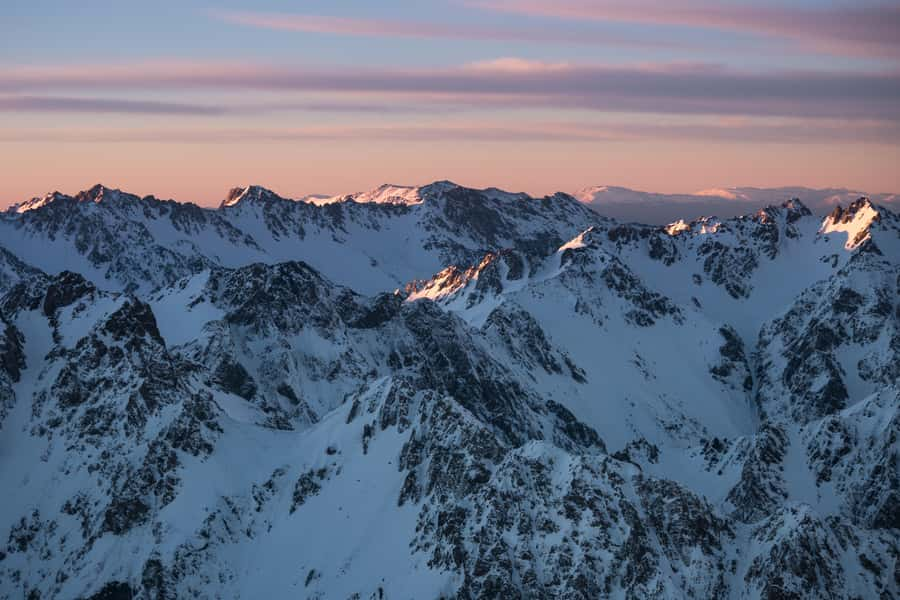
The most thrilling part of this flight is the route itself. You cross the Southern Alps, reach the West Coast, pass over Fox and Franz Josef Glaciers, then return beneath the east face of Aoraki Mt Cook. You get a grand view in less than an hour, with the scenery changing from icy valleys to the Tasman Sea and back again.
I like the small six-person group, since it keeps the briefing and commentary personal. I also like the chance to fly by ski plane or helicopter, with a glacier landing possible on the ski-plane option. The main caution is seating: one passenger reported poor visibility from a middle seat behind the rotor blade, so your view may depend on the aircraft and your assigned place.
Key points to know before booking
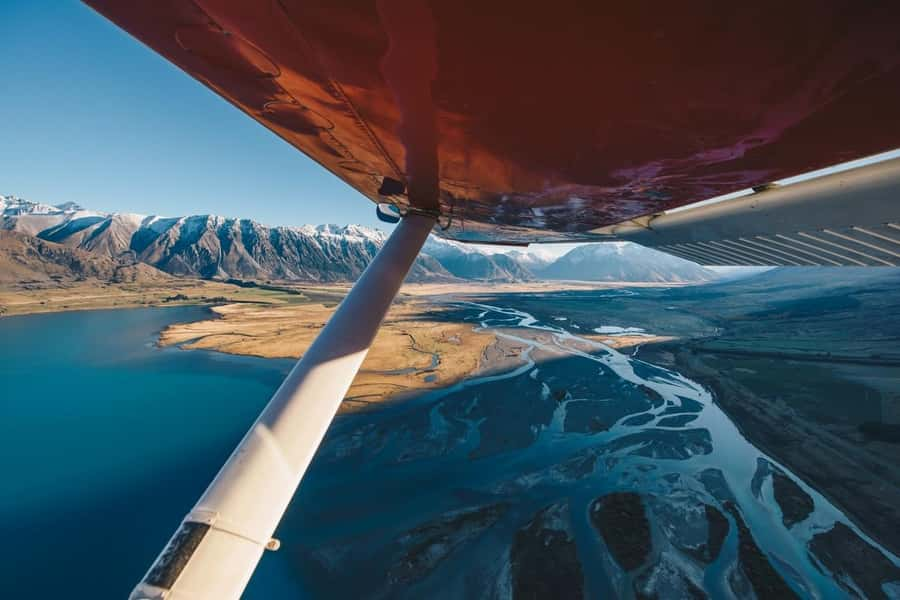
- Two aircraft choices: Fly by helicopter or ski plane, depending on availability and conditions.
- A full Southern Alps circuit: See Aoraki Mt Cook, Mt Tasman, Mt Sefton, Fox Glacier, Franz Josef Glacier, and the Tasman Glacier.
- Glacier flying is part of the appeal: The ski plane may land and take off from a glacier when conditions permit.
- Only six people per group: A useful advantage for personal commentary and a less crowded experience.
- Weather controls the day: Poor conditions can shorten, cancel, or change the flight.
- Bring only yourself and a camera: Bags and selfie sticks are not allowed, but phones and cameras may be used in flight.
Why this 55-minute flight is such a strong way to see Aoraki Mt Cook
Aoraki Mt Cook National Park is difficult to grasp from the ground. Walking trails show you one valley or one glacier at a time. From the air, you can see how the ice fields, peaks, valleys, and waterways fit together.
This flight gives you that wider view without taking a full day. In 55 minutes, you cross the Main Divide, reach the West Coast, track north along the Tasman Sea, and cross the snowy peaks again. You then return through Mt Cook National Park and the upper Tasman Glacier area.
I like this route because it is not just a quick circle around one mountain. It has a proper sense of progression. The scenery changes several times, so you are not staring at the same peak for the entire flight.
You also get live English commentary from the guide and pilot. That matters here. From the air, a glacier can look like a white river, while a steep icefall can seem like a frozen cliff. Commentary helps you understand what you are seeing instead of simply pointing your camera at a mass of snow.
More Helicopter Tours in Mount Cook
- Mount Cook: Scenic Helicopter Flight with Alpine Landing
★ 4.8 · 442 reviews - Mount Cook: Ski Plane and Helicopter Glacier Combo Flight
★ 4.6 · 271 reviews - Mount Cook: 3-Hour Tasman Glacier Helicopter Ride and Hike
★ 4.9 · 235 reviews
Taking off over the Southern Alps
The flight begins with beautiful views almost immediately. That is useful if you are nervous about flying or unsure how much scenery fits into 55 minutes. You do not spend most of the activity waiting for the interesting part.
The aircraft is either a helicopter or a ski plane. The choice can affect the feel of the trip. A helicopter gives you the classic close-up mountain flight, while the ski plane adds a strong sense of adventure, especially if it lands on a glacier.
The ski plane option has an extra attraction: one verified flight included a landing and takeoff from a glacier. That is not something you should treat as guaranteed, since weather and safety conditions decide what is possible. Still, it shows why the ski plane can feel like more than a sightseeing aircraft.
The helicopter can also be a good choice if the operation needs to change plans. One booking was shifted from a planned plane flight to a helicopter after weather problems affected the schedule. This kind of flexibility can save the day, though it may also mean your exact flight type is not fixed until conditions are clear.
Crossing the Main Divide to Fox and Franz Josef Glaciers
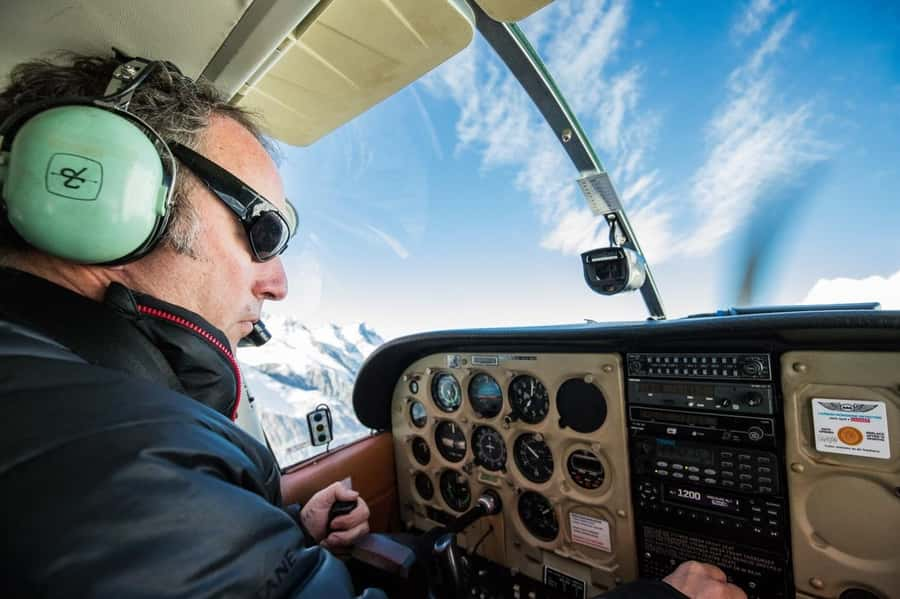
The aircraft crosses the Main Divide toward the West Coast. This is one of the strongest sections of the route because the scenery changes from the inland mountain country to the glacier valleys leading toward the sea.
You fly above the Fox Glacier and Franz Josef Glacier area. From the air, you get a sense of their scale and position that is hard to gain from a roadside viewpoint. The ice is part of a much larger system of peaks and valleys, rather than an isolated attraction.
This section is especially valuable for anyone with limited time in the South Island. You can see two famous West Coast glaciers in one flight, then continue to the Tasman Sea before returning over the mountains.
The route is not a guaranteed sightseeing checklist. Cloud can cover a peak, and the flight may be shortened or canceled when conditions are unsafe. That is the trade-off with mountain flying. The same weather that gives the Southern Alps their dramatic character can also hide the very scenery you paid to see.
Tracking north along the Tasman Sea
After reaching the West Coast, the aircraft tracks north along the Tasman Sea. This adds welcome variety to the flight. You are not simply circling Aoraki Mt Cook and heading back.
The sea also gives you a useful visual contrast. You move from the bright ice and steep peaks to the open coastline, then cross the Southern Alps again. In good visibility, this broad route helps you understand how close the high mountains are to the coast.
I would pay attention during this stretch even if your main goal is Aoraki Mt Cook. The flight is designed as a circuit, and the West Coast portion gives the trip a bigger sense of place.
More Scenic Flights in Mount Cook
- Mount Cook and The Glaciers 55-Minute Helicopter Flight
★ 4.5 · 133 reviews - 45-Minute Mount Cook Ski Plane and Helicopter Combo Tour
★ 4.5 · 107 reviews - Lake Tekapo: 50-Minute Mount Cook and Beyond Scenic Flight
★ 4.9 · 103 reviews - Franz Josef: 30-min Flight Franz Josef & Tasman Glaciers
★ 4.8 · 54 reviews
Returning over the Tasman Glacier and Mt Cook National Park
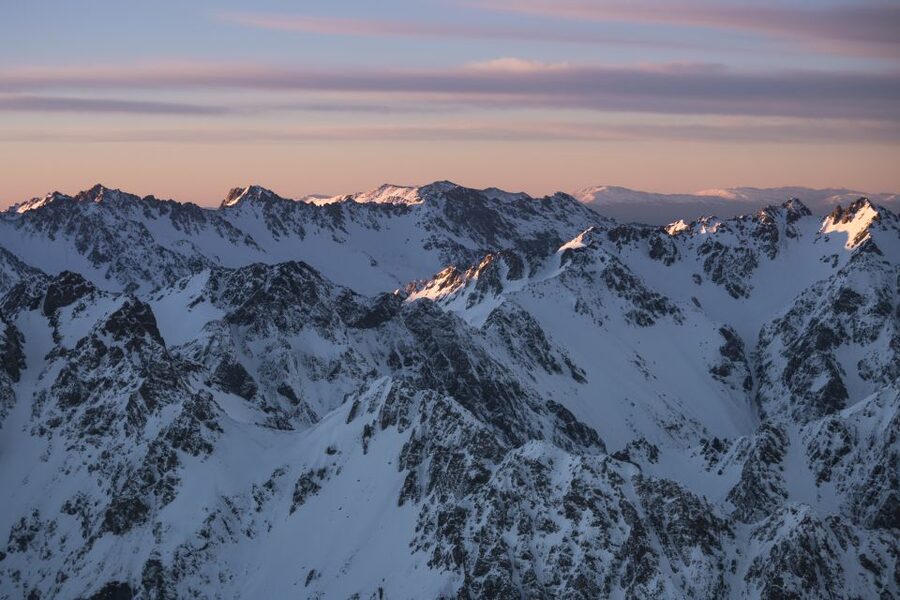
The return crossing brings you back to the Tasman Glacier. You then track south down the Tasman and continue through Mt Cook National Park.
The Tasman Glacier is one of the main visual anchors of the flight. From above, you can follow its long route through the mountains and see the ice in relation to the surrounding peaks. The Tasman Terminal Lake comes into view during the descent, adding water and darker tones to a route dominated by snow and rock.
The flight then moves through the Grand Plateau and the Hochsteter Icefall. These names are easy to skim past, but they describe some of the most dramatic terrain on the route. The icefall is a steep, broken mass of ice, while the plateau gives the aircraft a high, open mountain setting.
You pass under the east face of Aoraki Mt Cook before descending over the Tasman Terminal Lake. This is likely to be the most memorable section for many people. The mountain is not seen only from a distant lookout. The route brings you close to its east face, placing the peak, ice, and surrounding terrain in one view.
Helicopter or ski plane: which should you choose?
The supplied experience allows either a helicopter or ski plane, but you may not be able to control the final aircraft choice in every situation. Weather, availability, aircraft limits, and operational safety can affect the plan.
Choose the ski plane if the idea of a glacier landing is central to your decision. It offers a distinctive mountain experience and can make the flight feel more like an expedition than a simple aerial tour. One flight included a glacier landing and takeoff, which is a memorable feature when conditions allow.
Choose the helicopter if you prefer the aircraft often associated with close mountain sightseeing, or if the operator offers it as a weather-related alternative. A passenger was successfully moved to a helicopter after weather disrupted the planned plane schedule.
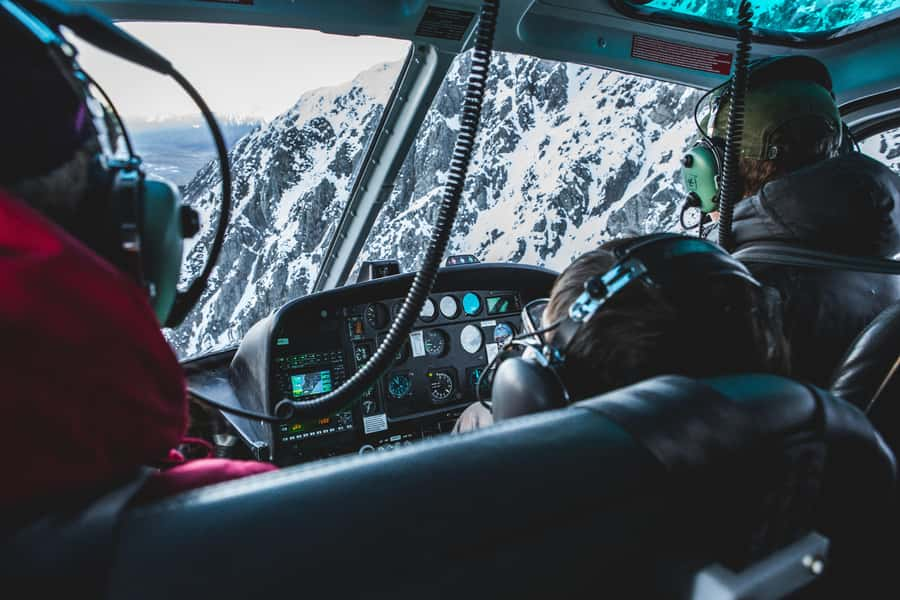
There is one practical point to keep in mind: seating can affect your view. A passenger reported poor visibility from a middle seat behind the rotor blade, pilot, and another passenger. I would ask the operator about seating when you arrive, but I would not assume a particular seat is guaranteed.
You can use a phone or camera during the flight. Bags and selfie sticks are not allowed, so pack light and keep your equipment simple. Comfortable clothing is recommended, but the information provided does not promise a special clothing list or onboard food.
What the small group size changes
The group is limited to six people. That is a meaningful advantage on a flight where the guide’s commentary adds context to the views.
A small group should make the safety briefing easier to follow and reduce the chance of a crowded departure area. It also gives you a better chance to hear the English commentary clearly and ask a question if time allows.
Do not confuse a six-person group with a private flight. You may still share the aircraft, and the seating arrangement may limit the view from some positions. The smaller size is best understood as a comfort and communication benefit, not a promise that every passenger gets an unobstructed window.
Staff service has also been a strong part of the experience. One particularly positive booking singled out helpful staff and a pilot named Angus. That is worth noting because calm, clear staff communication matters when mountain weather changes the plan.
Weather, cancellations, and changes on the day
The biggest factor is weather. If conditions make flying unsafe, the activity can be canceled and you can receive a full refund or reschedule.
Weather can also shorten a flight or lead to a change from ski plane to helicopter. One booking involved a shortened plane flight, followed by a later cancellation, and then a switch to a helicopter. That shows both the inconvenience and the practical value of an operator that tries to find another safe option.
You should avoid booking this as the one fixed event that your entire day depends on. Leave room in your schedule if possible. A replacement flight may not fit neatly into a tight itinerary, especially when mountain weather changes quickly.
The aircraft may also be rescheduled if the combined passenger weight reaches the maximum safety limit. Anyone close to the stated 115 kilogram limit should contact the operator before booking. The listed maximum is 254 pounds, or 115 kilograms, and the experience is not suitable for people with mobility impairments.
Is $447 a fair price?
At $447 per person, this is an expensive activity. I would not call it a casual add-on for every New Zealand itinerary.
The value comes from the amount of ground covered in 55 minutes. You see the Southern Alps, both Fox and Franz Josef Glaciers, the Tasman Sea, the Tasman Glacier, Mt Cook National Park, the Grand Plateau, the Hochsteter Icefall, Aoraki Mt Cook, and the Tasman Terminal Lake.
That is a lot of scenery in a short window, especially if your time around Mt Cook is limited. The price also includes the aircraft, safety briefing, and live guide commentary. Food and drinks are not included, but that is not a major concern for a flight of this length.
The price is harder to justify if you are only looking for a quick view of Aoraki Mt Cook. In that case, ground-based viewpoints and walks cost far less. The flight earns its price when you want the full geographic picture, a glacier flight, or a special occasion experience.
The most important value question is your tolerance for weather risk. You could pay for a flight that is delayed, shortened, changed, or canceled. The free cancellation policy allows cancellation up to 24 hours before departure for a full refund, and weather cancellations bring a full refund or rescheduling, but poor conditions can still disrupt your day.
Who will get the most from this flight?
I would recommend it most to people who want to see a large part of the Southern Alps in one short experience. It suits photographers, mountain enthusiasts, couples marking a special trip, and anyone with limited time in the Aoraki Mt Cook area.
It is also a good choice for you if a glacier landing sounds exciting but you do not want a long backcountry activity. The ski plane can give you that possibility without requiring a full day on the ice.
You should think twice if you are very uncomfortable with flying, need guaranteed seat visibility, have limited flexibility in your schedule, or cannot meet the weight and mobility requirements. One passenger canceled because of fear, and the staff handled that situation with understanding, but you should still be honest with yourself before booking.
FAQ
How long is the scenic flight?
The flight lasts 55 minutes.
Can I choose a helicopter or ski plane?
The experience is offered by helicopter or ski plane. The final aircraft may depend on availability, weather, and operational conditions.
Which mountains can I see?
The route includes Aoraki Mt Cook, Mt Tasman, and Mt Sefton.
Will I see Fox Glacier and Franz Josef Glacier?
Yes. The route includes aerial views over Fox Glacier and Franz Josef Glacier.
Does the flight include a glacier landing?
A ski plane may land and take off from a glacier when conditions allow. A landing is not guaranteed.
Is commentary provided during the flight?
Yes. An English-speaking guide provides live commentary.
How many people are in the group?
The group is limited to six participants.
Can I use my phone or camera during the flight?
Yes. You can use a phone or camera, but selfie sticks and bags are not allowed.
Should you book this Aoraki Mt Cook flight?
Book it if you want the broadest possible view of the Southern Alps in under an hour, and if $447 fits your budget. The route is unusually full, the small group helps, and the option of a glacier landing gives the ski plane a special edge.
I would not book it on a tight schedule or if you need a guaranteed aircraft, perfect visibility, or a particular seat. Mountain weather is part of the deal. For the right passenger, though, this is a powerful way to connect Aoraki Mt Cook, the West Coast glaciers, and the Tasman Glacier in one carefully planned flight.
Just added around Mount Cook
- Skydive Mt. Cook – 20+ Seconds of Freefall from 10,000ft★ 5.0 · 5 reviews
- Skydive Mt. Cook – 70+ Seconds of Freefall from 16,500ft★ 5.0 · 5 reviews
- Mt Cook to Christchurch One-Way Small Group Tour via Lake Tekapo★ 5.0 · 16 reviews
- Mt Cook to Queenstown Small Group Tour (One-Way)★ 4.5 · 25 reviews
- Mt Cook & Lake Tekapo 2-Day Small Group Tour from Queenstown★ 5.0 · 15 reviews
- Mount Cook: Mountains High 40-Minute Helicopter Flight★ 5.0 · 53 reviews
- Mount Cook Scenic 35 Minute Helicopter Flight★ 5.0 · 6 reviews
- Mount Cook Alpine Explorer Helicopter Flight with Alpine Landing★ 4.0 · 22 reviews
Helicopter Tours, compared.
Franz Josef Glacier: Helicopter Flight & Alpine Landing
Read our review →
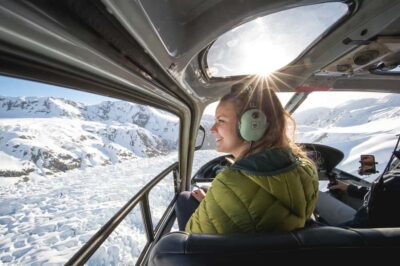
Franz Josef & Fox Glaciers Helicopter Flight & Snow Landing
Read our review →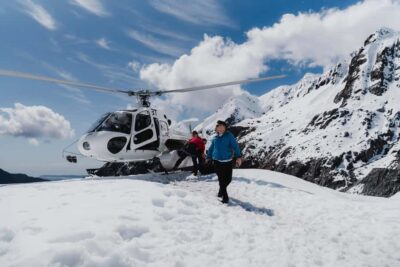
2.5 Hour Glacier Hike with Helicopter Transfer
Read our review →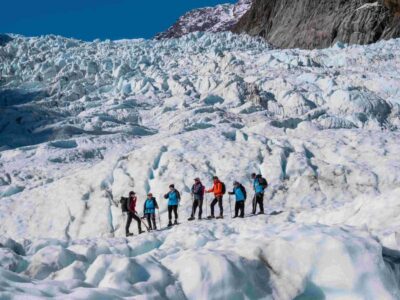
Fox Glacier: Up to 3 Hours Hike with Helicopter Transfer
Read our review →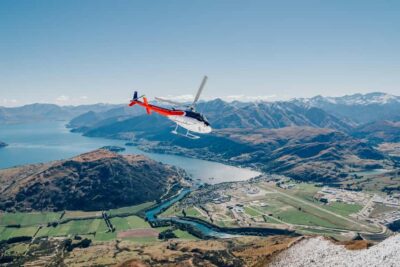
Pilot’s Choice Helicopter Tour & Alpine Landing
Read our review →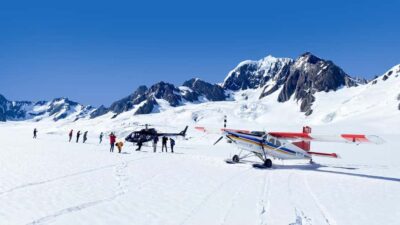
Browse the lists this tour appears in