
Reviewed · STARGAZING TOURS
Stargazing Experience at Cowan’s Private Observatory
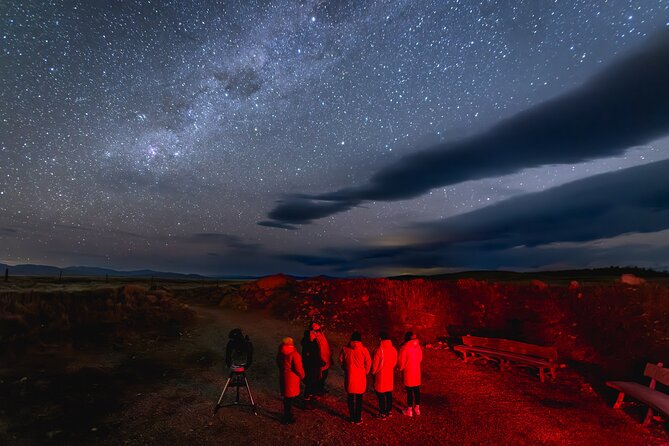
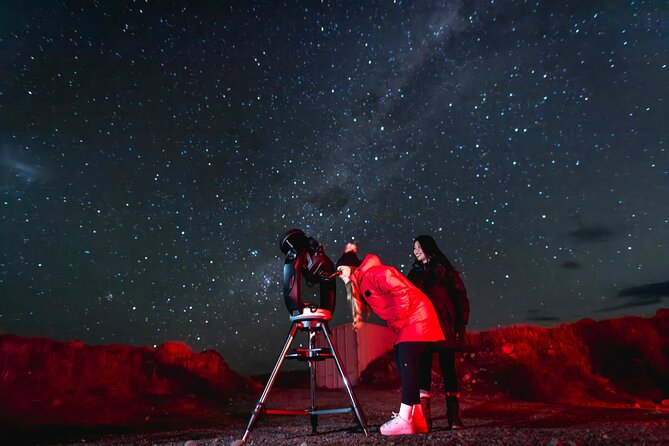
The best part of this outing is not simply looking through a telescope. It is seeing the Southern Hemisphere sky from the Aoraki Mackenzie International Dark Sky Reserve, where the Milky Way, Southern Cross, planets, and star clusters can appear with unusual clarity. Your guide helps you make sense of what you are seeing instead of leaving you to stare at a field of anonymous pinpoints.
I like the sheltered crater setting, which keeps wind and stray light under control. I also like the flexible teaching style: the guide adjusts the session to the stars, planets, and moon visible that night. The main catch is weather. Clouds can cancel the outdoor portion, and even on a clear evening you need warm clothing, since you spend much of the experience outside.
Key points before you book
- You leave from the Dark Sky Project base: A short shuttle ride takes you from central Lake Tekapo to Cowan’s Private Observatory.
- You watch from sheltered craters: The purpose-built viewing areas protect you from wind and reduce nearby light pollution.
- The sky changes every night: Your guide bases the session on current conditions, season, time, and cloud cover.
- Telescopes can reveal planets and clusters: Past clear sessions have included Jupiter, Saturn and its rings, the Southern Cross, and star clusters.
- The experience suits beginners: Children aged five and older can join, and those aged 17 and under receive discounted admission.
- Weather protection is built into the booking: If the session cannot operate outdoors, you may receive an indoor alternative or a full refund.
Why Lake Tekapo is a fine place to stargaze
Lake Tekapo sits inside the Aoraki Mackenzie International Dark Sky Reserve, a Gold Standard reserve known for very dark, clear skies. That designation matters because city lights wash out faint stars. Here, the Milky Way can appear as a broad band rather than a faint blur, and southern constellations become easier to pick out.
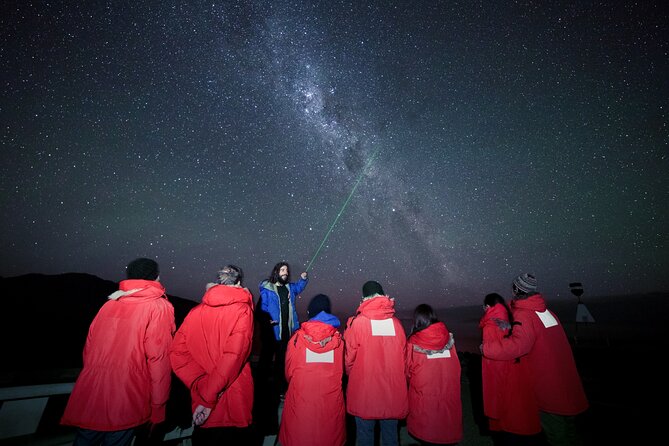
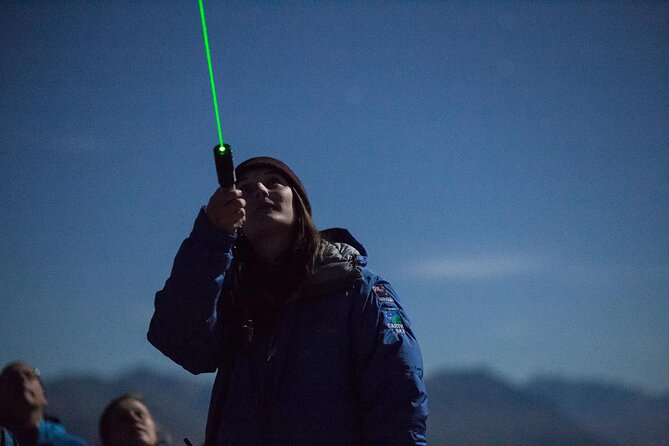
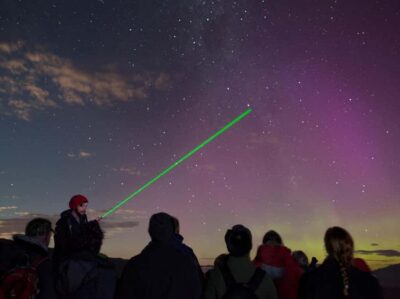
You do not need to know the difference between a nebula and a star cluster before arriving. This experience is designed for first-time stargazers. The guide points out patterns with a handheld laser, explains what you are seeing, and then uses telescopes to bring selected objects closer.
The value of the setting is greatest on a clear night. You may see planets, galaxies, star clusters, and the Milky Way without needing advanced equipment of your own. Still, keep your expectations sensible. A telescope cannot guarantee Saturn, Jupiter, or a particular galaxy every night. The moon, clouds, season, and hour all affect the view.
That uncertainty is part of astronomy, but it can also be frustrating if you have only one night in Tekapo. The operator offers another date or a full refund if bad weather prevents the experience from going ahead, which takes some pressure off your decision.
More Stargazing Tours in Lake Tekapo
- Lake Tekapo: Alpine Stargazing Experience with a Guide
★ 4.5 · 626 reviews - Lake Tekapo: Stargazing Experience
★ 4.9 · 607 reviews - Chameleon Stargazing Shared Tour
★ 5.0 · 181 reviews
Check-in at the Dark Sky Project base
Your evening begins at the Dark Sky Project base in Lake Tekapo, close to the township and easy to find in Lake Tekapo Park. This is where you check in before boarding the shuttle.
The transfer to Cowan’s Private Observatory takes about five minutes. That short ride makes the outing simple for families and for anyone staying near the town center. Hotel pickup and drop-off are not included, so you need to make your own way to the base.
Arrive early. The shuttle is part of the planned transfer, not a taxi that waits indefinitely. A late arrival can mean missing the ride and losing the outdoor portion of the booking. This matters especially for sessions scheduled around midnight, when it is easy to misread the date or arrive at the wrong local time. Check the booking date carefully if your start time falls after midnight.
The group can include up to 22 people. That is small enough for a guide to manage a shared telescope session, though it is not a private family viewing. Children must have an adult with them, and the minimum age is five.
Inside Cowan’s sheltered viewing craters
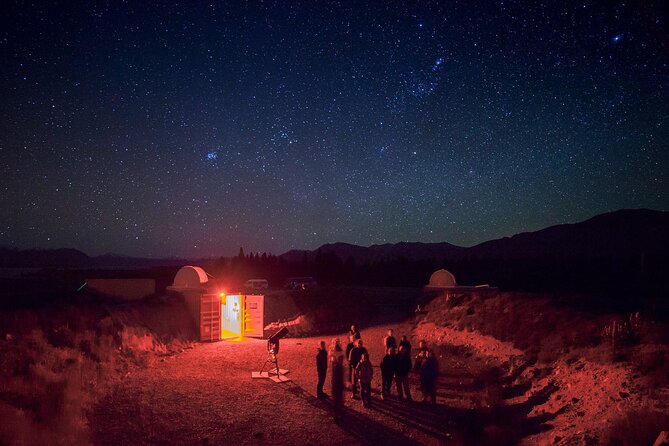
At the observatory, you move into purpose-built craters designed to shelter you from wind and nearby artificial light. This is a practical feature, not just a clever name. Cold wind can quickly spoil an outdoor astronomy session, especially when you are standing still and waiting for a telescope to be adjusted.
The crater setting also gives the group a defined viewing area. Rather than wandering around a dark field, you have a guide-led introduction with clear places to stand and look. The observatory is accessible to wheelchair users, adding useful flexibility for families and mixed-age groups.
The first portion at the observatory is a gentle introduction. The guide uses the visible sky as the lesson plan. You may learn how to identify major constellations, locate the Southern Cross, or understand how the Milky Way is arranged overhead. The explanation is aimed at ordinary people, not astronomy students.
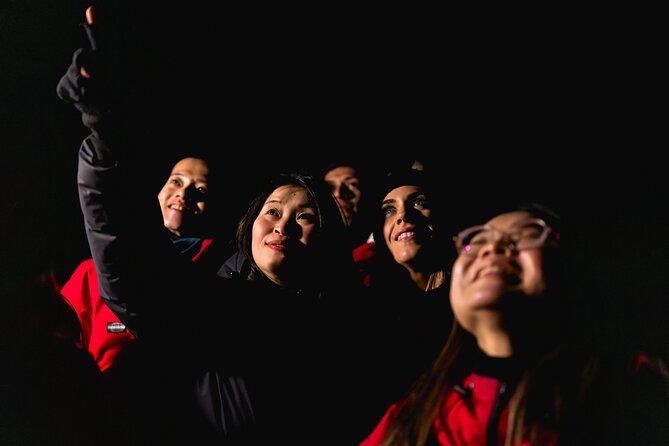
I especially like this format for children. Young people often enjoy the moment a telescope turns a bright point into a planet with a visible shape. The experience gives them a reason to look up again later, rather than treating stargazing as a silent wait in the cold.
You should still dress warmly all year. The sheltered craters reduce wind, but they do not turn the observatory into a heated room. A warm jacket and suitable layers matter even during warmer months. One clear April session was described as particularly cold, with more than an hour spent outdoors.
What the guides show you through the telescopes
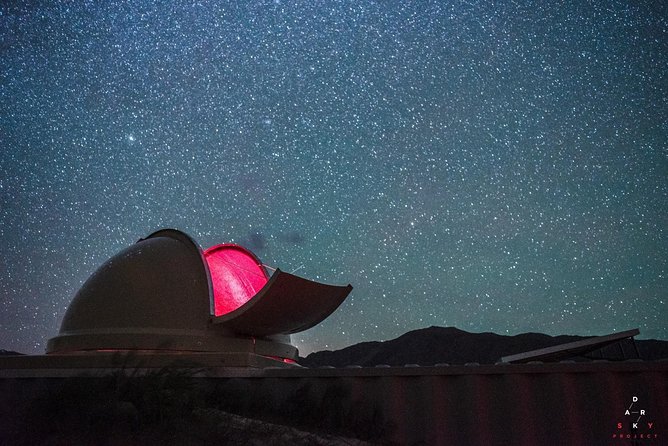
The astronomy guide combines spoken explanations, handheld lasers, and powerful telescopes. The laser helps connect the explanation to the real sky, while the telescope provides the close-up moments that most people remember.
On a clear night, you might see Jupiter, Saturn, star clusters, galaxies, or sections of the Milky Way. Saturn with its rings can be a remarkable sight, but it is not guaranteed. The same applies to Jupiter and its moons or any particular galaxy. The guide works with what is above you at that time.
That changing program is one of the experience’s strengths. You are not simply given a fixed script that ignores the weather and season. If the moon is bright, it may affect faint objects but offer a strong target of its own. If planets are well placed, they may receive more attention. If the sky is particularly clear, the guide can spend more time on star clusters and distant objects.
The session lasts about 1 hour and 15 minutes at Cowan’s, following the short transfer and check-in. That is long enough to include explanation and several telescope views without turning into an all-night commitment. The full experience runs about 90 minutes.
A telescope viewing is usually shared, so you may need to wait briefly while other people take their turn. That is normal for this kind of group outing. The group size is capped at 22, but the exact pace depends on how many objects are visible and how much explanation the guide gives.
Same corner of the country, a very different day out:
- Lake Tekapo: Mountaintop Stargazing at Mount John Summit
★ 4.5 · 176 reviews - Mount John Observatory Stargazing Experience, Tekapo
★ 4.5 · 160 reviews - Lake Tekapo: Single Day Multiple Entry Pass for Hot Pools
★ 4.2 · 129 reviews - Tekapo Star Gazing Tour – Soak in the Stars
★ 4.5 · 109 reviews
What happens when clouds move in
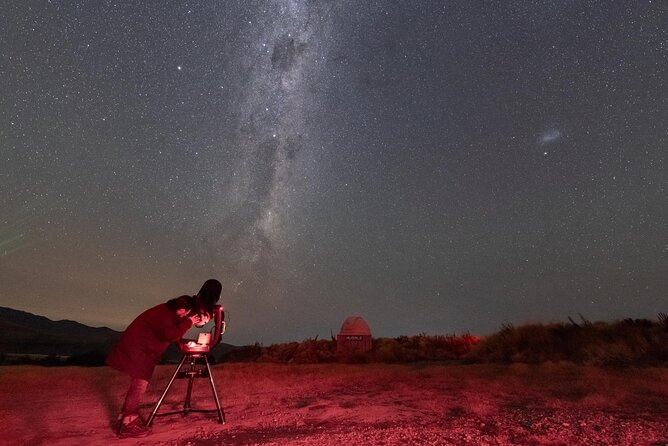
Weather is the biggest variable. Clouds can block the stars, and poor viewing conditions may lead to cancellation of the outdoor experience. If that happens, the operator may offer an alternative indoor experience. A full refund or a different date is also available when weather prevents the tour from operating.
An indoor session can still be worthwhile because it gives you an explanation of the night sky when telescopes cannot be used. But it is not identical to standing under the Mackenzie Basin sky. If the clouds later clear and you have the freedom to go outside on your own, you may still find good viewing in the countryside, but that is separate from the guided observatory session.
I would treat the weather policy as a real part of the booking, not a footnote. If the night is your only chance in Tekapo, book with the understanding that astronomy depends on conditions. If you have two or more nights, you have a better chance of finding a clear window.
Free cancellation is available up to 24 hours before the start time for a full refund. Cancellations or changes made inside that 24-hour period are not refunded, except where the operator cancels because of weather or because too few people are booked.
Is the $82.11 price good value?
At $82.11 per person, this is not the cheapest way to look at stars. You are paying for the Dark Sky Reserve setting, return transport to a private observatory, a guide-led explanation, sheltered viewing areas, and access to powerful telescopes.
The price makes the most sense if you are new to astronomy or want a structured introduction. Buying or carrying suitable equipment yourself would not solve the main problem: knowing where to look and understanding what you are seeing. Here, the guide does that work for you.
Families may find the discounted tickets for children aged 17 and under helpful. The minimum age is five, so the experience can work for a mixed-age group, provided younger children can stay warm and attentive outside.
The value is less certain if you already own strong astronomy equipment or prefer quiet, independent stargazing. You may also feel disappointed if clouds force the evening indoors, even with the refund option. The operator cannot control the sky, and no telescope can create clear conditions.
Who will enjoy this experience most?
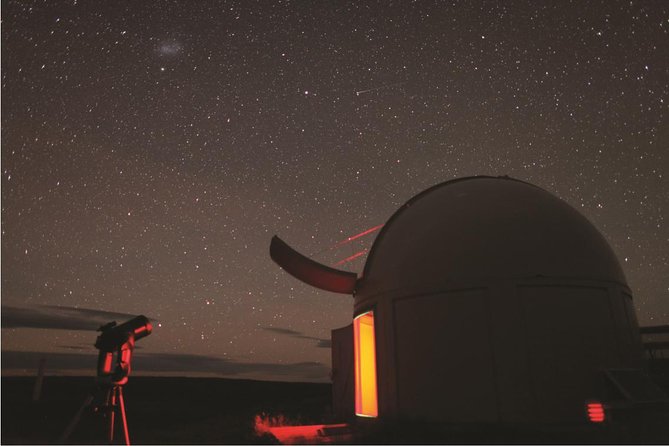
This is a good fit for first-time stargazers, families, couples, and anyone who wants context as well as views. The guide-led format takes away the guesswork. You do not need to learn constellation names in advance.
It is also useful for visitors with limited time in Lake Tekapo. The meeting point is near town, the shuttle ride is short, and the total duration is about an hour and a half. You can add it to an evening without committing to a much longer excursion.
Children are likely to enjoy the practical side of the session, especially when a telescope reveals a planet or a star cluster. The experience is not designed as a noisy entertainment show, though. Children need to follow instructions, stay with their adult, and cope with the cold.
This is less suitable if you dislike late nights, cannot speak the language used for the tour, or expect a guaranteed list of planets. Communication is required for health and safety, and anyone unable to speak the tour language will not be allowed to join.
Practical details that make the evening easier
Use the mobile ticket on your phone. A printer is not needed, and confirmation arrives at the time of booking.
Make your own way to the Dark Sky Project base. Public transport is nearby, but hotel pickup and drop-off are not included.
Wear warm clothing in every season. The craters provide shelter from wind and light, but the astronomy session remains an outdoor experience.
If you book a time after midnight, double-check the date. This is an easy mistake to make when the evening technically becomes the next calendar day.
The observatory is wheelchair accessible. Most people can participate, but children must be accompanied by an adult.
Should you book Cowan’s Private Observatory?
Book it if you want a clear, friendly introduction to the southern sky and would rather have a guide point out the important sights than figure them out alone. The sheltered craters, short shuttle, mobile ticket, family pricing, and weather refund policy make the logistics easy.
I would be more cautious if your schedule allows only one night and the forecast looks poor. Even on a clear night, the exact telescope views depend on the season and time. For most first-time stargazers in Lake Tekapo, though, the chance to see Saturn, Jupiter, the Southern Cross, or a crisp band of Milky Way makes the $82.11 fee reasonable, especially when you value expert help and a comfortable viewing setup.
FAQ
Where does the stargazing experience begin?
You check in at the Dark Sky Project base in Lake Tekapo Park, near Tekapo township.
How do I reach Cowan’s Private Observatory?
A shuttle takes you from the Dark Sky Project base to the observatory. The drive takes about five minutes.
How long does the experience last?
The total experience lasts approximately 1 hour and 30 minutes. The observatory session itself lasts about 1 hour and 15 minutes, in addition to the check-in and transfer.
What can I see through the telescopes?
Depending on the season, time, and cloud cover, you might see planets, galaxies, star clusters, the Milky Way, and notable constellations. Clear sessions have included Jupiter, Saturn and its rings, and the Southern Cross.
Is the observatory suitable for children?
Yes. The minimum age is five, discounted tickets are available for those aged 17 and under, and children must be accompanied by an adult.
What happens if the weather is bad?
If weather prevents the outdoor session, you may be offered an alternative indoor experience. You can also be offered a different date or a full refund when the tour is canceled because of poor weather.
Should I bring warm clothing?
Yes. You are advised to dress warmly all year because the stargazing takes place outdoors, even though the craters provide shelter from wind.
Can wheelchair users join?
Yes. The observatory is accessible to wheelchair users, and most people can participate.
Just added around Lake Tekapo
- Lake Tekapo Scenic Wilderness Cass Valley Tour★ 4.5 · 19 reviews
- Lake Tekapo Ultimate Stargazing Experience★ 5.0 · 3 reviews
- Christchurch to Tekapo Small-Group Tour (one-way)★ 5.0 · 4 reviews
- Lake Tekapo: Indoor Māori Cultural Astronomy Experience★ 4.5 · 43 reviews
- Tekapo: Merino Sheep Shearing and Sheepdog Demonstration★ 5.0 · 26 reviews
- Queenstown to Tekapo Small Group Tour One Way★ 4.6 · 6 reviews
- Private Photoshoot in Lake Tekapo★ 5.0 · 3 reviews
- Lake Tekapo: Ultimate Stargazing Experience★ 4.3 · 12 reviews
Stargazing Tours, compared.
Mount John Observatory Stargazing Experience, Tekapo
Read our review →
Silver River Stargazing Experience in Lake Tekapo
Read our review →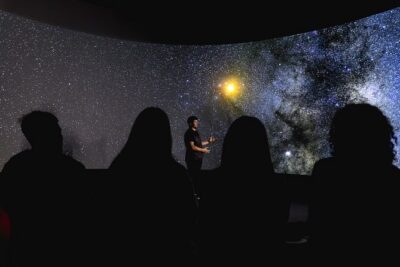
Dark Sky Indoor Maori Cultural Astronomy Experience
Read our review →Browse the lists this tour appears in