
Reviewed · STARGAZING TOURS
Mount John Observatory Stargazing Experience, Tekapo
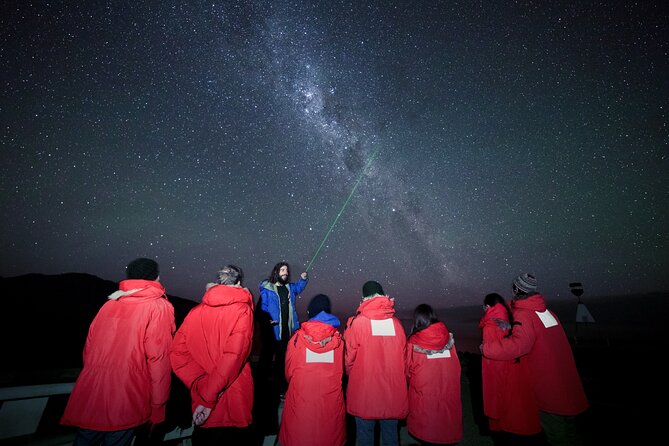
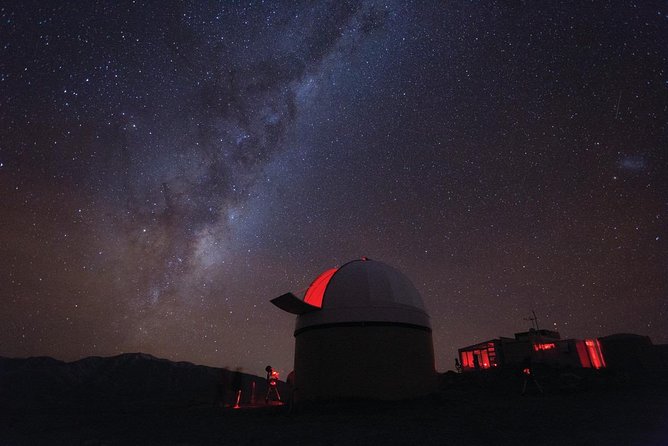
Mount John Observatory puts you above Lake Tekapo and inside the Aoraki McKenzie International Dark Sky Reserve, one of the finest places in the world for seeing the Southern night sky. You may spot the Southern Cross, Jupiter’s moons, ancient star clusters, and perhaps a distant galaxy, all with help from a guide who can turn a dark sky into a readable map.
I like two things here: the rare access to the University of Canterbury research centre and the mix of simple naked-eye viewing with serious telescope time. The guides, including Kieran, Alice, and Olive on some departures, make the science friendly rather than stuffy.
The catch is the weather. Clouds can cancel the summit visit, and the replacement indoor session may feel thin compared with the real thing. It is also cold, dark, and not a good match for anyone with mobility limits.
Key points before you book
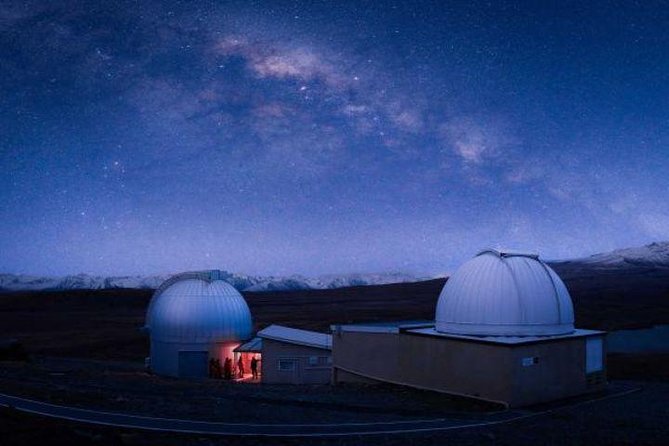
- Mountaintop access: Ride from Lake Tekapo to the 1,029-metre summit of Mount John.
- Three ways to see the sky: Watch with your own eyes, follow laser-pointer explanations, and view distant objects through advanced telescopes.
- Small-group format: The trip is capped at 22 people per departure time, with a stated maximum of 30 participants for the activity.
- Cold-weather gear supplied: Extreme Cold Weather jackets are provided, but you should still wear warm layers.
- English and Mandarin guidance: You must speak the tour language for safety reasons.
- Weather matters: A cloudy or otherwise poor night may lead to a different date, a refund, or an indoor alternative.
Why Mount John is the right place for stargazing
Tekapo is not simply a convenient town with a telescope on a hill. Mount John sits at 1,029 metres above the lake, within the Aoraki McKenzie International Dark Sky Reserve. The reserve is recognised as the largest Gold-standard reserve of its kind, which matters because dark skies let you see far more than the brightest stars.
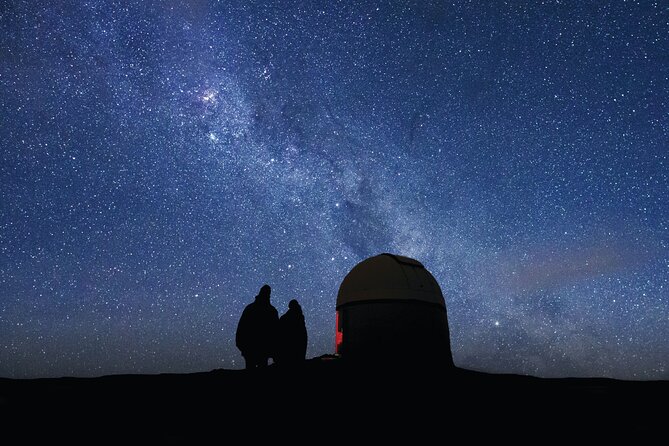
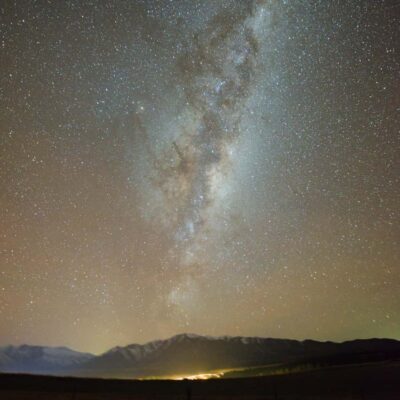
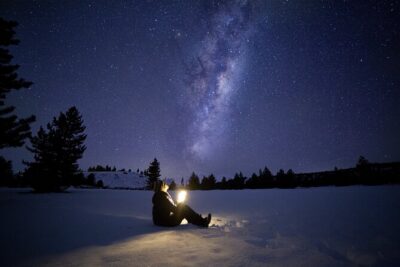
Light pollution hides much of the night sky in towns and cities. Here, the Milky Way can stretch across the sky in a way that feels almost unfamiliar. The southern half of the heavens also offers objects you cannot see well, or at all, from many northern locations.
That makes this tour useful even if you know little about astronomy. You do not need to arrive with a working knowledge of star charts. The guide points out major constellations, explains what you are seeing, and helps you separate real features from common mistakes.
One particularly neat lesson is the difference between the Southern Cross and the true southern celestial pole. The bright star that looks like it should mark south is not always the correct guide. A careful explanation can make the Southern Hemisphere sky easier to understand for the rest of your trip.
More Stargazing Tours in Lake Tekapo
- Lake Tekapo: Alpine Stargazing Experience with a Guide
★ 4.5 · 626 reviews - Lake Tekapo: Stargazing Experience
★ 4.9 · 607 reviews - Chameleon Stargazing Shared Tour
★ 5.0 · 181 reviews
From Lake Tekapo to the 1,029-metre summit
You begin at the Dark Sky Project base in Lake Tekapo. The return transport to the summit is included, so you do not need to arrange your own ride up the mountain. The transfer takes about 15 minutes as part of the scheduled experience.
The short journey matters because access to the summit is exclusive to the Dark Sky Project experience. You are not simply meeting a guide beside a public road and looking upward from town. You are being taken to a working observatory site high above Tekapo.
The mountain setting also brings practical limits. The route and summit area are not recommended for people with mobility issues. The tour takes place at night, and the ground can be hard to see. You are asked not to use white lights or torches, so staying close to the guide and your group is sensible.
The summit session and its three viewing methods
The main session lasts about 90 minutes. That is enough time to move between explanation and observation without making the night feel like a rushed demonstration.
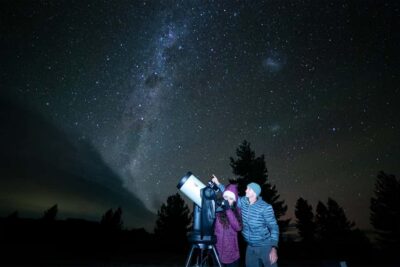
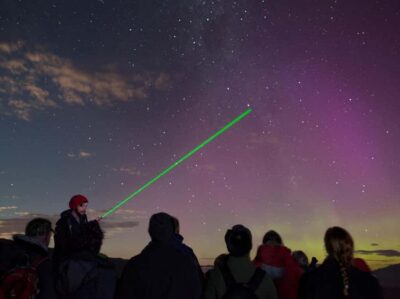
First comes naked-eye stargazing. This is the part many people underestimate. Before looking through a telescope, your eyes need time to adjust to darkness. The guide uses laser pointers to mark stars and constellations, helping you build a picture of the sky above you.
You may learn to identify familiar southern stars, the Southern Cross, planets, star clusters, and other major features. The exact program depends on the season, the position of the planets, and the clouds. Every night offers a different set of targets.
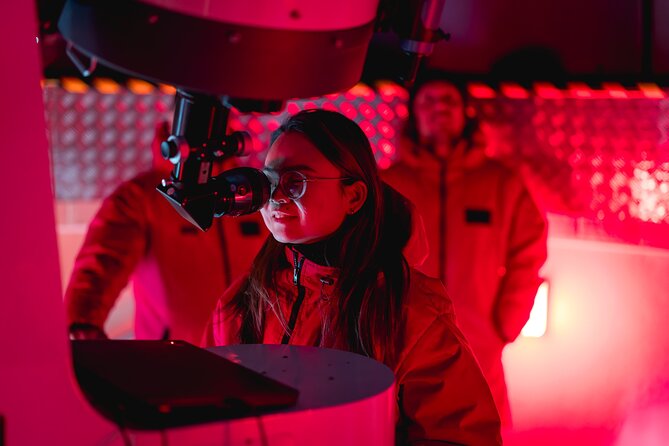
The second part uses the observatory’s telescope equipment. You may get views of the moons of Jupiter, compact star clusters, and other distant objects. One especially interesting target described during the experience is a cluster of stars formed soon after the Big Bang. You might also see a far-off galaxy if the conditions and equipment make it possible.
The third element is the guide’s interpretation. A telescope can show you a bright point or a fuzzy patch, but the story behind it gives the sight meaning. The guides explain what the object is, how far away it may be, and why it looks the way it does.
You may have three telescope stations available during the evening. That gives you more variety than a single quick look through one instrument. It also means the group may need to take turns, so do not expect uninterrupted private telescope time.
Guides who make the science easy to follow
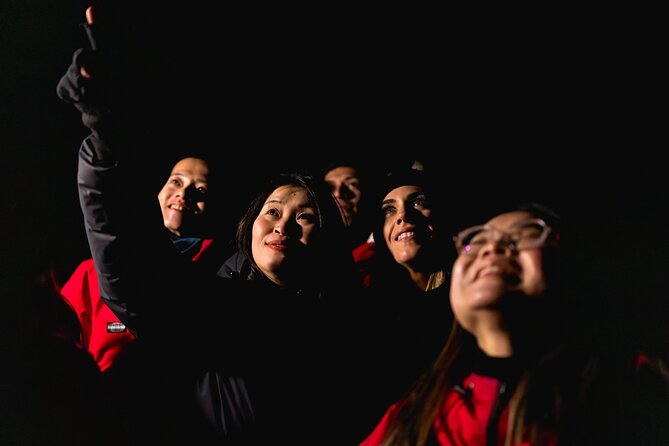
The strongest part of this experience is the human explanation. Guides such as Kieran, Alice, and Olive have been singled out for being engaging and clear, while other guide teams bring astronomy experience and practical knowledge of the southern sky.
That matters because astronomy can easily become a list of names and numbers. A good guide gives you a way to remember what you see. The best explanations connect a constellation to navigation, a planet to its moons, or a faint cluster to the long story of the universe.
The experience is designed for beginners, but it does not talk down to people who already know some astronomy. A keen amateur may still find something new, particularly in the telescope viewing and the southern objects that are difficult to see elsewhere.
Language is an important condition. Tours are offered in English and Mandarin, and you must be able to speak the language of the tour for health and safety reasons. If you cannot, you will not be allowed to join.
Same corner of the country, a very different day out:
- Lake Tekapo: Mountaintop Stargazing at Mount John Summit
★ 4.5 · 176 reviews - Lake Tekapo: Single Day Multiple Entry Pass for Hot Pools
★ 4.2 · 129 reviews - Tekapo Star Gazing Tour – Soak in the Stars
★ 4.5 · 109 reviews - Silver River Stargazing Experience in Lake Tekapo
★ 4.5 · 106 reviews
Cold, darkness, and the gear you should bring
Mount John can be very cold, even in spring. You receive an Extreme Cold Weather jacket, which is a welcome extra, but do not treat it as a replacement for proper clothing.
Wear several warm layers, with covered footwear and warm socks. You will spend much of the session standing outside, and cold becomes more noticeable when you are trying to keep still at a telescope. A jacket supplied by the operator helps, but your own base layers still matter.
The darkness is part of the point, yet it affects how you move. White lights and torches are not allowed because they ruin night vision for everyone nearby. Keep close to your group, follow the guide, and take care on the ground.
Photography is not the main attraction. On a still night you may be able to take pictures, but even a small amount of wind can prevent staff from helping with camera photos. You will get more from the evening by watching and listening than by trying to record every view.
Cloud cover can change the whole evening
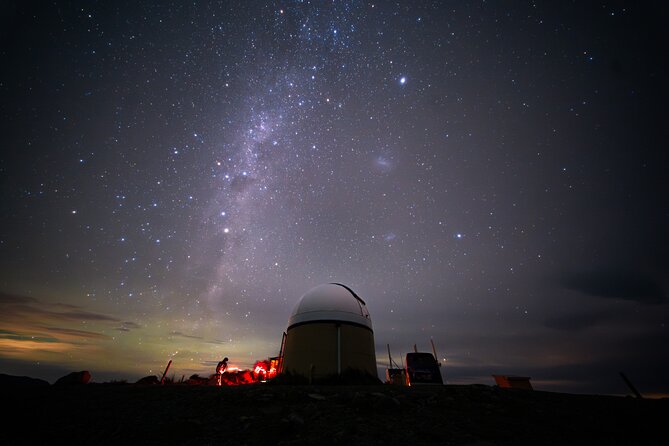
This is an outdoor astronomy experience, not a guaranteed telescope appointment. Clear or partly clear skies are needed for the summit session. If cloud cover prevents the tour from operating, you may be offered another date or a full refund.
Some nights are mixed. Cloud may cover part of the sky while openings reveal the Southern Cross, planets, or brighter stars. A skilled guide can work around moving cloud and still make good use of the available gaps.
But you should be realistic. If the summit visit is cancelled, the alternative indoor experience may not satisfy you in the same way. It can provide information, but it cannot reproduce the cold air, open sky, or sense of scale you get on Mount John.
If stargazing is a major reason for visiting Tekapo, consider allowing more than one night in town. The tour can be moved to another date when conditions permit, and an extra evening gives you a better chance of seeing the sky at its best. The weather policy allows a different date or a full refund when poor weather cancels the experience.
A full moon can also affect the view. Moonlight may brighten the sky and make the Milky Way less obvious, even when clouds are absent. If you have flexibility, a darker moon phase is preferable, though the exact quality of the night still depends on cloud and wind.
Is the $139.39 price good value?
The price is $139.39 per person. That is not a casual add-on for a quick look at the stars, but the fee includes return transport from Lake Tekapo, summit access, the guide, telescope viewing, and a warm extreme-weather jacket.
The value comes from access. You are not paying only for a telescope image. You are paying to reach a restricted summit site connected with the University of Canterbury’s astronomical research centre, then spend around 90 minutes with trained guides and observatory equipment.
I think the price makes the most sense if you are curious about astronomy and want structure. You could see plenty of stars from around Tekapo on your own, but you would not have the same access, equipment, or explanation. A self-guided look can be rewarding, yet it will not show you how to find the southern pole or reveal distant objects through observatory telescopes.
The value is weaker if you mainly want a dramatic photograph or a guaranteed view of the Milky Way. Weather, moonlight, wind, and group timing all affect what you see. There is no promise that every listed type of object will appear on your night.
Group size, timing, and who will enjoy it most
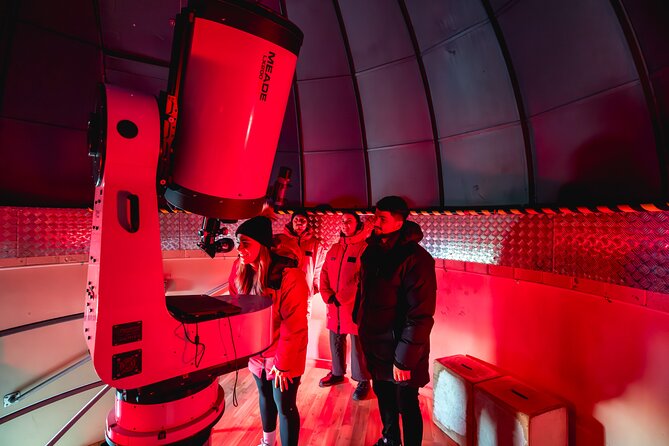
The tour limits each departure time to 22 people, with a maximum activity size listed as 30. That is small enough for a guide to address the group, though telescope viewing can still involve waiting your turn.
The total experience lasts about 1 hour and 45 minutes. It is long enough for a proper introduction and several telescope targets, but short enough to fit into a wider Tekapo stay.
I would recommend it most strongly for:
- First-time stargazers who want clear explanations
- Families with children who can handle the cold and darkness
- Visitors who want to see the Southern Hemisphere sky from a serious observatory site
- Amateur astronomy fans looking for southern objects and expert guidance
- People staying in Lake Tekapo without their own transport to the summit
Children must be accompanied by an adult. The activity is not recommended for people with mobility issues, and you should be comfortable standing outside in cold conditions.
The tour is less suitable if you dislike darkness, struggle with cold, need step-free access, or want a private experience. It is also a poor choice if your schedule allows no room for a weather change.
What the experience teaches you about the Southern Sky
The best result is not a single telescope image. It is learning how to look upward with more confidence.
You may begin by seeing a mass of stars. By the end, you should have a few reference points: the Southern Cross, the true southern direction, major constellations, bright planets, and the difference between a star cluster and a planet.
The telescope adds scale. A planet’s moons show that our solar system is not just a set of bright dots. An old star cluster hints at the age of the universe. A distant galaxy, if visible, puts our own galaxy into perspective.
The setting adds another layer. You are surrounded by the University of Canterbury research centre and looking outward from a high summit rather than a town car park. That connection between active astronomy, public explanation, and a protected dark sky gives the evening more substance than a simple constellation talk.
Booking advice and cancellation details
Confirmation is provided at booking, and the ticket is mobile, so you can keep it on your phone. Check your selected date carefully if the departure is after midnight. In that case, the date can be easy to misread.
You can cancel for a full refund up to 24 hours before the start time. Changes or cancellations made within 24 hours are not accepted for a refund. If the operator cancels because of poor weather, you are offered another date or a full refund.
Because this is a night activity, leave enough time before and after it in your Tekapo plans. Do not schedule a tightly timed late dinner, long drive, or early departure immediately around the tour. Weather decisions can affect the evening, and the summit transfer is part of the experience.
Should you book the Mount John Observatory Stargazing Experience?
Book it if you want the best-supported introduction to the southern night sky during a Tekapo visit. The summit location, dark reserve, expert guides, laser-pointer lessons, and telescope access give the experience real value. It is especially good for beginners, families, and anyone who wants more than simply looking upward from town.
Go in with sensible expectations. The cold is real, the ground is dark, telescope time is shared, and clouds can cancel the summit session. If you can accept those limits and have some schedule flexibility, this is a strong choice.
I would skip it only if mobility, language, cold, or a rigid itinerary makes the conditions unsuitable. For most visitors who have a passing interest in astronomy, the combination of Mount John’s setting and clear, friendly instruction makes this one of the more worthwhile things to do around Lake Tekapo.
FAQ
How long does the Mount John Observatory Stargazing Experience last?
The experience lasts approximately 1 hour and 45 minutes. This includes about 15 minutes associated with the transfer and check-in at the Dark Sky Project, followed by about 90 minutes at the summit.
Where does the tour begin?
You check in with the Dark Sky Project team in Lake Tekapo township. Return transport to the summit of Mount John is included.
What is included in the ticket?
The ticket includes exclusive summit access, an expert astronomy guide, naked-eye stargazing with laser pointers, telescope viewing, return transport from Tekapo township, and an Extreme Cold Weather jacket.
Is the tour available in Mandarin?
Yes. Guides are available in English and Mandarin. You must speak the language of the tour for health and safety reasons.
What happens if the weather is too cloudy?
If poor weather prevents the summit tour from operating, you may be offered an alternate indoor experience, another date, or a full refund. Cloud can also produce a partial viewing experience when the tour still runs.
Can I cancel for a refund?
You can cancel up to 24 hours before the start time for a full refund. Cancellations or changes made less than 24 hours before the start time are not accepted for a refund.
Just added around Lake Tekapo
- Lake Tekapo Scenic Wilderness Cass Valley Tour★ 4.5 · 19 reviews
- Lake Tekapo Ultimate Stargazing Experience★ 5.0 · 3 reviews
- Christchurch to Tekapo Small-Group Tour (one-way)★ 5.0 · 4 reviews
- Lake Tekapo: Indoor Māori Cultural Astronomy Experience★ 4.5 · 43 reviews
- Tekapo: Merino Sheep Shearing and Sheepdog Demonstration★ 5.0 · 26 reviews
- Queenstown to Tekapo Small Group Tour One Way★ 4.6 · 6 reviews
- Private Photoshoot in Lake Tekapo★ 5.0 · 3 reviews
- Lake Tekapo: Ultimate Stargazing Experience★ 4.3 · 12 reviews
Stargazing Tours, compared.
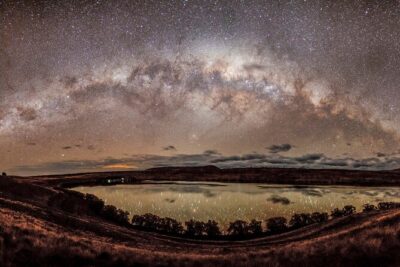
Silver River Stargazing Experience in Lake Tekapo
Read our review →
Stargazing Experience at Cowan’s Private Observatory
Read our review →
Dark Sky Indoor Maori Cultural Astronomy Experience
Read our review →Browse the lists this tour appears in