
Reviewed · MAORI CULTURE TOURS
Rotorua: Māori Cultural Performance with Dancing
The haka is the main event, but this short Rotorua performance gives you much more than a forceful war dance. You’ll hear traditional songs, watch the graceful poi dance, see stick games, and learn the story behind some of the music. I like the strong singing and the clear explanations, which help the show feel like a cultural introduction rather than a string of disconnected numbers.
I also like the sensible 30-minute length and the $20 price. You get a focused performance without a buffet, long village program, or other extras. The one thing to consider is that this ticket covers the performance only. It does not include a guided village tour or other activities at Whakarewarewa, and free seating means you should arrive early for the best spot.
Key points at a glance
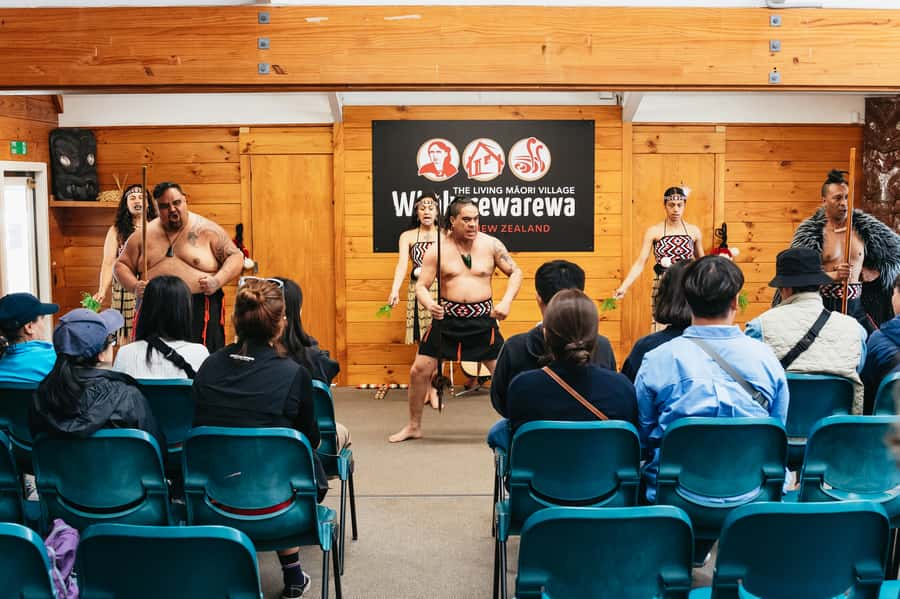
- The haka comes with context: You hear explanations before seeing the famous performance.
- Poi and stick games add variety: The show moves beyond the haka to display different Māori skills.
- Strong singing is central: Traditional melodies and harmonies give the performance much of its warmth.
- Thirty minutes works well: It is long enough for a useful introduction, but easy to fit into a busy Rotorua day.
- Free seating affects your view: Arrive early if you want a front-row position.
- The ticket is performance-only: Village tours, meals, and other activities are separate.
A compact introduction to Māori performance
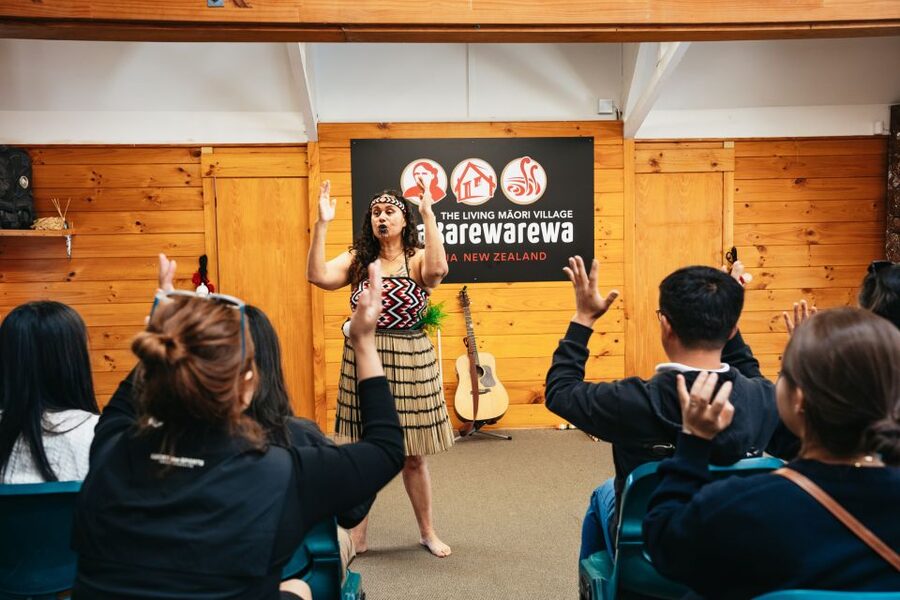
This experience takes place at Whakarewarewa, The Living Māori Village, one of Rotorua’s well-known Māori cultural settings. After you check in at the admissions building and collect your ticket, a host shows you to the performance area.
The format is simple. You sit down, listen to an introduction in English, and watch a sequence of songs and dances performed live. The show is designed as a short cultural presentation, not as a full-day visit or a broad tour of village life.
That focus is useful. Rotorua has many attractions competing for your time, and you may want a meaningful Māori experience without committing to a long program. In half an hour, you get a clear look at several performance traditions and the chance to see how song, movement, facial expression, and group rhythm work together.
The setting also matters. This is not presented as a detached theater production in an anonymous venue. It takes place at a living Māori village, which gives the performance a stronger sense of place. You are watching cultural arts in the community associated with the village, rather than simply attending a generic stage show.
At the same time, you should keep your expectations in check. The performance is a presentation for visitors. It can offer a respectful and enjoyable introduction, but 30 minutes cannot explain every part of Māori culture or village life.
More Maori Culture Tours in Rotorua
- Mitai Maori Village: Cultural Experience and Dinner Buffet
★ 4.7 · 3,575 reviews - Cultural Experience & Seasonal Māori Cuisine at Te Pā Tū
★ 5.0 · 1,546 reviews - Mitai Maori Village Cultural Experience in Rotorua
★ 4.5 · 1,294 reviews
What happens after you check in
Your first step is the admissions building, where you check in and receive your tickets. An English-speaking host or greeter then directs you to the performance.
The instructions are straightforward, which is helpful if you have just arrived at the village after another activity. One practical detail matters: seating is free rather than assigned. The performance area may not feel crowded, but the best seats can go first.
I would arrive early enough to settle in and choose your position. This is especially useful if you want to see the performers’ footwork and hand movements clearly. A front position also helps you follow the facial expressions that are an important part of the haka.
The available information does not provide a named guide or performer, so do not book this expecting a particular host. The host’s role is to welcome you and lead you into the performance. The cultural material comes from the performers on stage.
The opening songs set the tone
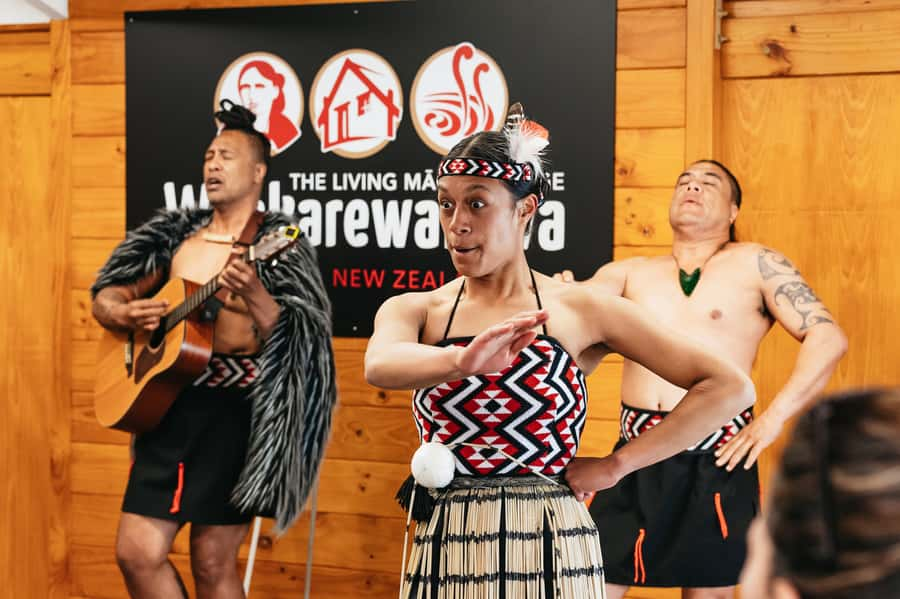
The show begins with traditional singing and an explanation of what you are about to see. This opening is important because it gives you a little cultural context before the movement begins.
The voices are a major strength of the performance. The melodies can feel gentle and welcoming, then the mood shifts as the group builds energy. You are not only watching dance steps. You are hearing a shared musical tradition carried by several voices at once.
One song specifically associated with the program is Pokarekare Ana. The story behind the song is explained, giving the melody more meaning than it would have if you simply heard it as a familiar tune. That small piece of explanation is exactly the kind of detail that helps a short show stay with you.
The singing also provides balance. If you have seen haka performances online, you may expect constant intensity. Here, the quieter songs and harmonies create space for the forceful sections to have an impact.
The haka brings power and ceremony
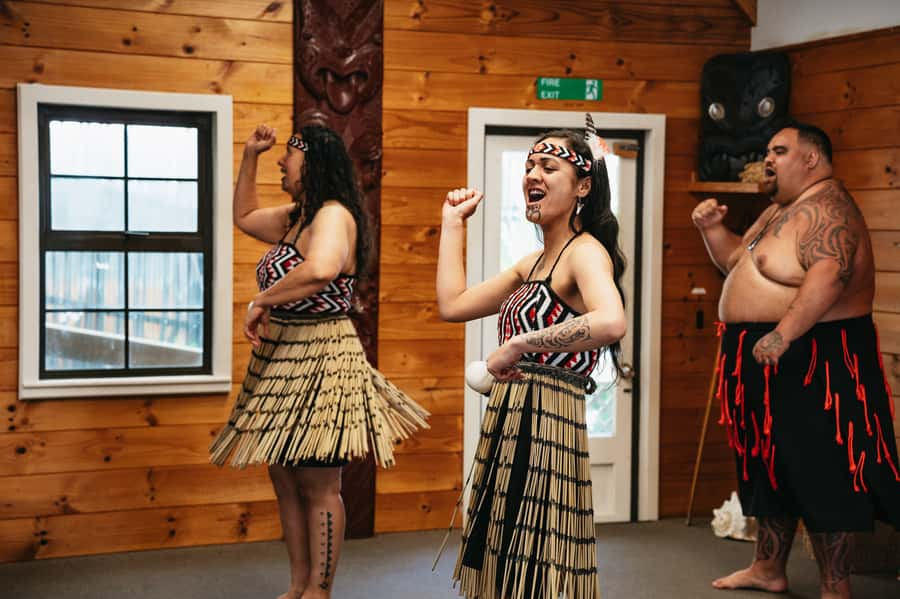
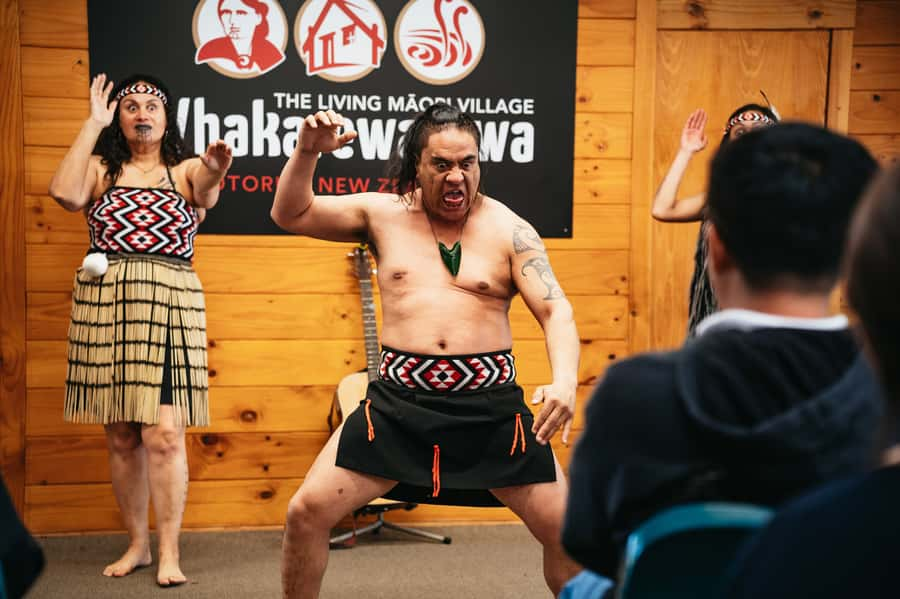
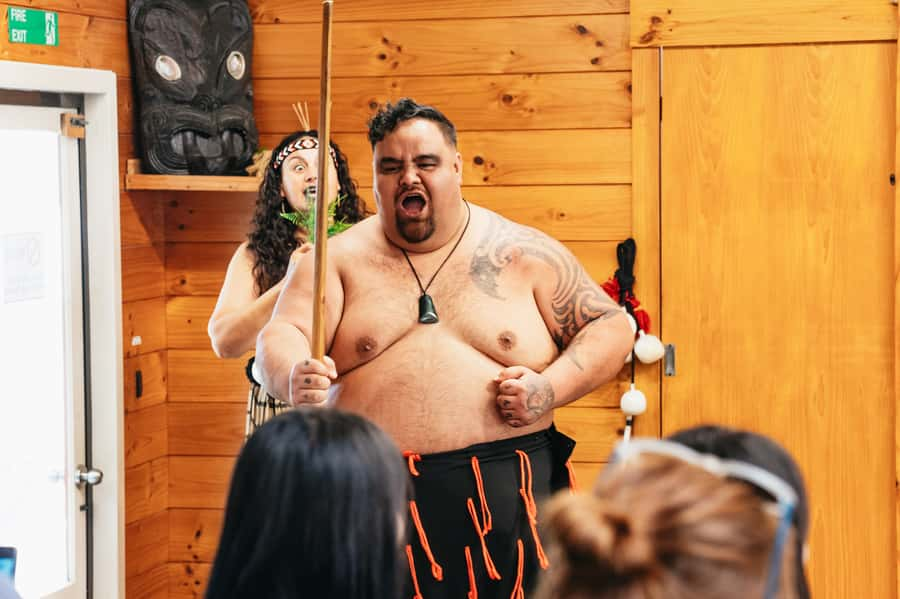
The haka is the moment most people are waiting for, and the live setting makes a difference. On a screen, you can study the movements, but in person you feel the combined force of stamping feet, sharp gestures, shouted words, and focused expressions.
The performers explain the haka before presenting it. That matters because the dance is not simply a challenge or a display of aggression. The meaning depends on the form being performed and the setting in which it is presented.
You should watch the whole group rather than focus only on the loudest moments. The timing between performers is part of the appeal. Small movements, changes in stance, and synchronized gestures all help create the overall effect.
The haka can be intense, but the presentation remains welcoming. Families and teenagers can follow the show easily, and the performance is accessible even if you know little about Māori culture. You are given enough background to understand what you are seeing without being buried in a long lecture.
Same corner of the country, a very different day out:
- Rotorua Canopy Tours: 2.5Hour Native Forest Zipline Adventure
★ 5.0 · 4,563 reviews - Rotorua: Wai-O-Tapu Geothermal Park Entry Ticket
★ 4.6 · 2,601 reviews - Rotorua’s Ultimate Zipline: 6 ziplines, 400 m Tandem, Cliff Walk
★ 5.0 · 2,557 reviews - Rotorua Rafting: Kaituna River White Water Rafting & Free Sauna
★ 5.0 · 1,952 reviews
Poi dance and stick games show a different side
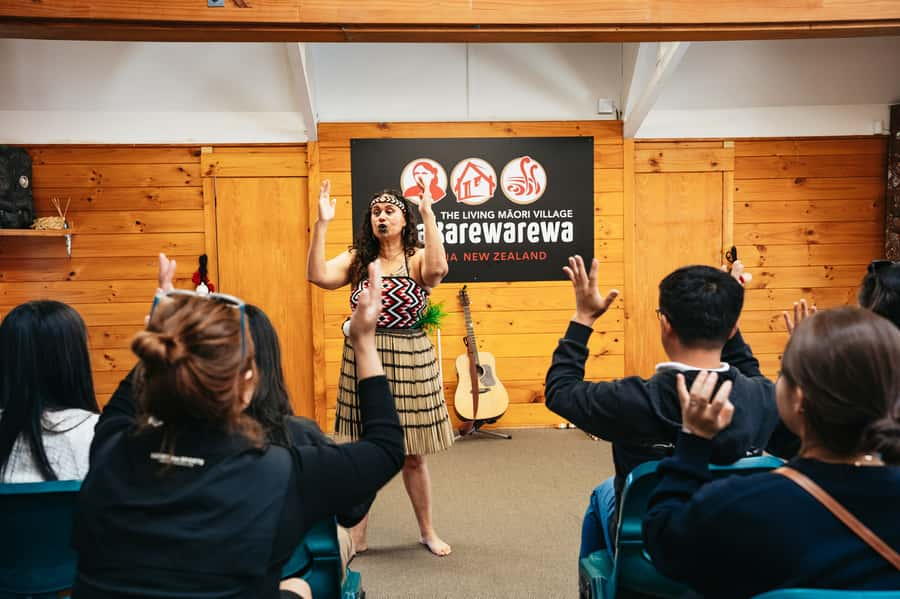
The poi dance changes the pace. Instead of the grounded force of the haka, you see controlled hand and arm movements as the performers swing and coordinate the poi. The dance has its own rhythm and visual pattern, and it gives the program a graceful counterpoint to the more powerful sections.
Stick games add another change. They show timing, coordination, and group awareness. The sound and movement make this part especially easy to follow, even from a distance.
Together, these sections show why the performance works better than a haka-only presentation. Māori performance traditions are not one single style. The program gives you several forms of song and movement, each with a different mood and purpose.
The variety also helps keep children engaged. Younger audience members may respond first to the haka, while the poi and stick games offer different visual details to notice. The final group song and dance can involve the audience, adding a light, friendly finish.
Audience participation keeps the ending relaxed
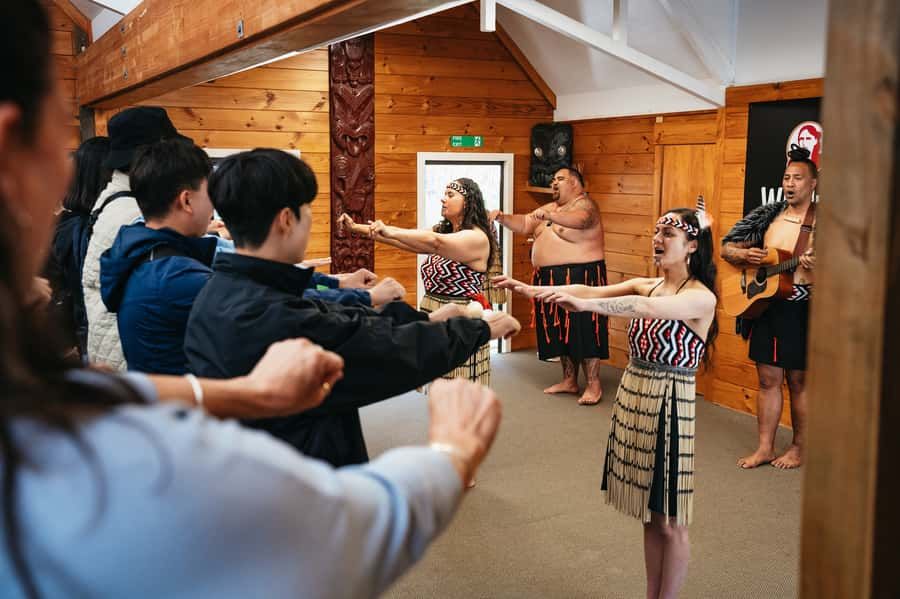
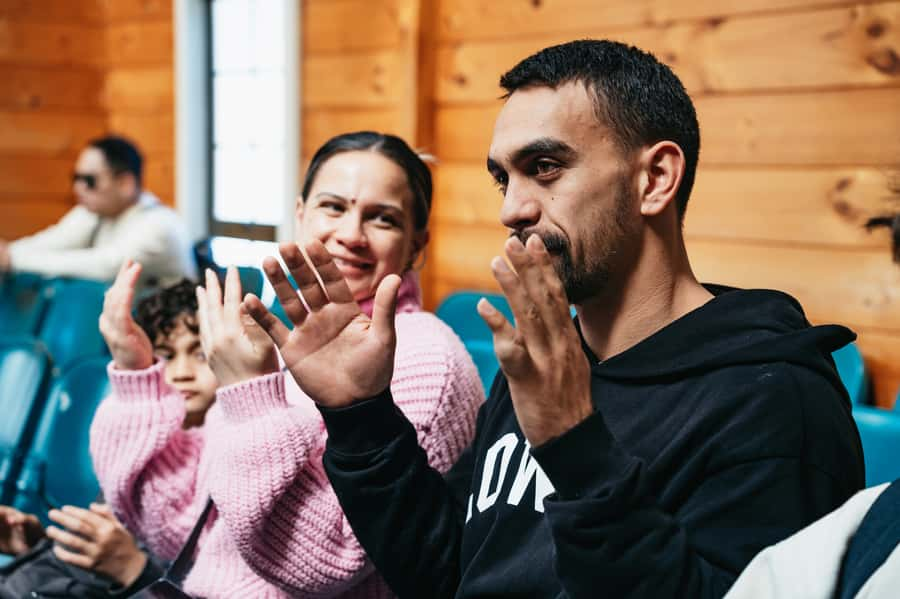
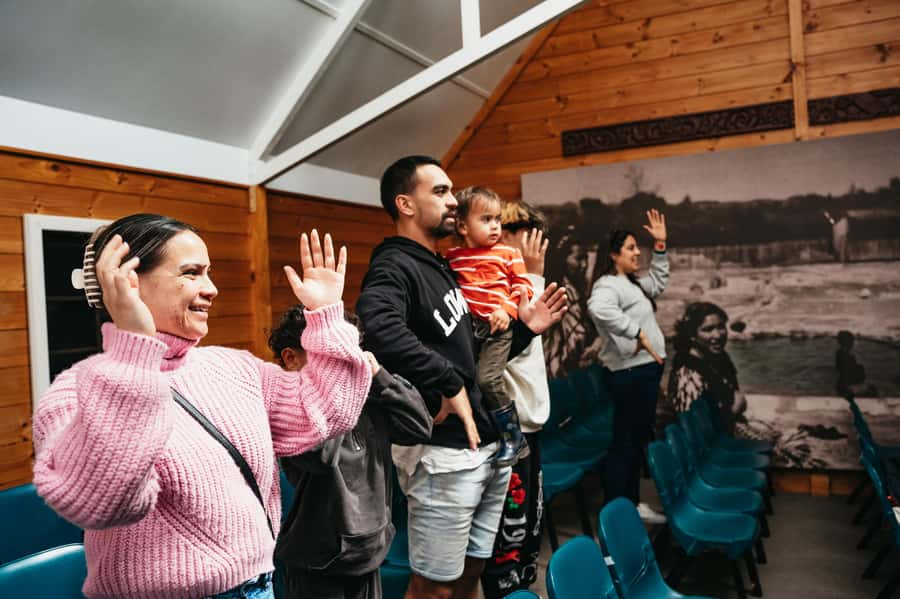
You may be invited to copy some of the movements near the end. This is not a demanding workshop, and you do not need dance experience. It is a brief way to make the audience part of the closing moment.
I like this approach because it avoids turning the entire performance into a forced activity. Most of the show lets you watch and listen. Participation comes as a short final touch, when you already understand the style of movement.
The atmosphere is warm rather than stiff. Smiles, group singing, and the performers’ enthusiasm help the show feel shared. If you prefer to remain seated and observe, the main performance still gives you plenty to enjoy.
One limitation is worth noting. There is no guaranteed photo opportunity with the performers after the event. If a photograph with the cast is important to you, do not assume it will be offered.
How the price compares with the time
At $20 per person, this is one of the easier Rotorua cultural experiences to fit into a budget. The value comes from the focus. You are paying for a live performance with singing, haka, poi dance, stick games, and an English introduction, not for a large package of meals and activities.
That makes it a good choice if you want a short taste of Māori culture before moving on to another Rotorua attraction. You can also use it as an addition to a separate visit at Whakarewarewa.
The price is less compelling if you want a full village experience. The ticket does not include a tour of the village, food, or other activities. You will need to book those separately if they are part of your plan.
Think of this as an entry point. It gives you a concentrated look at Māori performing arts, but it is not meant to answer every question about daily life, history, food, or the wider community.
Combining it with the village visit
Some visitors attend the performance after a guided tour of the village, and that pairing can work well. A village tour gives you broader context about Māori communal life, cooking, and the way resources are shared. The performance then lets you see song and dance as living arts within that setting.
Do not assume the tour is included with this ticket. The listed inclusions are the performance and host only. If you want the wider village program, check that you have booked it separately.
The order can also work in reverse. You can see the performance first, then explore the village if you have a separate booking. Either way, the show gives you a clear anchor for your visit.
For a short stop, the performance alone is enough. For a deeper cultural visit, add the village tour and allow extra time. The two experiences serve different purposes, so the choice depends on how much time and money you want to spend.
Who will enjoy this performance most
I would recommend it to first-time visitors to Rotorua who want a clear, approachable introduction to Māori culture. It suits couples, families, older visitors, and teenagers because the program is short, visual, and explained in English.
It is also useful for people with packed itineraries. Thirty minutes is long enough to feel worthwhile but short enough to place between other activities. The show does not require a full afternoon or a meal package.
You should book it if live music matters to you. The singing is not filler between dances. It is one of the strongest parts of the program, and the quieter songs give the performance emotional weight.
You may want something longer if you already know Māori performance traditions or want a detailed cultural discussion. Likewise, if you expect personal interaction with performers, extensive village access, or photographs afterward, this ticket may feel limited.
The venue is wheelchair accessible, which makes it a practical option for visitors who need step-free access. English is the language used by the host and for the explanations.
Booking advice and final verdict
I would book this performance if you want a compact, reasonably priced cultural experience with a strong haka, beautiful singing, poi dance, and stick games. Arrive early for free seating, and treat the program as a focused performance rather than a complete village visit.
The best reason to choose it is its balance. You get energy, grace, music, explanation, and a little audience participation without being committed to a long production. The main limitation is also clear: the ticket ends when the performance ends.
If you have extra time, pair it with a separate guided visit to Whakarewarewa. If your schedule is tight, the 30-minute show is a sensible way to add Māori culture to a Rotorua day. For $20, it offers a direct and enjoyable introduction, with enough substance to be more than a quick photo stop.
FAQ
How long does the Māori cultural performance last?
The performance lasts 30 minutes.
How much does the experience cost?
The listed price is $20 per person.
What is included in the ticket?
The ticket includes the performance and a host who shows you to it.
Is the village tour included?
No. The ticket does not include a tour of the village or other village activities.
What will I see during the performance?
You will see traditional Māori singing and dancing, including the haka, poi dance, stick games, and other performance elements.
Is the performance in English?
The host and explanations are in English.
Is the venue wheelchair accessible?
Yes, the activity is listed as wheelchair accessible.
Can I cancel the booking for a refund?
You can cancel up to 24 hours in advance for a full refund. You can also reserve now and pay later.
Just added around Rotorua
- TRIPLE DEAL Wai-O-Tapu, Redwood Forest & Blue Springs Ex Auckland★ 5.0 · 20 reviews
- Volcanic Rotorua Day Trip from Auckland★ 5.0 · 4 reviews
- Private Tour to Rotorua’s Natural wonders and Māori Arts & craft.★ 5.0 · 4 reviews
- Private Transfer From Auckland Airport To Rotorua★ 5.0 · 5 reviews
- Rotorua Highlights Tour inc. Te Puia Tour, Lunch & Cultural Show★ 4.5 · 53 reviews
- Private Tour – Rotorua Adventures Day Trip From Auckland★ 5.0 · 19 reviews
- Private Tour WaiOtapu & Huka Falls & Blue springs from Auckland★ 5.0 · 3 reviews
- Rotorua Full Day Private Tour from Auckland★ 5.0 · 3 reviews
Maori Culture Tours, compared.
Mitai Maori Village: Cultural Experience and Dinner Buffet
Read our review →
Cultural Experience & Seasonal Māori Cuisine at Te Pā Tū
Read our review →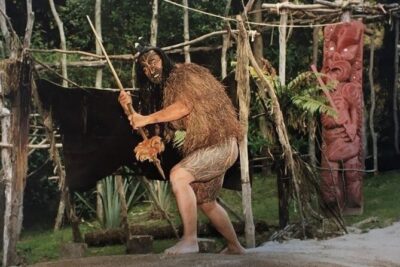
Mitai Maori Village Cultural Experience in Rotorua
Read our review →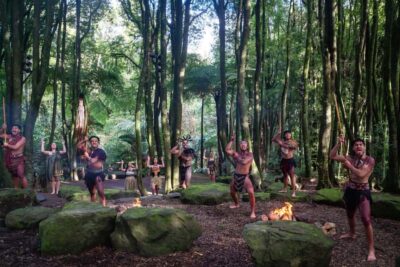
Te Pa Tu Māori Cultural Experience with Dinner
Read our review →
Lake Taupo: Sailboat Trip to the Maori Rock Carvings
Read our review →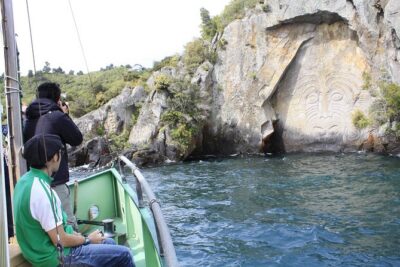
Lake Taupō Māori Rock Carvings Scenic Cruise aboard Ernest Kemp
Read our review →
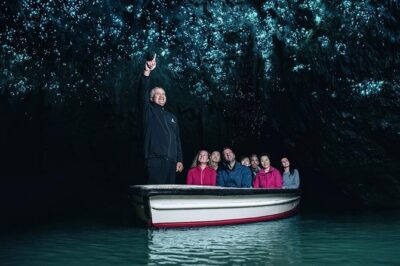
Waitomo Caves & Rotorua – Te Puia Small-Group Tour from Auckland
Read our review →Browse the lists this tour appears in