
Reviewed · MAORI CULTURE TOURS
Mitai Maori Village Cultural Experience in Rotorua
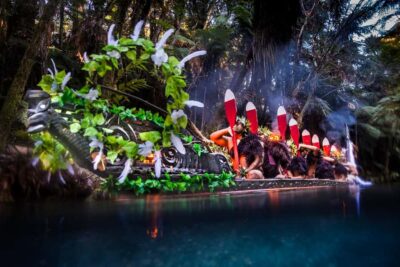
The most memorable part of this Rotorua evening is the arrival of Māori warriors in a waka, or traditional canoe, on the Wai-o-whiro stream. You also get a bush walk to the Fairy Spring, a haka and poi performance, and a hangi buffet for one booking price. I especially like the natural glowworm setting and the chance to ask questions about Māori customs rather than simply watch a show.
I also like the practical setup: hotel transport, dinner, and entertainment are handled in one three-hour outing. The main thing to weigh is the size of the crowd. Some evenings feel well organized, while others can involve close to 180 or even 300 people, which can make the forest visit and cultural welcome feel rushed.
Key points at a glance
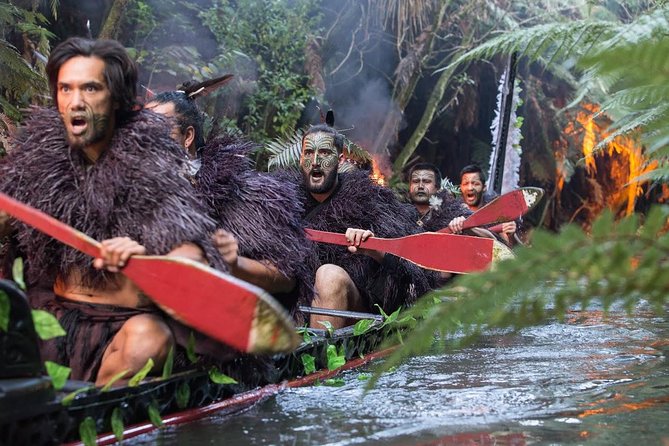
- The waka arrival is the evening’s signature scene: Māori warriors paddle down the Wai-o-whiro stream in traditional dress.
- The hangi is generous and central to the experience: Expect New Zealand meats and poultry, vegetables, salads, and buffet desserts.
- Glowworms appear in a natural bush setting: You may see them near the Fairy Spring, though the number can vary.
- The performance combines ceremony and entertainment: Haka, poi, songs, games, weapon displays, and questions about Māori life are included.
- Hotel pickup simplifies the evening: Courtesy transfers are available from local Rotorua accommodation, with limited places.
- This is a popular group event: It suits families and first-time visitors, but it is not an intimate village visit.
What the Mitai evening is really like
Mitai Māori Village gives you a compact introduction to Māori culture through a mix of welcome rituals, storytelling, food, nature, and performance. You are not simply sitting in a theater for three hours. The evening moves between the stream, the bush, the dining area, and the performance space.
That variety is the appeal. One moment you are watching a waka glide through the dark water. The next, you are hearing about medicinal native plants or looking for glowworms along the forest path. The final part shifts to a lively stage show built around Māori songs, dances, challenges, and the haka.
It is also important to set your expectations correctly. Mitai is a commercial cultural attraction, not a quiet visit to a working village. The experience is designed to welcome large groups efficiently. You will learn a great deal, but you will share the setting and the presentation with many other people.
The listed price is $104.88 per person. That is a fair package price for Rotorua if you would otherwise pay separately for transport, dinner, and a cultural performance. The value is strongest when you use the included pickup and want an easy evening without arranging a restaurant or finding your way back after dark.
More Maori Culture Tours in Rotorua
- Mitai Maori Village: Cultural Experience and Dinner Buffet
★ 4.7 · 3,575 reviews - Cultural Experience & Seasonal Māori Cuisine at Te Pā Tū
★ 5.0 · 1,546 reviews - Rotorua: Te Pa Tu Māori Cultural Experience with Dinner
★ 4.8 · 1,193 reviews
Arriving at Mitai and entering a sacred place
You can meet the group at 196 Fairy Springs Road, or arrange a courtesy transfer from eligible accommodation providers in Rotorua. Pickup places are limited, so confirm the arrangement when booking rather than assuming every hotel transfer is automatic.
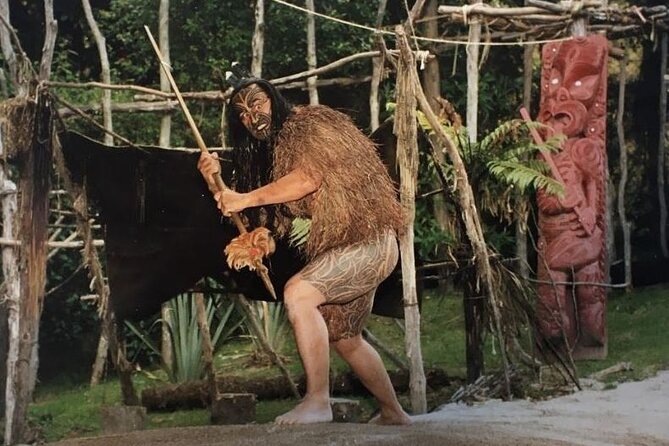
The arrival begins with a personal welcome and a photo opportunity with a Māori woman in traditional attire. Before you enter the village setting, you are given basic guidelines for approaching a place regarded as sacred and spiritual by the Māori people.
That short introduction matters. It frames the evening as more than dinner and dancing. You are being shown customs connected to land, ancestry, ceremony, and community. Pay attention here, since it gives context to the gestures and rituals you see later.
The opening can feel orderly and impressive, but timing depends on the size of the group. With a large crowd, you may be moved from one point to another in stages. The atmosphere remains friendly, yet you should not expect a private welcome or long one-to-one conversation.
The waka on the Wai-o-whiro stream
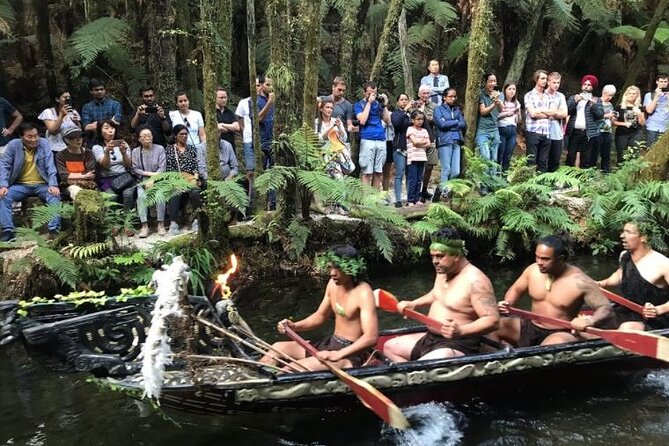
The waka arrival is the clearest visual highlight. Māori warriors paddle down the Wai-o-whiro stream in traditional dress, presenting the canoe as an ancient warrior craft rather than a modern show prop.
This works because it takes place outdoors, beside the water, rather than on the main stage. The dim bush setting, the carved canoe, and the steady movement of the paddlers give the scene a sense of ceremony. You will want to have your camera ready, but do not expect unlimited time to stop wherever you like.
The flow of people can affect your view. In a large group, some people will be closer to the stream while others watch from farther back. Staff may keep the group moving, especially around the waka and the hangi cooking area.
A useful tip is to listen carefully to the explanation, not just watch the canoe. The evening is strongest when you understand why the waka, warrior welcome, and formal approach matter within Māori tradition.
The bush walk, Fairy Spring, and glowworms
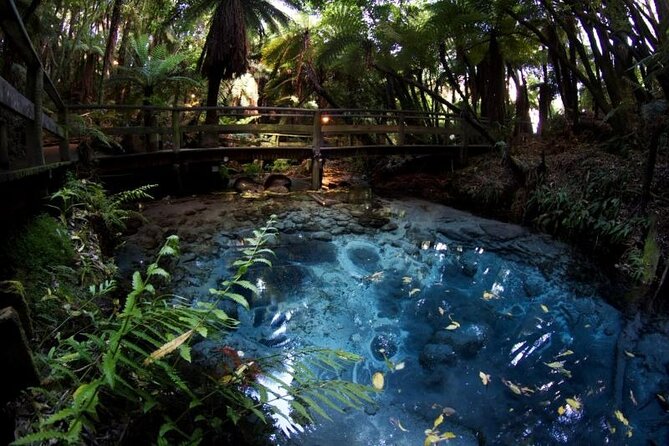
The guided walk is short, but it adds something that a dinner-and-show package alone would not provide. You follow a forest path and learn about native flora and fauna, including the medicinal uses of local plants.
The walk leads toward the Fairy Spring, where you may see freshwater eels, trout, and glowworms. The glowworms are in their natural habitat, which is more appealing than viewing them in a built display. Still, keep your expectations modest. The number visible can vary, and some evenings offer only a small scattering.
This part of the experience is also the least predictable. Darkness, weather, group size, and your position in the line all affect what you see. It is best to treat the glowworms as a pleasant extra rather than the main reason to book.
The path includes some steps and uneven ground. Most people can take part, but wear proper walking shoes and warm, comfortable clothing. The activity operates in all weather conditions according to the tour details, although the cancellation terms also allow for a change of date or full refund if poor weather causes a cancellation. In practice, come prepared for cool or wet Rotorua conditions.
If someone in your party has a physical disability, contact the operator in advance and ask for clear advice about the path, steps, and which portions can be skipped. The experience is described as suitable for most people, but the walk is not completely flat, and staff assistance should not be assumed without prior discussion.
Same corner of the country, a very different day out:
- Rotorua Canopy Tours: 2.5Hour Native Forest Zipline Adventure
★ 5.0 · 4,563 reviews - Rotorua: Wai-O-Tapu Geothermal Park Entry Ticket
★ 4.6 · 2,601 reviews - Rotorua’s Ultimate Zipline: 6 ziplines, 400 m Tandem, Cliff Walk
★ 5.0 · 2,557 reviews - Rotorua Rafting: Kaituna River White Water Rafting & Free Sauna
★ 5.0 · 1,952 reviews
What you learn before dinner
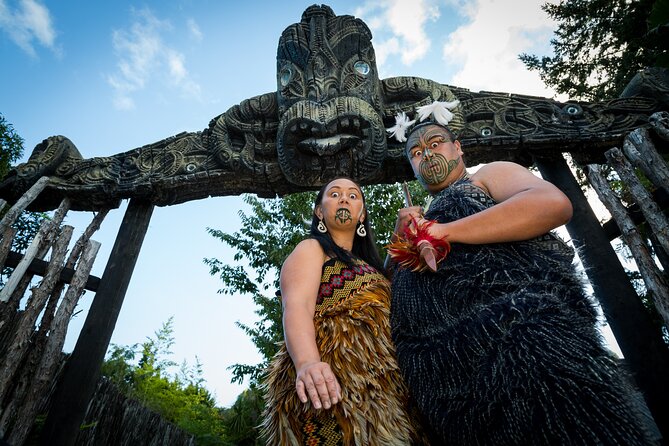
The educational part is spread through the evening rather than delivered as one long lecture. You hear about the area, Māori customs, native plants, traditional activities, and the meaning behind parts of the performance.
The question-and-answer time is particularly useful. It gives you a chance to ask about customs and traditions in plain language, and it helps turn the performance into something more than a polished spectacle.
The quality of this section depends on the presenter and the pace of the night. On a well-run evening, the host is warm, clear, and amusing. On a crowded evening, explanations may be shortened, and the walk can feel rushed.
The experience offers eight language choices, which is useful if you are worried about following the presentation. English is the natural choice for most visitors, but the language selection can make the booking easier for mixed-language groups.
The hangi buffet and what you actually get
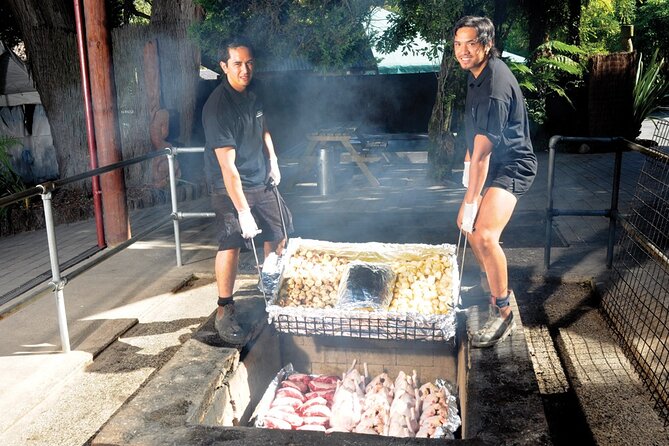
Dinner is served as a buffet and includes food cooked underground in an earthen oven, the traditional hangi method. The meal includes New Zealand meats and poultry, vegetables, fresh salads, side dishes, and desserts. Tea, coffee, and spring water are included, while alcoholic drinks are available to buy at the full bar.
Food is one of the most consistently praised parts of the evening. You get plenty of it, and the meal is more satisfying than many people expect from a cultural show. The buffet format also works well for families and mixed appetites because you can choose from several dishes and return for more.
Vegetarian choices may be limited. If you have a food allergy or another dietary restriction, ask what is in each dish before serving yourself and contact Mitai in advance. Do not rely on the buffet labels alone.
Dinner is also where the group scale becomes most obvious. You may share a dining hall with roughly 100 people, and on some nights the total number on site can approach 180 or 300. The service is built for volume, so this is not the place for a slow, quiet restaurant meal.
Still, the dinner adds real value to the price. You are not paying only for a short performance. You are also receiving a substantial meal, basic drinks, transport options, and the guided outdoor portion.
The haka, poi, and evening performance
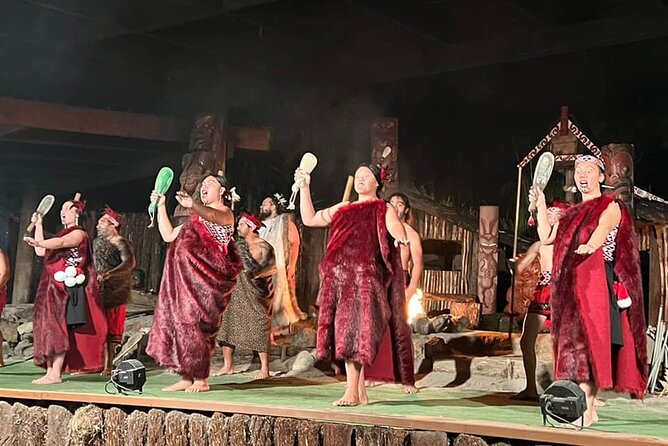
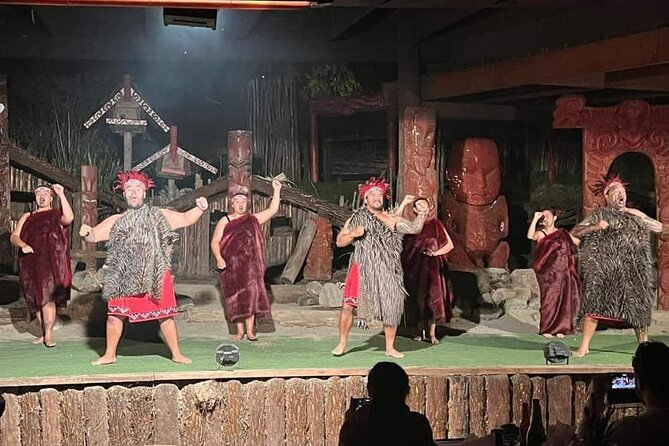
After dinner, you gather for the cultural performance. It includes songs, games, dances, weapon displays, poi, and the haka. The Māori women’s poi presentation offers a change of pace from the warrior demonstrations, while the haka supplies the powerful final burst most people expect.
The performers bring clear energy and pride to the show. You will see traditional challenges and fighting movements presented in a way that is suitable for a broad audience, including families and children.
The show is informative as well as entertaining. Explanations help you understand what the gestures, chants, and weapons represent. If you want more background, use the question-and-answer period rather than trying to decode every movement during the performance.
The physical setting can change your impression of the evening. Some visitors have found the stage and village presentation less expansive than on earlier visits, with more traffic noise and fewer built village features. Others have found the performance itself strong enough to carry the night.
That distinction is useful. You should book Mitai for the full combination of welcome, nature, food, and performance, not because you expect a large theatrical production with elaborate scenery. The performers are a major strength, but the production scale may feel more modest than the publicity photographs suggest.
Group size, timing, and the pace of the night
The advertised duration is about three hours, including the cultural activity and return transfer. That is long enough to make the evening feel substantial, but short enough to fit into a Rotorua itinerary without taking over the whole day.
Group size is the main practical variable. The maximum is listed as 180 people, while some descriptions of the dining arrangement refer to larger numbers on site. You may be divided into sections or guided through the program in stages, but you are still attending a popular group attraction.
Large groups bring two advantages: the operation has enough staff and structure to keep the evening moving, and the price can remain reasonable. The tradeoff is less personal attention, fewer quiet moments, and occasional difficulty seeing a small feature such as glowworms or a ceremonial detail.
I would arrive ready to follow instructions and keep your expectations realistic. If you want an intimate cultural conversation or a private forest walk, this is not the right format. If you want a well-planned introduction with plenty to see and eat, the size is easier to accept.
Who will get the most from Mitai Māori Village
This experience suits you best if you are visiting Rotorua for the first time and want one evening to cover several major elements of Māori culture. Families, couples, solo visitors, and mixed-age groups can all find something here.
Children have the benefit of movement, costumes, music, food, and outdoor discovery rather than a long seated lecture. Solo visitors can also join the group comfortably, particularly during dinner and the performance.
You should consider another option if your top priorities are silence, small groups, extensive walking, or a highly personal cultural exchange. You may also feel disappointed if you mainly want to see large numbers of glowworms or an elaborate stage village.
The experience is a good match for a rainy or cool Rotorua evening, provided you dress properly. It runs in all weather conditions, and the forest path can be slippery or uneven. Comfortable walking shoes are more important than dressing up.
Is $104.88 a fair price?
At $104.88, Mitai offers reasonable value for a three-hour Rotorua evening. The price combines a guided activity, cultural performance, hangi buffet, tea, coffee, spring water, and possible hotel transport.
The value depends on how you would otherwise spend the night. If you would pay for a separate dinner, taxi, and show, this package is efficient. If you dislike buffets and large group attractions, the price may feel less appealing even though the inclusions are extensive.
The meal is a strong part of the calculation. It is plentiful and includes several courses, while alcoholic drinks remain an extra cost. Transport is another useful saving, though pickup is limited to local Rotorua accommodation providers.
The rating is 4.6 from 1,295 reviews, with 91 percent recommending the experience. Those numbers fit the overall picture: the food, performers, and clear introduction to Māori culture are the safest reasons to book. Crowd management and the changing production setting are the main cautions.
Practical advice before you book
Bring warm layers and walking shoes. You will spend part of the evening outdoors, and the bush path has steps and uneven ground.
Ask about dietary needs before arrival, particularly if you are vegetarian or have a food allergy. The buffet has limited vegetarian choices, and staff may need advance notice to explain or manage special requirements.
Confirm your pickup details, since courtesy transfers have limited places. If you meet at the village, the address is 196 Fairy Springs Road in Fairy Springs, Rotorua.
The experience is offered with free cancellation up to 24 hours before the start time. Changes or cancellations inside that period are not refunded, and the operator may offer another date or a full refund if weather or minimum numbers force cancellation.
Should you book Mitai Māori Village?
Book it if you want a well-priced first introduction to Māori culture with a traditional meal, a haka, a waka arrival, and a short nature walk in one evening. The generous hangi and strong performances make the package especially useful for families and first-time visitors.
Think twice if you need a small group or a quiet, highly personal setting. The glowworms may be limited, and the forest walk and welcome can feel hurried when the site is full.
For most Rotorua itineraries, I would consider Mitai a worthwhile evening, as long as you see it as a polished cultural presentation rather than a private village visit. Go for the complete mix of ceremony, food, nature, and performance, and you are more likely to feel the price was well spent.
FAQ
How long does the Mitai Māori Village experience last?
The experience lasts about three hours, including the cultural activities, buffet hangi meal, performance, and return arrangements.
Is hotel pickup included?
Courtesy transfers are available from local accommodation providers within Rotorua, but places are limited. You can also meet at 196 Fairy Springs Road, Fairy Springs, Rotorua.
What food is included?
The buffet includes hangi-cooked New Zealand meats and poultry, vegetables, fresh salads, side dishes, and desserts. Tea, coffee, and spring water are included. Alcoholic drinks are available to purchase.
Will I see glowworms?
The guided bush walk visits the Fairy Spring, where glowworms can be seen in their natural habitat. The number visible may vary, so they should be treated as an extra rather than guaranteed as the main attraction.
Is the walk suitable for everyone?
Most people can participate, but the forest walk includes some steps and uneven ground. Wear comfortable walking footwear and ask the operator in advance about access needs or dietary requirements.
Can I cancel for a full refund?
You can cancel at least 24 hours before the experience start time for a full refund. Cancellations or changes made less than 24 hours before the start time are not refunded. If the operator cancels because of poor weather or insufficient numbers, you will be offered another date or a full refund.
Just added around Rotorua
- TRIPLE DEAL Wai-O-Tapu, Redwood Forest & Blue Springs Ex Auckland★ 5.0 · 20 reviews
- Volcanic Rotorua Day Trip from Auckland★ 5.0 · 4 reviews
- Private Tour to Rotorua’s Natural wonders and Māori Arts & craft.★ 5.0 · 4 reviews
- Private Transfer From Auckland Airport To Rotorua★ 5.0 · 5 reviews
- Rotorua Highlights Tour inc. Te Puia Tour, Lunch & Cultural Show★ 4.5 · 53 reviews
- Private Tour – Rotorua Adventures Day Trip From Auckland★ 5.0 · 19 reviews
- Private Tour WaiOtapu & Huka Falls & Blue springs from Auckland★ 5.0 · 3 reviews
- Rotorua Full Day Private Tour from Auckland★ 5.0 · 3 reviews
Maori Culture Tours, compared.
Mitai Maori Village: Cultural Experience and Dinner Buffet
Read our review →
Cultural Experience & Seasonal Māori Cuisine at Te Pā Tū
Read our review →
Te Pa Tu Māori Cultural Experience with Dinner
Read our review →
Lake Taupo: Sailboat Trip to the Maori Rock Carvings
Read our review →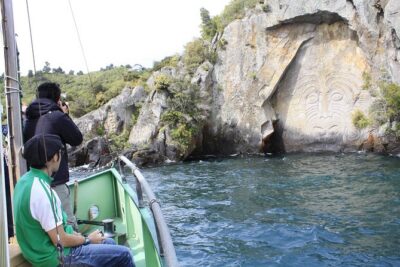
Lake Taupō Māori Rock Carvings Scenic Cruise aboard Ernest Kemp
Read our review →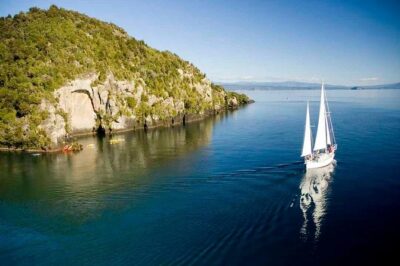
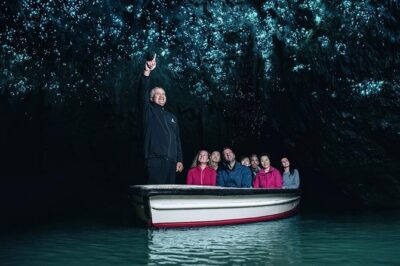
Waitomo Caves & Rotorua – Te Puia Small-Group Tour from Auckland
Read our review →
Lake Taupo: Maori Rock Carvings 10.30 AM 1.5-Hour Cruise
Read our review →Browse the lists this tour appears in