
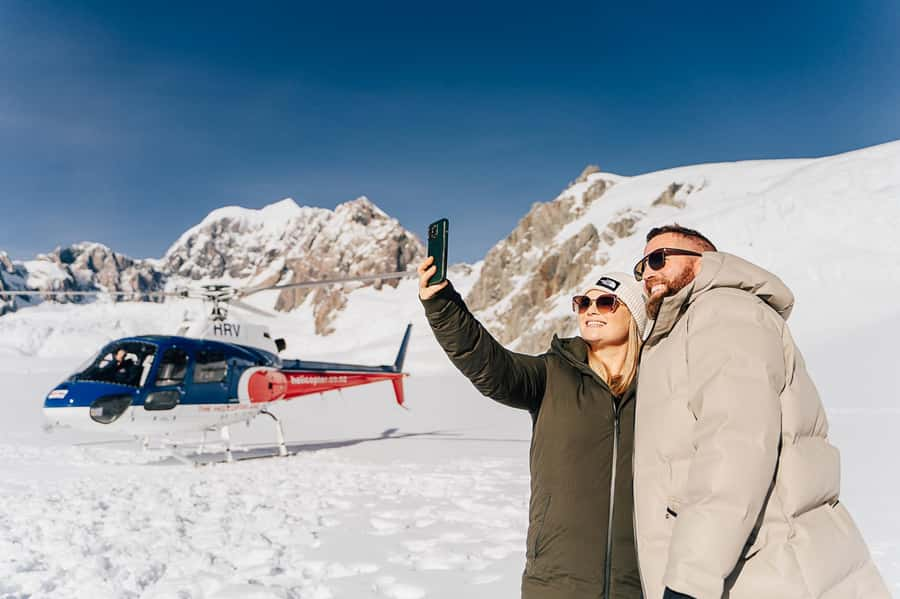
Reviewed · GLACIER TOURS
Mount Cook: Aoraki/Mt Cook & The Glaciers 55 Minute Flight
A snow landing high in the Southern Alps is the great draw here. In 55 minutes, you fly from Glentanner over Tasman Glacier Lake, trace the 23-kilometre Tasman Glacier, and cross to the West Coast for views of Fox and Franz Josef Glaciers. The range of scenery is remarkable, and a clear day can put Aoraki/Mount Cook in view from several angles.
I like the small six-person group, which gives everyone a better chance at a window view, and I like the route itself: one flight takes in three major glaciers and both sides of the Southern Alps. The main catch is weather. Routes and landings can change, and a snow landing is never guaranteed.
Key points at a glance
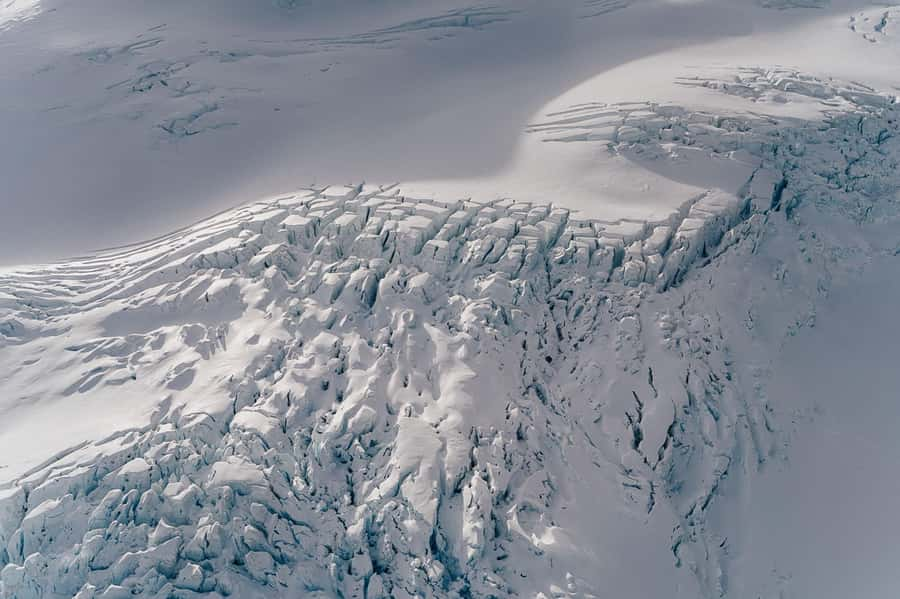
- Tasman Glacier from above: Follow New Zealand’s longest glacier from its broad lake to its upper ice fields.
- Aoraki/Mount Cook landing: Land in the snow when conditions allow, with the country’s highest peak nearby.
- Three major glaciers: See the Tasman, Fox, and Franz Josef Glaciers in one flight.
- A compact group: The helicopter carries no more than six participants, keeping the experience personal.
- Pilot commentary: English-speaking pilots explain what you are seeing during the flight. Pilot Mike received special praise for a smooth, informative trip.
- Weather flexibility matters: Book early in your stay so you have room to move the flight if poor weather cancels it.
Why this 55-minute flight covers so much
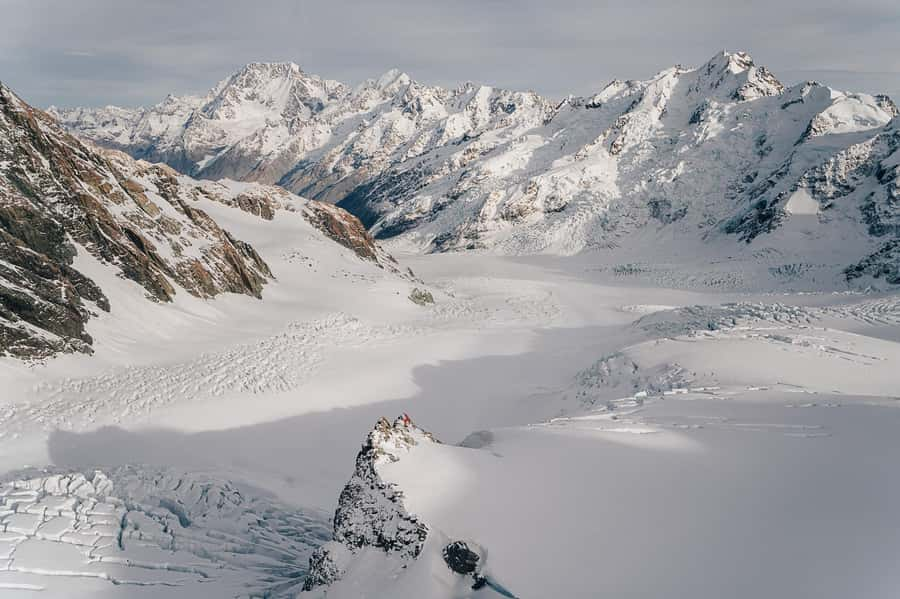
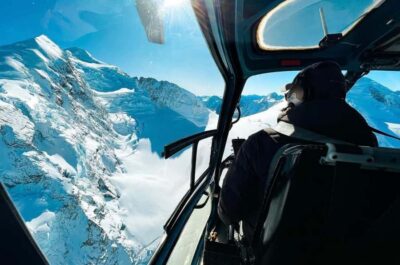
This is not simply a short scenic loop around Mount Cook Village. The route has a useful sense of progression. You begin over the inland ice and lakes of the Aoraki/Mount Cook region, climb toward the Southern Alps, cross the main divide, and then look toward the West Coast glaciers before returning to Mount Cook.
That variety is the strongest reason to consider it. You are not seeing one peak from one direction for an hour. You are watching the character of the mountains change as the helicopter moves from the dry eastern side of the range toward the wetter West Coast.
The flight begins at Glentanner Park Centre, near Aoraki/Mount Cook. Complimentary transport can be provided to and from Aoraki/Mount Cook Village, a useful detail if you are staying in the village without your own car. The flight itself lasts 55 minutes, and that time includes the landing.
The helicopter group is limited to six people. That does not guarantee a perfect window view from every seat, but it is a much more manageable setup than a large aircraft. You will also hear the pilot’s commentary directly rather than through a crowded cabin.
More Glacier Tours in Mount Cook
- Mount Cook, Lake Tekapo and Tasman Glacier Tour from Christchurch
★ 5.0 · 353 reviews - From Queenstown: Mt Cook & Tasman Glacier Viewpoint Day Tour
★ 4.8 · 329 reviews - Mount Cook: Ski Plane and Helicopter Glacier Combo Flight
★ 4.6 · 271 reviews
Leaving Glentanner for Tasman Glacier Lake
The first major sight is Tasman Glacier Lake. From the air, the lake helps you understand the scale and movement of the glacier better than a ground-level viewpoint can. The ice does not simply end at a neat wall. It feeds into a broad mountain setting, with water, ice, rock, and snow all connected.
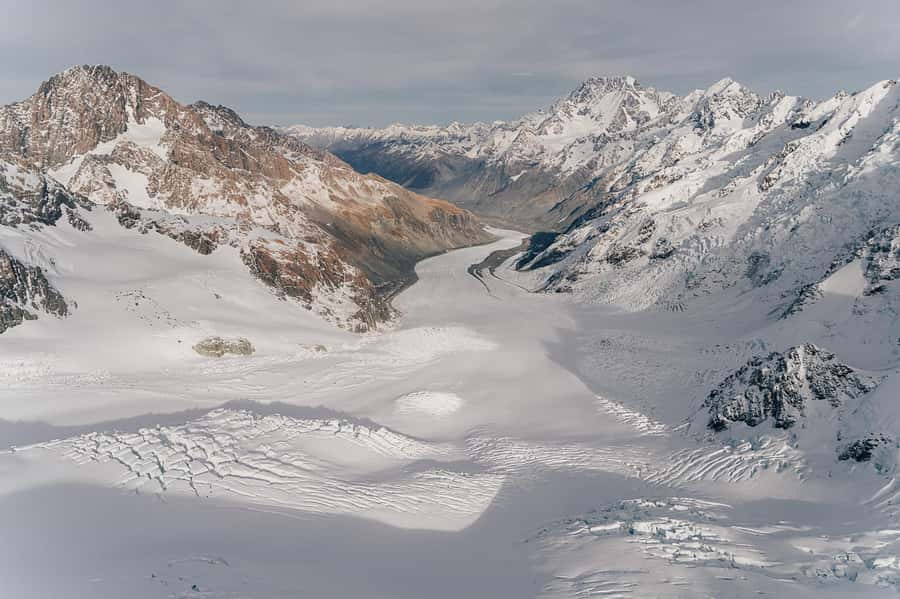
The Tasman Glacier is New Zealand’s longest glacier, stretching about 23 kilometres and reaching up to 4 kilometres wide in places. Those figures are easier to appreciate from the helicopter, where the glacier’s full route can unfold below you.
The flight follows the path of the Tasman Glacier toward the higher mountains. You may see a changing mix of snow, exposed ice, rocky ridges, and steep valley walls. The exact views depend on the weather and the pilot’s chosen route, so you should think of the published path as a guide rather than a fixed script.
This early section is especially valuable if you have visited the region from the road. From ground level, Aoraki/Mount Cook can seem like a single dramatic summit above the valley. From the helicopter, the mountain system becomes much larger and more connected.
The Tasman Glacier and the high alpine landing
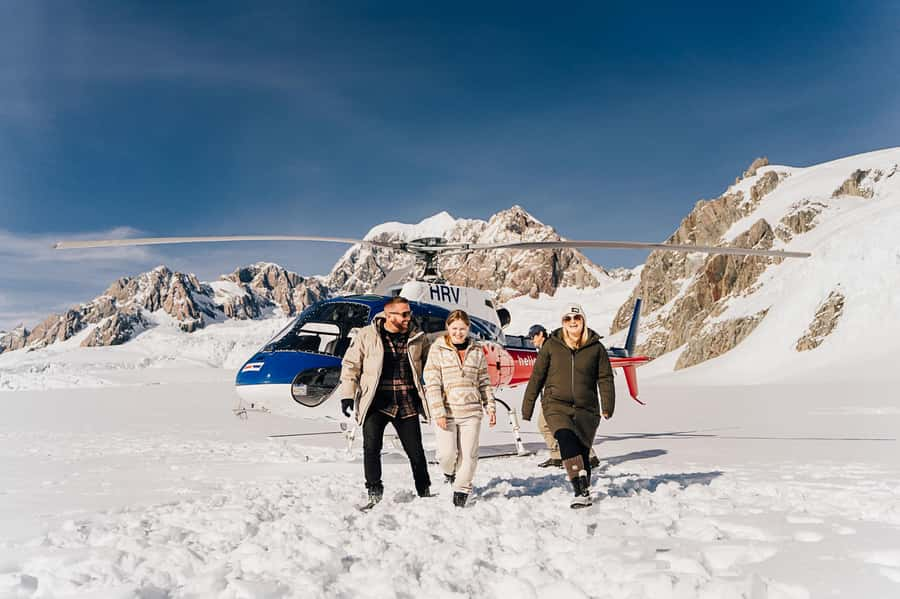
As the helicopter climbs farther into the mountains, the chance of an alpine landing becomes the emotional center of the trip. When snow levels permit, you land in a high alpine location with Aoraki/Mount Cook before you.
The landing is subject to snow conditions, so it is important not to treat it as an absolute promise. Routes, flight times, and landing points can change at the pilot’s discretion. That flexibility is necessary in this environment, but it also means you should judge the experience by the full flight rather than by the landing alone.
At the landing site, you have time for photographs and videos before continuing. Bring warm clothing even in summer. Temperatures at altitude can be sharply different from those in the valley, and standing on snow calls for more than a light jacket.
Closed-toe shoes are required, and sunglasses are practical because bright snow can be hard on your eyes. A camera is worth bringing, but keep your equipment simple. Drones, selfie sticks, tablets, and iPads are not allowed.
The mountain backdrop is the point here, not a long walk. This is a short alpine stop that gives you the rare feeling of standing in a place most people reach only after a serious climb. You get a physical sense of the height, cold, and exposure of the upper mountains without needing mountaineering skills.
Crossing the Southern Alps to Fox and Franz Josef
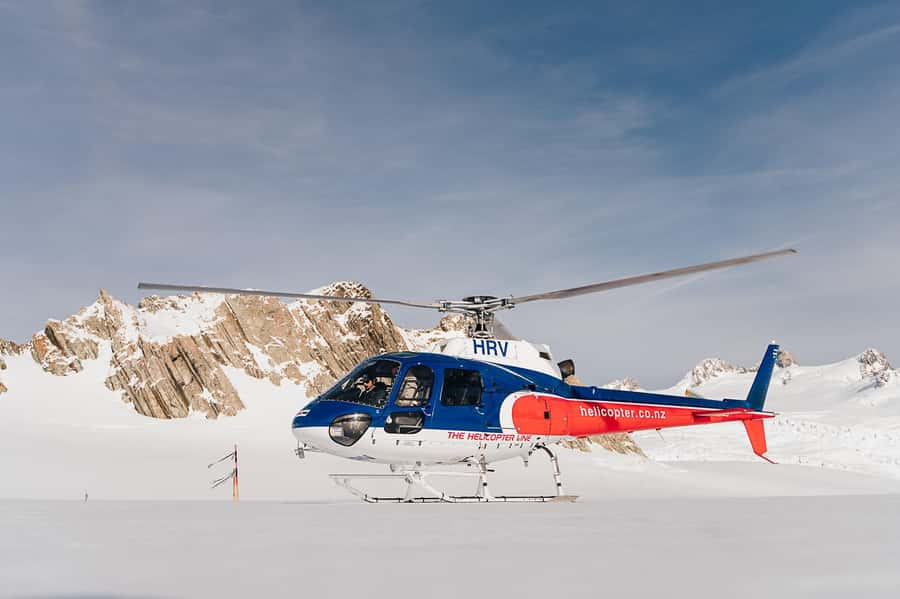
After the alpine stop, the helicopter crosses the rugged Southern Alps toward the West Coast. This change in direction gives the flight its real scope.
Fox Glacier and Franz Josef Glacier are both included in the route. Seeing them in the same flight lets you compare the two famous ice systems and the valleys that carry them toward the coast. The mountains can look more rugged and heavily cut on this side of the range, though visibility will depend on cloud and wind.
This is also the part of the trip that makes the activity more than a Mount Cook sightseeing flight. You are not simply circling the country’s tallest peak. You are crossing the main mountain chain and seeing how quickly the scenery changes from one side to the other.
The pilot’s commentary matters during this section. A clear day can present a lot of peaks, ridges, glaciers, and valleys in a short period. One pilot, Mike, was singled out for combining useful information with a calm flight and a smooth glacier landing. You should expect the pilot to explain what you are seeing, though the amount of commentary may vary with the conditions and route.
More Scenic Flights in Mount Cook
- Mount Cook: Scenic Helicopter Flight with Alpine Landing
★ 4.8 · 442 reviews - Mount Cook and The Glaciers 55-Minute Helicopter Flight
★ 4.5 · 133 reviews - 45-Minute Mount Cook Ski Plane and Helicopter Combo Tour
★ 4.5 · 107 reviews - Lake Tekapo: 50-Minute Mount Cook and Beyond Scenic Flight
★ 4.9 · 103 reviews
Returning with Aoraki/Mount Cook in view
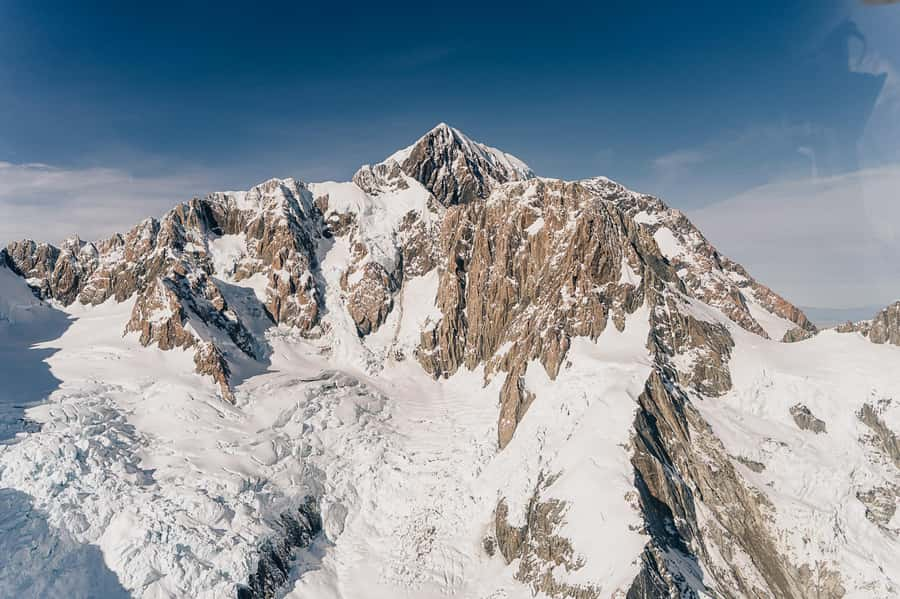
The flight eventually comes full circle, with views toward the summit ridge of Aoraki/Mount Cook. This return angle can be one of the most useful parts for photography because the mountain looks different from the direction you saw it earlier.
Aoraki/Mount Cook is New Zealand’s highest peak, and the flight gives you several chances to place it in context. The mountain is not just a distant pointed summit. It belongs to a broad, complicated range of ridges and glaciers, and the helicopter makes that relationship visible.
Clear conditions can produce views of turquoise lakes, snow-covered peaks, and large stretches of ice even in summer. That combination was a major reason one passenger described the day as the highlight of a two-week New Zealand trip. Such conditions are not guaranteed, but the comment points to the experience’s best-case potential: calm air, blue sky, and open views from takeoff to the West Coast.
The return to Glentanner comes after the alpine landing and the glacier crossing, so the flight feels well packed without being an all-day commitment. Still, 55 minutes passes quickly. If you want long periods at a landing site, a walking trip, or time to explore a glacier on foot, this is not that kind of activity.
Is the $523 price good value?
At $523 per person, this is a major travel expense. I would not describe it as a casual add-on. The value comes from the distance and variety covered in less than an hour, plus the alpine landing when snow conditions allow.
You are paying for a scenic helicopter flight, an English-speaking pilot, a small group, and access to views that are difficult or impossible to reach on foot during a normal holiday. The route links the Tasman, Fox, and Franz Josef Glaciers, rather than focusing on only one attraction.
The price also includes concession fees that support conservation and sustainability management. That does not make the flight inexpensive, but it gives you useful context for part of the cost.
I would consider it good value if Aoraki/Mount Cook is one of the main reasons you came to the South Island and you want one major aerial experience. I would think twice if your budget is tight, your schedule is full of other paid activities, or you would be disappointed by a changed route or a landing that cannot happen.
A perfect-weather flight can feel like a once-in-a-lifetime event. A cloudy or shortened flight still provides an aerial view, but the value is more dependent on visibility than it would be for a museum or a fixed indoor attraction.
Weather, cancellations, and smart scheduling
The weather is the practical issue you need to plan around. Flights operate only in favorable conditions, and poor weather can lead to a cancellation, an alternative date, or a full refund.
I recommend booking this early in your Aoraki/Mount Cook stay rather than on your final morning. That gives you a chance to move the flight if the mountains disappear under cloud or wind prevents the landing.
The operator also coordinates bookings to meet minimum passenger numbers where possible. This means your exact departure may depend on the day’s flight planning and passenger demand. Check availability for the starting times that work with your schedule, but keep some flexibility.
Flight times are approximate because the landing and the route can change. The pilot has the final say on where it is safe to fly and land. That is not a flaw in the experience. It is a basic condition of flying in a high mountain environment.
What to wear and bring
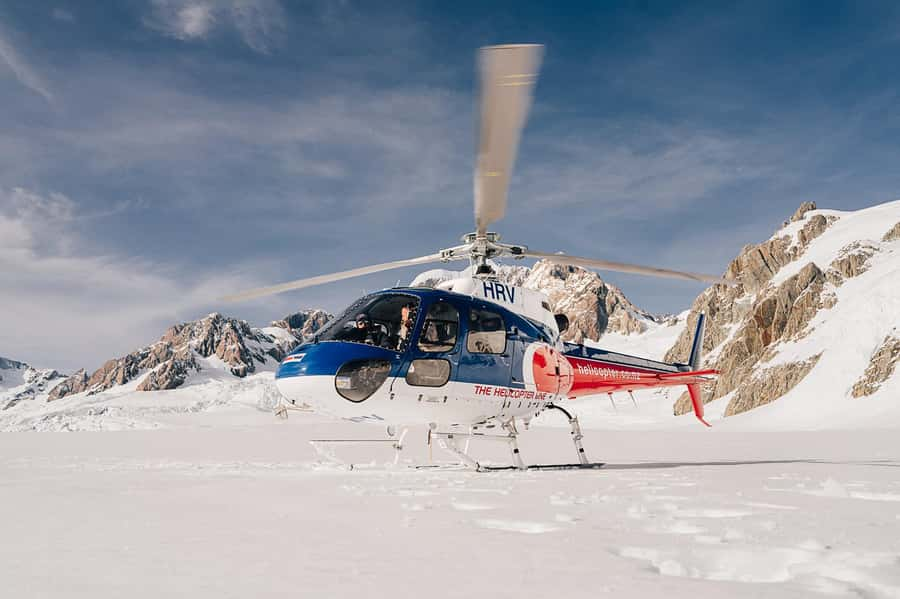
Dress for cold conditions, not just the weather you see at Glentanner. Wear warm layers, bring sunglasses, and use closed-toe shoes. The snow landing, if available, can feel much colder than the valley.
A camera is welcome, and you will likely want it for the glacier views and the landing. Keep in mind that drones, selfie sticks, tablets, and iPads are not allowed. A compact camera or phone is easier to handle in a small helicopter cabin.
Children must be with a paying adult. Infants under 4 years and under 15 kilograms sit on an adult’s knee. Infants over 15 kilograms need their own seat.
The experience is wheelchair accessible, although the activity’s practical arrangements may still depend on the flight operator and conditions. If you need specific assistance, confirm the details when booking.
Who will get the most from this flight?
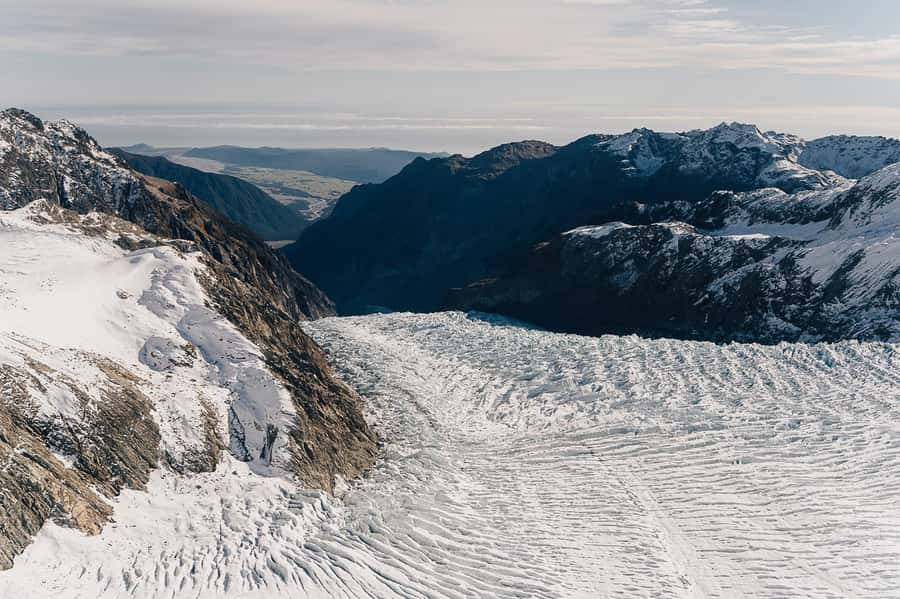
I would choose this for someone who wants a broad view of the Southern Alps but does not have time for a long trek. It also suits photographers, first-time visitors to the Mount Cook region, and anyone who wants to see the Tasman, Fox, and Franz Josef Glaciers in one carefully planned outing.
It is a strong choice for couples and small groups who value a quiet, compact experience. With up to six participants, the flight should feel more personal than a large sightseeing operation, and the pilot’s commentary is close at hand.
Families can also consider it, provided children meet the stated arrangements and everyone is comfortable with a helicopter flight. The short duration helps, but the high price and weather uncertainty are worth discussing before you commit.
I would not choose it as the only way to experience Aoraki/Mount Cook. Pairing an aerial flight with time on the ground gives you both the huge mountain views and the slower feel of the valley. The helicopter shows scale. Ground walks show texture and pace.
Should you book the Aoraki/Mount Cook glacier flight?
Book it if you want to see a large portion of the Southern Alps in one trip and you can accept the weather rules. The route from Tasman Glacier Lake to the high alpine snow, across to Fox and Franz Josef, and back toward Aoraki/Mount Cook is unusually varied for a 55-minute flight.
The strongest reasons are the small group, the chance to land in snow, and the ability to see three major glaciers in one outing. The biggest reasons to hesitate are the $523 cost and the fact that cloud or snow conditions can change the route.
My practical advice is simple: schedule it near the beginning of your stay, bring warm clothing, and treat the landing as a welcome bonus rather than the sole purpose of the booking. If the mountains open up, this can become one of the defining experiences of a South Island trip.
FAQ
Where does the helicopter flight begin?
The flight begins at Glentanner Park Centre near Aoraki/Mount Cook. Complimentary transportation can be provided to and from Aoraki/Mount Cook Village.
How long is the flight?
The experience lasts 55 minutes, and the stated flight time includes the alpine landing.
Which glaciers can I see?
The route includes the Tasman Glacier, Fox Glacier, and Franz Josef Glacier. You also fly over Tasman Glacier Lake and see Aoraki/Mount Cook.
Is the snow landing guaranteed?
No. The alpine landing is subject to snow levels, weather, and the pilot’s discretion. Routes and landing points may change.
How many people can join the flight?
The activity is limited to six participants, making it a small-group helicopter flight.
What happens if bad weather cancels the flight?
If poor weather causes a cancellation, you can choose an alternative date or receive a full refund. Free cancellation is also available up to 24 hours in advance.
Just added around Mount Cook
- Skydive Mt. Cook – 20+ Seconds of Freefall from 10,000ft★ 5.0 · 5 reviews
- Skydive Mt. Cook – 70+ Seconds of Freefall from 16,500ft★ 5.0 · 5 reviews
- Mt Cook to Christchurch One-Way Small Group Tour via Lake Tekapo★ 5.0 · 16 reviews
- Mt Cook to Queenstown Small Group Tour (One-Way)★ 4.5 · 25 reviews
- Mt Cook & Lake Tekapo 2-Day Small Group Tour from Queenstown★ 5.0 · 15 reviews
- Mount Cook: Mountains High 40-Minute Helicopter Flight★ 5.0 · 53 reviews
- Mount Cook Scenic 35 Minute Helicopter Flight★ 5.0 · 6 reviews
- Mount Cook Alpine Explorer Helicopter Flight with Alpine Landing★ 4.0 · 22 reviews
Glacier Tours, compared.
Franz Josef Glacier: Helicopter Flight & Alpine Landing
Read our review →
Small-Group Kayak Adventure from Franz Josef Glacier
Read our review →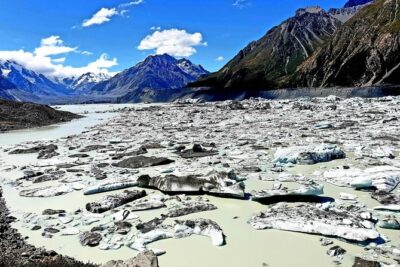
Mount Cook, Lake Tekapo and Tasman Glacier Tour from Christchurch
Read our review →
Franz Josef & Fox Glaciers Helicopter Flight & Snow Landing
Read our review →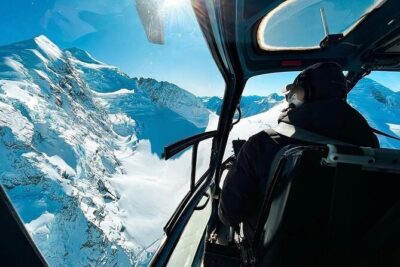
Pilot’s Choice: 2 Glaciers & Snow Landing – 35min
Read our review →Browse the lists this tour appears in