
Reviewed · MAORI CULTURE TOURS
From Auckland: Rotorua Māori Village & Hot Springs with Haka
Rotorua’s best sights come as a package deal: a living Māori village built among geysers and boiling pools, followed by a long soak in warm mineral water. Whakarewarewa gives you culture and geothermal drama in one stop, while the Polynesian Spa provides a quiet finish beside Lake Rotorua.
I like the small group of up to 11, which makes the three-hour bus ride more personal and lets guides such as Huzefa, Matt, Brendan, and JJ share local tips along the way. I also like the balance of Māori songs, dance, and haka with two hours of easy spa time. The catch is simple: this is a long day, with about three hours each way between Auckland and Rotorua.
Key points
- A living Māori village: See Whakarewarewa as a real community, not just a museum display.
- Geothermal sights up close: Walk among bubbling mud, steaming vents, silica formations, boiling pools, and geysers.
- A proper cultural performance: Songs, dance, and a haka give the village visit a strong, memorable finish.
- Small-group transport: The minibus carries no more than 11 people and includes downtown Auckland pickup and return.
- Two hours at Polynesian Spa: Soak in mineral pools with views toward Lake Rotorua and nearby forest.
- Good value for a long day: At $236 per person, the price covers transport, both main admissions, the guide, and hotel pickup, but not food.
Why this Auckland to Rotorua day trip works
If you are based in Auckland but do not have time to change hotels, this tour solves a common New Zealand travel problem. Rotorua is far enough away to require planning, yet important enough that many people regret skipping it. This trip gets you there and back in one day, with the major cultural and geothermal stops arranged for you.
The experience has a clear rhythm. The ride takes you south from Auckland, the village visit gives you several hours of activity and learning, and the spa slows everything down before the return journey. That last part matters. After a busy day around steaming ground and performances, the mineral pools offer a calm place to rest.
You pay $236 per person, which is not a bargain-basement day trip. Still, the price includes round-trip bus transport, hotel pickup and drop-off, a live English-speaking guide, admission to Whakarewarewa Village, cultural performances, and entry to Polynesian Spa. Buying those pieces separately would take planning, and driving yourself would leave you with the job of navigating after a long day.
The value is strongest if you want culture as well as scenery. If you only want geysers, a shorter geothermal attraction may suit you better. If you want to see a Māori community, watch a haka, and finish with a spa visit without arranging the details yourself, the cost is easier to justify.
More Hot Pools and Spas in Rotorua
- Rotorua: Hell’s Gate Outdoor Mud Spa & Guided Walk
★ 4.7 · 1,140 reviews - Rotorua Forest Hot Tub Soak at Secret Spot
★ 5.0 · 556 reviews - Rotorua: Hells Gate Outdoor Mud Bath & Spa Experience
★ 4.6 · 398 reviews
The three-hour road trip from Auckland
Pickup is available from a large group of central Auckland hotels, including the Sofitel, Pullman, Cordis, Hilton, SkyCity, M Social, Grand Millennium, and others. People staying near the airport or in South Auckland can use The Sebel Auckland Manukau as the pickup point.
The vehicle is a small-group bus with room for no more than 11 people. That is a useful size for a full-day trip. You are not lost in a large coach crowd, and the guide can answer questions and make the ride feel less anonymous.
Allow roughly three hours each way. That is the main tradeoff of this experience. The road time is long, especially on a busy holiday return, but guides have helped with rest stops and traffic choices. Matt was specifically praised for making comfort stops and finding ways around heavy traffic. Huzefa has also been noted for pointing out sights, suggesting photo stops, and contacting passengers ahead of time to clarify arrangements.
Treat the ride as part of the day rather than a quick transfer. Bring a reusable water bottle, keep a snack handy since food is not included, and do not schedule an evening flight or fixed dinner reservation immediately after the return. Pickup can begin up to 20 minutes before the stated departure time, and guides ask you to wait outside five to 10 minutes early.
Whakarewarewa Village among the steaming ground
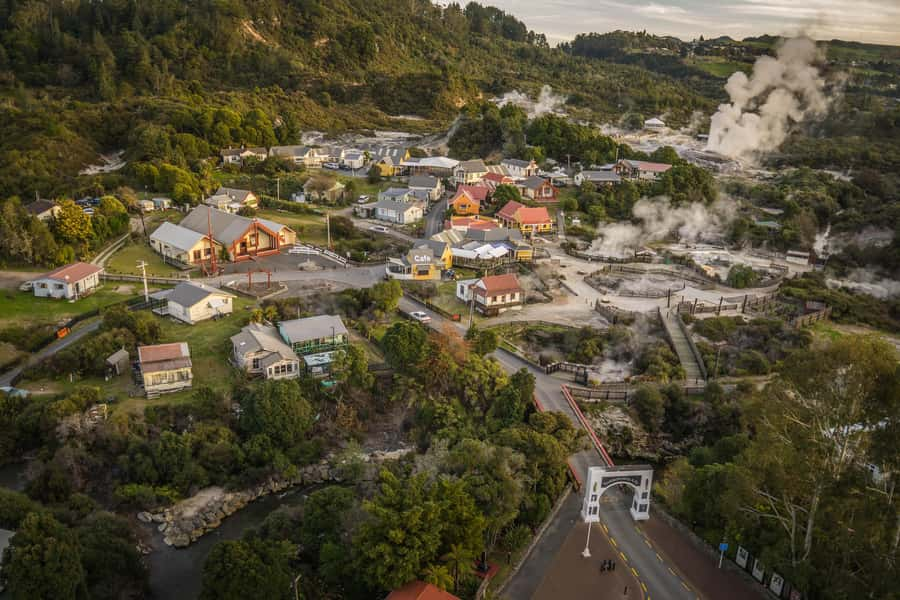
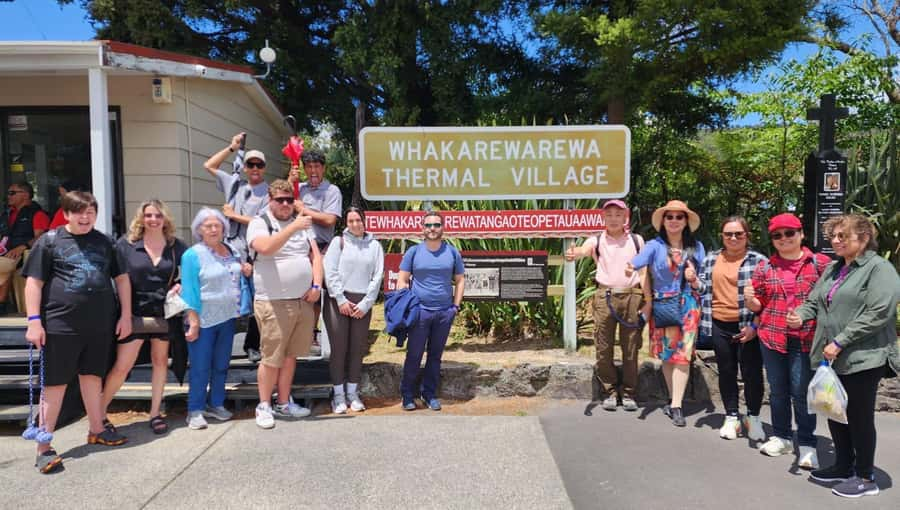
The first major stop is Whakarewarewa, where you spend about three hours with a local guide. This is not a staged village built only for tourists. It is a living Māori community, and that changes the way you read the place. You are learning about a community that still lives and works among the geothermal features.
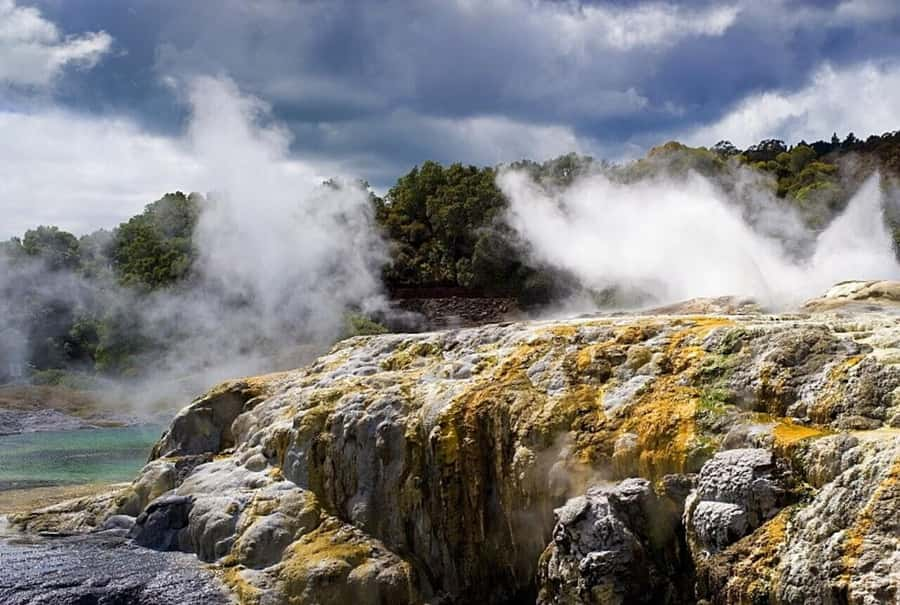
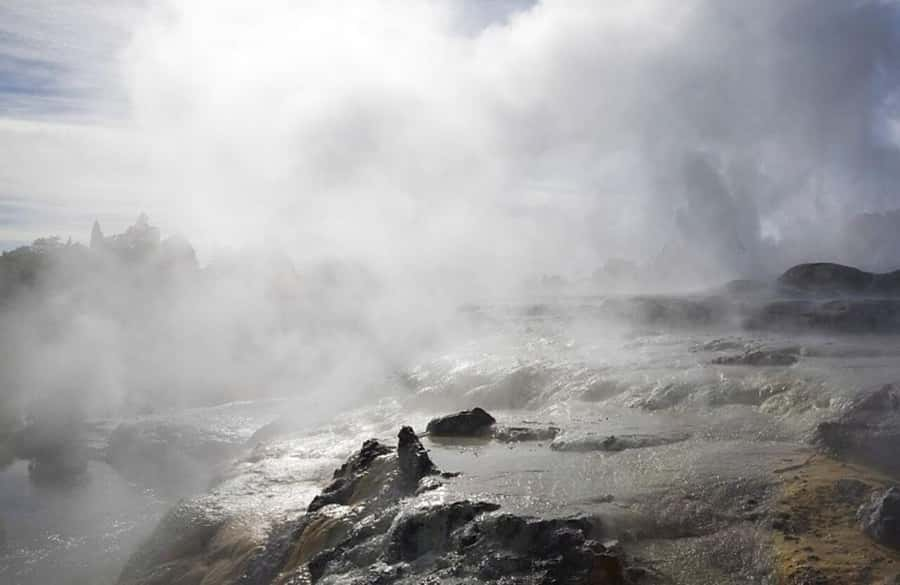
The setting is striking before any explanation begins. Steam rises from the ground, mud bubbles, pools boil, and geysers send water upward. Silica formations add pale, sculpted shapes to the scene. The geothermal activity is not tucked away behind glass. It is part of the village’s daily surroundings and helps explain why people have lived here in a different way from communities elsewhere in New Zealand.
Your guide explains Māori customs, village life, and the relationship between people and the land. The local guides are central to the experience. Michael, who has led the village walk, was praised for explaining village life and the surrounding geothermal area clearly. That personal connection is more useful than simply reading labels beside a mud pool.
The walk is also a chance to understand practical Māori use of geothermal resources. The supplied details do not promise a particular cooking demonstration or craft workshop, so do not arrive expecting a fixed list of hands-on activities. What you can count on is a guided look at customs, daily life, geothermal features, and the community’s cultural traditions.
Wear comfortable shoes and stay aware of where you step. You are walking around hot water, steam, and unstable-looking ground. The tour is not suitable for wheelchair users, so anyone with mobility concerns should ask before booking.
The haka and cultural performance
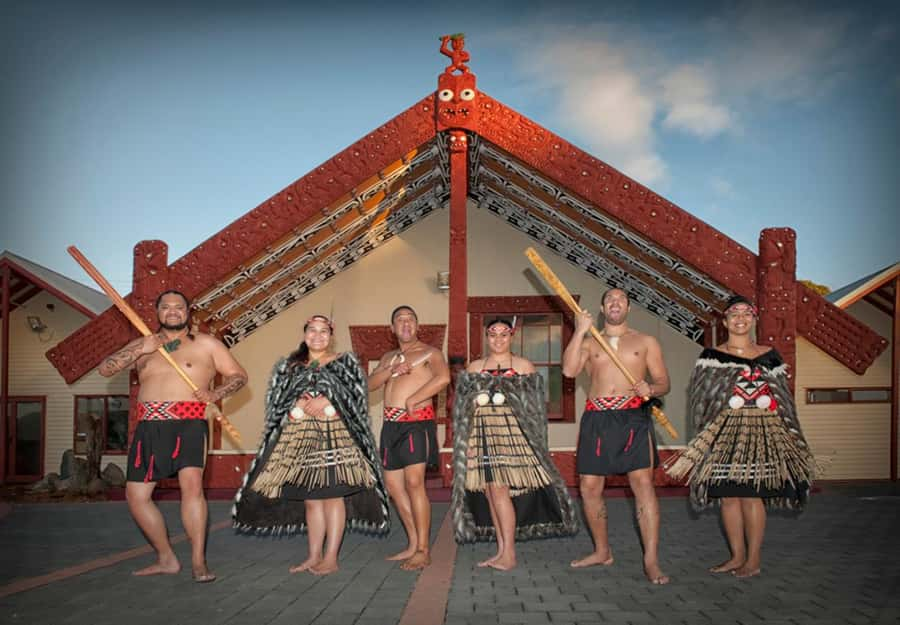
The cultural performance is one of the clearest reasons to choose this tour. You see traditional songs and dances, followed by a haka that gives the visit its emotional punch. The performance is not just a quick photo opportunity. It gives context to Māori identity and provides a direct connection between the stories explained during the walk and the way those traditions are performed.
The haka is often the moment people remember most. It is powerful, physical, and easy to understand even if you know little about Māori culture beforehand. You do not need prior knowledge to appreciate the force of the voices, movement, and group coordination.
I like the way the performance follows the guided village visit. First, you learn about the community and its surroundings. Then you see cultural expression in action. That order makes the show more meaningful than watching a performance with no background.
The village visit may also include time at the local café. Food is not included in the tour price, but you can buy lunch there, including traditionally prepared hangi food according to the available details. Budget separately for this. If you want lunch, ask your guide about the timing so you do not miss part of the visit or performance.
After the formal program, you may have time to look around the geothermal area at your own pace. That gives you a chance to take photographs and revisit a pool or geyser that caught your attention. Stay with the instructions given by the guide, since these are active geothermal surroundings rather than an ordinary park.
More Maori Culture Tours in Rotorua
- Mitai Maori Village: Cultural Experience and Dinner Buffet
★ 4.7 · 3,575 reviews - Cultural Experience & Seasonal Māori Cuisine at Te Pā Tū
★ 5.0 · 1,546 reviews - Mitai Maori Village Cultural Experience in Rotorua
★ 4.5 · 1,294 reviews - Rotorua: Te Pa Tu Māori Cultural Experience with Dinner
★ 4.8 · 1,193 reviews
Two hours at Polynesian Spa
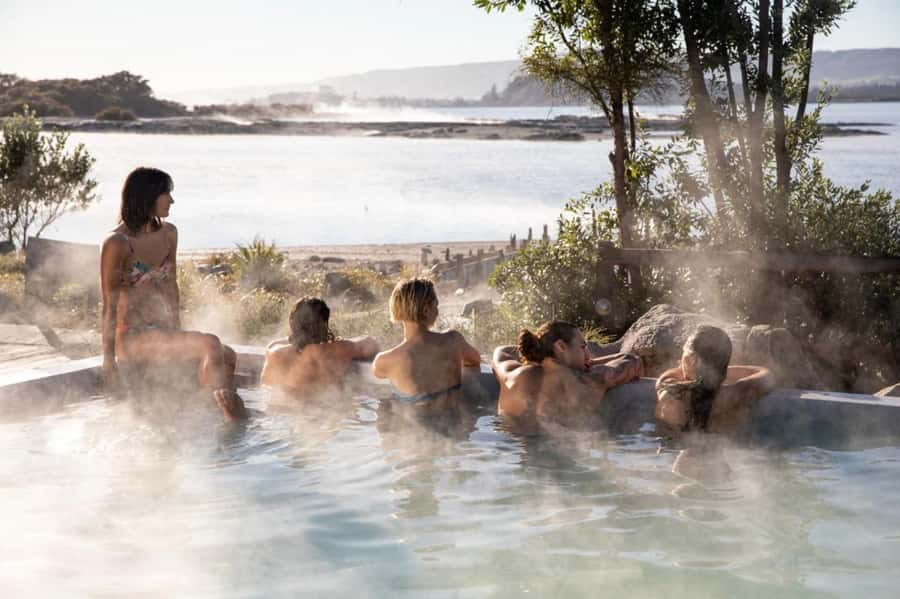
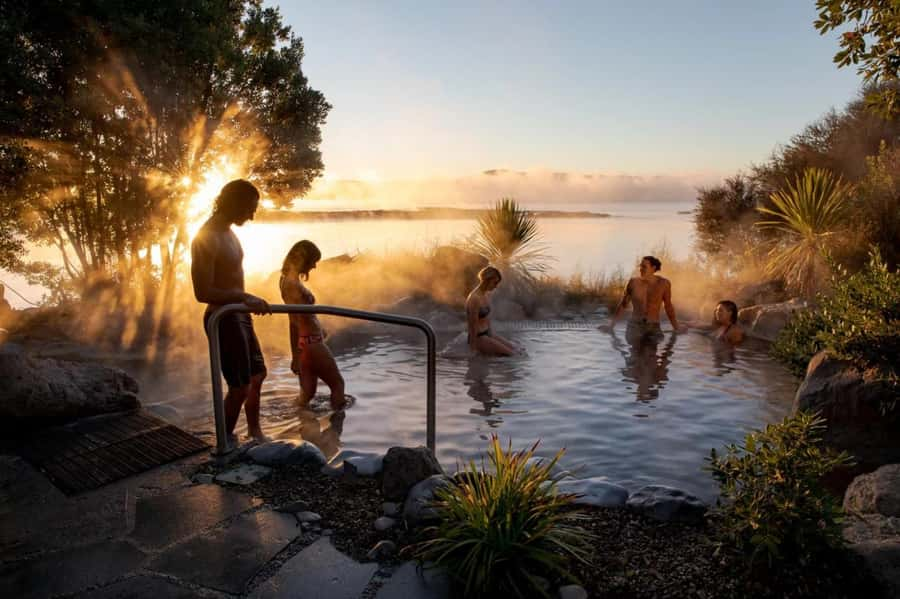
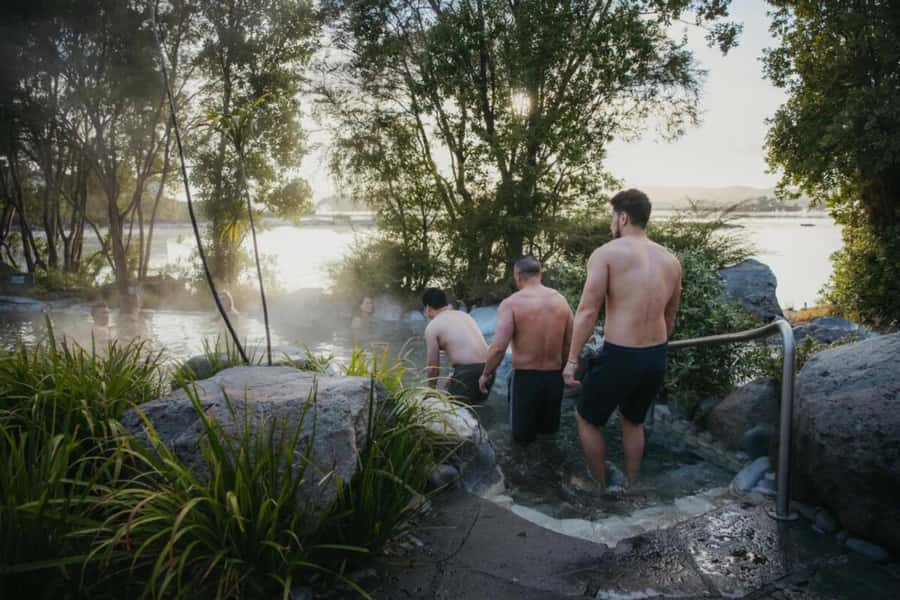
After Whakarewarewa, the tour moves to Polynesian Spa for about two hours. This is the recovery period built into the day, and it is more than a token stop. You have enough time to change, soak, and enjoy the setting without immediately being rushed back onto the bus.
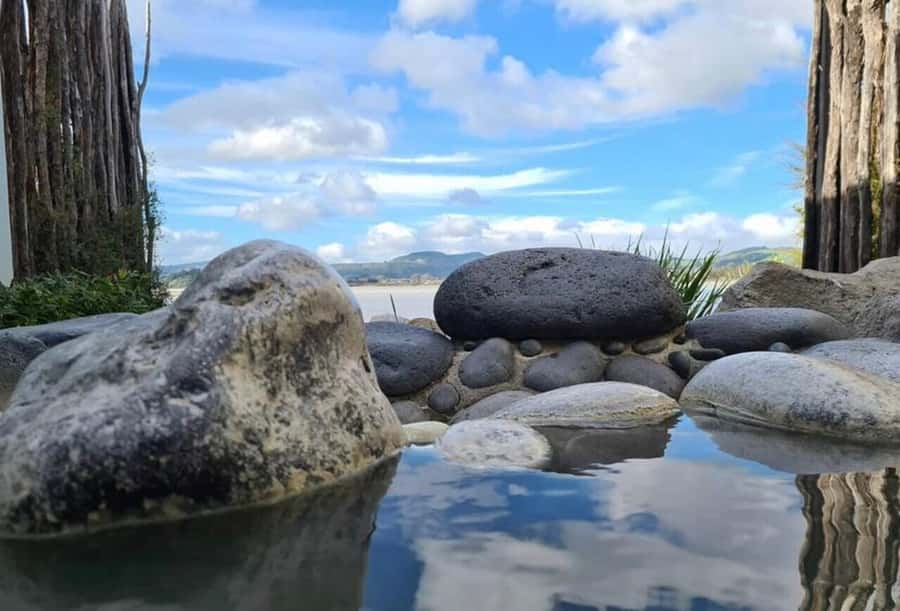
The spa sits beside Lake Rotorua, with views toward the water and surrounding trees. The mineral pools use natural geothermal water, and the experience includes alkaline and acidic spring options. The exact pool choice is yours, within the areas available during your visit.
This is a good contrast with the morning. Whakarewarewa is active, educational, and full of sound and steam. Polynesian Spa is slow and quiet. By the time you leave, you should feel rested rather than as if you have simply added another attraction to a packed schedule.
Bring swimwear and flip-flops. Adult swimwear can be hired or purchased at the Spa Essentials Shop, but bringing your own is simpler. A reusable bottle is also useful. You should consult a medical practitioner before using the pools if you are pregnant, have heart problems, another serious medical condition, or an allergy to sulphur.
The spa visit is not a luxury add-on in the usual sense. It helps make the long Auckland return manageable. Several guides have been praised for arranging the day so the cultural visit comes first and the spa brings things down gently at the end.
A day shaped by the guide
The quality of the guide matters on a trip with this much road time. A quiet or disorganized guide could make the day feel like a long transfer with two admissions attached. Here, the strongest part of the experience is the personal help along the way.
Huzefa has been praised for local knowledge, humor, attention to comfort, and extra stops beyond the basic plan. He has also helped passengers understand logistics before departure. Matt has been noted for practical driving, rest breaks, and traffic management. Brendan was described as informative and enjoyable company, while JJ was praised for pacing and experience.
Those details matter because the formal itinerary is only part of the day. The guide sets the mood during the road sections, explains what you are seeing between stops, and helps with small problems such as pickup confusion or timing. The tour uses English, so you should be comfortable following explanations and instructions in English.
Guide quality can never be guaranteed on a particular date, but the small group format gives the experience a better chance of feeling personal. You also have fewer people competing for questions, seats, and attention than you would on a large coach.
What the $236 price really covers
At $236 per person, this tour is best judged as transport plus two substantial admissions, not as a cheap bus ride. The main inclusions are:
- Round-trip transportation from Auckland
- Pickup and drop-off at selected hotels
- A live English-speaking guide
- Entry to Whakarewarewa Village
- The village’s cultural performances
- Entry to Polynesian Spa
Food and drinks are extra. That includes lunch at the village café if you choose to eat there. Plan for this additional cost rather than assuming the lunch period means lunch is included.
The tour becomes good value if you would otherwise need to rent a car, pay for fuel, arrange parking, and purchase both attractions separately. It is also useful if you want to return to Auckland the same day without driving after the spa.
The value is weaker for independent visitors already staying in Rotorua. In that case, you may prefer to visit the village and spa on separate days, spend longer at each, or choose a lower-cost local transport option. The Auckland departure is the reason to book this particular outing.
Who should book it, and who should think twice
This tour suits you if Auckland is your base and Rotorua is high on your New Zealand list. It is especially good for first-time visitors who want a guided introduction to Māori culture, geothermal sights, and a spa without building the schedule themselves.
It also works well for couples, families with older children, and solo visitors who prefer a small group. Children must be accompanied by an adult, and unaccompanied minors cannot join.
You should think twice if you dislike long road days. Three hours each way is a serious commitment, even with rest stops and guide commentary. You should also reconsider if you need wheelchair access, since the tour is not wheelchair accessible.
People with heart problems should not book without medical advice, and the same applies to pregnancy, serious medical conditions, or sulphur allergies. The spa is a central part of the day, so do not treat these health notes as minor fine print.
Cancellation is flexible up to 24 hours before departure for a full refund, and you can reserve now and pay later. Pickup points can change by day, so check the final meeting details and be ready early.
Should you book this Rotorua day trip?
Book it if you want a full Rotorua introduction from Auckland and value convenience, local explanation, and a relaxing finish. The strongest combination is the living Māori village, the haka, active geothermal ground, and the two-hour soak at Polynesian Spa.
I would not book it for a quick Rotorua taste. The bus ride takes up much of the day, and the price is not low. But if you have only one Auckland-based day available, the itinerary uses that day well. You get culture first, geothermal sights throughout, and warm mineral pools before the ride home.
The best preparation is simple: wear comfortable clothing, bring swimwear and flip-flops, carry water and money for food, and keep your evening free. For many people, the drive will fade from memory sooner than the haka, the steaming village, and the view across Lake Rotorua.
FAQ
How long is the Auckland to Rotorua tour?
The full activity lasts 12 hours. The road journey takes roughly three hours each way, with about three hours at Whakarewarewa Village and two hours at Polynesian Spa.
What is included in the $236 price?
The price includes round-trip bus transport, selected hotel pickup and drop-off, an English-speaking guide, entry to Whakarewarewa Village, cultural performances, and entry to Polynesian Spa.
Is lunch included?
No. Food and drinks are not included. You can buy food at the village café, including traditionally prepared hangi food according to the available details.
Do I need to bring swimwear?
Yes. Bring swimwear, flip-flops, and a reusable water bottle. Adult swimwear can also be hired or purchased at the Spa Essentials Shop.
Is the tour suitable for wheelchair users?
No. The tour is not wheelchair accessible. Children must be accompanied by an adult, and unaccompanied minors are not allowed.
Can I cancel the booking?
Yes. You can cancel up to 24 hours in advance for a full refund. The tour also allows you to reserve your place and pay later.
Just added around Rotorua
- TRIPLE DEAL Wai-O-Tapu, Redwood Forest & Blue Springs Ex Auckland★ 5.0 · 20 reviews
- Volcanic Rotorua Day Trip from Auckland★ 5.0 · 4 reviews
- Private Tour to Rotorua’s Natural wonders and Māori Arts & craft.★ 5.0 · 4 reviews
- Private Transfer From Auckland Airport To Rotorua★ 5.0 · 5 reviews
- Rotorua Highlights Tour inc. Te Puia Tour, Lunch & Cultural Show★ 4.5 · 53 reviews
- Private Tour – Rotorua Adventures Day Trip From Auckland★ 5.0 · 19 reviews
- Private Tour WaiOtapu & Huka Falls & Blue springs from Auckland★ 5.0 · 3 reviews
- Rotorua Full Day Private Tour from Auckland★ 5.0 · 3 reviews
Maori Culture Tours, compared.
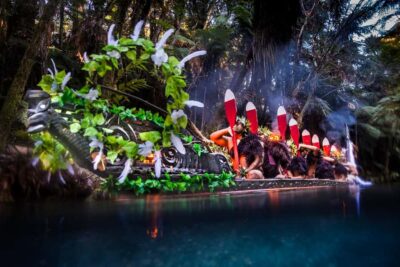
Mitai Maori Village: Cultural Experience and Dinner Buffet
Read our review →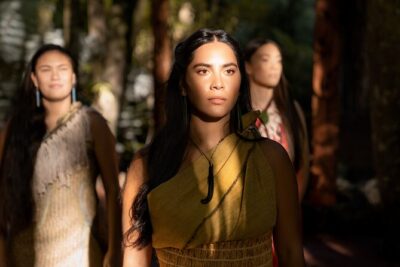
Cultural Experience & Seasonal Māori Cuisine at Te Pā Tū
Read our review →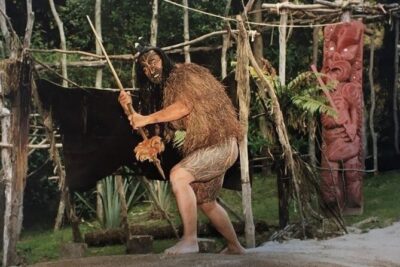
Mitai Maori Village Cultural Experience in Rotorua
Read our review →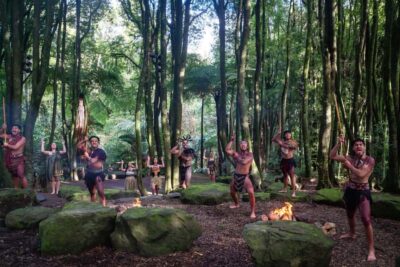
Te Pa Tu Māori Cultural Experience with Dinner
Read our review →
Lake Taupo: Sailboat Trip to the Maori Rock Carvings
Read our review →
Lake Taupō Māori Rock Carvings Scenic Cruise aboard Ernest Kemp
Read our review →
Waitomo Caves & Rotorua – Te Puia Small-Group Tour from Auckland
Read our review →Browse the lists this tour appears in