
Reviewed · HIKING & TREKKING
Llama Trek (Taster) – Kowhai River Valley and Native Woodland Tour
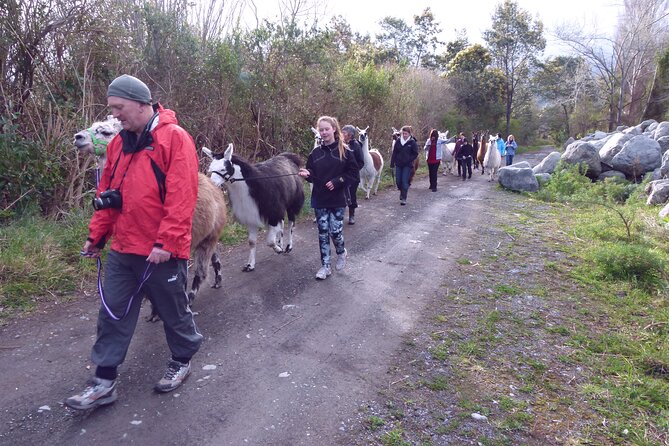
The unusual part comes first: you are not simply looking at llamas in a paddock. You help lead them along the Kowhai River banks and riverbed, with protected native woodland around you and bird calls in the background. It is a gentle outdoor outing with an animal at the center, not a hard trek.
I like the small maximum of five people, which gives Kevin room to explain llama behavior and help you handle the animals. I also like the 90-minute length: long enough to feel like a proper activity, but short enough to fit neatly into a busy Kaikoura day.
The main consideration is that you need to take part. This is not a sit-back-and-watch encounter. The walk is easy, but you will be expected to help lead the llamas, and much of the appeal comes from being active with them.
Key points at a glance
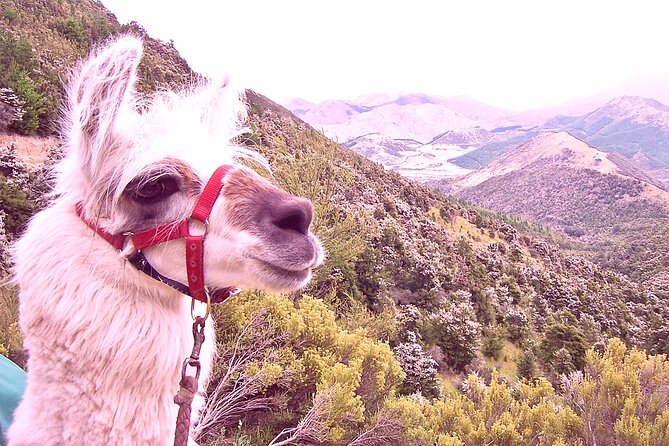
- Lead the llamas yourself: You get close to the animals and take part rather than watching from the side.
- Follow the Kowhai River: The route uses riverbanks and sections of riverbed beneath protected native woodland.
- Small group size: A maximum of five people allows for personal guidance and plenty of animal time.
- Kevin explains llama behavior: Expect practical guidance about how llamas act and how to work with them.
- Easy 90-minute outing: The trek suits a short gap in your Kaikoura plans and does not require a demanding hike.
- Mostly stroller accessible: Around 80 percent of the route is accessible, with an alternate way around the less accessible section.
Why this llama trek feels different
Kaikoura is famous for its marine wildlife, but this experience takes you inland and slows the pace down. Instead of heading out on a boat or joining a large group, you spend time beside llamas in the Kowhai River Valley.
That change of rhythm is the point. The llamas are funny, curious animals that like to snack, so the walk includes plenty of small pauses and close contact. You may find yourself concentrating less on covering ground and more on what the animal beside you is doing.
The activity is also more hands-on than the word trek might suggest. You are not setting off on a strenuous mountain route. You are helping lead a small group of llamas while moving along the river area, with your guide explaining what to do.
For families and first-time llama handlers, that makes the experience approachable. You do not need specialist outdoor skills. You do need to be willing to participate, listen to instructions, and accept that the llamas may have their own ideas about when to stop for food.
The excellent 5 rating from 76 reviews and a 99 percent recommendation rate reflect the experience’s strongest feature: direct contact with the animals. The natural setting adds atmosphere, but the llamas are the real reason to book.
More hiking tours in Kaikoura:
- Llama Trek (Half-day) – Kaikoura Bay, Beaches & Seal Colony
★ 5.0 · 157 reviews - Franz Josef Glacier Heli-Hike
★ 4.5 · 618 reviews - Heli Hike Fox Glacier
★ 5.0 · 563 reviews
Starting at 12 Kowhai Ford Road
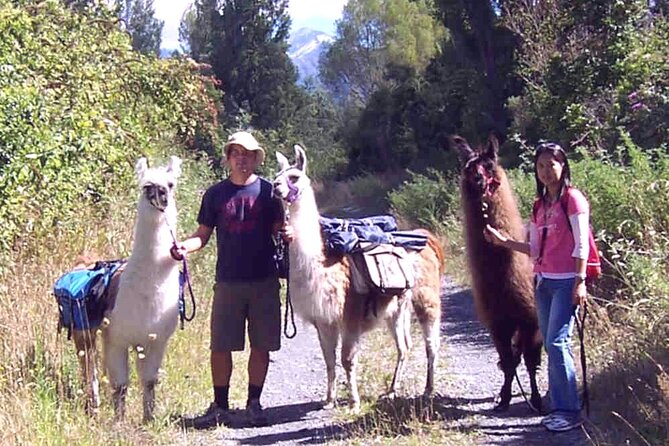
The meeting point is 12 Kowhai Ford Road, Kaikoura Flat, Kaikōura 7371. The activity begins and ends there, so you do not need to arrange a separate pickup or work out a one-way return.
That simple setup matters if you are fitting the trek between other Kaikoura plans. You arrive at one location, spend about an hour and a half on the outing, and return to the same place when it is finished.
The exact transfer from central Kaikoura is not provided, so check your own route to the meeting point before booking. The activity is near public transportation, but the supplied information does not specify a particular bus stop or timetable.
Once you arrive, expect the guide to get you acquainted with the llamas and explain how the trek works. Kevin is praised for explaining llama behavior clearly and patiently. That guidance is useful because the best experience comes from knowing how to approach, touch, and lead the animals in a calm way.
Along the Kowhai River banks and riverbed
The route passes through the Kowhai River Valley, using the riverbanks and riverbed. You are surrounded by protected native woodland for much of the outing, with native birds and other wildlife close by.
The raised riverbanks are especially useful for seeing and hearing what is around you. The information provided describes constant bird sounds and wildlife that can be seen easily from these higher sections. That gives the walk more interest than a simple animal encounter in a fenced area.
The riverbed adds variety underfoot. It also means this is an outdoor activity shaped by natural ground rather than a fully paved path. The walk is described as easy, but you should still expect a real riverside setting, not a smooth urban footpath.
The woodland and river setting give you something to pay attention to between animal encounters. You might hear native birds before you see them, then spot wildlife from the riverbank while the llamas pause nearby. The setting is peaceful without needing a packed schedule of stops.
There is only one listed stop, but that is not a weakness here. The whole experience is built around one continuous area, so you are not losing time to vehicle transfers or repeated introductions. The interest comes from the changing mix of animals, river ground, woodland, and wildlife sounds.
Getting to know the llamas
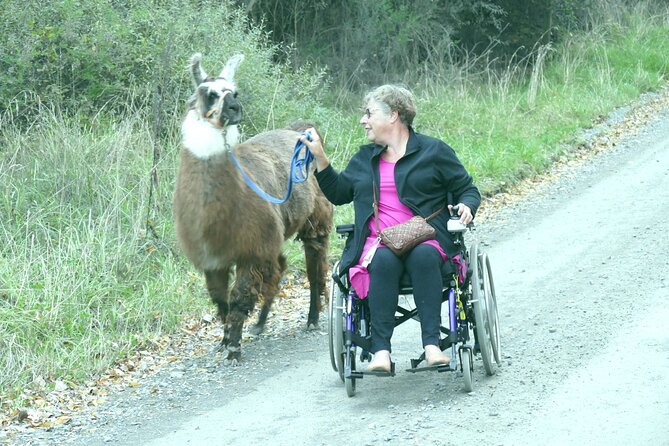
The best part of the outing is the chance to get close and touch the llamas. You also help lead the pack, which gives the activity a stronger sense of participation than a standard petting experience.
Llamas have their own habits. They like to snack, and they may not march along in a perfectly straight line. That is part of the fun, but it also explains why the guide’s instructions matter. A patient approach will serve you better than trying to rush the group.
Kevin’s role is important here. He explains llama behavior in detail and helps you understand what the animals are doing. For children, this can turn a cute-animal visit into a useful lesson about reading animal behavior. For adults, it adds a bit of structure to what could otherwise be a short photo stop.
You should be prepared to be an active participant, but the activity is not described as hard or frightening. The physical demand comes from walking and handling the llamas, not from climbing or a long wilderness route.
If you are uncomfortable touching animals or prefer to observe quietly, this may not be the right choice. You can still enjoy the woodland and river, but the experience is designed around contact and participation.
A few more Kaikoura trips worth a look
- Kaikoura: Whale Watching Cruise
★ 4.6 · 3,089 reviews - Whale Watching in Kaikoura by Boat
★ 4.5 · 2,906 reviews - Kaikoura: Whale Watching Flight with Commentary
★ 4.6 · 823 reviews - Wildlife Sea Kayaking Tour – Kaikoura
★ 5.0 · 467 reviews
A gentle pace with a small group
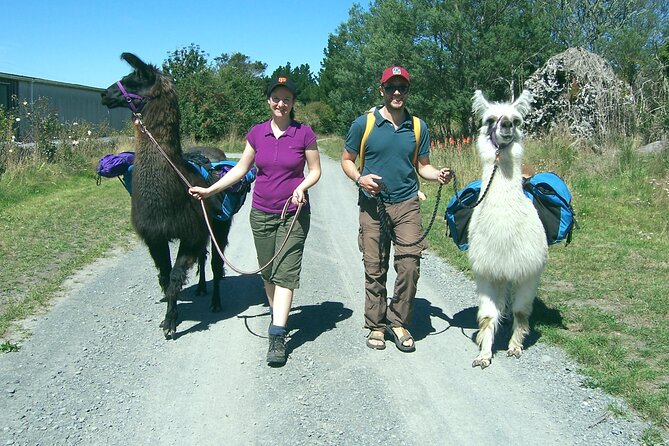
The group maximum is five people. That is one of the clearest advantages of this booking.
A small group means less crowding around the llamas and more opportunity for the guide to answer questions. It also makes it easier to keep the group together along the riverbank and riverbed. If one person needs extra help with a llama, the guide is not trying to manage a large line of people at the same time.
The short duration is another practical strength. At about 1 hour and 30 minutes, this is a good choice if you want an activity that adds something special to your day without taking over the whole afternoon.
Do not expect a full-day expedition. The taster is deliberately compact. One family had only enough time for the shorter experience and still found it satisfying, while also noting that a longer outing would be appealing if their schedule allowed.
That gives you a useful way to judge it. Book the taster if you want an introduction to llama trekking or have limited time. If your main goal is a long walk through the countryside, you may find the 90 minutes too brief.
What the price includes in practical terms
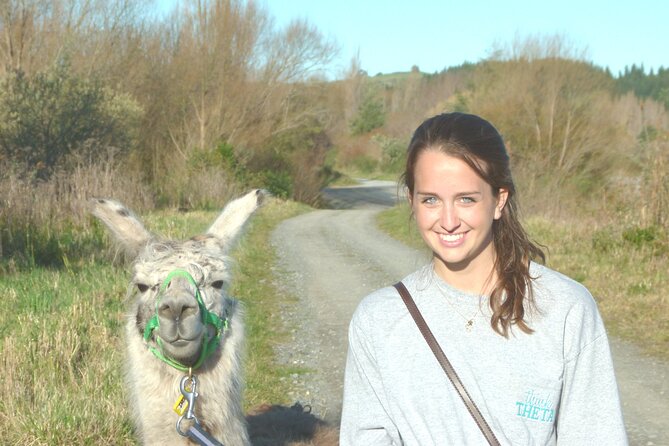
The listed price is $83.16 per person. That is not the cheapest way to take a walk, but you are paying for more than access to a track.
Your price covers a guided, small-group animal experience in the Kowhai River Valley. It includes direct time with the llamas, instruction on their behavior, and a route through native woodland and river areas. The maximum of five helps explain why the cost is higher than a general public attraction with dozens of people.
I see the value most clearly for people who want something personal and unusual. A family can share the activity, children can take part in leading the animals, and adults still get a quiet walk with wildlife around them.
The value is weaker if you only want scenic walking. You could find the 90-minute duration short for the price if the llamas are not a major draw for you. This is an animal encounter first and a nature walk second.
Group discounts are available, which may improve the price for several people booking together. Since the exact discount is not provided, check the final booking total before assuming how much you will save.
Access, participation, and who should book
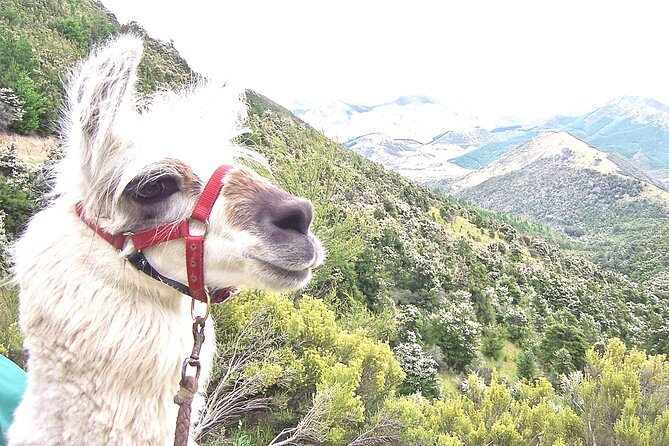
Around 80 percent of the trek is stroller accessible. The less accessible section can be avoided, allowing you to complete the activity by taking an alternate route.
That is helpful, but it does not mean the whole experience is fully step-free. The route includes riverbanks and riverbed, so anyone with mobility concerns should consider the natural ground and ask the provider about current conditions before booking.
Service animals are allowed. Most people can participate, and there is no stated fitness requirement beyond taking part in an easy walk and helping with the llamas.
I would recommend this for:
- Families who want an animal activity with a short walking component
- Couples looking for something more unusual than a standard sightseeing stop
- Visitors with limited time in Kaikoura
- People who enjoy wildlife but prefer a calm, land-based activity
- Anyone curious about llama behavior and hands-on animal care
I would be more cautious if you want a long hike, a completely passive encounter, or a fully paved route. The experience asks you to engage with the animals and accept a natural riverside setting.
Timing, tickets, and cancellation
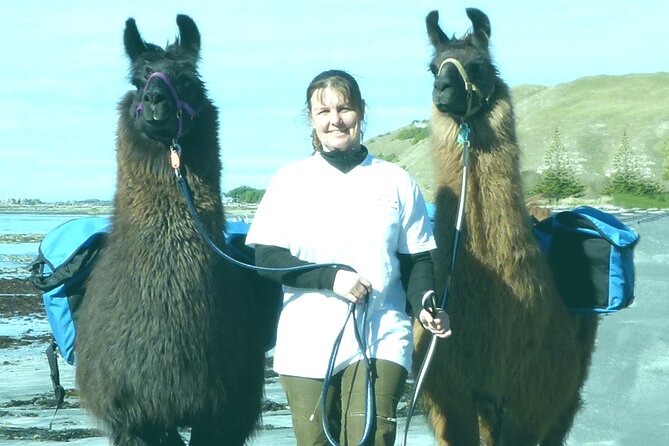
The ticket is mobile, which makes it easy to keep the booking on your phone. Confirmation is normally sent at booking. If you book within two days of the activity, confirmation can take up to 48 hours and remains subject to availability.
Free cancellation is available when you cancel at least 24 hours before the local start time. Cancellations or changes made inside that window are not accepted for a refund.
The activity requires a minimum number of participants. If the provider cancels because that minimum is not reached, you will be offered another date or experience, or you can receive a full refund.
Those rules are worth checking before you book a tight itinerary. The safest plan is to reserve early, confirm the meeting point, and leave enough space around the 90-minute activity for arrival and departure.
Should you book the Kowhai River llama trek?
Book it if you want a small, friendly, hands-on animal experience in a natural Kaikoura setting. The combination of llama handling, native woodland, river scenery, and bird sounds makes this more memorable than a simple photo opportunity.
The strongest reasons to go are the maximum group size of five, Kevin’s patient explanation of llama behavior, and the chance to lead and touch the animals. The activity also fits neatly into a busy day.
Skip it if you want a serious hike or prefer to watch animals from a distance. At $83.16 per person, the price makes most sense when you value close contact and personal guidance.
For families, first-time llama handlers, and anyone seeking a quieter alternative to Kaikoura’s better-known ocean activities, I would put this near the top of the short-list.
FAQ
Where does the llama trek start?
It starts at 12 Kowhai Ford Road, Kaikoura Flat, Kaikōura 7371, New Zealand.
Where does the activity finish?
The trek ends back at the meeting point on Kowhai Ford Road.
How long does the experience last?
The taster experience lasts approximately 1 hour and 30 minutes.
How much does the llama trek cost?
The listed price is $83.16 per person.
How many people can join the tour?
The maximum group size is five travelers.
What will I see during the trek?
You will walk along the Kowhai River banks and riverbed, surrounded by protected native woodland. Native birds and other wildlife may be seen and heard along the way.
Do I get to touch the llamas?
Yes. The experience includes close contact with the llamas, including the opportunity to touch them.
Do I help lead the llamas?
Yes. You should expect to be an active participant and help lead the pack.
Is the trek stroller accessible?
Around 80 percent of the trek is stroller accessible. The less accessible section can be avoided so you can complete the activity.
Can I cancel for a full refund?
Yes, if you cancel at least 24 hours before the local start time. Cancellations made less than 24 hours in advance are not refunded.
Just added around Kaikoura
- Kaikōura Whale Watching – 1hr 20min Ultimate Adventure★ 5.0 · 8 reviews
- Kaikōura Whale Watching and Scenic Landing – 1hr Premier Tour★ 5.0 · 24 reviews
- Kaikoura Whale Watching – 45 Minute Ocean Safari★ 5.0 · 39 reviews
- Sunset Kayak tour in Kaikoura★ 5.0 · 46 reviews
- Private Wildlife Kayaking Tour – Kaikoura★ 5.0 · 44 reviews
- Private Seal Kayaking and Wildlife Tour in Kaikoura★ 5.0 · 7 reviews
- Sunset Evening Kayaking Tour – Kaikoura★ 4.5 · 81 reviews
- Kaikoura Helicopters Extended Whale Watch★ 4.5 · 15 reviews
Hiking & Trekking, compared.


Queen Charlotte Track: Cruise & Self-Guided Hike from Picton
Read our review →
2.5 Hour Glacier Hike with Helicopter Transfer
Read our review →
Fox Glacier: Up to 3 Hours Hike with Helicopter Transfer
Read our review →
Rotorua Hiking: Mt Tarawera Guided Volcanic Crater Experience
Read our review →
Cardrona High Country Pub Trail Horse Riding Trek (Intermediate+)
Read our review →
Volcanic Valley Self Guided Walking and Hiking at Waimangu
Read our review →Browse the lists this tour appears in