
Reviewed · GEOTHERMAL TOURS
Rotorua: ‘Thermal Path Tour’ Geothermal half day Tour
Rotorua’s geothermal country is at its best when you move beyond the famous stops. This four-hour outing takes you to hot lakes, bubbling mud, a colored crater lake, and a powerful spring, then finishes with a soak at Waikite Valley Thermal Pools. The small group of up to eight keeps the experience personal and makes it easier to ask questions.
I like the way the tour links several different geothermal sights rather than showing you one large attraction and sending you home. I also like the local guiding, especially if Stephen, Steph, or Steven leads your group. Past guests describe the guide as warm, attentive, and full of useful local detail. The main drawback is that the Waikite Valley soak is an important part of the plan, yet one past outing had a program change that meant the pools were missed.
Key points at a glance
- Rotorua’s largest hot water lake: A strong first stop for understanding the forces beneath the region.
- Rainbow Mountain crater lake: Walk through native forest and geothermal plant life before reaching the colored water.
- Largest active mud pool in the area: Watch gas and steam push bubbles through thick mud.
- Te Manaroa Spring: A short walk leads to Rotorua’s largest hot water spring.
- Waikite Valley soaking: The final stop adds a calm, restorative finish to a walking-focused morning or afternoon.
- Small-group format: With no more than eight people, the guide can respond to your interests and keep the pace relaxed.
Why this four-hour route works
Rotorua has enough geothermal attractions to fill several days, but many visitors see only the most heavily promoted sites. This tour takes a different approach. It strings together several natural locations, each showing a different form of geothermal activity.
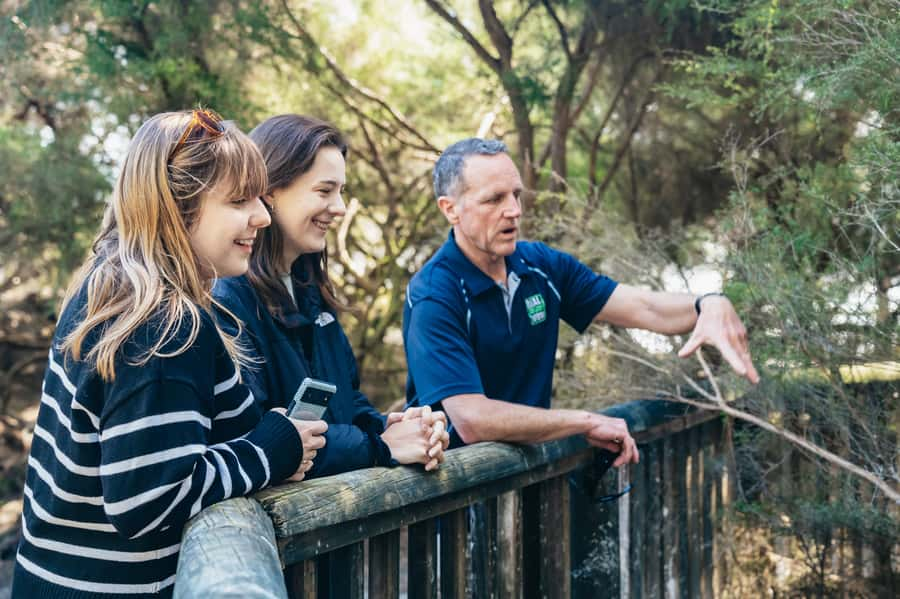
You will travel in comfortable air-conditioned transport between stops, with an English-speaking local guide explaining what you are seeing. That matters here. A mud pool can look like a muddy puddle unless someone explains the gases, heat, and pressure at work beneath it. A crater lake can look simply colorful until you understand how volcanic minerals and geothermal conditions shape its appearance.
The group limit is eight people. I consider that a real advantage for this kind of outing. You are not being moved through a large crowd, and the guide can give more attention to questions or interests. The relaxed format also suits a half day when you want to see a lot without spending all day on your feet.
There is a physical side to the trip. The walks total up to 2 kilometers, but the ground can include tree roots, rocks, uneven sections, and slippery surfaces. You need a good level of fitness and balance. This is not a suitable choice for wheelchair users, people with mobility impairments, children under six, or anyone who struggles with walking on rough ground.
More Geothermal Tours in Rotorua
- Rotorua: Wai-O-Tapu Geothermal Park Entry Ticket
★ 4.6 · 2,601 reviews - Rotorua: Hell’s Gate Outdoor Mud Spa & Guided Walk
★ 4.7 · 1,140 reviews - Hell’s Gate Mud Bath & Spas
★ 4.5 · 475 reviews
Starting with Rotorua’s largest hot water lake
The first stop introduces you to the scale of Rotorua’s geothermal activity. You will visit the largest hot water lake in the area, where heat from below the surface affects a large body of water rather than a small pool or spring.
I like this as an opening because it gives you a broad sense of the region before the tour becomes more detailed. The stop helps explain why Rotorua has steam, hot ground, mineral colors, and unusual plant life in such close proximity. Your guide can also give you a basic framework for the rest of the trip: geothermal activity is not one single thing, but a range of hot water, gases, mud, and volcanic ground conditions.
The lake is a viewing stop, not a place for swimming. In geothermal areas, you should remain on formed paths and obey your guide’s instructions. Thin crusts, hot fluids, carbon dioxide, and sulphide gases can cause severe injury or worse. The scenery may look calm, but the ground is not ordinary lakeside terrain.
Rainbow Mountain and its colored crater lake
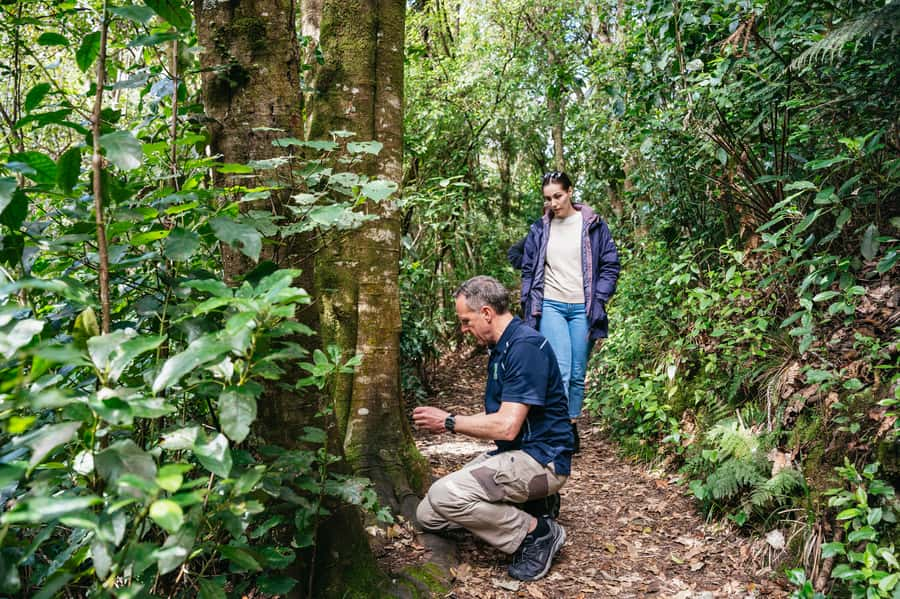
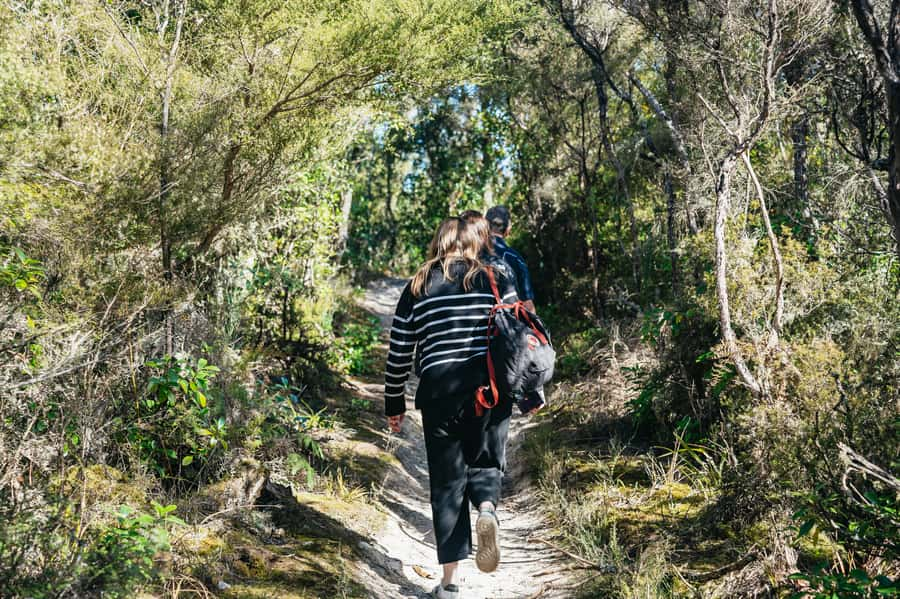
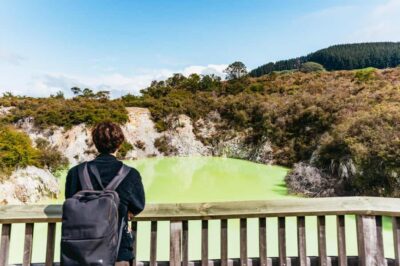
The route then moves to Rainbow Mountain. Here, you walk through native forest before reaching a crater lake with striking color. The forest is part of the interest. Geothermal conditions create plant life and growing conditions found only in this sort of setting, so the walk is not just a short approach to a viewpoint.
This section gives the tour a welcome change of pace. You move from a large hot lake to a forest path, then arrive at a crater shaped by volcanic forces. The contrast makes the area easier to appreciate. You are not simply looking at another steaming pool. You are seeing how heat below the ground affects soil, water, vegetation, and the shape of the land.
The walk is short, but you should still wear closed-toe shoes with a good grip. Roots and rocks can make the path less easy than the distance suggests. If you enjoy taking photographs, the crater lake should be one of the stronger stops, though exact colors can vary with light and conditions.
The huge mud pool that never sits still
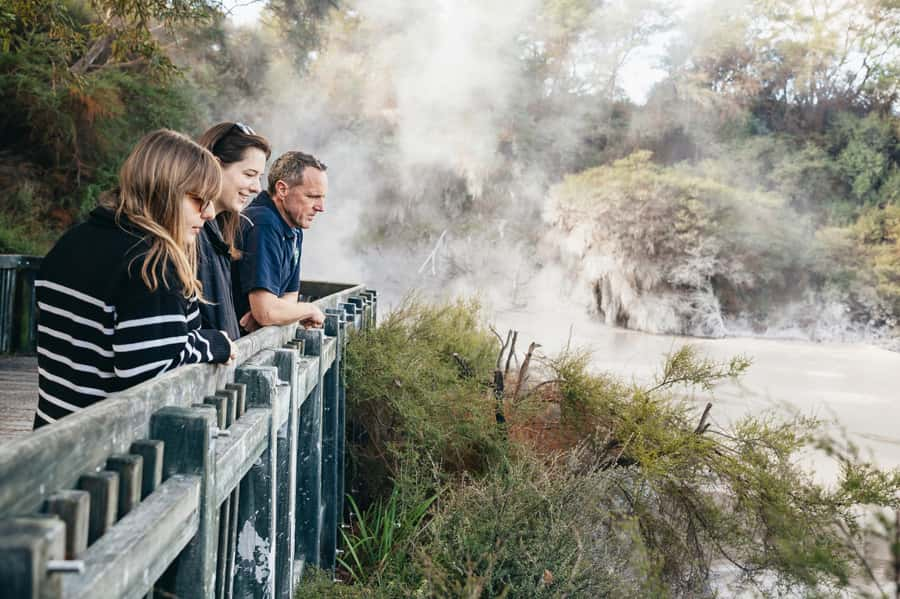
A short drive brings you to a large active mud pool, described as the biggest and most active in the region. This is one of the clearest examples of geothermal power on the route.
Steam and gases rise through the pool, forcing mud bubbles to form and burst. The action is slow, irregular, and oddly compelling. You may watch a smooth patch swell, break, and collapse, then see another bubble appear a few feet away. It is not a polished attraction. That is part of its appeal.
The mud pool also shows why staying on the marked path is essential. Hot water and gases are close to the surface, and the crust around geothermal features can be unsafe. Keep your distance, follow the guide, and do not step across barriers or formed trails for a better photograph.
This stop may be especially useful if you want to understand the difference between a hot spring and a mud pool. The water here has changed the surrounding material into mud, while gases push upward from below. Your guide can connect what you see to the larger volcanic system beneath Rotorua.
Same corner of the country, a very different day out:
- Rotorua Canopy Tours: 2.5Hour Native Forest Zipline Adventure
★ 5.0 · 4,563 reviews - Mitai Maori Village: Cultural Experience and Dinner Buffet
★ 4.7 · 3,575 reviews - Rotorua’s Ultimate Zipline: 6 ziplines, 400 m Tandem, Cliff Walk
★ 5.0 · 2,557 reviews - Rotorua Rafting: Kaituna River White Water Rafting & Free Sauna
★ 5.0 · 1,952 reviews
Walking to Te Manaroa Spring
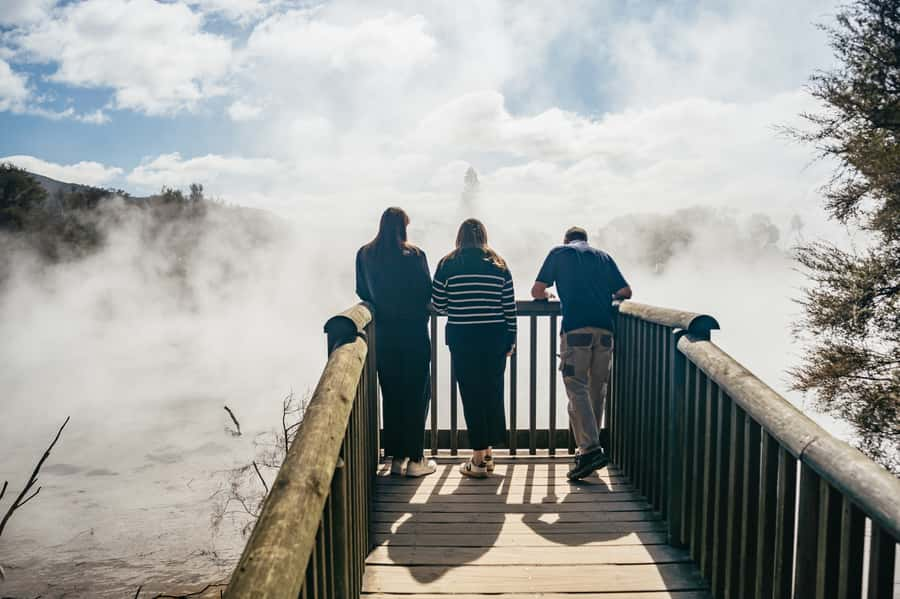
Next comes Te Manaroa Spring, reached by a short walk. It is Rotorua’s largest hot water spring, with boiling water surging up from below and vegetation around it.
The spring gives you another version of geothermal activity. The mud pool is thick, lumpy, and restless. Te Manaroa is more forceful and fluid, with hot water rising from depth. The nearby vegetation adds a softer frame, but do not let the greenery make the site seem harmless. Boiling water and geothermal gases are present.
This is the sort of stop that benefits from a local guide. The physical features are easy to see, but the meaning of the place is less obvious without context. Stephen, Steph, or Steven may add personal touches and adjust the explanation to your interests. That personal style has been one of the strongest aspects of this experience, particularly for people who prefer conversation over a fixed script.
The short walk is manageable for fit visitors, but balance still matters. Wear comfortable clothes and shoes that can cope with uneven ground. If rain has affected the path, slippery surfaces may make the walk more demanding.
Ending with a soak at Waikite Valley
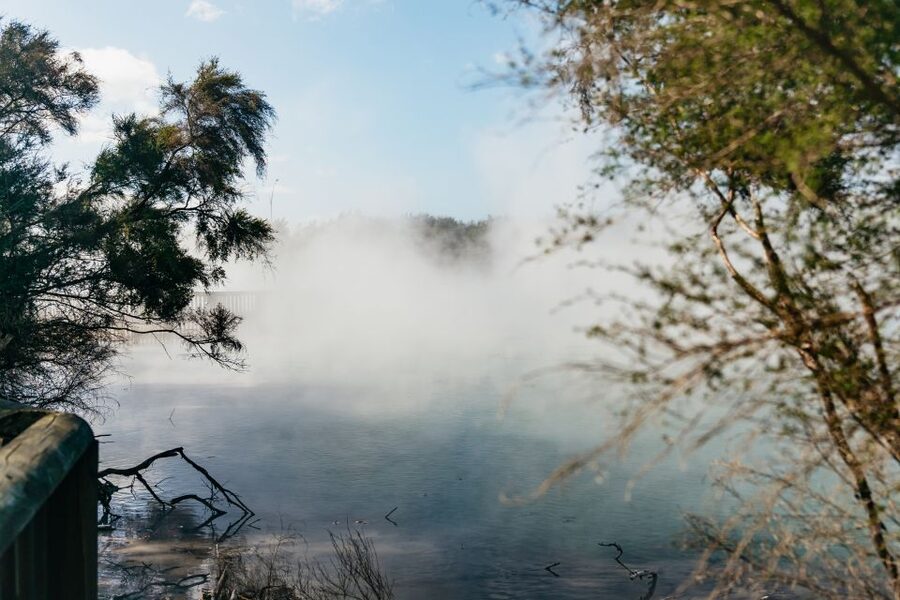
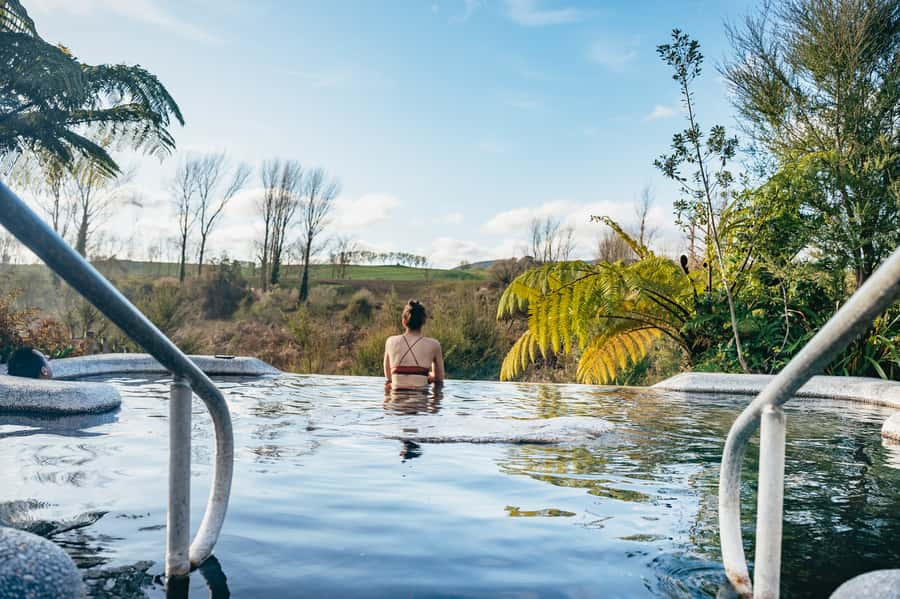
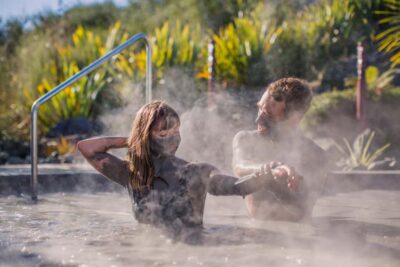
The final stop is Waikite Valley Thermal Pools. After several walks and outdoor viewing stops, the chance to bathe gives the outing a different rhythm. You can relax in silica-rich thermal water and finish the tour in a quieter way than it began.
This is not just an extra activity tacked onto the end. It changes the value of the half day. You are not only looking at geothermal water, you are also getting time to enjoy a managed bathing complex. For many people, this will be the most restorative part of the trip.
Bring your swimwear. The entry fee is included, along with transport and the guide, but food and drinks are not. Keep your head above the water while bathing because of the risk of amoebic meningitis, a potentially fatal infection associated with geothermal waters. Follow the pool’s safety instructions carefully.
There is one practical point to keep in mind. A previous outing involved a late program change, and the Waikite Valley pools were not available. The guide remained interesting and the geothermal stops continued, but that was a real disappointment for someone who had chosen the tour mainly for the soak. If the pools are your top priority, confirm the current plan close to departure and understand that conditions or operational changes may affect the final stop.
What the guide adds to the experience
The guide is more than a driver between attractions. The strongest feedback centers on the local guiding, with Stephen named several times and also referred to as Steph or Steven. The descriptions point to a friendly, attentive guide who explains the area clearly and adds personal touches.
That matters because the tour visits places you might not easily find or connect on your own. You could drive around Rotorua and see geothermal features, but you might miss the meaning of the forest, the difference between bubbling mud and boiling water, or the reasons for the unusual vegetation.
A small group also lets the guide respond to your interests. If you want more detail about volcanic activity, plant life, safety, or the local surroundings, you have a better chance of getting a useful answer than on a large coach outing. The pace is described as relaxed, but you should not expect a completely passive sightseeing ride. You will walk at several locations.
Is $89 a fair price?
At $89 per person, the tour offers reasonable value if you want several natural sites and a thermal bathing stop in one four-hour outing. The cost covers the guide, air-conditioned transport, and entry to Waikite Valley Thermal Pools. You do not need to arrange separate transport between the locations, which is useful because the route includes less familiar geothermal spots.
The value is strongest for visitors without their own vehicle, visitors who want local explanation, and anyone who prefers a compact half-day plan. You are paying for access, transport, guiding, and the convenience of linking four very different geothermal environments.
It is less compelling if you only want a long thermal soak. In that case, a pool visit by itself may fit your priorities better. It is also not ideal if you dislike walking on rough paths or would rather spend the whole day at one major attraction.
Food and drinks are not included, so plan around that. The tour lasts four hours, and the available start times should be checked when you book. Free cancellation is available up to 24 hours in advance, and you can reserve without paying immediately if that option is offered for your date.
What to bring and how to prepare
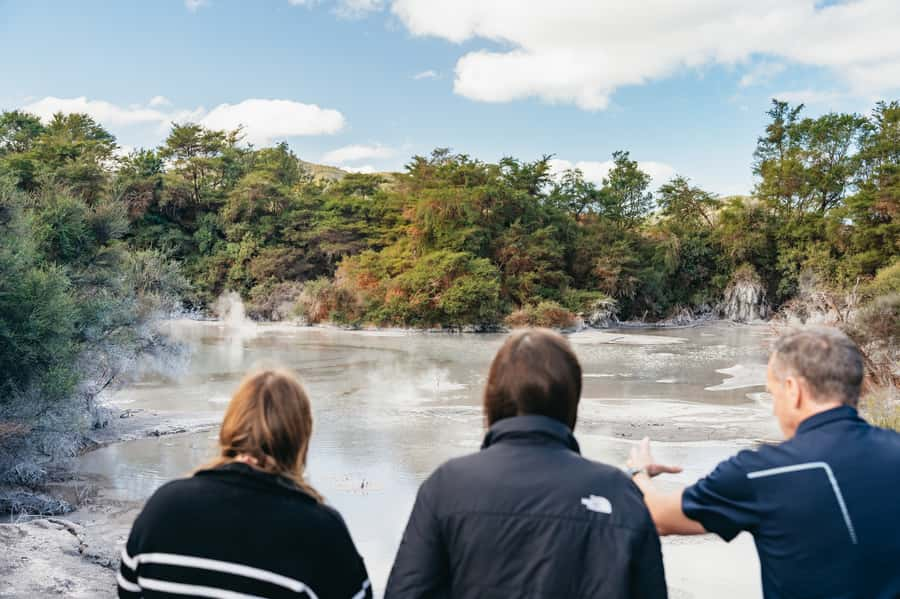
Wear comfortable clothes and closed-toe shoes. Good footwear is more important than fashionable footwear here, since the route may include rocks, roots, uneven ground, and slippery surfaces.
Pack swimwear for Waikite Valley. You should also be ready for changing outdoor conditions, although no specific weather gear is listed as included. Since food and beverages are not provided, bring what you need or eat before the tour.
The safety briefing deserves your full attention. Stay on formed paths in geothermal areas, keep away from thin crust surfaces, and do not approach hot water or mud. Carbon dioxide and sulphide gases can be dangerous, and contact with hot fluids can cause serious injury, asphyxiation, or death.
This outing requires a reasonable level of fitness and balance. Walks can total up to 2 kilometers, and the difficulty comes partly from the surface rather than the distance. If you are unsure about your mobility, this tour is probably not the right choice.
Who should book the Thermal Path Tour?
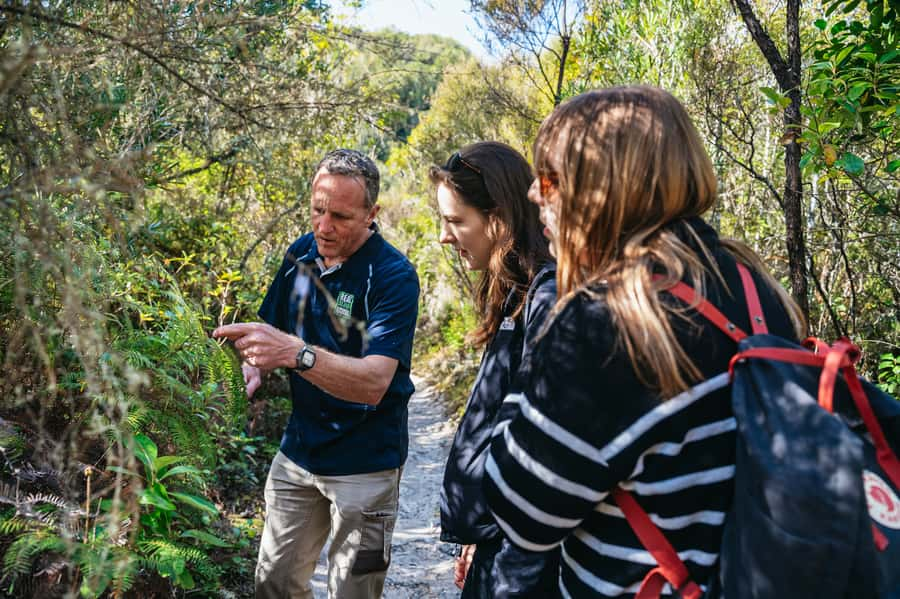
I would choose this tour if you want to see several different geothermal features and prefer a small, personal group. It is a good fit for curious visitors who want explanation as well as scenery, and for people who like the idea of ending an active outing with a thermal bath.
It also suits anyone who has already seen Rotorua’s better-known attractions and wants a quieter route. The mix of hot lake, forest, crater lake, mud pool, spring, and bathing pool gives you a more rounded sense of the area.
I would hesitate if you have limited mobility, low fitness, or a strong dislike of uneven paths. I would also think twice if Waikite Valley is your only reason for booking, since a past program change affected access to the pools. For everyone else, the route offers a useful balance of unusual sights, local guidance, and time to relax.
FAQ
How long does the Thermal Path Tour last?
The tour lasts four hours.
How much does the tour cost?
The price is $89 per person.
How many people are in the group?
The group is limited to eight participants.
What language is the tour conducted in?
The tour is conducted in English with a live guide.
What places does the tour visit?
The route includes Rotorua’s largest hot water lake, Rainbow Mountain and its crater lake, a large active mud pool, Te Manaroa Spring, and Waikite Valley Thermal Pools.
Is entry to Waikite Valley Thermal Pools included?
Yes. Entry to Waikite Valley Thermal Pools is included in the tour price.
What should I bring?
Bring comfortable clothes, swimwear, comfortable shoes, and closed-toe shoes. Food and drinks are not included.
Is the tour suitable for people with mobility difficulties?
No. The tour includes walks of up to 2 kilometers over uneven ground, and it is not suitable for wheelchair users, people with mobility impairments, or people with a low level of fitness.
Should you book it?
Book the Thermal Path Tour if you want a well-paced introduction to Rotorua’s less familiar geothermal places, with a small group and a thermal soak at the end. The local guide is the main asset, and the variety of stops gives you far more than a single mud pool or hot spring visit.
Skip it if you need step-free access, want a full-day outing, or care only about bathing. For fit visitors who value unusual natural sights and practical local explanation, $89 is a sensible price for this compact Rotorua experience.
Just added around Rotorua
- TRIPLE DEAL Wai-O-Tapu, Redwood Forest & Blue Springs Ex Auckland★ 5.0 · 20 reviews
- Volcanic Rotorua Day Trip from Auckland★ 5.0 · 4 reviews
- Private Tour to Rotorua’s Natural wonders and Māori Arts & craft.★ 5.0 · 4 reviews
- Private Transfer From Auckland Airport To Rotorua★ 5.0 · 5 reviews
- Rotorua Highlights Tour inc. Te Puia Tour, Lunch & Cultural Show★ 4.5 · 53 reviews
- Private Tour – Rotorua Adventures Day Trip From Auckland★ 5.0 · 19 reviews
- Private Tour WaiOtapu & Huka Falls & Blue springs from Auckland★ 5.0 · 3 reviews
- Rotorua Full Day Private Tour from Auckland★ 5.0 · 3 reviews
Geothermal Tours, compared.
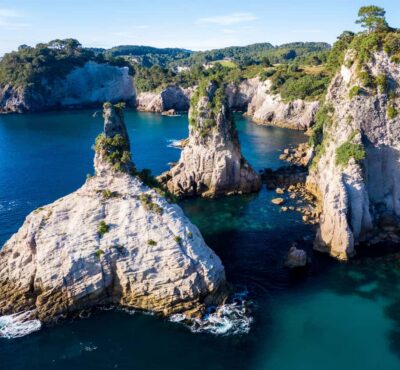
2-Hour Cathedral Cove and Volcanic Coast Cruise
Read our review →
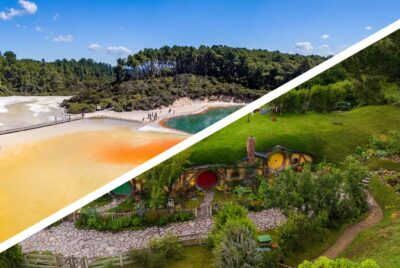
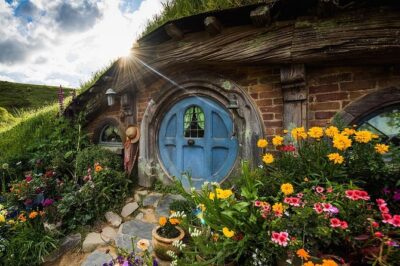
Hobbiton & Rotorua including Wai-O-Tapu – Small Group Tour from Auckland
Read our review →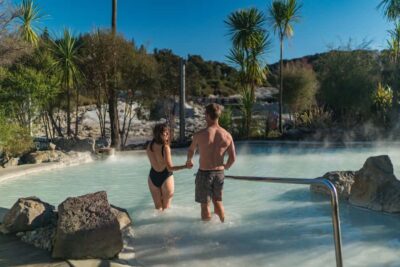

2 Hour Cathedral Cove and Volcanic Coast Cruise with Shade Canopy
Read our review →Browse the lists this tour appears in