
Reviewed · GEOTHERMAL TOURS
From Rotorua: WAIMANGU VOLCANIC VALLEY Half-Day Tour
Waimangu Volcanic Valley is a place where the ground still feels new. Born from the 1886 eruption of Mount Tarawera, this young geothermal system gives you steaming craters, boiling lakes, bright mineral colors, and native greenery in one compact valley.
I like the small group of up to 10 and the easy pickup from central Rotorua. I also like the freedom of a self-guided walk, since you can set your own pace instead of being marched from one hot spring to the next. The main consideration is the walking: this is not a sit-back sightseeing trip, and it is not suitable for wheelchair users or people with mobility impairments.
Key points to know before you go
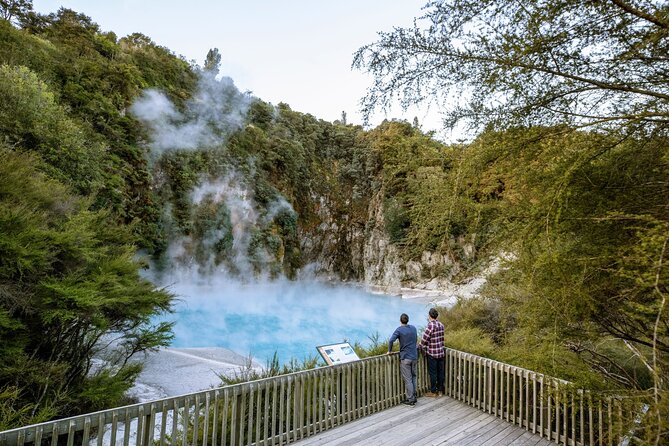
- Frying Pan Lake is the star feature: See the world’s largest hot spring, spread across the valley in a broad, steaming basin.
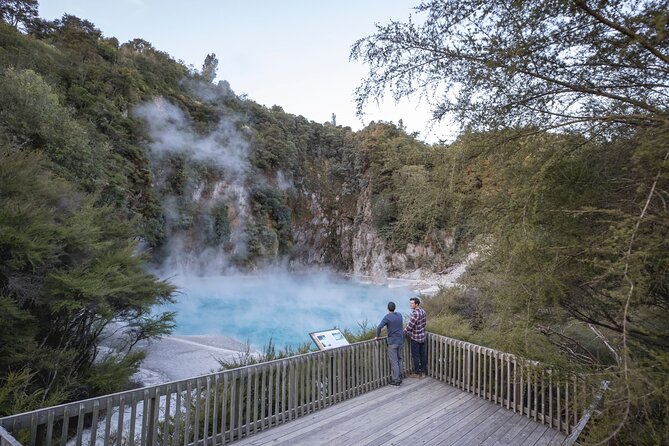
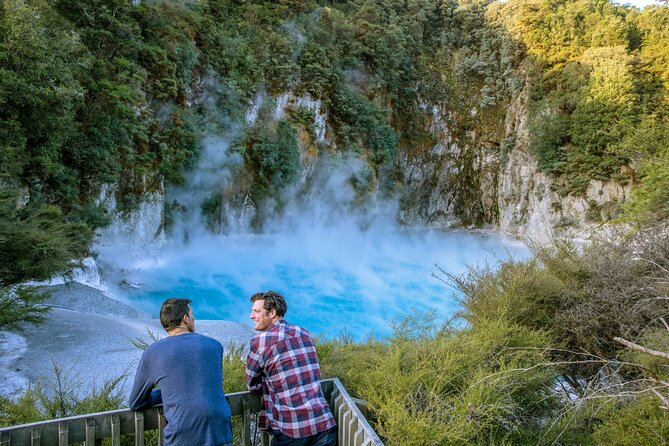
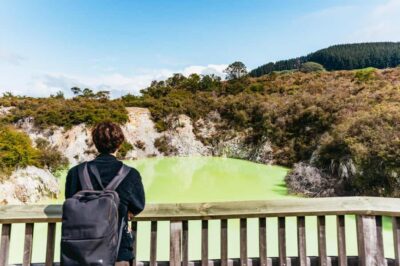
- Inferno Crater brings the color: Its brilliantly blue boiling water is one of Waimangu’s most striking sights.
- The valley was born in 1886: Mount Tarawera’s eruption created the geothermal system you explore today.
- You walk at your own pace: Your guide provides context, while the valley walk gives you room to stop for photos and scenery.
- The group stays small: With no more than 10 participants, transport and questions should feel more personal than on a large coach tour.
- Plan for a morning of walking: Wear sturdy comfortable shoes, carry water, and bring sun protection.
Why Waimangu feels different from Rotorua’s other geothermal stops
Rotorua offers several places to see geothermal activity, but Waimangu has a particular sense of age and youth at the same time. The valley is the world’s youngest geothermal system, created by the Mount Tarawera eruption in 1886. That gives the visit a clear story: you are not simply looking at hot water and steam, but at a volcanic area still changing and regenerating.
The setting also shifts as you move through it. You may look across steaming craters one moment, then see native plants and wildlife taking hold around the geothermal features. That contrast is part of the appeal. Waimangu is not a bare field of vents. It is a living mix of hot ground, colored water, green growth, and quiet walking paths.
I like this kind of place because the sights are not all packed into one viewing platform. You get a sense of moving through a valley, with the features appearing in sequence. The walking makes the geology easier to understand, even if you are not a serious volcano enthusiast.
More Geothermal Tours in Rotorua
- Rotorua: Wai-O-Tapu Geothermal Park Entry Ticket
★ 4.6 · 2,601 reviews - Rotorua: Hell’s Gate Outdoor Mud Spa & Guided Walk
★ 4.7 · 1,140 reviews - Hell’s Gate Mud Bath & Spas
★ 4.5 · 475 reviews
Leaving Rotorua from the iSite
The tour begins at the iSite Rotorua bus stop at 1167 Fenton Street. Pay close attention to the meeting instructions: you should wait at the iSite stop and not opposite the Pullman Hotel. That small detail matters, since a pickup trip is no fun when you are standing on the wrong side of the street.
The drive from Rotorua takes you through lush countryside toward Waimangu. It is a useful transition from town to open volcanic country, and your English-speaking guide provides information about the area, its geothermal activity, and its cultural background along the way.
The small group format is a real advantage here. With up to 10 people, you can ask questions without trying to catch a guide’s voice across a full-size bus. It also makes the pickup and return less cumbersome. This is a good fit if you want transport from Rotorua but do not want a large organized outing.
The tour lasts about four hours in total and is usually offered in the morning. That timing leaves the rest of your day open for another Rotorua activity, a relaxed lunch, or a second geothermal site. It also means you should eat and drink before setting out, since meals and drinks are not included.
Walking through the youngest geothermal system
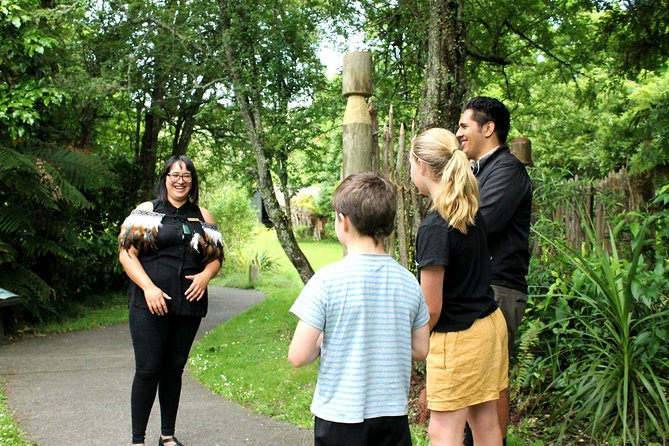
Once you arrive, the central part of the outing is a self-guided walk or hike through Waimangu Volcanic Valley. The guide does not need to keep you in a tight parade. Instead, you can take time with the views, pause for photographs, and move along at a pace that suits you.
That freedom is important because geothermal scenery rewards patience. Steam can shift across a pool, sunlight can change the look of colored water, and the scale of a crater is easier to grasp when you stop rather than rush. You will want comfortable walking shoes, weather-appropriate clothing, water, a hat, sunscreen, and a camera.
The walking is described as moderate. That means you should be ready for a reasonable amount of time on foot, rather than expecting a short stroll from the vehicle to one viewing area. The tour is not suitable for wheelchair users or people with mobility impairments, so consider your comfort with walking before booking.
The valley combines obvious volcanic features with quieter details. Look for steam rising from the ground, pools with unusual colors, and plant life growing close to areas shaped by heat and volcanic activity. The scenery changes as you continue, which gives the walk more variety than a single geothermal viewing stop.
Frying Pan Lake, the valley’s broad hot-water basin
Frying Pan Lake is one of the tour’s major sights and is described as the world’s largest hot spring. Its name gives you a good idea of the scale and character of the feature: this is a wide, steaming body of hot water rather than a tiny bubbling pool.
The size makes it impressive, but the surrounding steam is what gives it atmosphere. You may find that some views are partly veiled, so do not expect a perfectly clear look at every moment. That is part of seeing an active geothermal area rather than a fixed display.
Frying Pan Lake also helps explain why Waimangu works as a walking experience. The valley’s features are spread through a natural setting, so you see the relationship between the hot water, the craters, the vegetation, and the slopes around them. I like that the visit gives you more than a quick photo stop.
Your guide’s introduction is useful here, especially if you want to understand how the 1886 eruption changed the area. The live commentary is in English, and it adds context before you continue along the route. The actual pace of your walk remains your own.
Same corner of the country, a very different day out:
- Rotorua Canopy Tours: 2.5Hour Native Forest Zipline Adventure
★ 5.0 · 4,563 reviews - Mitai Maori Village: Cultural Experience and Dinner Buffet
★ 4.7 · 3,575 reviews - Rotorua’s Ultimate Zipline: 6 ziplines, 400 m Tandem, Cliff Walk
★ 5.0 · 2,557 reviews - Rotorua Rafting: Kaituna River White Water Rafting & Free Sauna
★ 5.0 · 1,952 reviews
Inferno Crater and its intense blue water
Inferno Crater is the feature most likely to stop you in your tracks. Its water is brilliantly blue and boiling, a sharp visual contrast to the darker rock, steam, and green vegetation around it.
The color is the kind of detail that makes Waimangu memorable, but it is worth paying attention to the wider setting too. Inferno Crater is not an isolated blue pool placed for display. It belongs to a volcanic system of steaming vents, hot lakes, and altered ground.
You will want your camera ready, though strong sun and steam can change how the water appears in photographs. Take a moment to look without the screen as well. The scale, heat, and sound of an active crater are easier to appreciate in person than in a snapshot.
The path and viewing areas are designed for seeing the geothermal features, but you still need to follow safety instructions and stay aware of the terrain. This is hot, active ground, not a place for wandering off the marked route.
Steam, color, and native growth along the route
Waimangu’s appeal comes from the mix of harsh and gentle scenery. Steaming pools and craters show the force below the surface, while native plants and wildlife show how life returns and adapts around the geothermal area.
That mix is especially valuable if you want more than a collection of dramatic photographs. The valley gives you a chance to see regeneration in progress. The 1886 eruption did not leave a frozen monument. It created conditions that continue to shape the area, while plants and wildlife gradually occupy the spaces around the heat.
I would plan to walk with your eyes moving between close and distant views. Watch for steam, colored water, crater edges, plant growth, and changes in the valley’s shape. A brisk walk may cover the route, but a slower pace will give you more from the experience.
The weather can affect how the valley feels. Sun protection matters, and weather-appropriate clothing is essential. Bring water even for a morning tour. The combination of walking and exposed outdoor conditions can be tiring, especially if the day is warm.
What the guide adds to a self-guided walk
The phrase self-guided walk does not mean you are left without any help. The tour includes an English-speaking live guide, transport from Rotorua, and an introduction to the geothermal and cultural background of the area.
The benefit is a useful middle ground. You receive explanation and local context, but you also get space to look around without standing in one fixed group. If you have a question, the small group size should make it easier to ask. If you prefer quiet observation, you can enjoy the path at your own speed.
This setup is best for someone who likes a little structure but does not want every minute scheduled. It may be less appealing if you want a fully guided walking tour with constant commentary. The supplied information does not promise continuous narration along every section, so book this with the expectation of guided transport and orientation followed by independent exploration.
The guide also helps connect Waimangu to the wider Rotorua area. Geothermal activity is central to the region, but Waimangu’s 1886 origin gives this stop its own identity. You are seeing a site shaped by a specific eruption and by the years of change that followed.
Is $111 a fair price?
At $111 per person, this is not the cheapest way to visit a geothermal attraction. The value depends on what you need.
If you are staying in Rotorua without a rental car, the round-trip transportation is useful. You do not need to arrange your own route to Waimangu, and the small group keeps the outing more personal than a large bus trip. The tour also saves you the effort of combining transport, entry arrangements, and background information on your own.
The four-hour duration is another point in its favor. You get a focused geothermal outing without giving up a full day. That works well in Rotorua, where you may also want time for Māori cultural activities, another thermal park, or the town’s other sights.
The price is harder to justify if you already have a car and only want independent entry. A self-guided ticket option exists separately, and driving yourself may give you more control over arrival and departure. In that case, the main reasons to choose this tour are the guide, the small group, and the convenience of transport.
Meals, drinks, and personal expenses are not included. Bring your own water and plan food around the morning schedule. That is a small cost, but it is worth noting when comparing the total price of your day.
Who should book this half-day outing?
I would recommend this tour to you if you want to see Rotorua’s geothermal side but prefer a natural valley to a tightly arranged attraction. It suits couples, solo visitors, and small groups who value easy transport and a calmer pace.
It is also a good choice if you enjoy photography. Inferno Crater’s blue water, Frying Pan Lake, steam, and plant life give you plenty to look at. Just remember that changing steam and weather can affect your photographs, so bring patience as well as a camera.
You should also be comfortable with moderate walking. Comfortable shoes are not optional advice here. The tour is not suitable for wheelchair users or people with mobility impairments, and anyone who finds uneven or extended walking difficult should choose a more accessible Rotorua activity.
This outing may be less suitable if you want a full cultural program, a meal, or spa time. Waimangu focuses on geology, scenery, and walking. It does not include food, drinks, mud bathing, or a long evening performance.
Practical tips for a better morning
Meet at the iSite Rotorua bus stop on Fenton Street, and double-check that you are not waiting opposite the Pullman Hotel. Arrive ready to board rather than trying to buy breakfast at the last moment.
Wear shoes that you can walk in for several hours. Add layers for changing weather, plus a hat and sunscreen. Water is essential, and a camera is worth bringing if you enjoy photographing steam and bright mineral colors.
Smoking is not allowed. Keep your attention on the route and the safety guidance around hot ground. Geothermal areas look calm in places, but the heat beneath the surface is real.
The cancellation terms are flexible: you can cancel up to 24 hours before the activity for a full refund. That is helpful when your Rotorua plans depend on weather, though you should still check the final booking conditions at the time you reserve.
Should you book Waimangu from Rotorua?
Book this tour if you want a half-day look at one of New Zealand’s most unusual geothermal areas, with transport, an English-speaking guide, and a small group. The combination of Frying Pan Lake, blue Inferno Crater, steam, native growth, and a walk through a volcanic valley gives you a fuller experience than a single roadside viewpoint.
Skip it if you need wheelchair access, dislike moderate walking, or want a meal or spa activity built into the outing. Also compare the cost with a self-guided entry option if you already have a car.
For most visitors staying in Rotorua without their own transport, the $111 price buys useful convenience and a well-sized group. The best reason to go is simple: Waimangu lets you see geothermal activity as part of a changing valley, not just as a row of hot pools.
FAQ
Where does the tour meet in Rotorua?
Meet at the iSite Rotorua bus stop at 1167 Fenton Street.
Should I wait opposite the Pullman Hotel?
No. The pickup point is the iSite Rotorua bus stop, and you should not wait opposite the Pullman Hotel.
How long does the Waimangu tour last?
The tour lasts about four hours.
Is the tour usually available in the morning?
Yes. The activity is usually available in the morning.
Is transportation from Rotorua included?
Yes. Round-trip transportation from Rotorua is included.
Is the walk guided or self-guided?
The experience includes a live English-speaking guide, while the walk through Waimangu Volcanic Valley can be taken at your own pace as a self-guided walk or hike.
What are the main geothermal sights?
The main sights include Frying Pan Lake, the world’s largest hot spring, and Inferno Crater, known for its brilliantly blue boiling water. You will also see steaming craters, hot springs, bubbling pools, native wildlife, and plant life.
How large is the tour group?
The group is limited to 10 participants.
What should I bring?
Bring comfortable walking shoes, weather-appropriate clothing, a hat, sunscreen, water, and a camera.
Is the tour suitable for wheelchair users?
No. The tour is not suitable for wheelchair users or people with mobility impairments.
Just added around Rotorua
- Rangitaiki River White Water Rafting from Rotorua★ 5.0 · 96 reviews
- Rangitaiki River White Water Scenic Rafting from Rotorua★ 5.0 · 23 reviews
- TRIPLE DEAL Wai-O-Tapu, Redwood Forest & Blue Springs Ex Auckland★ 5.0 · 20 reviews
- Volcanic Rotorua Day Trip from Auckland★ 5.0 · 4 reviews
- Private Tour to Rotorua’s Natural wonders and Māori Arts & craft.★ 5.0 · 4 reviews
- Private Transfer From Auckland Airport To Rotorua★ 5.0 · 5 reviews
- Rotorua Highlights Tour inc. Te Puia Tour, Lunch & Cultural Show★ 4.5 · 53 reviews
- Private Tour – Rotorua Adventures Day Trip From Auckland★ 5.0 · 19 reviews
Geothermal Tours, compared.
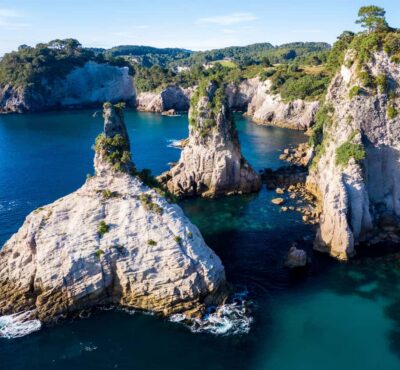
2-Hour Cathedral Cove and Volcanic Coast Cruise
Read our review →
Hobbiton & Rotorua including Wai-O-Tapu – Small Group Tour from Auckland
Read our review →

2 Hour Cathedral Cove and Volcanic Coast Cruise with Shade Canopy
Read our review →Browse the lists this tour appears in