

Reviewed · WALKING TOURS
Christchurch: Ōtautahi Meander Walking Tour with Tastings
Christchurch’s story begins long before its modern streets. This two-hour walk connects the Māori meaning of Ōtautahi with the city you see today, linking food-gathering places, former pā sites, settler stories, the earthquake, and Christchurch’s newer laneways.
I like the personal scale of the tour, which lets guides such as Ash, Riwa, Riwai, and Spud answer questions rather than rush through a script. I also like the food stops: coffee, morning tea, and local artisan tastings make the city’s culture something you can enjoy, not just hear about.
The main consideration is its short length. Two hours gives you a useful introduction, but it is not a full Christchurch sightseeing tour, and the exact tasting stops may vary.
Key points to know before you book
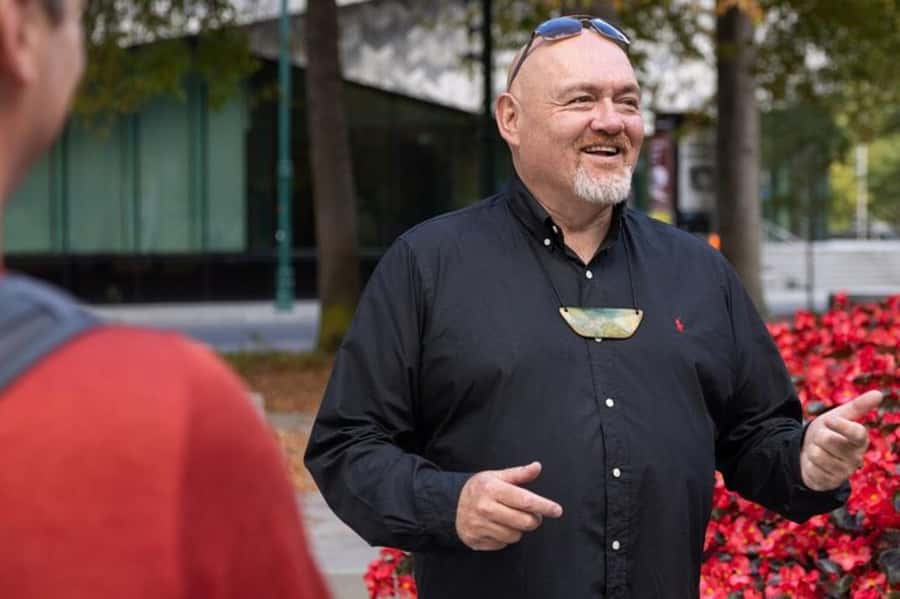
- Ōtautahi has a story before Christchurch: Learn what the Māori name means and how Māori and European histories meet in the city centre.
- The guide makes the difference: Ash, Riwa, Riwai, and Spud are among the guides associated with this experience, each bringing a personal connection to culture and place.
- Food is part of the lesson: Coffee, morning tea, and tastings from local artisan producers add a welcome, practical look at Christchurch today.
- You walk through meaningful places: Former mahinga kai and pā sites help turn ordinary streets into places with older stories.
- Manaakitanga gives the tour a clear purpose: You’ll learn about care for people and the principle expressed by Kia atawhai ki te iwi.
- The pace suits a first morning: At two hours, it works well near the start of a Christchurch visit, especially if you want history without a long commitment.
Starting at the Bridge of Remembrance
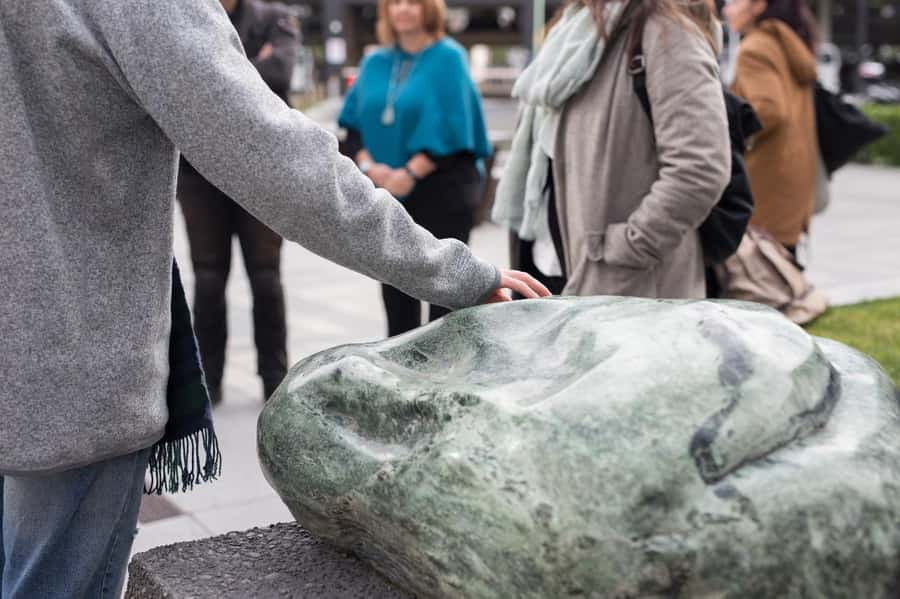
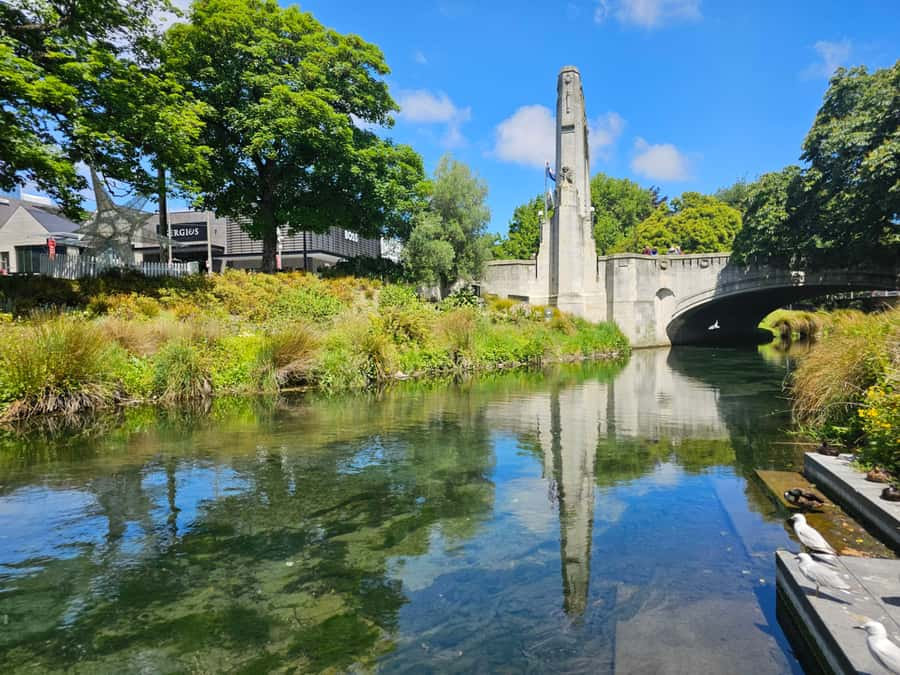
The meeting point is in front of the Bridge of Remembrance, on the shopping precinct side. This places you in the centre of Christchurch, with the modern city close at hand and the Avon River area nearby.
The bridge is a fitting starting point for a walk about memory and change. The tour does not treat Christchurch as a city that began with European settlement. Instead, the guide introduces Ōtautahi and the Māori meaning behind the name before moving into the wider story of the city.
That opening matters. Place names are not decoration. They tell you whose connections to the land came first and how a city’s identity has changed over time. You’ll follow stories of Māori life, settler life, and the ways those histories now sit together in Christchurch.
The tour is conducted in English. A live guide leads the walk, so you can ask questions as the morning develops. That is especially useful here, since the subject is not simply a list of dates. It involves pronunciation, customs, cultural values, food, and the meaning attached to particular places.
More Walking Tours in Christchurch
- Full Day Guided Walking Tour and Picnic around Godley Head
★ 5.0 · 147 reviews - Ōtautahi: Christchurch Small-Group Inner City Food Walking Tour
★ 5.0 · 85 reviews - Lyttelton Shore Excursion – Guided Walking Tour and Picnic
★ 5.0 · 57 reviews
Ōtautahi before the modern city
A central feature of the walk is the effort to make Māori Christchurch visible. You’ll hear about traditional ways of life, including mahinga kai, the places where people gathered food, and pā, Māori village sites.
Today, these places may not look like dramatic archaeological ruins. They may be part of an urban setting, which is exactly why the guide’s explanation helps. A street, river edge, or city block can carry a story that is easy to miss when you are sightseeing on your own.
The guide also brings in settler stories and ways of life. This side-by-side approach is one of the tour’s strongest features. It avoids presenting Māori and European history as two unrelated chapters. Instead, you get a sense of how the city developed through contact, conflict, cooperation, and change.
The point is not to turn two hours into a full course in New Zealand history. The value is more practical. You leave with a framework for understanding Christchurch, plus a better sense of why Māori names, customs, and ideas belong in the city’s present-day story.
Learning manaakitanga through a local guide
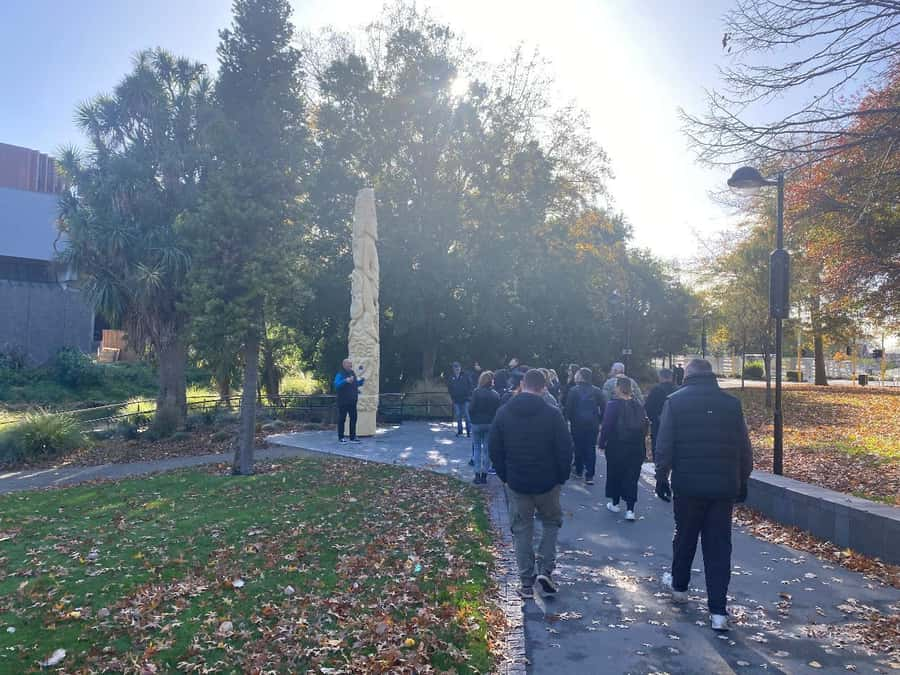
The tour includes a traditional Māori greeting and an introduction to manaakitanga. This principle is connected with care, respect, and looking after people. The guiding proverb given on the walk is Kia atawhai ki te iwi, meaning care for your people.
That idea gives the experience more shape than a standard city walk. You are not only being shown buildings and told dates. You are being introduced to a way of thinking about how people treat one another and how a community presents itself.
The guides bring this part to life in different ways. Ash, also referred to as Ashley, has been praised for a friendly and personal approach. Riwa or Riwai has been noted for connecting Māori and European heritage through cooperation and mutual respect. Spud is described as fun and well informed.
Those details matter because cultural tours depend heavily on the person leading them. A good guide can explain sensitive subjects without making the walk feel stiff. The reported guide experiences here point to warm, approachable leadership, with time for questions and conversation.
Still, your experience will depend on the guide assigned to your departure. The guide names are useful context, not a guarantee that you will have a particular person.
Walking through food-gathering and pā sites
The route passes traditional mahinga kai and pā sites, then connects their stories with Christchurch as it exists now. This is likely to be the most interesting part for anyone who prefers place-based history over a checklist of landmarks.
You can look at Christchurch in two ways. At first glance, it is a rebuilt city with shops, streets, public spaces, and familiar urban features. With the guide’s help, you also see layers of older use and meaning beneath that surface.
The walk does not promise a museum-style display at every stop. Instead, the guide uses the city itself as the setting. You’ll hear how traditional food gathering and Māori settlement fit into the area, then see how those stories continue alongside later development.
This approach has one clear advantage: it makes the past feel connected to the present. The drawback is that some locations may require imagination. If you want preserved structures or large interpretive exhibits, this tour may feel less visually dramatic than a museum visit.
For most people, that is a fair trade. The route helps you notice details you might otherwise walk past, and the short format keeps the information manageable.
Same corner of the country, a very different day out:
- Christchurch Hop-On Hop-Off Tram
★ 4.5 · 841 reviews - Christchurch Gondola and Tram City Tour Combo
★ 4.5 · 725 reviews - Christchurch: Hop-On Hop-Off Tour by Vintage Tram
★ 4.6 · 717 reviews - Christchurch: Tram, Punt and Gondola Ride Combo Ticket
★ 4.7 · 608 reviews
Christchurch after the earthquake
Christchurch’s earthquake experience is also part of the conversation. The tour connects the city’s cultural past with the impact of the earthquake, the people of Christchurch, and the way the city has changed.
That gives you useful context for the streets around you. Christchurch is not simply an old city with a few new buildings. It is a place shaped by loss, rebuilding, adaptation, and decisions about what should be remembered.
The walk will not cover every earthquake site or act as a dedicated disaster-history tour. Instead, the earthquake appears as one thread in a broader story about people and place. That balance works well for a first visit because you learn about the event without losing sight of Māori heritage, settler history, and present-day city life.
If the earthquake is your main reason for visiting Christchurch, you may want a more focused experience as well. For a general introduction, though, its inclusion adds real value.
Laneways, coffee, and local artisan tastings
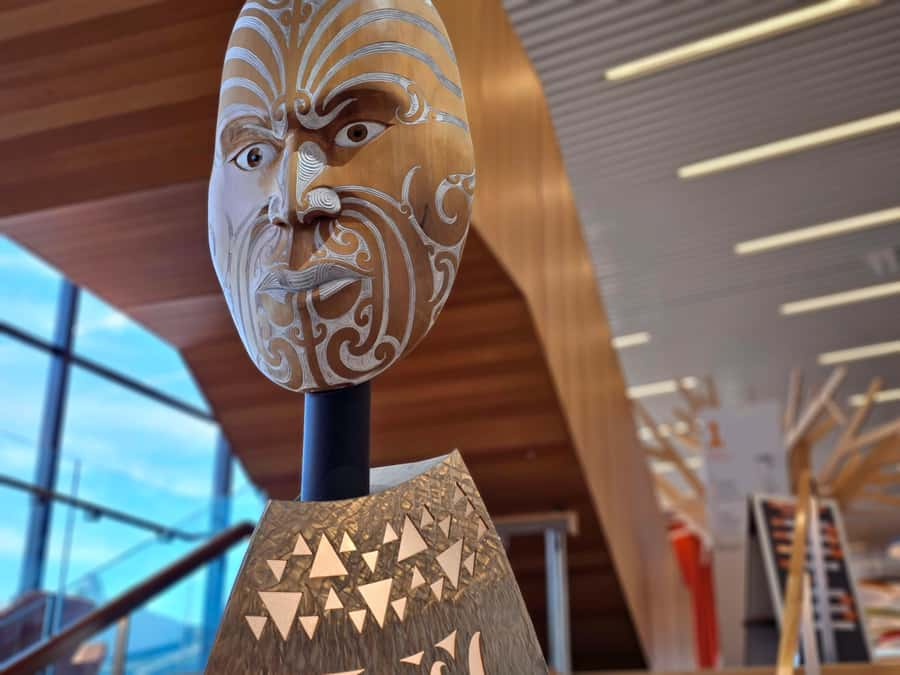
The final part of the experience brings the history into Christchurch’s present-day food scene. You’ll wander through laneways and stop for morning tea, coffee, and tastings from local artisan producers.
The exact businesses and products are not specified, so you should not book expecting a fixed menu. That flexibility can be useful, since local stops may change. It also means the food portion is best understood as a series of selected tastes rather than a full meal.
The coffee is worth noting if you book an early departure. One morning experience specifically included coffee at the start, and the food was described as regional and well selected. Other comments highlight indulgent tastings and small stops at local businesses.
This part gives the tour a welcome change of pace. You may begin with cultural explanation, move through sites tied to older food gathering, then finish by tasting what local producers are making now. That connection between traditional food culture and modern craft food is one of the experience’s most appealing ideas.
Morning tea is included, but lunch is not listed as a standard inclusion. One person referred to lunch, yet the formal inclusions specify morning tea and food tastings. Plan to buy your own lunch afterward if you need a full meal.
Is $95 good value for two hours?
At $95 per person, this is not the cheapest way to walk around central Christchurch. You are paying for a live cultural guide, a focused route, morning tea, coffee or other refreshments, and artisan food tastings.
The price makes the most sense if you value interpretation. You could walk through the same central area for free, but you would miss the explanation of Ōtautahi, the Māori and settler stories, the mahinga kai and pā connections, and the discussion of manaakitanga.
The small-group feel also adds value. A guide who can stop to answer questions gives you more than a standard audio route. Several guide experiences have been praised for their warmth, patience, and ability to explain both Māori culture and Christchurch history.
I would see the tour as a strong first-morning purchase for someone who wants cultural context and a few local tastes. It is less compelling if you only want major landmarks, a large meal, or a long walking route.
Who will enjoy this Christchurch walk?
This experience suits you if you:
- Want an introduction to Māori culture that is tied to a real city rather than presented in isolation.
- Prefer conversation and storytelling to a large group moving from one landmark to the next.
- Like to combine history with coffee and food.
- Want to understand Christchurch before exploring it independently.
- Are interested in how Māori and European heritage connect.
- Need a wheelchair-accessible activity.
It can work for many age groups, since the route is only two hours and the pace has been described as comfortable. You should still wear comfortable shoes, since this is a walking tour, and bring water, sunscreen, a sun hat, and a camera.
The experience is also useful near the beginning of a stay. Afterward, you’ll have more context for Māori names and cultural references around New Zealand, plus a clearer idea of how Christchurch’s centre has changed.
Practical details that affect your morning
The walk lasts two hours and runs at scheduled starting times, so check availability before booking. There is no hotel pickup or drop-off. You meet at the Bridge of Remembrance on the shopping precinct side.
English is the tour language. The activity is wheelchair accessible, though the provider does not give further route details in the supplied information. If you use a wheelchair, it is sensible to confirm any specific access needs before you go.
Wear comfortable shoes and prepare for sun. Christchurch weather can change, so a light extra layer may also be sensible, although that is general walking advice rather than a stated tour requirement.
The booking terms are flexible. You can cancel up to 24 hours before the activity for a full refund, and the reserve-now, pay-later option lets you hold a place without paying immediately.
My call: book it for context, not a checklist
I would book the Ōtautahi Meander if I wanted a thoughtful start to Christchurch, especially if Māori history, local food, and personal guiding mattered to me. The combination of former mahinga kai and pā sites, earthquake context, laneway tastings, and manaakitanga gives the walk a clear identity.
I would skip it if I wanted a long list of famous buildings or a substantial food tour. Two hours passes quickly, and the tastings are small rather than a substitute for lunch.
For most first-time visitors, the price is fair when you count the guide’s interpretation and included food. Book it early in your stay, bring sun protection, and arrive ready to listen as much as walk.
FAQ
Where does the Ōtautahi Meander Walking Tour start?
Meet in front of the Bridge of Remembrance, on the shopping precinct side.
How long does the walking tour last?
The tour lasts two hours.
What language is the tour conducted in?
The live guided tour is conducted in English.
Is morning tea included?
Yes. Morning tea is included, along with food tastings from local artisan producers.
Does the tour include hotel pickup or drop-off?
No. Hotel pickup and drop-off are not included.
Is the activity wheelchair accessible?
Yes, the activity is listed as wheelchair accessible.
What should I bring?
Bring comfortable shoes, a sun hat, sunscreen, water, and a camera.
Can I cancel for a full refund?
Yes. You can cancel up to 24 hours in advance for a full refund. The reserve-now, pay-later option is also available.
Just added around Christchurch
- Willowbank Wildlife Reserve Day Entry★ 4.5 · 94 reviews
- Wine trail and Christchurch City – Luxury, Small Group Tour★ 5.0 · 15 reviews
- Waipara Valley Winery Tour Wine Tastings and Scenic Views★ 5.0 · 5 reviews
- Uniquely Kiwi Landsailing Adventure★ 5.0 · 66 reviews
- Tranz Alpine Train Tour★ 5.0 · 92 reviews
- Arthur’s Pass Tour From Christchurch With Jet Boat & TranzAlpine★ 5.0 · 8 reviews
- Small Group Southern Loop 7 Days Tour★ 5.0 · 18 reviews
- Small Group Southern Voyager 7 Days Tour★ 5.0 · 36 reviews
Walking Tours, compared.
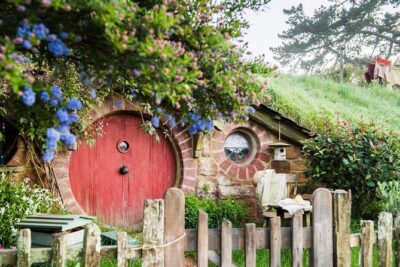
Hobbiton™ Movie Set Walking Tour from Shires Rest
Read our review →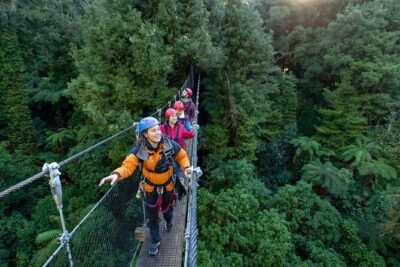
Rotorua’s Ultimate Zipline: 6 ziplines, 400 m Tandem, Cliff Walk
Read our review →
Full-Day Milford Sound Tour with Cruise and Walks from Te Anau
Read our review →
Abel Tasman: Sea Shuttle Cruise and Walking Tour Combo
Read our review →
Browse the lists this tour appears in