
Reviewed · SKYDIVING
Bay of Islands: 9000ft Skydive
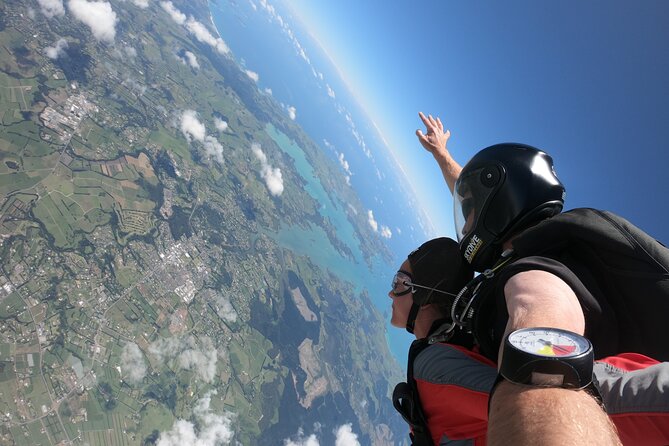
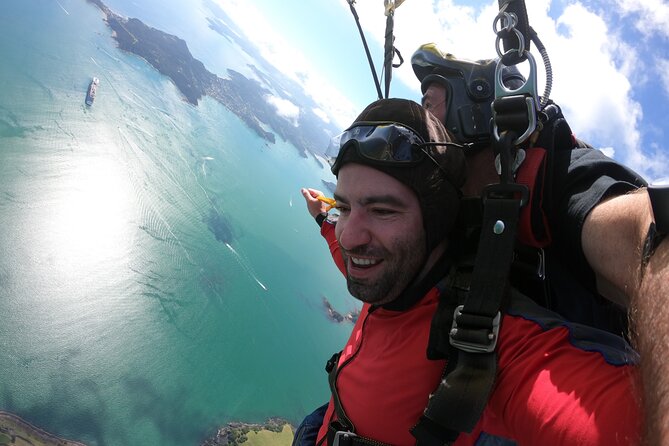
The best part of this experience is the sudden change in scale. From the plane, the Bay of Islands becomes a pattern of green islands, pale beaches, and blue water spread across the sea. You freefall from around 9,000 feet, then slow down for a calmer parachute ride with time to look around.
I like the wide aerial view and the practical pickup service from central Paihia or Kerikeri. The main caution is time: the jump itself may take about 1.5 hours, but weather and aviation delays can stretch the visit to two to four hours. One poor service report also described an insensitive comment from an instructor named Andrew, so the safety record and personal manner of your assigned instructor may matter as much as the scenery.
Key points before you book
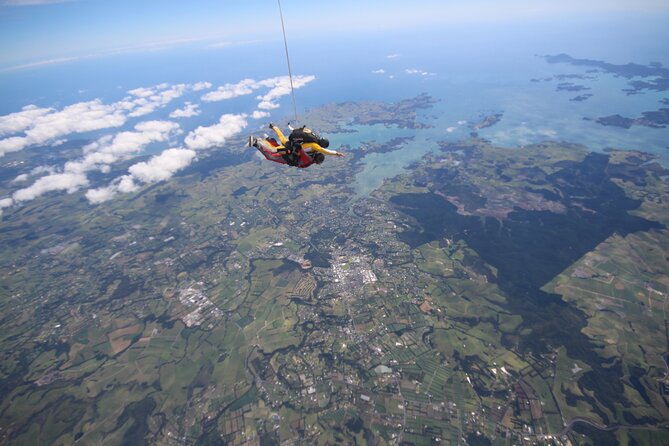
- The jump reaches about 9,000 feet: You get a thrilling freefall followed by a slower canopy descent.
- The Bay of Islands is the main attraction: You may see Paihia, Russell, Cape Brett, Cape Brett Lighthouse, and many of the region’s 144 islands.
- Safety equipment and instruction are provided: You jump with a tandem instructor and must wear comfortable clothing with closed-toe shoes.
- Transfers simplify the day: Complimentary pickup is offered from central Paihia, Kerikeri, and the cruise port.
- The schedule needs breathing room: Allow two to four hours, even though the standard skydive process often takes about 1.5 hours.
- Photos and video cost extra: An instructor can record the jump, but souvenir images and the DVD are not included in the $204.11 price.
The view from 9,000 feet over the Bay of Islands
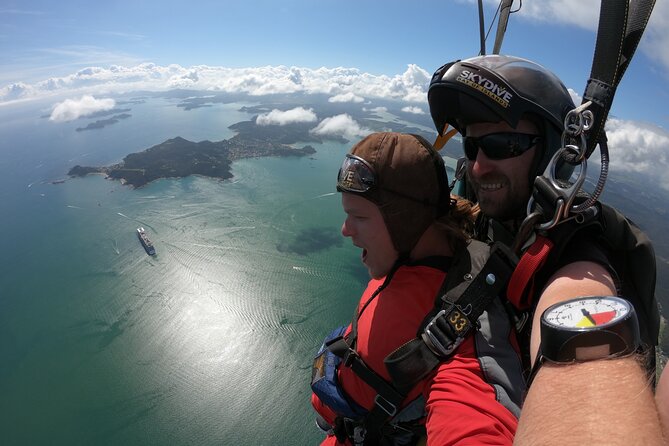
The Bay of Islands is made for an aerial activity. Its 144 islands scatter across open water, with small beaches, forested slopes, rocky headlands, and sheltered coves creating a view you cannot get from a roadside lookout.
At roughly 9,000 feet, you are high enough to see the wider shape of the bay rather than just one beach or town. On a clear day, the view may stretch toward the meeting point of the Tasman Sea and the Pacific Ocean. Cape Reinga itself is not normally visible during most jumps, but the northern meeting of the seas gives the region a larger sense of place.
The jump has two very different moods. The freefall is short, loud, and intense. Once the parachute opens, the pace changes. You have more time to look toward the islands, coastline, and towns below. That contrast is part of the appeal. It is not only an adrenaline activity, and it is not only a scenic flight.
Your tandem instructor handles the technical work. Training and safety equipment are supplied, so you do not need prior skydiving experience. You should still expect a serious pre-jump briefing and clear instructions about body position and movement.
More skydives over Bay of Islands:
- NZONE Skydive Queenstown
★ 4.5 · 1,438 reviews - Queenstown: Tandem Skydive Experience
★ 4.8 · 475 reviews - Lake Taupo 12,000-Foot Tandem Skydiving
★ 5.0 · 359 reviews
What happens at the Kerikeri meeting point
The formal meeting point is at 182 Wiroa Road, Kerikeri 0293. The activity ends back there, which matters if you are planning another excursion or arranging transport afterward.
If you are staying in central Paihia or Kerikeri, the complimentary collection service can make the day easier. Pickup is also offered from the cruise port. You need to confirm the details with the operator, especially if you are staying outside the central areas.
All jumpers must call one hour before the scheduled skydive to confirm that conditions are suitable. This is not a minor formality. Skydiving depends on wind, cloud, visibility, and other aviation requirements, so a clear morning can still turn into a delayed or rescheduled jump.
The operator may also need to manage aircraft or shuttle arrangements. The stated maximum group size is 20 people, but that does not mean everyone will be in the air together. You may wait while groups are processed, briefed, and assigned to flights.
One rating gave the safety-minded instructors high marks but criticized the long processing time, particularly after a large number of earlier participants. If you dislike waiting, bring patience and avoid placing another tightly timed activity immediately afterward.
Freefall, parachute time, and the role of your instructor
The tandem format lets you experience the jump without managing the parachute system yourself. Your instructor is attached to you and directs the sequence from the aircraft exit through landing.
The first part is the rush. You leave the plane at around 2,750 meters, or 9,000 feet, and experience freefall before the parachute opens. The second part is slower and gives you a chance to take in the view. Your instructor may point out features below, though the exact route and sights depend on the flight path and weather.
The operator provides the required training and equipment. You should arrive ready to listen closely, even if you have watched skydiving videos or tried another adventure activity. Wear comfortable clothes and closed-toe shoes. Loose or awkward clothing can make the harness and body position less comfortable.
Your physical condition also matters. The experience requires a moderate level of fitness, and anyone with a medical condition that could affect the jump should seek professional medical advice before booking. The strict weight limit is 100 kilograms. If you may be close to that limit, contact the operator before arriving rather than leaving the question until check-in.
Customers under 18 need signed permission from a parent or guardian. You also cannot jump within 24 hours of scuba activity because of pressure changes.
The human side of the experience deserves attention. One account described a very poor response from an instructor called Andrew when the participant was nervous. That comment was not reassuring, and it is a useful reminder that a tandem instructor needs good communication as well as technical skill. Another account described the instructors as fantastic and safety conscious. The sensible approach is to expect professional procedures, while remembering that the personal tone can vary from one instructor to another.
If you feel nervous, say so clearly and early. You deserve calm explanations, not jokes that make the situation worse. A good instructor should tell you what will happen, check your harness, and give direct instructions without adding needless drama.
The islands and towns you may see below
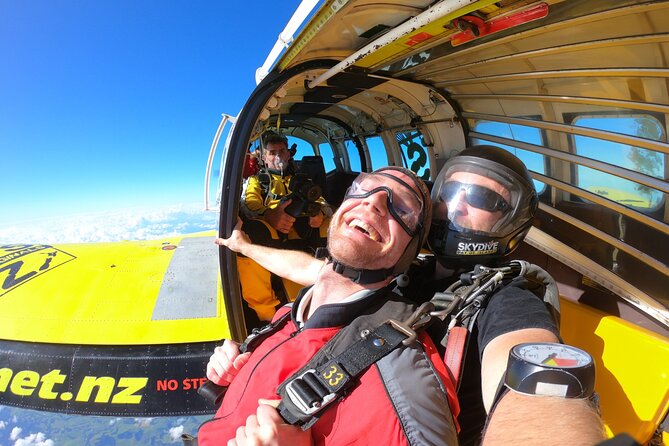
The exact view depends on the aircraft route, cloud, and seat position, but this region gives the jump plenty to look at.
Paihia is the main coastal base for exploring the bay. From above, it offers a useful reference point for the coastline and nearby islands. If you are collected from Paihia, the jump also fits neatly into a wider stay in the area.
Across the water, Russell shows why this part of New Zealand has such a strong maritime identity. It is a historic town with a picturesque waterfront, and its position across the bay gives the aerial view a clear sense of distance and shape.
The Waitangi Treaty Grounds carry major importance in New Zealand history. They mark the place associated with the signing of the Treaty of Waitangi and the country’s founding relationship between Māori and the British Crown. You may see the surrounding area from the air, but this skydive is not a substitute for visiting the grounds on foot. The aerial view gives geography, not the detail and context of the site.
Urupukapuka Island, the largest island in the Bay of Islands, is another possible highlight. Its clear water and walking tracks make it popular from sea level, while from the plane its size and shape help explain how the island chain fits together.
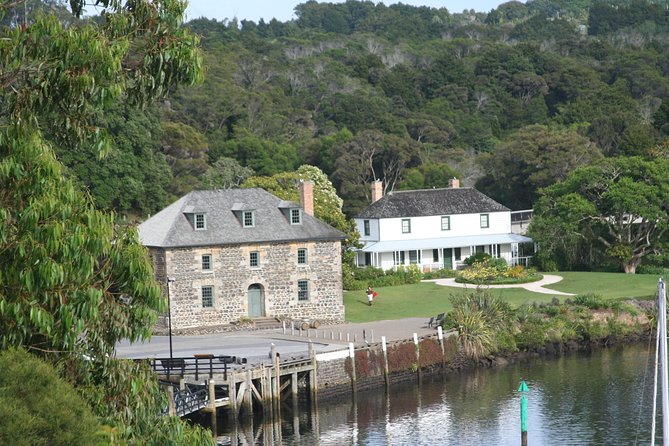
Further inland, Kerikeri is known for New Zealand’s oldest stone buildings and its green surroundings. Since the meeting point is in Kerikeri, you can combine the jump with time in town if your schedule allows. Keep your plans loose, since the skydive may run late.
Near Cape Brett, the Hole in the Rock is a well-known natural arch in the sea. It is a dramatic feature from a boat, but visibility from the skydive route is not guaranteed. You should treat it as a possible sight, not a promise.
The Cape Brett Peninsula adds rugged cliffs and open ocean to the view. It helps show the contrast between the sheltered inner bay and the more exposed coast beyond it.
Near Matauri Bay, the Rainbow Warrior memorial recalls the Greenpeace ship bombed in Auckland in 1985. It is a meaningful regional reference, though it may be too small or too distant to identify from the air. The main value is understanding how many layers of natural and modern history are packed into this northern corner of New Zealand.
Cape Reinga is listed as part of the wider regional context, where the Pacific and Tasman Sea meet. It is not normally visible during most jumps. If seeing Cape Reinga is important to you, plan a separate land excursion rather than assuming the skydive will provide that view.
A few more Bay of Islands trips worth a look
- Paihia/Russell: Hole in the Rock Cruise with 2 Island Stops
★ 4.8 · 1,002 reviews - Paihia: Cape Reinga and Ninety Mile Beach Trip with Lunch
★ 4.6 · 877 reviews - Paihia/Russell: Hole in the Rock and Bay of Islands Cruise
★ 4.6 · 727 reviews - Bay of Islands Tall Ship Sailing on R. Tucker Thompson Including BBQ Lunch
★ 5.0 · 361 reviews
Photos, video, and the true cost of the experience
The listed price is $204.11 per person. For that amount, you receive the tandem skydive, instruction, required safety equipment, and pickup where available. Photos and video are extra.
I see the price as reasonable for a once-only activity if the weather cooperates and you value the aerial view. The cost covers more than a few seconds of freefall. It includes trained staff, aviation operations, equipment, and the time needed to prepare each participant. Still, you should include the optional media package in your budget if you want a record of the jump.
The instructor can take photos and video for you to purchase afterward. These are not included, and the DVD is also sold separately. Ask about the available media options before you jump if documenting the experience matters. Once you are back on the ground, the decision may feel less clear because the jump itself is over.
The value is strongest for people who want one major thrill during a Bay of Islands visit. It is less compelling if you are mainly seeking a relaxed scenic tour, a low-cost activity, or a carefully timed half-day outing.
Timing, waiting, and weather planning
The usual skydive process takes about 1.5 hours, but you should allow two to four hours. Weather can delay a flight, and unexpected operational needs can affect an aviation business.
This flexible timing affects how you build your day. Do not book a cruise departure, long-distance bus, or important dinner immediately afterward. If you are visiting from a cruise ship, confirm that the pickup and return schedule leaves a comfortable margin. Cruise passengers should be especially careful because a weather delay is not under your control.
The operator asks for 48 hours’ notice for changes or cancellations. Free cancellation is available if you cancel at least 24 hours before the start time. Inside that window, you may not receive a refund, and changes are not accepted. Open-dated vouchers need to be booked seven days before the requested jump date.
A printed ticket or voucher is required at the drop zone. That is an old-fashioned detail, but it is easy to miss if you rely on your phone for every booking. Print it before you leave your accommodation.
Who will enjoy this skydive most
This experience suits confident adventure seekers, first-time tandem jumpers, and anyone who wants to see the Bay of Islands from an unusual angle. You do not need to manage the equipment yourself, and the instructor takes responsibility for the jump procedure.
It also works well for visitors staying in Paihia or Kerikeri because the transfer service removes some transport hassle. The maximum group size of 20 keeps the operation limited in overall size, though waiting times can still be long when several groups are scheduled.
You may want to skip it if you dislike heights, need a guaranteed schedule, or prefer a quiet way to see the coast. It is also not suitable if you are over the 100-kilogram limit, have a medical issue that makes the activity unsafe, or have taken part in scuba activity within the previous 24 hours.
Service style is another consideration. The experience depends heavily on your assigned instructor. Most of the available feedback points toward strong safety awareness, but the negative account involving Andrew shows why respectful communication matters. Tell the team if you are anxious and expect clear, professional guidance.
Final call: should you book it?
I would book this skydive if you have a flexible day, can accept weather delays, and want the Bay of Islands in one sweeping view rather than from a single lookout. The mix of freefall, parachute time, and island scenery gives the activity more substance than a short thrill ride.
I would not book it as a tightly scheduled add-on before a cruise departure or flight. Allow the full four-hour window, confirm conditions one hour before the jump, and budget extra for photos or video.
For the price, the strongest reasons to go are the 9,000-foot view, included safety gear, tandem instruction, and pickup from central locations. The main reasons to hesitate are uncertain timing, possible waiting, and the fact that the best media memories cost extra. If those tradeoffs suit you, this is a memorable way to see one of New Zealand’s most scenic coastal regions.
FAQ
How high is the Bay of Islands skydive?
The jump takes place from about 9,000 feet, or approximately 2,750 meters.
How long should I allow for the experience?
The skydive typically takes about 1.5 hours, but you should allow two to four hours because of weather changes and unexpected aviation requirements.
Is pickup available?
Complimentary pickup is offered from central Paihia, Kerikeri, and the cruise port. The main meeting point is 182 Wiroa Road in Kerikeri.
Are photos and video included?
No. Photos and video can be purchased separately after the jump, and a DVD is also available for an additional cost.
Is there a weight limit?
Yes. The strict weight limit is 100 kilograms. Contact the operator if you think you may be close to that limit.
What should I wear?
Wear comfortable clothing and closed-toe shoes. Training and safety equipment are provided.
Just added around Bay of Islands
- Private Charter Bay of Islands★ 5.0 · 13 reviews
- Electric Boats to explore Kerikeri river★ 4.5 · 14 reviews
- Bay of Islands Shore Excursion: Puketi Rainforest Guided Walk★ 5.0 · 27 reviews
- Cape Reinga Half-Day Tour Including Scenic Flight★ 5.0 · 137 reviews
- Bay of Islands Scenic Tour★ 5.0 · 50 reviews
- Bay of Islands Tall Ship Sundowner Sailing★ 5.0 · 100 reviews
- Waitangi Treaty Ground Day Trip Private Transport From Auckland★ 5.0 · 3 reviews
- Bay of Islands Discovery Experience from Auckland incl. Hole In The Rock Cruise★ 5.0 · 12 reviews
Skydiving, compared.
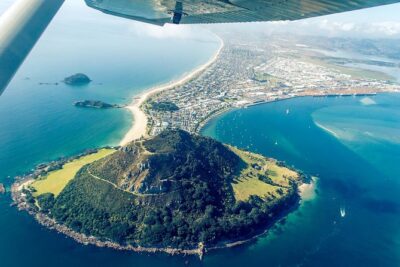
15,000ft Tandem Skydive in Tauranga – Bay of Plenty
Read our review →
Browse the lists this tour appears in