
Reviewed · SKYDIVING
Wanaka: Tandem Skydive Experience
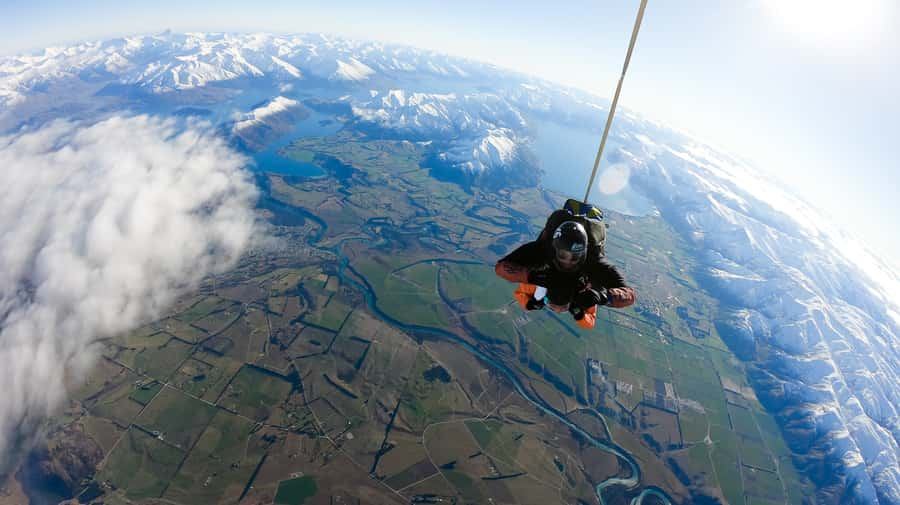
Wanaka gives you more than a quick thrill from an airplane. From 9,000, 12,000, or 15,000 feet, you get a sweeping view of six lakes, the Southern Alps, and Mount Cook before dropping through the air at up to 200kph. The scenery gives this jump real character, rather than making it just an exercise in nerve.
I like the choice of altitudes, which lets you match the price and freefall time to your comfort level. I also like the strong focus on instructors, with names such as Chris, Ben, Jamie, Rory, and Lucas repeatedly praised for keeping nervous first-timers calm. The main drawback is cost: the $214 starting price does not include photo and video packages, and those extras can add a serious amount to your bill.
Key points at a glance
- Choose your freefall time: Jump from 9,000, 12,000, or 15,000 feet, with about 25 to 60 seconds in freefall.
- See the Southern Alps from above: The flight may reveal Mount Cook, Mount Aspiring, lakes, and the Clutha River.
- Expect about three hours: Check-in, briefing, gearing up, flight, jump, landing, and video collection all take time.
- Experienced tandem masters matter: Chris, Ben, Jamie, Rory, Lucas, and others are praised for calm instruction and friendly energy.
- Budget for the memory package: Photos and video are extra, and one review found the roughly $200 add-on expensive.
- Weather can change the plan: A jump may be delayed or moved to another day, and one booking was offered an alternative in Queenstown after a cancellation.
Why Wanaka is such a strong setting for a first jump
The appeal here is not only the sensation of falling. It is the view you get before, during, and after the jump.
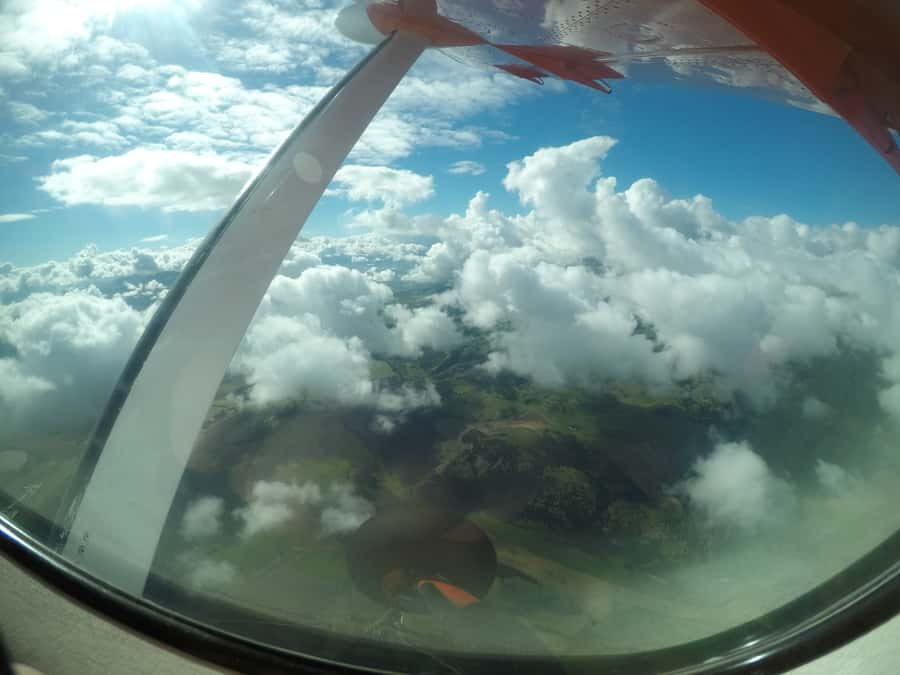
During the roughly 20-minute flight to altitude, your tandem instructor can point out Mount Cook, Mount Aspiring, the Southern Alps, several lakes, and the Clutha River. That gives you something to focus on while the aircraft climbs. It also helps you understand the scale of Central Otago before you leave the plane.
Once the parachute opens, you have about five minutes beneath the canopy. That part is slower and calmer than the freefall, giving you time to look around and take in Wanaka from above. For many people, this is where the scenery becomes easier to appreciate. The freefall is fast and noisy; the canopy ride lets you catch your breath.
I would choose Wanaka for someone who wants the scenery to be a major part of the experience. If you only want the longest possible freefall, the 15,000-foot option is the obvious choice. If you want the setting and the thrill but feel unsure about the height, 9,000 feet still gives you the full tandem experience.
More skydives over Wanaka:
- NZONE Skydive Queenstown
★ 4.5 · 1,438 reviews - Queenstown: Tandem Skydive Experience
★ 4.8 · 475 reviews - Lake Taupo 12,000-Foot Tandem Skydiving
★ 5.0 · 359 reviews
Choosing between 9,000, 12,000, and 15,000 feet
The three altitude options give you a useful way to control the experience.
At 9,000 feet, expect about 25 seconds of freefall. This is the available option for children aged 12 and under, and it may suit anyone who wants the shorter version of the jump. It still includes the plane ride, tandem instructor, parachute descent, and Wanaka views.
The 12,000-foot jump gives you a middle ground. You get more freefall than at 9,000 feet without choosing the longest version. This can make sense if your budget matters but you do not want the shortest option.
At 15,000 feet, freefall lasts up to about 60 seconds, with speeds reaching 200kph. This is the pick for anyone who wants maximum time in the air. One first-time jumper specifically chose 15,000 feet and found the instructions easy to follow and the experience reassuring.
The price listed is $214 per person, but check the amount for your chosen altitude when booking. The available information gives the starting price, not a separate breakdown for each jump height. Also remember that photo and video are not included.
What happens from check-in to the aircraft
Plan on around three hours from start to finish. That does not mean three hours in the air. Much of the time goes into check-in, safety instructions, fitting equipment, waiting for the aircraft, the scenic flight, and preparing the media package afterward.
You begin at the drop zone, where the frontline crew handles registration and the initial briefing. You then receive the safety information and put on the supplied gear. The equipment includes a jumpsuit, frap hat, goggles, gloves, and harness. Lockers are available for valuables, and the base has free Wi-Fi and internet kiosks.
Wear closed-toe shoes. Cameras are not allowed, so you cannot bring your own phone or action camera for the jump. If you want images, you need to buy one of the operator’s photo and video packages at check-in.
The next key moment is meeting your tandem master. This is where the experience often becomes easier for nervous people. Chris is singled out for a relaxed, upbeat manner, while Ben is praised for helping people feel comfortable before the aircraft leaves the ground. Jamie, Rory, Lucas, and other instructors also receive strong marks for being friendly and professional.
The instructor checks the harness and explains what you need to do. Your job is to listen carefully, follow the body-position instructions, and trust the person attached to you. The equipment and safety checks are handled by the trained team.
The 20-minute flight over Wanaka
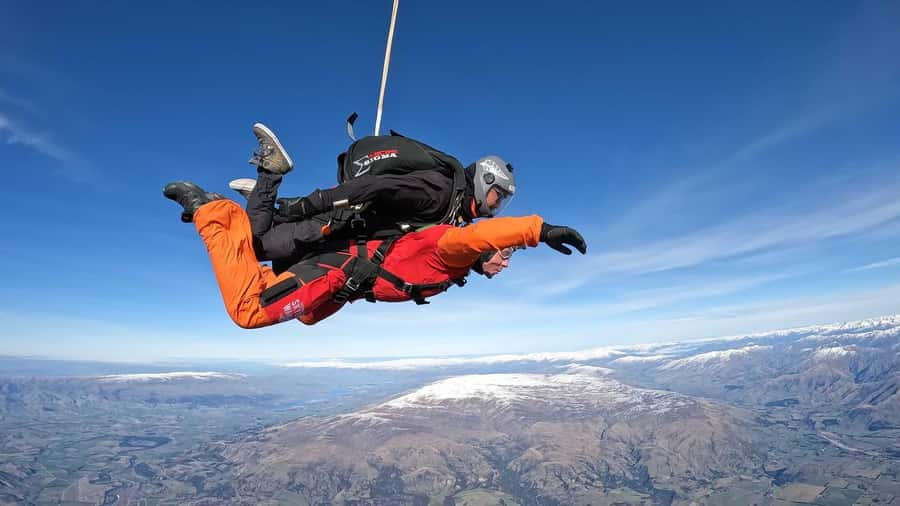
The aircraft ride is not just a way to reach the jump height. It is one of the best scenic parts of the outing.
As you climb, your instructor may point out Mount Cook, Mount Aspiring, the Southern Alps, the Clutha River, and a number of lakes. On a clear day, this gives you a broad view of the South Island’s mountains and waterways before the main event begins.
That flight also gives first-timers time to settle down. You may start out focused on the jump, then find yourself studying the view instead. The plane ride is long enough to build anticipation without taking up the whole day.
The trade-off is that the schedule can shift. Skydiving depends on suitable conditions, and one booking was cancelled in Wanaka because of weather before an alternative jump was offered in Queenstown the following day. Another person experienced a later start after waiting for a late-arriving group.
I would avoid booking this on a day when you have a tight connection or a fixed afternoon appointment. Give yourself room for a delay. If the weather is uncertain, keep the rest of your day flexible.
A few more Wanaka trips worth a look
- Wildwire Wanaka- Level 2 (4 Hours)
★ 5.0 · 467 reviews - Bike the Wanaka and Hawea Trails
★ 5.0 · 346 reviews - Lake Wanaka Happy Hour Cruise
★ 4.6 · 313 reviews - Small Group Jet Boat Adventure on the Clutha River from Wanaka
★ 5.0 · 302 reviews
The jump: fast freefall, then a quiet canopy ride
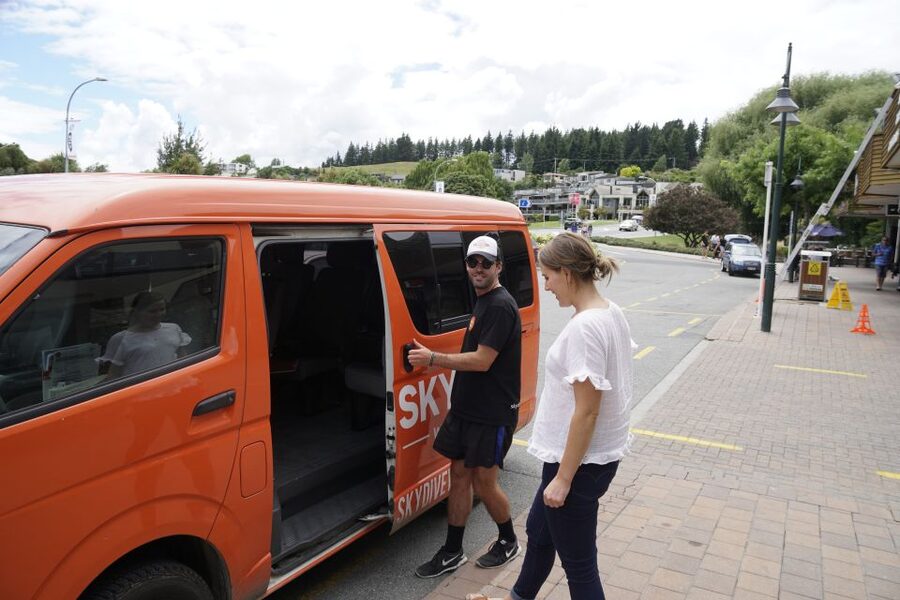
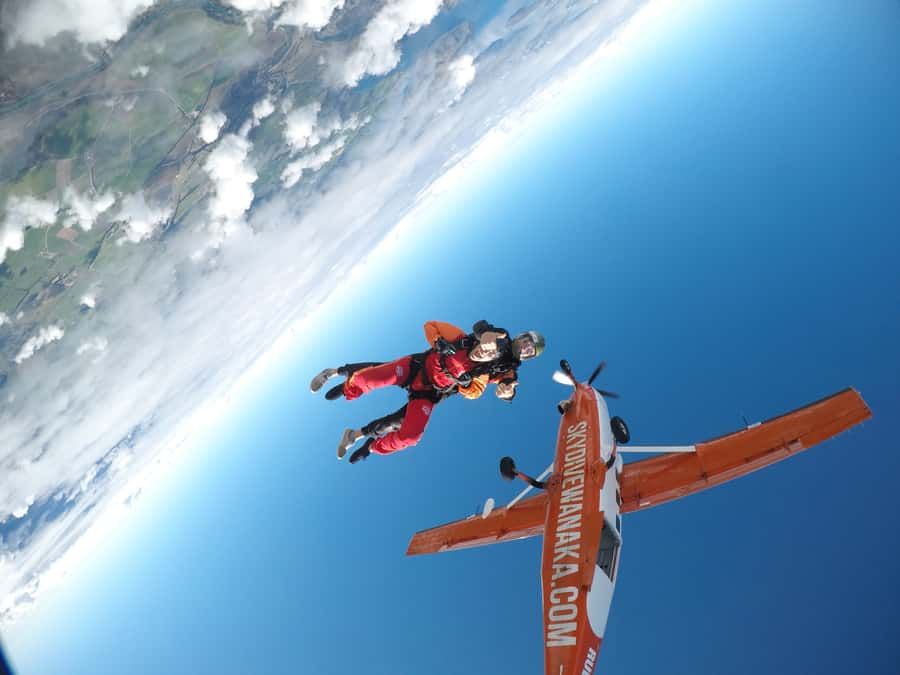
The moment at the aircraft door is the hardest part for many people. You have already spent time getting ready and flying upward, so there is no mystery left about what comes next. Your tandem master gives the final instructions, and you leave the aircraft together.
Freefall lasts about 25 to 60 seconds, depending on the altitude you choose. Speeds reach up to 200kph, so the sensation is intense and loud. This is not a gentle scenic float, but the short duration keeps it manageable for most people who are prepared for a powerful rush.
After freefall, the parachute opens and you spend about five minutes under canopy. This is the part where you can look properly at the mountains and lakes. Some people may find the canopy turns uncomfortable. One person with motion sickness found the spinning after the parachute opened difficult, so let your instructor know if you are prone to that problem.
The landing brings the most visible release of tension. Smiles, hugs, tears, and fist pumps are common reactions. You then return to the hanger, remove the gear, and wait for any purchased photos and video to be prepared.
Safety, age, weight, and physical requirements
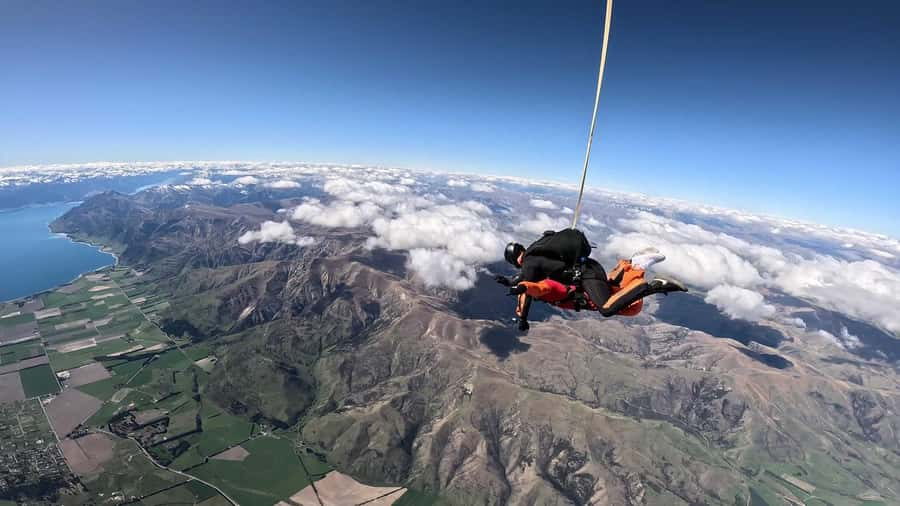
You are taking part in a real parachute activity, so the safety warning deserves more than a quick glance. The operator notes that parachuting carries risks connected to weather, health, aircraft operation, descent, landing, and parachute performance. You participate at your own risk.
Every participant is assessed by the tandem master at the drop zone. You also need to fit securely into the harness. The minimum age is six, and the minimum weight is 30kg or 66 pounds. Children aged 12 and under may only jump from 9,000 feet.
The maximum listed weight is 115kg or 254 pounds. Pregnant women and anyone below the minimum weight or above the maximum weight cannot take part.
These limits are not minor booking details. If you are close to the weight limit, contact the operator before paying. The tandem master makes the final assessment, and the harness must fit properly.
The operation receives praise for clean, up-to-date gear and repeated safety checks. That does not remove the natural risk of the activity, but it does matter when you are deciding which company to use for a first jump.
The instructors make a real difference
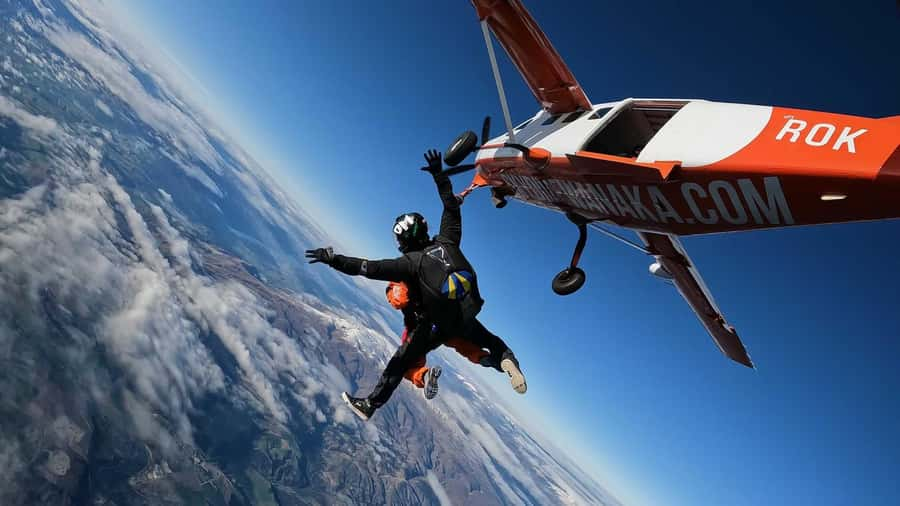
A tandem jump is technical, but your personal experience depends heavily on the instructor beside you.
Chris is praised for making nervous people feel relaxed and for bringing genuine enthusiasm to the jump. Ben is described as friendly and reassuring. Jamie, Daniel, Rory, Lucas, and Vance are also named in positive comments about instruction, camera work, and the overall atmosphere.
That personal approach is valuable because the minutes before boarding can feel long. A calm instructor gives you clear instructions instead of adding drama. A cheerful one helps you enjoy the experience rather than simply endure it.
You should still remember that instructor requests may not be possible. You can appreciate the strong record of individual staff without assuming a particular person will be assigned to you.
The operation offers instruction in English and Chinese. That can be useful if you are more comfortable receiving safety information in Chinese, though the available details do not specify which staff members speak each language.
Transport, timing, and the practical details
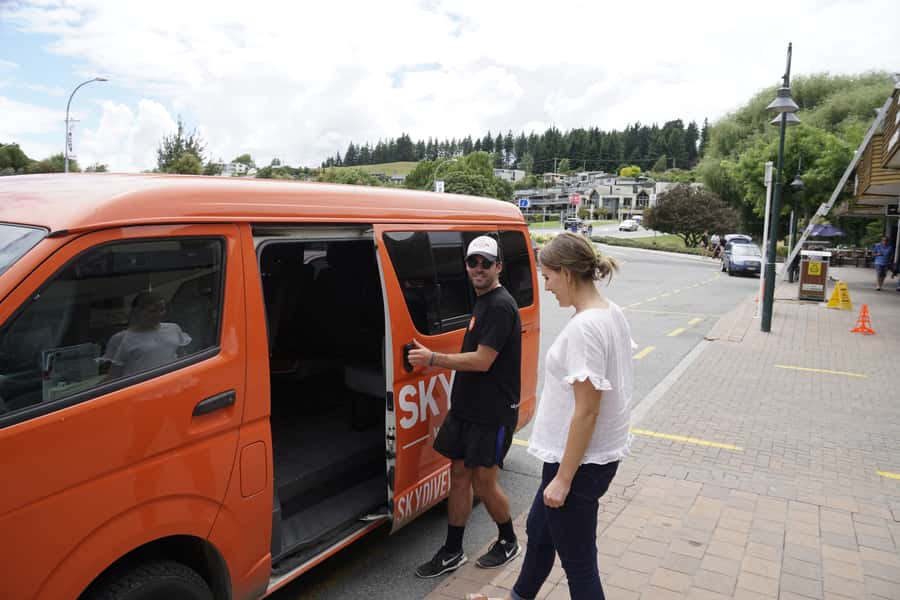
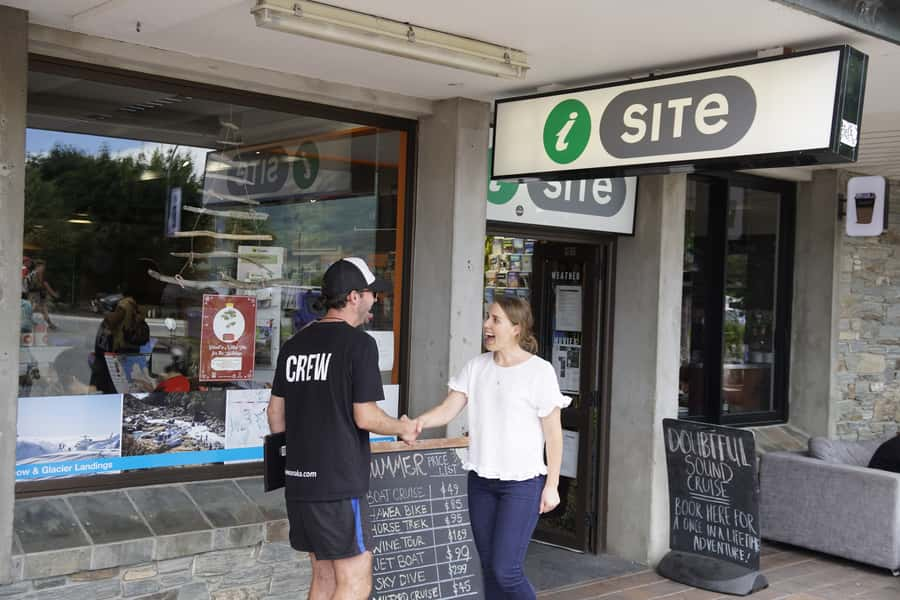
If you drive yourself, meet at 14 Mustang Lane 20 minutes before your scheduled time. If you use the return transfer, meet outside the Wanaka i-Site 30 minutes before departure.
The return transfer can save you the trouble of driving after the jump, but build in patience. One person waited about 40 minutes for the shuttle after finishing. That is not necessarily typical, but it is a reason not to arrange an immediate dinner reservation or airport transfer.
The base provides lockers for valuables, free Wi-Fi, and internet kiosks. Bring closed-toe shoes and leave cameras behind. You may want a warm layer for before or after the jump, but the supplied information only requires closed-toe footwear.
Free cancellation is available up to 24 hours in advance, and you can reserve without paying immediately. Those terms are helpful when weather and mountain conditions may affect plans, but always check the final booking conditions before confirming.
Are the photos and video worth the extra money?
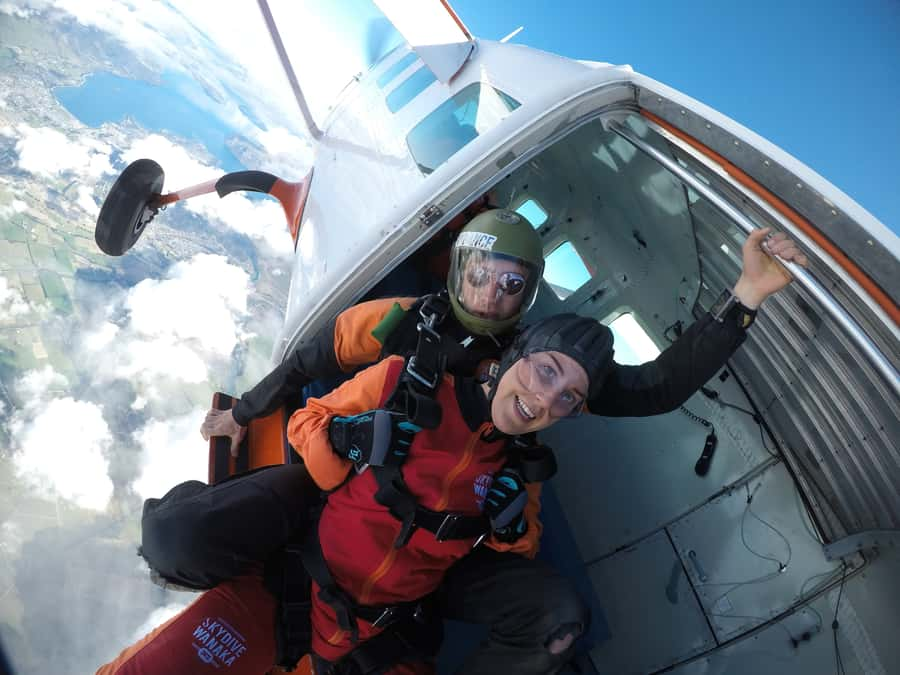
You cannot use your own camera, so the operator’s media package is the only way to receive jump footage and photos.
The package gives you something practical: proof of the experience and a way to share the views with people who stayed on the ground. It also lets you see your own reactions, which you will not notice while concentrating on instructions and the air rushing past you.
The extra cost is the weak point. Photo and video are not included in the $214 price, and one person considered a roughly $200 add-on too expensive, especially when two family members were jumping. If several people in your group are taking part, ask whether any shared or multi-person pricing is available before check-in. No group discount is promised, so do not count on one.
Spectators should also manage expectations. One parent found that the jump took place too far away to watch properly from the ground, including the landing. The base is not necessarily a full spectator show, so the media package may be especially useful for family members who want to see what happened.
Who should book the Wanaka jump?
This suits first-time skydivers, couples, families with eligible children, and anyone who wants a major thrill paired with mountain views. It is also a good choice for people who value a well-run operation and personal support from the instructor.
The 9,000-foot option works for younger participants and anyone who wants a shorter freefall. The 15,000-foot option suits experienced thrill-seekers in spirit, even if this is your first jump. The altitude choice makes the activity easier to match to your nerves and budget.
I would think twice if you dislike uncertainty, motion, or weather-related changes. The start time may shift, the return shuttle may take longer than expected, and the parachute ride can include spinning that bothers people prone to motion sickness.
At $214 before media, this is not a cheap add-on. Still, you are paying for a roughly three-hour experience, a scenic flight, trained staff, safety equipment, and an unforgettable view of Wanaka. For a once-only holiday splurge, the value is strong if you care about the setting and the personal guidance.
Should you book this Wanaka tandem skydive?
Yes, if you want your first jump to come with some of New Zealand’s finest mountain and lake scenery. Choose 9,000 feet for a shorter, more approachable version, 12,000 feet for a middle option, or 15,000 feet for the longest freefall.
Book it when your schedule has room for weather delays, and decide about photos and video before you arrive. If the extra media cost bothers you, the jump itself remains the main event. With experienced tandem masters, well-regarded equipment, and a scenic flight that includes the Southern Alps and possible views toward Mount Cook, this is one of Wanaka’s strongest high-adrenaline activities.
FAQ
How long does the Wanaka tandem skydive experience take?
The full experience lasts about three hours. This includes check-in, the safety briefing, gearing up, the flight to altitude, the jump, canopy ride, landing, and time to collect purchased photos and video.
What jump heights are available?
You can choose from 9,000, 12,000, or 15,000 feet. Freefall lasts about 25 to 60 seconds, depending on the altitude selected.
How fast do you fall?
The freefall reaches speeds of up to 200kph.
What scenery can you see from the aircraft?
During the roughly 20-minute flight, your instructor may point out Mount Cook, Mount Aspiring, the Southern Alps, several lakes, and the Clutha River.
What is included in the price?
The experience includes the selected tandem skydive, freefall, about five minutes under canopy, a tandem master, safety equipment, lockers, and access to the base facilities and free Wi-Fi. Photos and video cost extra.
What are the age and weight limits?
The minimum age is six, and the minimum weight is 30kg or 66 pounds. The maximum listed weight is 115kg or 254 pounds. Children aged 12 and under may only jump from 9,000 feet.
Where do I meet the operator?
Self-drive participants should meet at 14 Mustang Lane 20 minutes before the scheduled time. For a return transfer, meet outside the Wanaka i-Site 30 minutes before departure.
Just added around Wanaka
- From Wanaka: Ruby Island 1-Hour Cruise and Photo Walk★ 4.6 · 43 reviews
- Queenstown: Private Day Trip to Wanaka, Arrowtown & More★ 4.9 · 11 reviews
- Lake Wānaka: 3 hour Fishing Adventure by Boat★ 4.9 · 7 reviews
- From Queenstown: Mount Aspiring Full-Day Canyoning Adventure★ 4.8 · 14 reviews
- From Queenstown: Cardrona First Timer Ski or Snowboard★ 5.0 · 4 reviews
- ebike tour lake Hawea river track to Wanaka★ 5.0 · 4 reviews
- Cardrona Valley: Mountain Quad Bike Experience★ 4.9 · 30 reviews
- Wanaka: Water Taxi & Mou Waho Island Tour★ 4.8 · 299 reviews
Skydiving, compared.
15,000ft Tandem Skydive in Tauranga – Bay of Plenty
Read our review →
Browse the lists this tour appears in