
Reviewed · WILDLIFE
Kiwi Park Admission Ticket
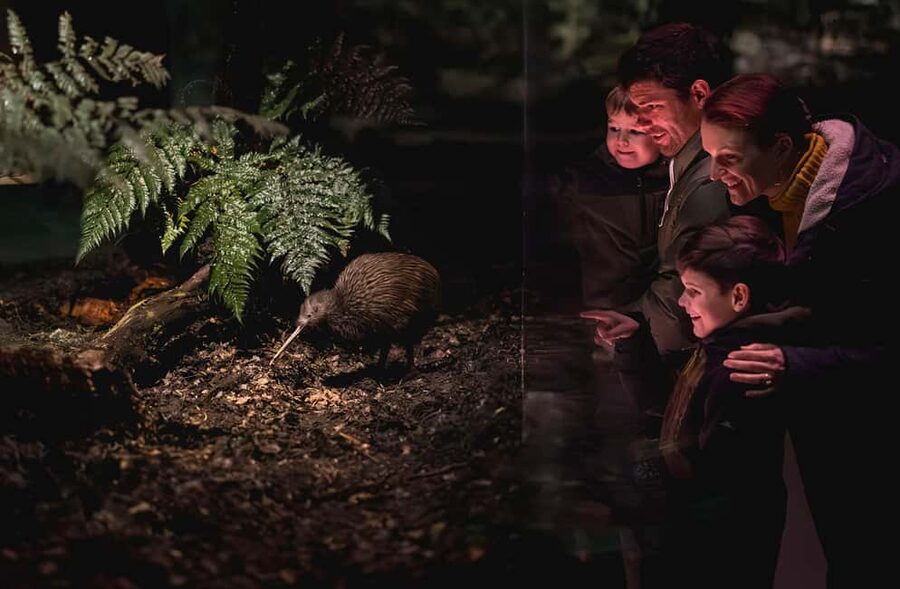
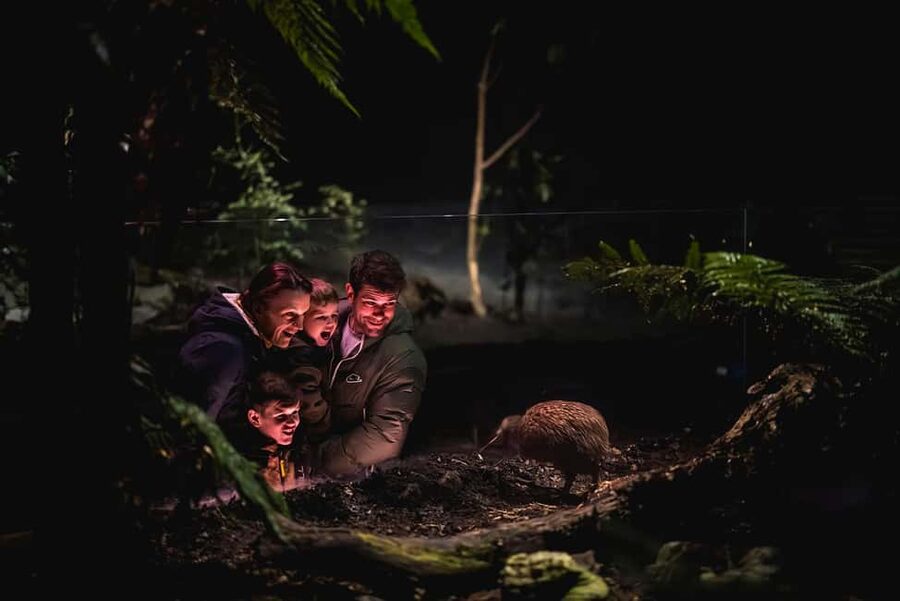
The best reason to visit Kiwi Park is simple: you are guaranteed to see a kiwi. In the specially designed nocturnal house, you wait for your eyes to adjust, then watch these shy, flightless birds move through their dark enclosure. It is one of the more reliable ways to see New Zealand’s national bird near Queenstown.
I like the free-flight conservation show, which turns serious wildlife issues into a lively 30-minute lesson. I also like the self-guided audio tour, available in five languages, because it lets you move at your own pace. The main drawback is that some reptiles can be hard to spot in their generously planted habitats, and photography is not allowed in the Kiwi House.
Key points
- Guaranteed kiwi sightings: Enter the dark nocturnal house and allow your eyes time to adjust.
- Two seasonal show schedules: Kiwi Encounters run several times daily, while conservation shows are offered two or three times a day.
- Five acres in central Queenstown: The park gives you a calm break from the town’s more active excursions.
- A useful audio tour: Follow the map and commentary in English, Chinese, French, German, or Japanese.
- Honey tasting included: Watch bees at work in a see-through hive and sample different New Zealand honey flavors.
- A conservation-focused visit: The park explains the damage caused by introduced rats, possums, and other pests.
Why Kiwi Park is worth your Queenstown time
Queenstown is packed with big-ticket activities: jet boats, lake cruises, scenic flights, and day trips to Milford Sound. Kiwi Park offers a different pace. You spend your time on foot, learning about native animals and seeing species that are difficult to find in the wild.
The park covers five acres in the center of town. That makes it easy to fit into a busy day, especially if you are staying nearby or have a spare morning before another activity. The visit is self-guided, so you are not locked into one group or a fixed walking speed.
I would allow one to two hours for a focused visit. You can spend longer if you take the audio tour slowly, wait for a show, and stop at each enclosure. The ticket is valid for one day, so you can also plan around the show times instead of racing through the park.
The purpose matters here. Kiwi Park is family-owned and operated, with a clear focus on protecting endangered New Zealand wildlife. You are not just looking at animals in enclosures. The talks and displays explain why many native species are in trouble and how captive breeding and conservation work can help.
More wildlife tours in Queenstown:
- Kiwi Park Queenstown Admission
★ 4.5 · 306 reviews - Clearwater Wildlife Tours (small group 10max) Otago Peninsula
★ 5.0 · 531 reviews - Wildlife Sea Kayaking Tour – Kaikoura
★ 5.0 · 467 reviews
Finding the entrance on Upper Brecon Street
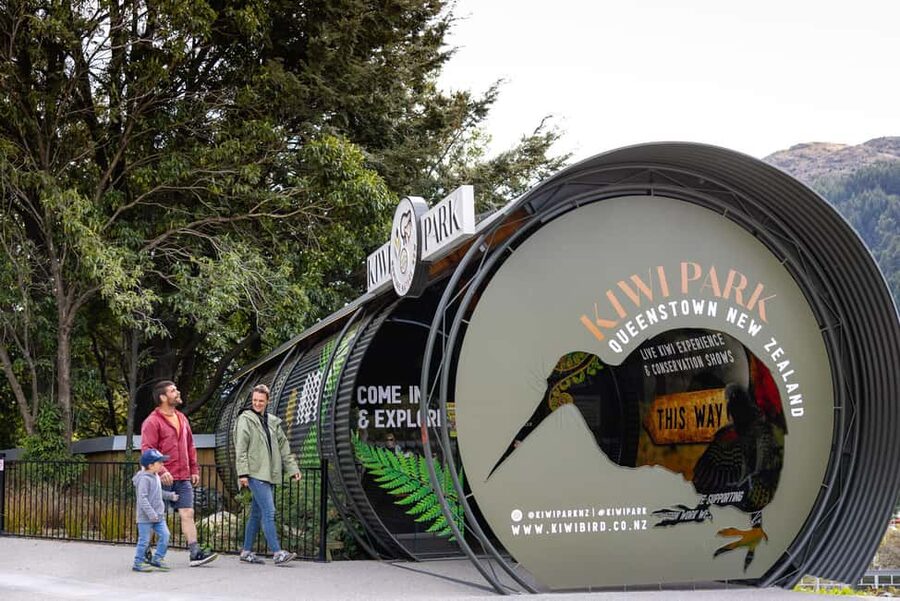
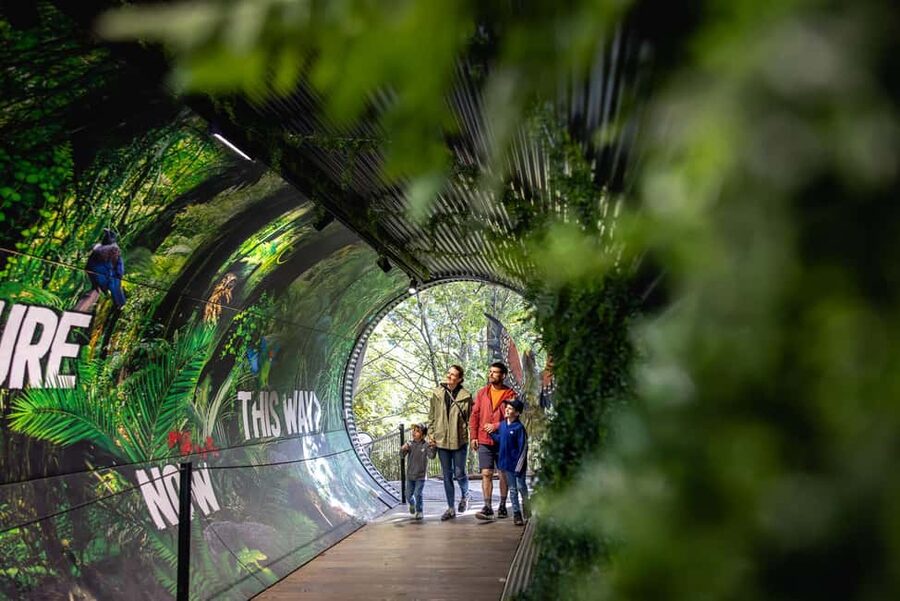
Kiwi Park is on Upper Brecon Street in Queenstown. Look for the large tunnel marked Kiwi Park, then walk through it to reach reception. This is a central location, but the tunnel entrance is easy to miss if you are walking quickly along the street.
Admission costs $35 per person. At first glance, that may seem like a modest attraction compared with Queenstown’s major adventure activities. The value comes from the included program: park entry, kiwi viewing, the conservation show, the audio tour, and the Honeybee Centre are all covered.
For a short visit focused only on animal viewing, the price may feel less compelling. For a longer stop that includes the show and audio commentary, it becomes easier to justify. I would especially consider it good value for families, wildlife fans, and anyone who has not yet seen a kiwi.
The park is wheelchair accessible. Food and drinks are not included, so plan on paying extra if you want refreshments during your visit.
Start with the Kiwi Encounter
Make the Kiwi Encounter your priority. The viewing times change with the season, and this is the one part of the park you should not leave until the last few minutes.
From October through May, Kiwi Encounters are scheduled at 10am, 11am, 12:15pm, 1pm, 2:15pm, 3pm, 4:15pm, and 5pm. From May through September, the times are 10am, 11am, 12:15pm, 1pm, 2pm, 3:45pm, and 4:30pm.
Inside the Kiwi House, the lighting is kept low to match the kiwi’s nocturnal habits. Give your eyes a few minutes to adjust. At first, you may see little more than darkness and movement. Then the shapes begin to make sense, and you can watch the birds walk, forage, or investigate objects in the enclosure.
A keeper provides information about kiwi behavior and conservation. The experience is not a hands-on animal encounter, and photography is not permitted inside the Kiwi House. That restriction is worth knowing in advance, particularly if you are hoping to take home a picture. Instead, focus on watching the bird itself.
The kiwi viewing is the park’s strongest feature. It solves the main problem with trying to see one in the wild: kiwi are shy, nocturnal, and difficult to locate. Here, you have a planned opportunity and a setting designed to improve your chances.
The conservation show brings the park to life
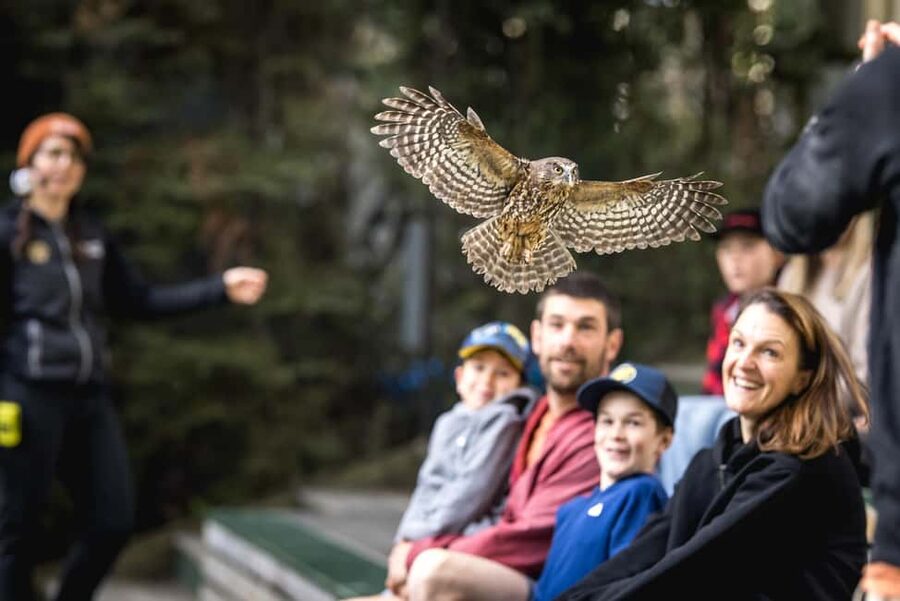
The 30-minute Conservation Show is the other major part of the visit. It is presented by the park’s wildlife team and combines free-flying birds with information about New Zealand’s native species.
The tone is lively, but the subject is serious. You learn about the threats faced by native wildlife and the effect of introduced rats, possums, and other pests. The show also explains how some birds became extinct and how captive breeding programs are helping species that once came close to disappearing.
The schedule changes by season. From October through May, shows take place at 11:30am, 1:30pm, and 3:30pm. From May through September, the times are 11:30am and 3pm.
Plan your walk around one of these performances. If you arrive without checking the schedule, you could miss the show and lose one of the best parts of the ticket. The program suits children because it is entertaining and active, but the conservation message gives adults plenty to think about too.
The show also gives context to the animals you see elsewhere in the park. Instead of treating each enclosure as a separate display, it helps you understand the wider problem: New Zealand’s native birds evolved without many mammalian predators, and introduced pests changed that balance.
A few more Queenstown trips worth a look
- Queenstown: Walter Peak Gourmet BBQ & Lake Whakatipu Cruise
★ 4.8 · 2,713 reviews - Shotover River Extreme Jet Boat Ride in Queenstown
★ 5.0 · 2,540 reviews - Queenstown: Shotover River and Kawarau River Jet Boat Ride
★ 4.7 · 1,682 reviews - Queenstown: Lake Wakatipu Scenic Cruise (90 Minutes)
★ 5.0 · 1,462 reviews
Take the audio tour at your own speed
Your admission includes a complimentary audio tour and park map. Commentary is available in English, Chinese, French, German, and Japanese.
I like this format because it leaves you in control. You can pause at an enclosure, skip ahead, or spend more time with the species that interest you. The audio also includes information about the park itself, not just the animals.
The map helps you plan a sensible route through the five acres. You can combine the audio tour with the Kiwi Encounter and Conservation Show, then return to exhibits you want to see again. This makes the park feel less like a quick walk past cages and more like a small wildlife education center.
The audio guide is also useful if you do not want to join a group. The host and greeter language is English, but the recorded tour offers more language choices. If you are visiting with family or friends who prefer different languages, that can make the experience easier to share.
Native birds, reptiles, and the limits of spotting animals
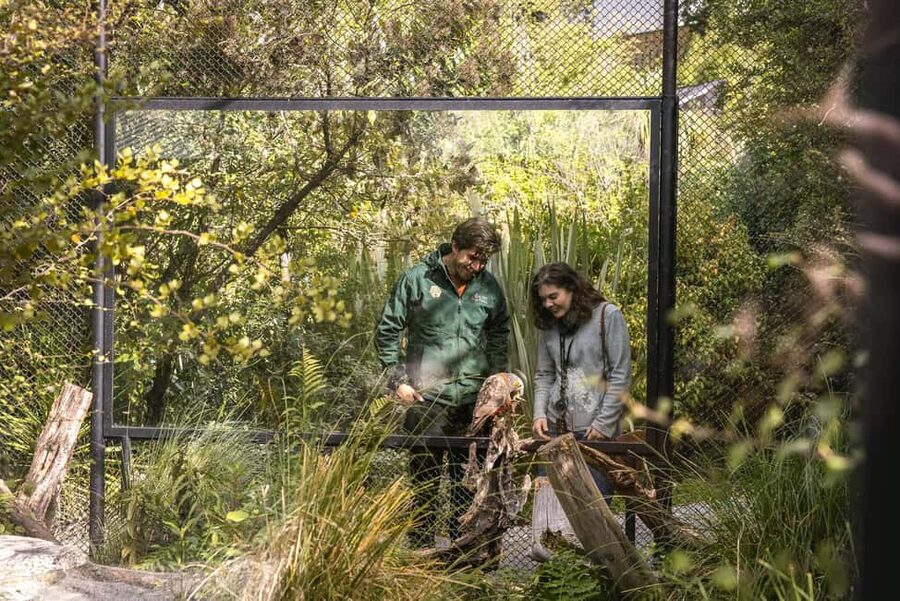
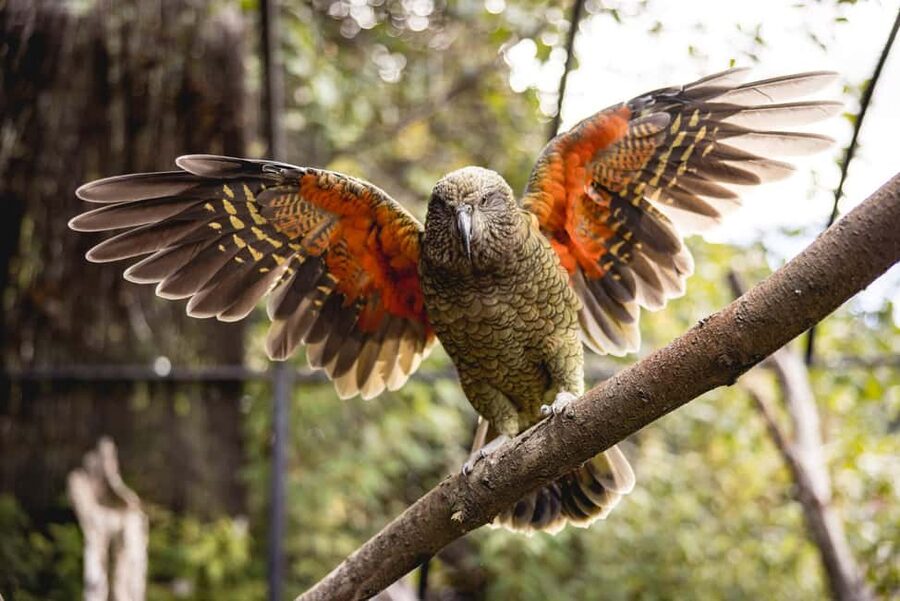
Kiwi Park houses a range of native birds and reptiles. You might see tuatara and ruru, the native owl, along with other New Zealand species. The park is laid out so that the displays are easy to find, and the grounds are cared for rather than left feeling neglected.
Some enclosures are planted with plenty of hiding places. That is good for the animals, but it can frustrate you when a reptile stays out of sight. You may need patience and a sharp eye, especially around habitats designed to give the creatures cover.
This is an important tradeoff. A sparse enclosure might make animals easier to photograph, but a more natural habitat gives them places to retreat and behave normally. You should not expect every animal to appear on cue.
The park’s bird displays are a highlight. The setting allows you to focus on New Zealand’s unusual native species, many of which are hard to encounter during a normal South Island road trip. The combination of birds, reptiles, plants, and conservation information gives the visit more depth than a single-species attraction.
Stop at the Honeybee Centre
The Honeybee Centre adds a pleasant change of pace. A see-through hive lets you watch the bees at work without opening the hive. You also get a complimentary honey tasting, with different flavors, grades, and combinations of New Zealand honey to try.
This stop is included in the ticket, and it works well for families. Children can watch the movement inside the hive, while adults can compare the honey samples. It also connects the park’s wildlife message to a familiar agricultural product.
The Honeybee Centre is not the main reason to buy the ticket, but it rounds out the visit. After the dark Kiwi House and the energetic show, the hive offers a quieter activity. If you enjoy food stops that also teach you something, do not skip it.
A practical schedule for one visit
You can organize the park around one kiwi session and one conservation show. For example, arrive before a late-morning Kiwi Encounter, walk through the exhibits with the audio guide, then attend the 11:30am Conservation Show. Finish with the Honeybee Centre and any displays you missed.
Another option is to arrive around lunch, attend a 1pm or 2pm Kiwi Encounter depending on the season, then catch the 3pm or 3:30pm conservation show. Check the current times before you go because the seasonal schedule changes, and May is listed in both schedule periods.
The park is open for a full day of validity, but most people will not need a full day. One to two hours is enough for the main sights. Add time if you want to hear every audio stop, wait patiently for hidden reptiles, or revisit the bird areas.
Because there is no transport included, you make your own way to Upper Brecon Street. That is a benefit in Queenstown, where you can fit the park into a day of walking around town. It is also a consideration if your schedule is already packed with distant excursions.
Who will enjoy Kiwi Park most?
I would recommend Kiwi Park to families, first-time visitors to New Zealand, bird lovers, and anyone who wants a quieter Queenstown activity. It is also a smart choice for people who have tried to see a kiwi in the wild and want a more dependable opportunity.
The park works well for children because the visit has several parts: dark kiwi viewing, birds and reptiles, a live show, and honey tasting. The conservation program gives the day more purpose than simple animal spotting.
You should be comfortable with a self-guided visit. There is no detailed group itinerary carrying you from one stop to the next. You use the map, audio tour, and show times to shape the experience yourself.
Photographers should adjust their expectations. Photography is not permitted in the Kiwi House, and some animals may be hidden in their habitats. This is a place for watching and learning first, not for collecting a full set of animal photos.
The wheelchair-accessible grounds make the park suitable for visitors who need that feature. The supplied information does not specify details about every path or enclosure, so you may want to confirm any particular access needs before booking.
Booking, cancellation, and overall value

You can cancel up to 24 hours in advance for a full refund. The ticket is valid for one day, and availability depends on the selected starting time.
At $35, Kiwi Park is not the cheapest way to fill time in Queenstown, but it is a focused conservation experience rather than a simple entrance ticket. The guaranteed kiwi sighting is the key value. Add the conservation show, multilingual audio tour, native species, and honey tasting, and the price is reasonable for a two-hour visit.
The strongest parts are the kiwi viewing and the passionate keeper talks. The weaker part is the occasional difficulty spotting reptiles, along with the photography restriction in the Kiwi House. Those limits are easy to accept if your main goal is to see a kiwi and learn about New Zealand wildlife.
Should you book Kiwi Park?
Book it if seeing a kiwi is high on your New Zealand list, or if you want an informative family activity in central Queenstown. Build your visit around the Kiwi Encounter and Conservation Show, then use the audio guide to explore the rest of the grounds.
Skip it if you want a fast, photo-heavy attraction or if your Queenstown schedule is already full of major outdoor excursions. For most visitors with an interest in native wildlife, though, the dependable kiwi sighting and conservation focus make this $35 admission a worthwhile change from Queenstown’s more adrenaline-driven activities.
FAQ
Where is Kiwi Park located?
Kiwi Park is on Upper Brecon Street in Queenstown, New Zealand. Enter through the large tunnel marked Kiwi Park and continue to reception.
How much does admission cost?
Admission costs $35 per person.
How long is the ticket valid?
The ticket is valid for one day.
Are kiwi sightings guaranteed?
Yes. The Kiwi Encounter provides a guaranteed opportunity to see kiwi in the specially designed nocturnal house.
What languages are available for the audio guide?
The audio guide is available in Chinese, English, French, German, and Japanese.
Is photography allowed in the Kiwi House?
No. Photography is not permitted inside the Kiwi House.
Is Kiwi Park wheelchair accessible?
Yes. The activity is listed as wheelchair accessible.
Just added around Queenstown
- 7 – Day North to South Island Grand Tour – Auckland to Queenstown★ 5.0 · 5 reviews
- 12 Day New Zealand Private Tour from Auckland to Queenstown★ 5.0 · 7 reviews
- Ultimate Lake Dunstan Bike Hire, Shuttles And Boat Return★ 5.0 · 4 reviews
- Thrillzone Queenstown: Multiplayer Virtual Reality★ 5.0 · 3 reviews
- The Grand Circle 30-Minute Helicopter Tour & Alpine Landing★ 5.0 · 5 reviews
- From Queenstown: ‘Valley of the Vines’ Wine and Bike Tour★ 4.9 · 79 reviews
- Queenstown: Scenic Alpine Heli-Flight★ 4.7 · 88 reviews
- Queenstown: Helicopter Flight and Gin Tasting Tour★ 5.0 · 3 reviews
Wildlife, compared.

Clearwater Wildlife Tours (small group 10max) Otago Peninsula
Read our review →

6 Ziplines, Swing-Bridges & Wildlife Encounters
Read our review →
Sea Life Kelly Tarlton’s Aquarium General Admission
Read our review →
Browse the lists this tour appears in