
Reviewed · CITY TOURS
Dunedin: Small Group City Highlights Tour
Dunedin packs grand stone buildings, university life, hillside views, and odd little stories into a surprisingly compact city. This small-group tour moves between the highlights by air-conditioned vehicle, leaving you with a useful first look without giving up an entire day.
I like the efficient route, especially the stops at Dunedin Railway Station and the upper Botanic Garden. I also like that the tour goes beyond the usual postcard stops, adding Signal Hill, an old cemetery, and the story of William Larnach. The main consideration is time: the guided city portion is described as two hours, so each stop is a quick introduction rather than a long visit.
Key points to know
- Dunedin Railway Station: See the city’s most photographed building and hear the story behind its grand design.
- Baldwin Street: Stop for a photo or a short walk on the famously steep road.
- Upper Botanic Garden: Take a brief guided stroll among seasonal plants, rhododendrons, native birds, and aviaries.
- Signal Hill: Pause for broad views over Dunedin and the surrounding area.
- Old cemetery visit: Learn about notable people buried there and see the Larnach family tomb.
- Short, focused format: The tour returns to the Octagon and suits anyone who wants a quick overview before other plans.
A quick orientation from Dunedin’s Octagon
You meet outside the Dunedin Visitor Centre at 50 The Octagon, the natural starting point for getting to know central Dunedin. The Octagon places you close to some of the city’s best-known civic buildings, so the tour begins in the middle of Dunedin rather than at an outlying attraction.
That matters if you have limited time. You do not need to spend your first hour finding the city center or arranging separate transport to distant sights. The vehicle handles the connections, and the small-group setup is intended to keep the experience more personal than a large coach outing.
The tour is conducted in English. Bottled water is included, and the air-conditioned vehicle is useful for moving between central streets, hillside viewpoints, and the Botanic Garden without wearing yourself out before the walking begins.
One point needs clearing up before you book. The activity information gives a duration of 10 hours, but the actual city sightseeing program is repeatedly described as a two-hour guided tour that returns to the Octagon. I would treat the sightseeing portion as two hours and confirm the exact departure time when booking.
More City Tours in Dunedin
- Shore Excursion: V8 Trike, Peninsula and City Tour
★ 5.0 · 207 reviews - Garden and City tour
★ 4.5 · 197 reviews - Cruise Dunedin City and Castle Tour
★ 5.0 · 142 reviews
St Paul’s Cathedral, the Octagon, and Robbie Burns
The central city section introduces you to Dunedin’s public face. St Paul’s Cathedral and the First Church of Otago show the city’s strong Scottish influence, while the Robbie Burns Statue adds a small but telling reminder of the Scottish roots that shaped Dunedin.
These are not isolated sights picked at random. Together, they help explain why Dunedin feels different from many other New Zealand cities. The architecture gives the center a formal, old-world character, while the university and student population bring a younger energy to the streets.
You should expect brief stops and commentary rather than a long interior visit. The information provided does not promise admission inside the cathedral or churches, so think of this section as an exterior introduction, with the guide explaining what you are seeing and why it matters.
That short format works well if you are trying to get your bearings. It is less useful if your main goal is detailed architectural study or quiet time inside the buildings. You will likely want to return on your own if one of the churches catches your interest.
Dunedin Railway Station, the city’s grand showpiece
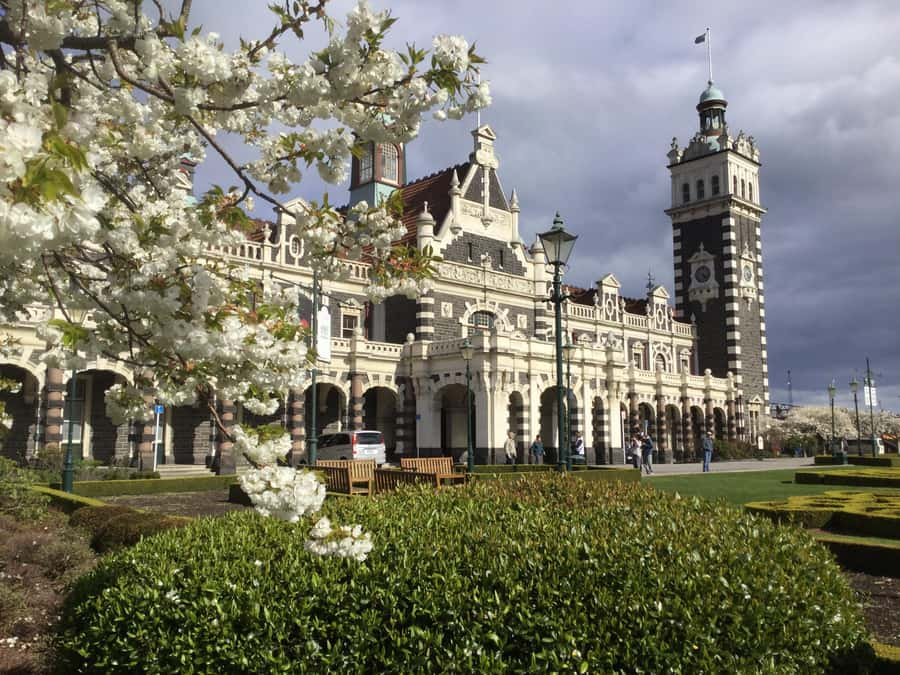
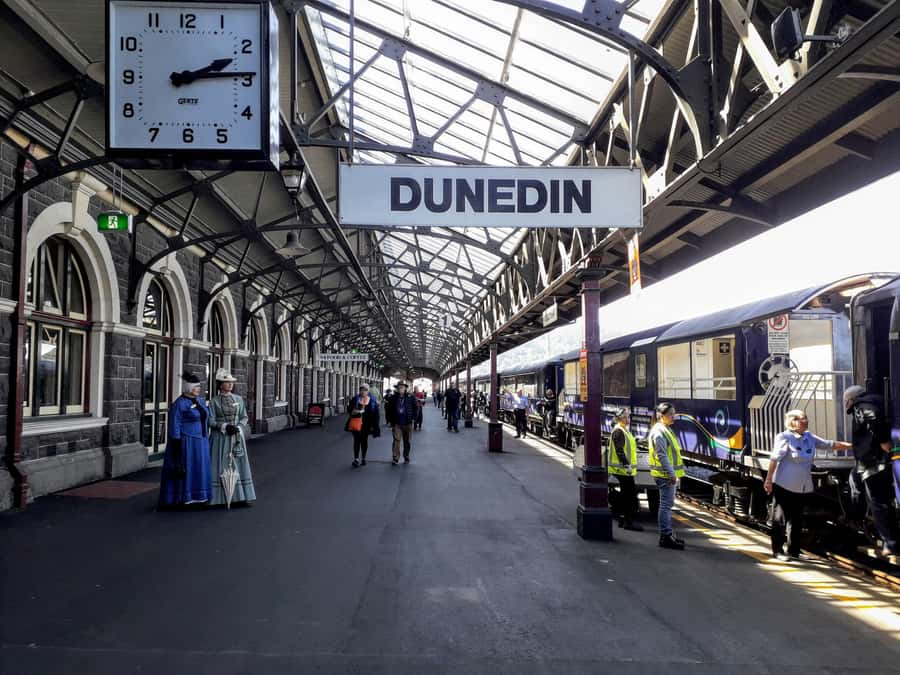
Dunedin Railway Station is one of the strongest stops on the route. It is described as the most photographed building in New Zealand, and its elaborate appearance makes it easy to see why the building earns so much attention.
The tour gives you time to stop for photographs and hear the story of the station. That storytelling is important here. A quick photo can show you the patterned exterior, but a guide can help turn a pretty building into a sign of Dunedin’s earlier importance as a transport and commercial center.
Do not expect a long station visit or a railway journey. This is a sightseeing stop, not a train experience. Still, it is the kind of place that rewards a camera, especially if you enjoy ornate civic architecture.
I would keep your camera ready, but avoid spending the whole stop taking pictures. The point is not only the facade. Listen for the details about the building’s past, since the historical explanation is one of the better reasons to see it with a guide rather than simply passing by.
Otago University and Dunedin’s student heart
The tour also stops at the University of Otago, identified as New Zealand’s oldest university. This gives you a look at a different side of Dunedin, one that is less formal than the cathedral and railway station stops.
The university helps explain the city’s modern character. Dunedin is not only a place of historic buildings and steep roads. It is also a university city, and Otago’s presence shapes the local identity.
The stop is best understood as an outside overview. The information provided does not include a campus walk, classroom visit, or admission to university buildings. You will see the institution as part of the city and hear about its importance, but you should not expect a full campus tour.
That is enough for a first visit. If you are considering a longer stay, the stop may help you decide to return and explore the university area at a slower pace.
A few more Dunedin trips worth a look
- Speight’s Brewery Tour & Guided Tasting
★ 5.0 · 508 reviews - Dunedin: Wildlife and Penguin Tour
★ 4.6 · 239 reviews - Olveston Historic Home Guided Tour
★ 5.0 · 205 reviews - Albatross, seals, and sea birds-Wildlife Cruise
★ 5.0 · 189 reviews
Baldwin Street and the art of a quick photo stop
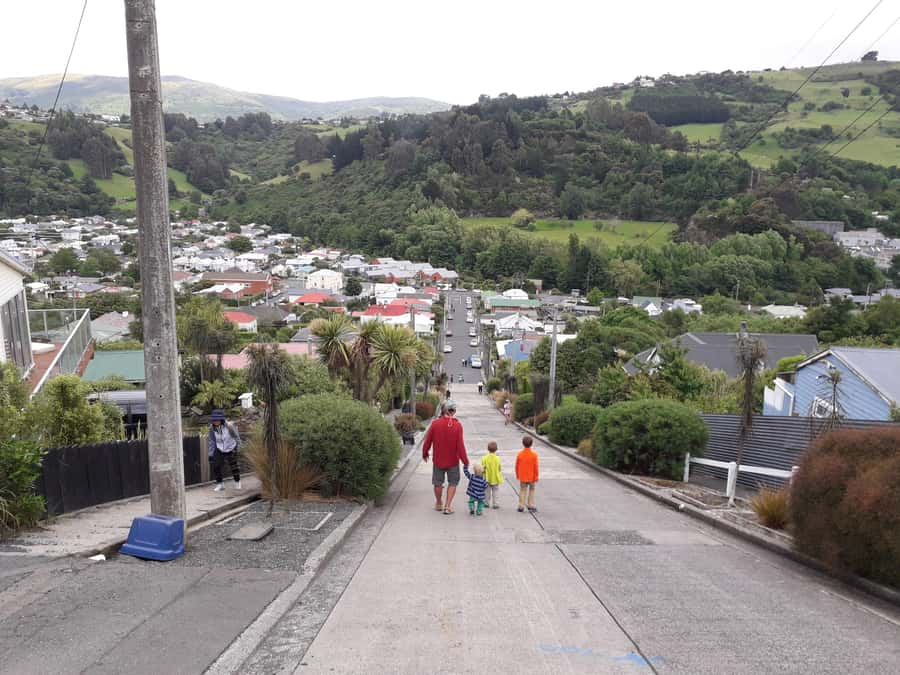
Baldwin Street is the tour’s easiest crowd-pleaser. It is widely described as the steepest street in the world, although the title has been disputed. The tour handles that claim sensibly by presenting the local fame without pretending the debate does not exist.
You can stop for a photograph or take a short walk up the street. That wording matters. You are not signing up for a serious hill climb, and the stop is not presented as a long hike.
The street is memorable because it turns a simple road into a physical oddity. The steep grade is hard to appreciate from a flat photograph, so a short walk can help you understand its angle. Wear comfortable shoes, as requested for the tour, and do not treat this as a place for impractical footwear.
Time will be limited. If you want a detailed exploration of the surrounding neighborhood or a long climb, you would need to come back independently. On this tour, Baldwin Street is a lively visual stop that adds variety to the churches, university, and railway station.
Signal Hill for a wider view of Dunedin
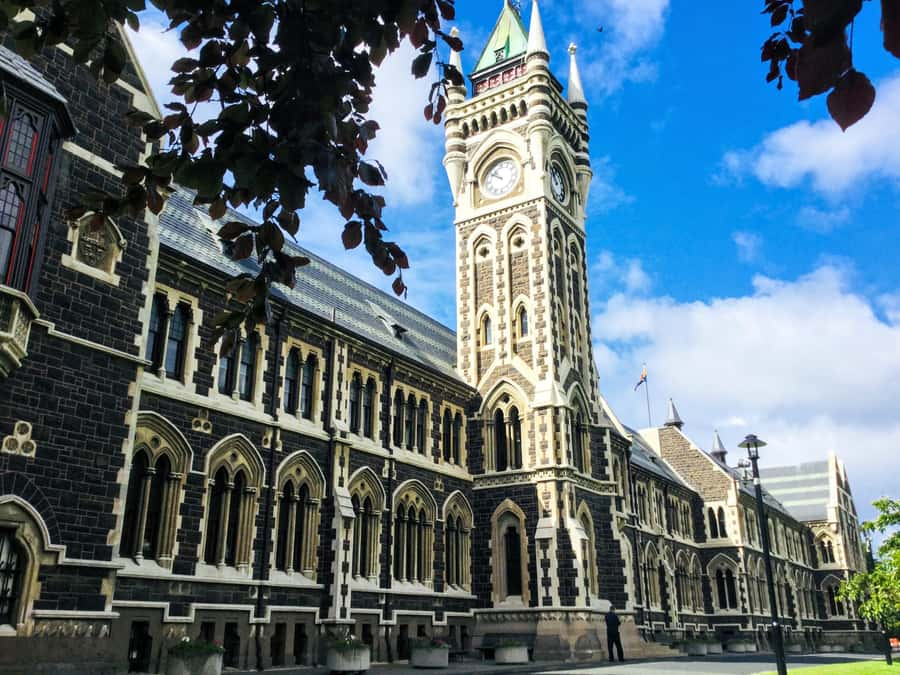
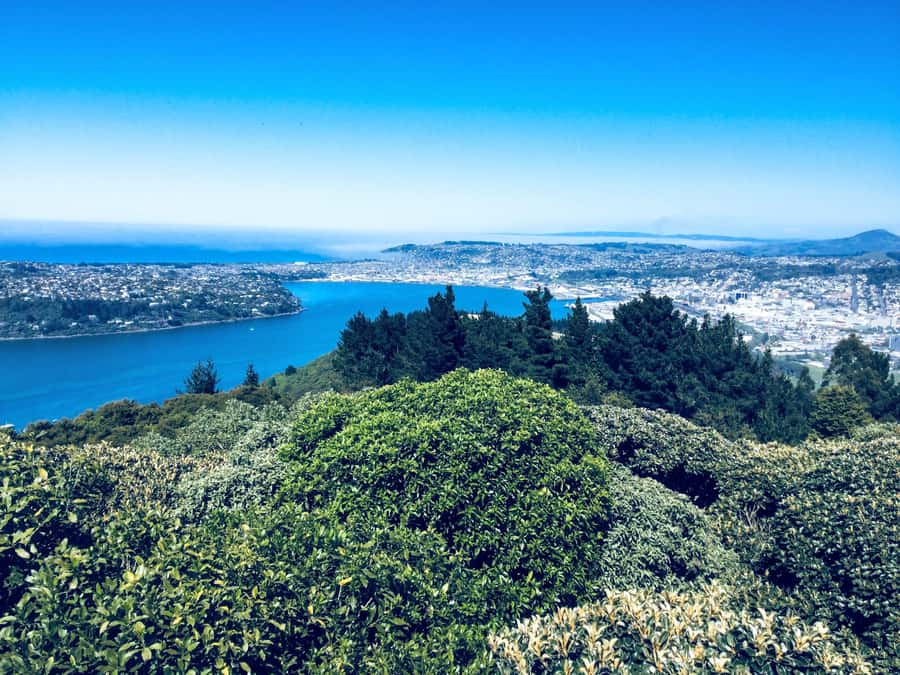
After the central sights, Signal Hill offers a change of scale. Instead of looking at individual buildings, you pause to view Dunedin and the surrounding area from above.
This is one of the useful features of a vehicle tour. Dunedin’s hills can make independent sightseeing slow, especially if you are trying to fit several distant stops into a short visit. The vehicle handles the climb and lets you reach a viewpoint that would take more planning on foot.
The appeal depends on visibility. The provided information promises a beautiful panorama, but weather can affect how much you see. Keep the stop flexible in your mind. Even on a less-than-perfect day, the hill helps you understand how Dunedin is arranged, but clear conditions will make the view more rewarding.
Signal Hill also breaks up the historical commentary. After hearing about churches, railway travel, and the university, you get a broad look at the city itself. For a two-hour tour, that contrast is useful.
A short walk through the upper Botanic Garden
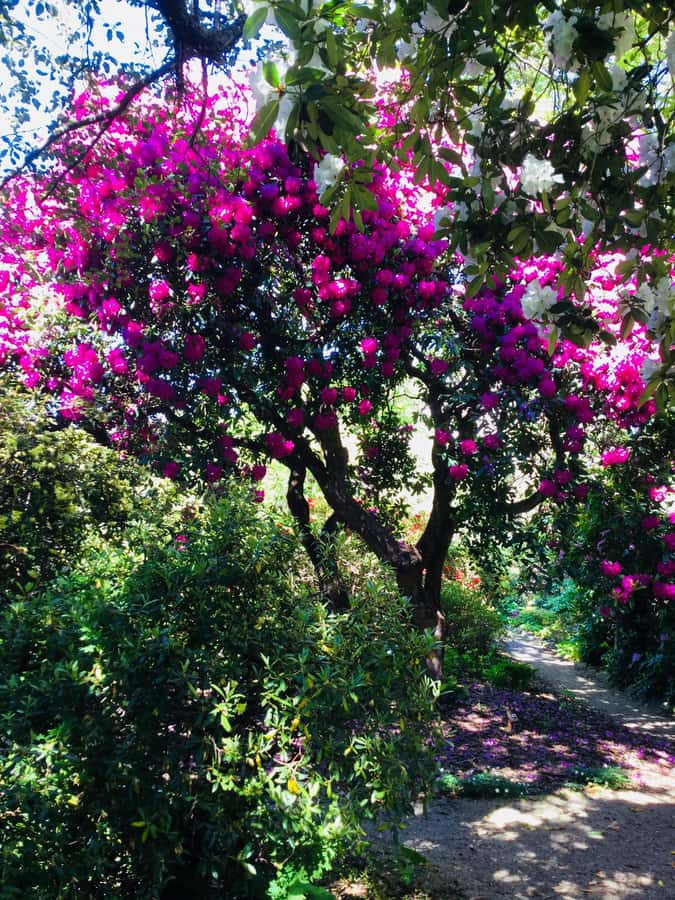
The upper section of Dunedin Botanic Garden is where the tour becomes more natural and relaxed. A guided stroll introduces seasonal plants in flower, large rhododendrons, New Zealand native birds, and bird aviaries.
Admission to the Botanic Garden is included, so you do not need to budget a separate entry fee for this stop. The walk is described as short, which makes it suitable for adding some greenery without turning the tour into a long garden outing.
The mention of seasonal flowers is worth keeping in mind. What you see will depend on the time of year, and the garden will not look identical on every departure. The gigantic rhododendrons are a particular feature, while the native birds and aviaries add an element of local wildlife.
This is not a full botanical tour. You will not have hours to roam every path, and anyone with a serious interest in plants may want to return later. For a first introduction, though, the guided walk gives you more than a drive-by view and adds a quieter stop to the route.
Bring comfortable shoes. The tour asks you to do so, and even a short garden stroll is more enjoyable when you are not thinking about sore feet.
The old cemetery and William Larnach’s family tomb
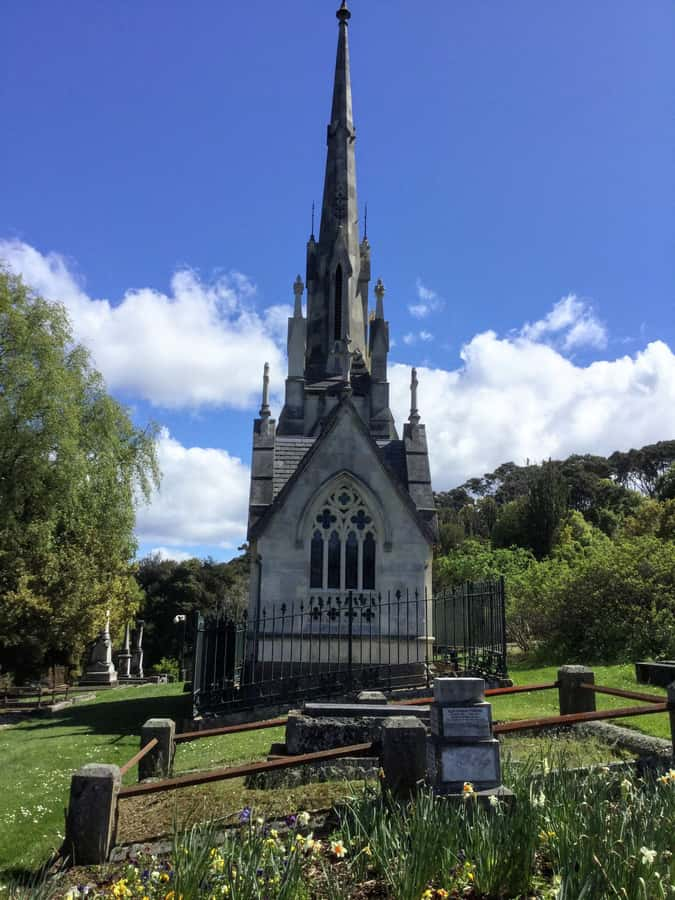
The cemetery stop gives the tour a more personal kind of history. Instead of hearing only about public buildings, you visit one of Dunedin’s oldest cemeteries and learn about notable people buried there.
The guide also tells the story of William Larnach and points out his family tomb. That detail gives the stop a human focus. You are not simply looking at old stones. You are connecting a local place with one of Dunedin’s better-known historical figures and families.
The supplied information does not identify the cemetery by name or specify how long you will spend there. Expect a short guided visit rather than a long genealogy walk. The value comes from the explanation, so stay close enough to hear the guide.
This is also a reminder that Dunedin’s past is not limited to grand architecture. Cemeteries preserve personal stories, social divisions, and the names of people who helped shape the city. A quick stop can make the wider tour feel less like a checklist.
Why the two-hour format can work well
The route covers a lot in a short time: central churches, a statue, the railway station, the university, Baldwin Street, Signal Hill, the Botanic Garden, and a cemetery. That is an ambitious list, and transport between the stops is what makes it possible.
I like this format for a first day in Dunedin or for a schedule with other plans. You can see the major landmarks, hear an informative talk about the city’s history and modern character, and still have time afterward for your own exploring.
The tradeoff is obvious. You will not linger at every stop, and the tour cannot give each place the attention it deserves. If you prefer long walks, museum visits, or detailed architectural commentary, a self-guided afternoon after the tour would round out the experience.
The small-group format should help keep the experience more individual than a large sightseeing bus. However, the exact group size is not provided, so I would not book it expecting a private tour.
Is $74 a fair price?
At $74 per person, the value depends on how much you value saved time. The fee includes transport in an air-conditioned vehicle, bottled water, and admission to Dunedin Botanic Garden. It also gives you a guide for the historical and local context, which is the part you cannot get from simply photographing the buildings.
For someone with only a morning or a narrow window in Dunedin, the price is reasonable. You are paying to connect several spread-out sights without arranging your own route, finding parking, or working out how to reach Signal Hill and Baldwin Street.
The price is less compelling if you already have a car, plenty of time, and a strong interest in exploring independently. You would still miss the convenience of a guide’s commentary, but you could choose how long to spend at the railway station, university, cemetery, or garden.
I see the tour as a practical orientation rather than a full-day cultural program. Book it for access, context, and efficiency, not for lengthy visits at each landmark.
Who should book this Dunedin tour?
I would recommend it to first-time visitors who want a clear introduction to the city. It also fits people with limited time, travelers with other activities planned, and anyone who prefers having transport arranged between hillside and central stops.
It is a good choice if your interests include architecture, local history, gardens, city views, and unusual landmarks. The route gives each of those interests at least one stop.
It may not suit you if you use a wheelchair, since the activity is specifically listed as unsuitable for wheelchair users. It is also a poor match if you want to spend a long time inside the churches, walk the entire university area, or make a full visit of the Botanic Garden.
Smoking is not allowed, and comfortable shoes and a camera are the practical items to bring. The tour is in English, so you should be comfortable following spoken English commentary.
Free cancellation is available up to 24 hours before departure, and you can reserve now and pay later. Starting times depend on availability, so check the schedule carefully, especially if you are fitting this around another Dunedin booking.
Should you book it?
Book this tour if you want a fast, guided introduction to Dunedin with the driving handled for you. The strongest parts are the Railway Station, Baldwin Street, Signal Hill, and the Botanic Garden, while the cemetery and William Larnach story add a more personal layer.
Skip it if you have a full day to explore at your own pace or want substantial time at each sight. For most time-poor visitors, though, $74 buys a sensible overview, useful local context, and a good list of places to revisit later.
FAQ
Where does the Dunedin tour begin?
It begins outside the Dunedin Visitor Centre in the Octagon at 50 The Octagon.
Where does the tour finish?
The tour returns to 50 The Octagon.
How long is the guided city tour?
The city sightseeing portion is described as two hours. The activity information also lists a 10-hour duration, so confirm the exact schedule when booking.
What language is the tour conducted in?
The live guided tour is conducted in English.
What landmarks are included?
Stops and sights include St Paul’s Cathedral, the Robbie Burns Statue, First Church of Otago, Dunedin Railway Station, the University of Otago, Baldwin Street, Signal Hill, an old cemetery, and the upper Botanic Garden.
Is Botanic Garden admission included?
Yes. Entry to Dunedin Botanic Garden is included.
Is transportation included?
Yes. You travel between the stops in an air-conditioned vehicle.
Is bottled water provided?
Yes, bottled water is included.
Is the tour suitable for wheelchair users?
No. The activity is listed as unsuitable for wheelchair users.
What should I bring?
Bring comfortable shoes and a camera. Smoking is not allowed.
Can I cancel the booking?
You can cancel up to 24 hours in advance for a full refund. You can also reserve now and pay later, subject to the booking terms.
Just added around Dunedin
- Invercargill to Dunedin via the Catlins Small Group 1 Way Tour★ 5.0 · 5 reviews
- Dunedin City – Settlers & Voyages Tour★ 5.0 · 13 reviews
- Wildlife and Penguin Tour★ 5.0 · 27 reviews
- Twilight at the Opera★ 5.0 · 5 reviews
- Speight’s Brewery Tour & Dinner★ 5.0 · 7 reviews
- Southern Skies Stargazing Tour in Dunedin★ 5.0 · 62 reviews
- Private Guided Tour of Dunedin City Heritage and Unique Wildlife and Scenery★ 5.0 · 36 reviews
- Shared Small Group Dunedin City and Peninsula Scenery Day Tour★ 5.0 · 5 reviews
City Tours, compared.
Half-day Discover Auckland City Sightseeing Tour
Read our review →


2025 Award Winning: Auckland City Highlights Half Day Tour
Read our review →
Arrival Transfer: Auckland Airport to Auckland Central City Centre
Read our review →

Browse the lists this tour appears in