
Reviewed · CANOES & KAYAKS
Auckland: Sunset & Night Sea Kayak Tour to Rangitoto Island
Rangitoto is Auckland’s volcanic landmark, but this seven-hour trip gives you a far more memorable way to see it than a daytime ferry ride. You paddle across the Hauraki Gulf, walk to the summit as the light softens, eat dinner on the island, then return by kayak with Auckland’s lights ahead of you.
I like the small group of nine or fewer, which gives the guide time to help nervous beginners. I also like the rare combination of sunset views, a hot BBQ, and a night paddle. The catch is simple: this is a real physical outing, not a gentle sightseeing cruise. Wind can change the route, and you need to hike 2.5 km uphill.
Key points before you book
- Kayak across the Hauraki Gulf: You receive basic instruction, a kayak, paddle, and life jacket, so no previous experience is required.
- Climb Rangitoto at sunset: The 2.5-km walk to the summit rewards you with broad views toward Auckland and the Waitakere Ranges.
- Eat a Kiwi BBQ outdoors: Dinner includes hot and cold drinks, with guides such as Dan and Daniel handling both the cooking and the group care.
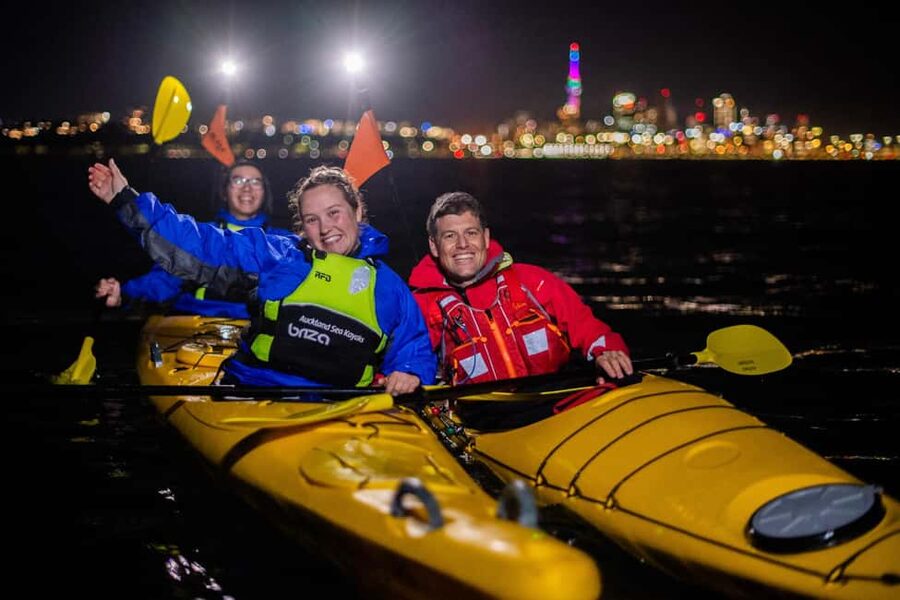
- Paddle back after dark: The city lights and stars replace the daytime scenery, making the return trip the tour’s most unusual part.
- Prepare for wet clothes: Bring shorts, warm layers, walking shoes, a towel, and two or three spare outfits if the weather looks rough.
- Know the weather matters: High winds have forced the group to skip Rangitoto on occasion and visit other beautiful spots instead.
Why this Rangitoto trip feels different
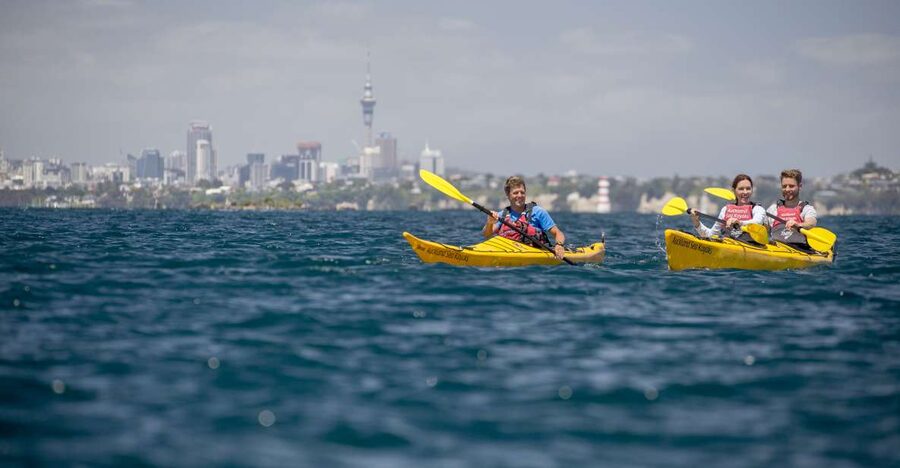
Auckland offers plenty of ways to reach Rangitoto, but most of them involve sitting on a ferry. Here, the crossing is part of the adventure. You are close to the water, working with your paddling partner, and watching the island grow larger ahead.
The trip starts at St Heliers Beach, at 384 Tamaki Drive, at the scheduled start time. If you arrange the optional pickup, you meet 30 minutes earlier at The Atrium at Auckland War Memorial Museum. Hotel pickup and drop-off are not included, so check your transport plan before booking.
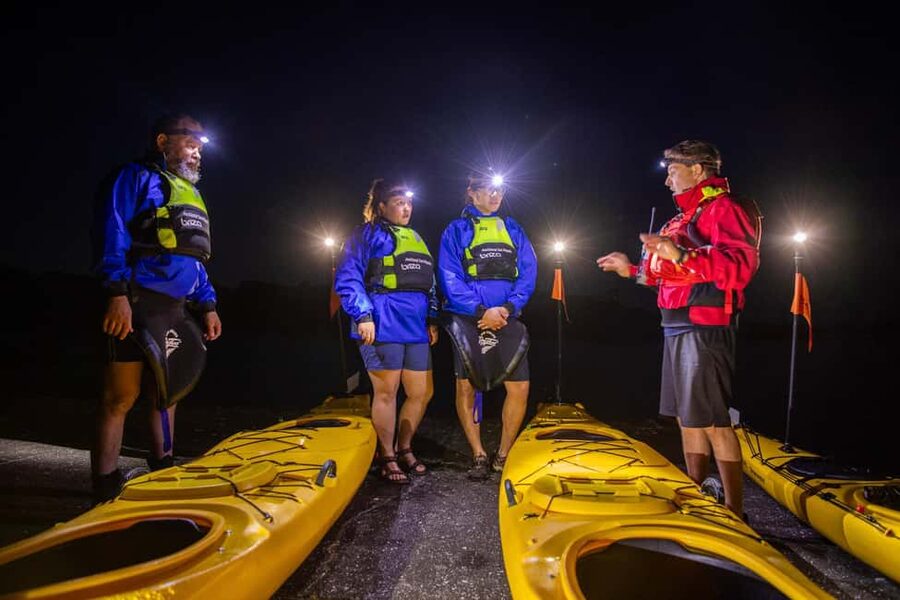
Your guide gives first-time kayakers a basic lesson before you set out. That matters because the group is not expected to arrive with kayaking skills. You still need to listen, ask questions, and be ready to paddle for a substantial part of the day. Katrina, who joined on her first kayaking trip, found that following the instructions and speaking up when unsure made the outing manageable.
I like that the guide stays with a small group rather than sending a large flotilla across the gulf. The English-speaking guides also add context about Auckland, the nearby islands, and local plants and animals. Daniel received particular praise for making people feel safe while keeping the day lively, while Kobey handled a windy day by changing the plan and finding two other beautiful locations.
More Kayaking Tours in Auckland
- Auckland: Night Kayak Tour in Glowing Bioluminescent Waters
★ 4.9 · 259 reviews - Bioluminescence Kayak Tour – Est. 1994
★ 4.0 · 187 reviews - Sunset kayak tour to Rangitoto Island
★ 5.0 · 168 reviews
The paddle from St Heliers Beach to Rangitoto
The first crossing is scenic, but it is also the part that demands the most honest self-assessment. You will be sitting in a kayak for a long period, using your arms and torso to make steady progress. The water may be calm, or it may bring waves and stronger wind.
You do not need prior experience, but you do need a reasonable level of fitness. The tour is not suitable for people with back problems, mobility impairments, or a low level of fitness. It also has a stated weight limit of 275 pounds, or 125 kilograms, and is not suitable for wheelchair users or people over 95.
The small group format helps here. A guide can watch how everyone is coping, explain the next step, and adjust the pace when needed. You should still expect to get wet. Bring shorts or sportswear for the kayak, and keep a change of clothes close at hand.
Waterproof bags for your camera or mobile phone are provided. I would still pack your electronics carefully and use a camera strap if you have one. A sun hat, sunglasses, sunscreen, and a reusable water bottle are sensible for the outward crossing, while warm clothing becomes more important once the sun goes down.
Pulling ashore at Rangitoto Wharf
Once you reach Rangitoto, the group brings the kayaks ashore at Rangitoto Wharf. This break is welcome after the crossing, but it is not the end of the physical work. You leave the kayaks and begin the 2.5-km walk to the summit.
Rangitoto is a volcanic island, and the walk gives you a close look at its dark volcanic ground and hardy plant life. The climb is short enough to fit into the evening but long enough to raise your heart rate. Comfortable walking shoes are essential. Jeans are not allowed, and they would be a poor choice for both paddling and walking anyway.
The guide provides time to settle into the climb rather than treating the island as a race. You may even have the option to run down afterward, though that is not a requirement and should only appeal if your knees and balance are happy with the idea. One outing also included a swim before dinner, but you should treat that as an optional possibility rather than a fixed part of every trip.
The summit view at sunset
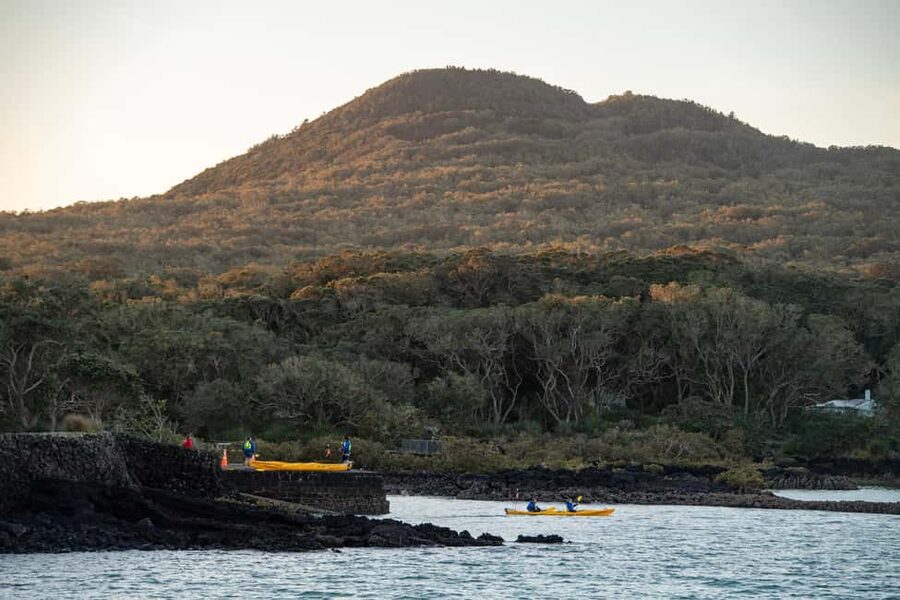
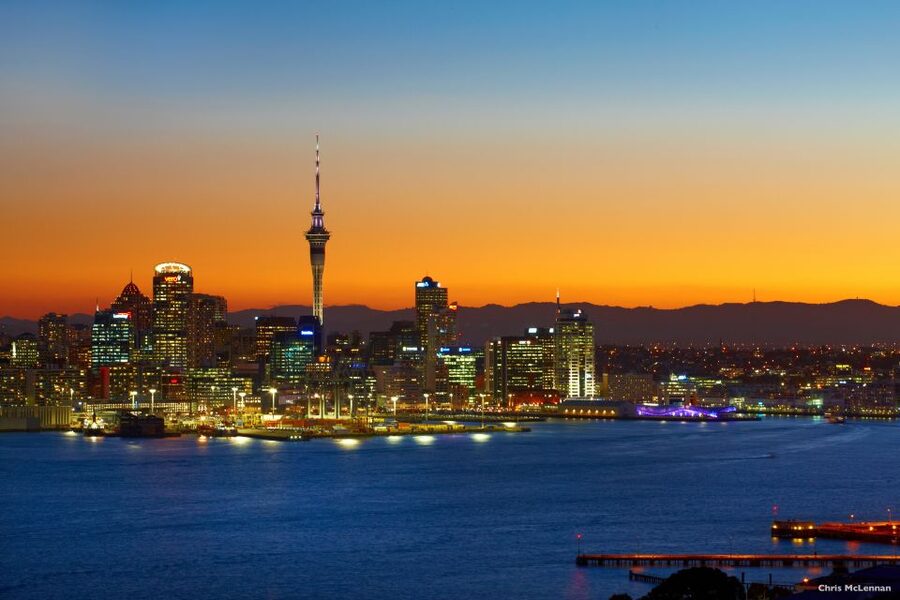
The summit is the payoff for the crossing and uphill walk. From the top, you can look across Auckland and the Hauraki Gulf as the sun drops behind the Waitakere Ranges. The changing light gives you a view that a daytime ferry passenger simply does not get.
Sunset timing changes through the year, so the exact start time varies. The activity lasts about seven hours, and you need to check the available departure time for your date. The evening schedule also means you should not plan a tight appointment immediately afterward.
Take your camera, but do not spend the entire stop looking through it. The summit is one of those places where the best part is watching the colors change across the water and city. A warm layer is useful here because the temperature can feel different once you stop walking and the sun slips away.
This is also where the trip makes the most sense for people who want an active view rather than a passive one. You have earned the outlook by crossing the gulf under your own effort. That makes the short stop feel like part of a full story, not just a photo stop.
Same corner of the country, a very different day out:
- Auckland Dolphin and Whale Watching Eco-Safari Cruise
★ 4.5 · 1,790 reviews - Auckland Explorer: Sightseeing Hop-on Hop-off Tour
★ 4.0 · 1,180 reviews - Half-day Discover Auckland City Sightseeing Tour
★ 5.0 · 1,080 reviews - Auckland: Whale and Dolphin Watching Half-Day Eco Cruise
★ 4.5 · 1,072 reviews
A Kiwi BBQ with the guide doing the cooking
After the summit walk, you return for a relaxed BBQ dinner on Rangitoto. The tour includes the meal plus hot and cold drinks, so you do not need to organize dinner separately. Guides Dan and Daniel were both praised for cooking well, with one particularly noted for preparing a good steak.
The meal is practical as well as enjoyable. A hot dinner gives you a chance to refuel before the nighttime paddle, and sitting down helps you recover from the crossing and climb. The healthy Kiwi treats served as a picnic lunch add another useful food stop to the day.
Exact food choices can vary, so do not book this as a specialist dining experience. The value is the setting and the convenience: you eat outdoors, after sunset, with the gulf around you, without carrying a full meal from Auckland.
You should also remember that alcohol and drugs are not allowed. If you want a beer with dinner, this is not that sort of tour. The focus is safety, paddling, walking, and getting everyone back across the water.
The night paddle back to Auckland
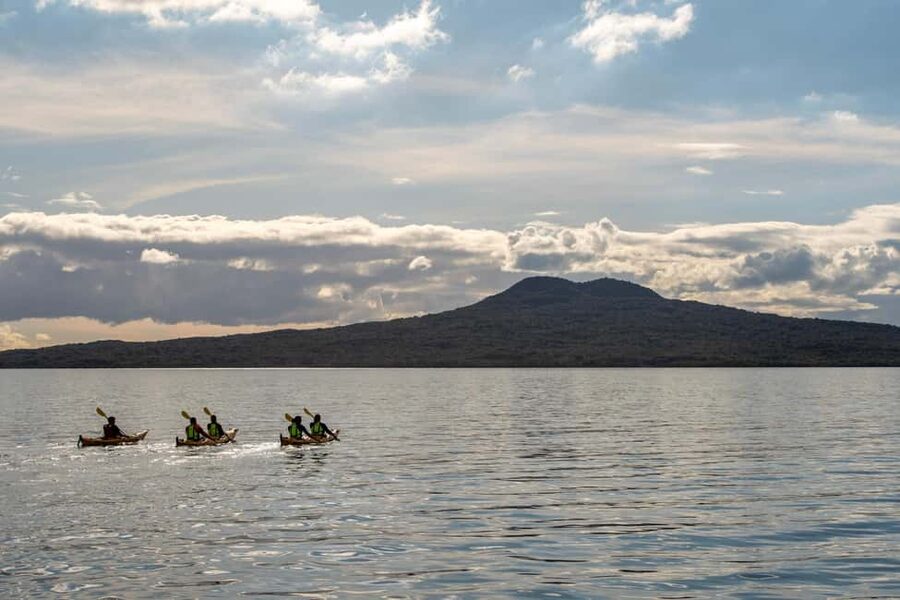
The return crossing is the part I find most appealing. You leave Rangitoto after dark and paddle toward the twinkling lights of Auckland. The Southern Cross may be visible on a clear night, and the city gives you a fixed point to watch as you move across the gulf.
Night kayaking changes the mood completely. During the outward trip, you can study the island and nearby water. On the return, you become more aware of the darkness, the sound of each paddle stroke, and the lights ahead. It feels calm when the water is settled, but it can also feel more demanding if waves pick up.
One March outing included some waves on the way back, which made the experience more exciting. That detail is worth taking seriously. Darkness can make a moderate crossing feel more intense, especially if you are new to kayaking. The guide leads the group and keeps safety first, but you should not expect a flat, predictable ride every time.
This is why the tour suits people who want a genuine outdoor challenge. It is also why I would not recommend it to someone hoping for a quiet, low-effort evening activity. You need enough energy left for the final paddle after the walk and meal.
Wind, weather, and the backup plan
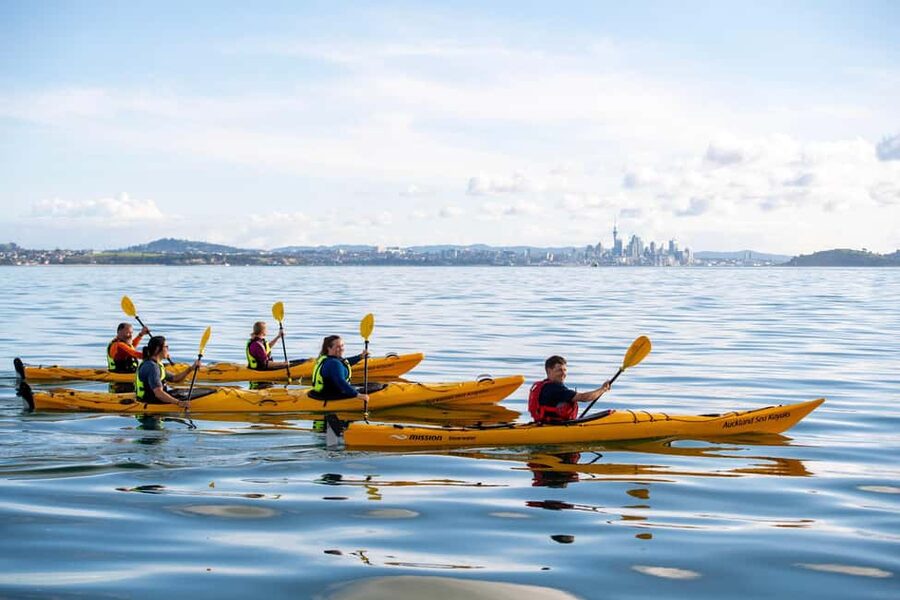
Auckland’s weather can change the plan. Strong wind has prevented the group from reaching Rangitoto, even after the day began. On that occasion, Kobey took the group to two other beautiful locations instead.
That is an important point in the tour’s favor, but it does not erase the disappointment of missing the island. If Rangitoto itself is the only reason you are booking, check the weather and keep your schedule flexible. The operator’s first duty is to choose a safe route, not to force the advertised destination in poor conditions.
Pack as if you may get wet. I would bring two spare sets of clothing for a cold or windy day, and three if you tend to feel chilled. Include a towel, dry socks, warm layers, and shoes that work for both the walk and the shore. A tightly secured hat is better than a loose one, since wind can carry it away quickly.
The gear provided includes a kayak, paddle, and life jacket. You bring the personal items listed above. Since no hotel transport is included, you also need to arrange your own way to St Heliers Beach unless you have requested the museum pickup.
What the $138 price includes
At $138 per person, this is not a cheap way to spend an evening, but it bundles together several activities that would otherwise require separate planning. You receive instruction, equipment, a guide, the island crossing, the summit walk, a BBQ dinner, hot and cold drinks, and the return paddle after dark.
The small group adds real value. With no more than nine people, the guide can spend time with beginners and keep the pace personal. You are not paying just for transport to Rangitoto. You are paying for a full guided outing with a safety structure, food, and a route that would be difficult to organize alone.
The value is strongest if you want an active day and would otherwise book several separate experiences. It is weaker if you mainly want a sunset viewpoint or a simple island visit. In that case, a ferry and independent walk will likely require less effort and cost less, though they will not provide the night kayaking experience.
The free cancellation policy allows a full refund when you cancel at least 24 hours ahead. That is useful when Auckland’s weather looks uncertain, but it does not mean you should wait until the last minute to prepare. You still need to check the start time, transport, fitness requirements, and clothing list before committing.
Who should book this experience
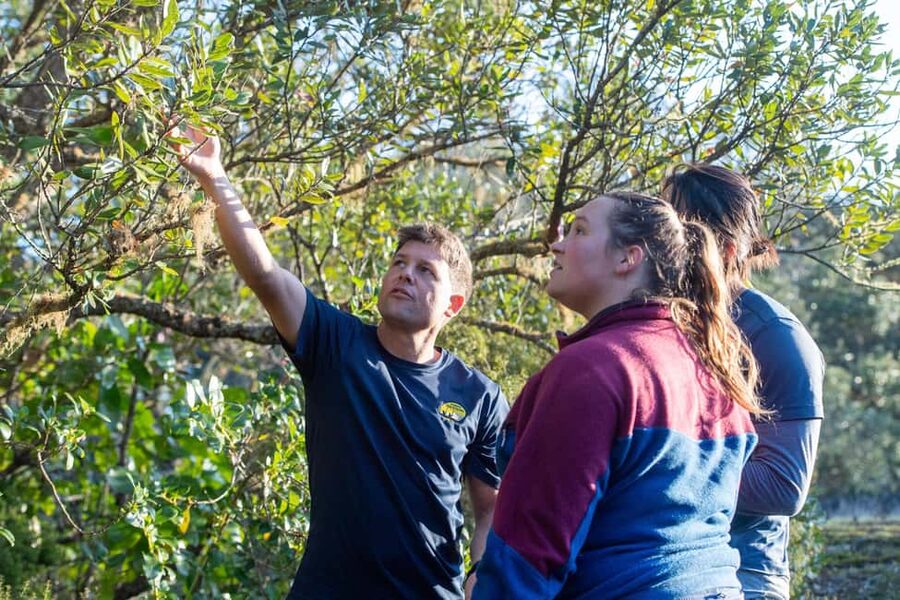
I would recommend this tour to fit adults, active couples, solo visitors who enjoy small groups, and families with older teenagers who can manage the crossing and 2.5-km climb. It also suits first-time kayakers who want instruction without signing up for a large class.
You should book it if the idea of paddling under stars excites you more than the thought of a long dinner. The trip rewards curiosity, stamina, and a willingness to accept changing conditions. Guides such as Daniel, Dan, Eric, and Kobey have shown that good instruction and a friendly manner can make a big difference.
I would skip it if you have back or mobility problems, a low fitness level, or strong concerns about getting wet. I would also think twice if you dislike outdoor meals, cannot handle a late return paddle, or need a guaranteed visit to Rangitoto regardless of wind.
Final verdict: book it for the night kayaking
Book this Rangitoto trip if you want Auckland from the water, the summit, and the darkened gulf in one long outing. The night paddle back is the feature that makes the $138 worthwhile, while the small group, meal, and patient instruction make the demanding parts easier to manage.
Go prepared with spare clothes, warm layers, walking shoes, water, and a towel. Ask questions during the safety briefing, listen to the guide, and accept that high wind may change the destination. If you can handle the physical effort, this is a memorable way to see Auckland beyond its streets and ferry terminals.
FAQ
Do I need previous kayaking experience?
No. The tour includes instruction, and it is designed for first-time kayakers as well as experienced paddlers. You should listen carefully and ask questions whenever you are unsure.
How long is the tour?
The experience lasts about seven hours. Departure times vary, so check availability for your chosen date.
Where does the tour start?
The main meeting point is St Heliers Beach at 384 Tamaki Drive. If you request pickup, meet 30 minutes before the tour at The Atrium at Auckland War Memorial Museum.
Is hotel pickup and drop-off included?
No. Hotel pickup and drop-off are not included. A pickup option is available for people who have requested it from the Auckland War Memorial Museum meeting point.
What food and drinks are included?
The tour includes a Kiwi BBQ dinner, hot and cold drinks, and a picnic lunch with healthy Kiwi treats.
What should I bring?
Bring comfortable walking shoes, shorts or sportswear, warm clothing, sunglasses, a sun hat, a reusable water bottle, and a camera. A towel and two or three spare sets of clothing are useful because you may get wet. Waterproof bags for a camera or mobile phone are provided.
Is the tour suitable for everyone?
No. It is not suitable for people with back problems, mobility impairments, low fitness, or wheelchair users. The stated maximum weight is 275 pounds, or 125 kilograms, and the tour is not suitable for people over 95. You must also be able to complete the 2.5-km walk to the summit.
More Evening Experiences in Auckland
- Te Pā Tū Evening Cultural Experience – Private Tour from Auckland
★ 5.0 · 22 reviews - Romantic Auckland Sunset tour with Winery & Thermal pool
★ 5.0 · 11 reviews - Auckland: Twilight Fishing Charter 5pm – 9:30pm
★ 4.5 · 6 reviews - Twilight Wild Kiwi Bird Encounter Private Tour
★ 5.0 · 3 reviews
Just added around Auckland
- Auckland Airport Private One-Way or Round-Trip Transfer★ 4.5 · 14 reviews
- Auckland’s Wild West Coast & Black Sand Beaches Tour inc Lunch★ 5.0 · 12 reviews
- Kumeu Wine Region Shuttle from Auckland★ 4.5 · 19 reviews
- West Coast Discovery – Piha Beach or Muriwai Beach from Auckland★ 3.5 · 6 reviews
- West Coast Discovery Tour★ 5.0 · 37 reviews
- Wētā Workshop Unleashed – Intro to Scars and Scrapes Workshop★ 5.0 · 5 reviews
- West Coast Discovery Piha Beach Private Tour★ 5.0 · 14 reviews
- Ultimate Auckland Experience Full Day Tour with Brewery Lunch★ 5.0 · 6 reviews
Canoes & Kayaks, compared.
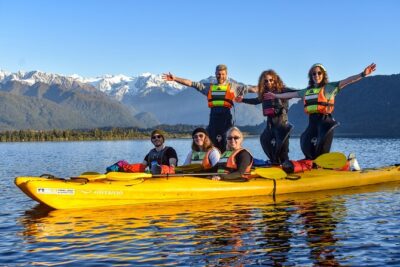
Small-Group Kayak Adventure from Franz Josef Glacier
Read our review →
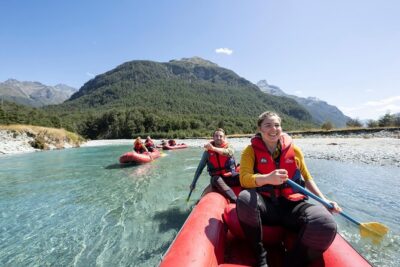
Dart River Canoe and Jet Boat Experience from Queenstown
Read our review →Browse the lists this tour appears in