
Reviewed · WHITE WATER RAFTING
Rotorua: Kaituna River Rafting Experience
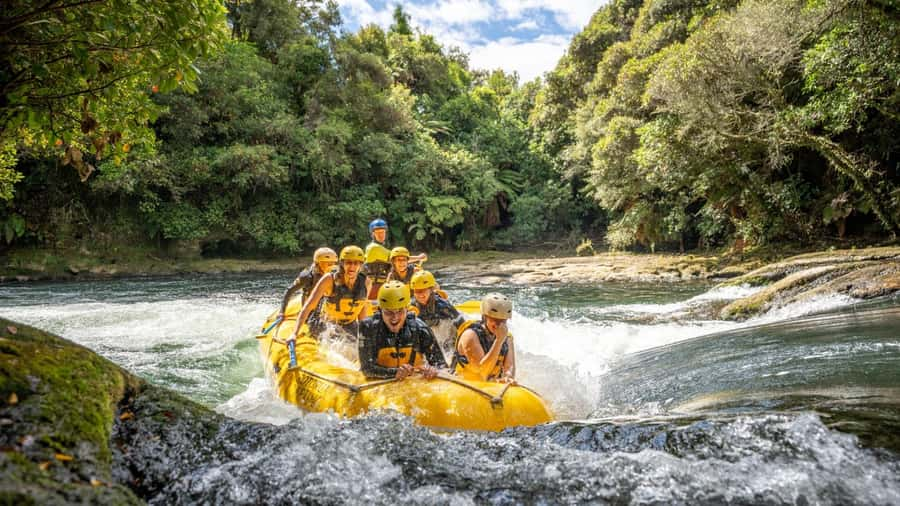
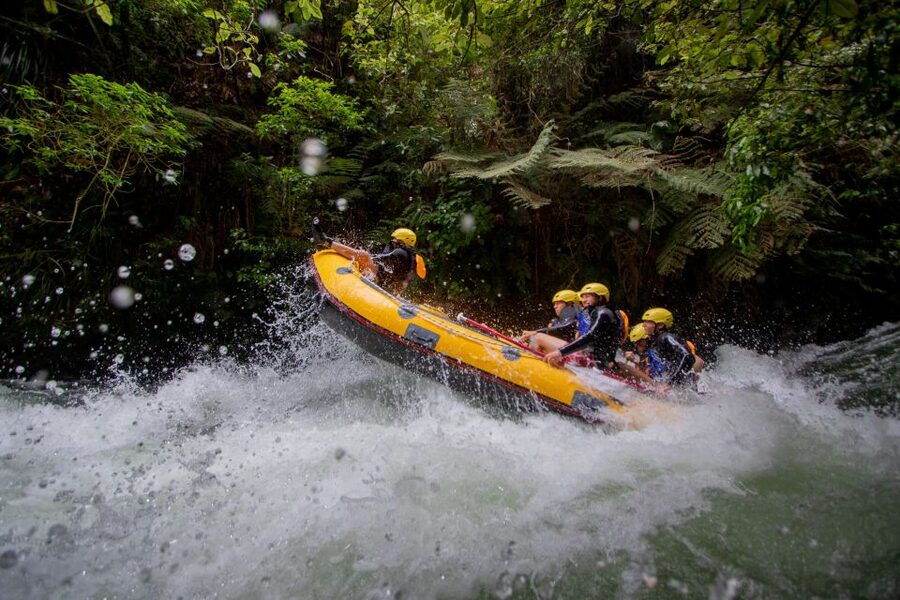
The big draw here is simple: you raft over three waterfalls, including a 7-meter drop, on a short, fast section of the Kaituna River. The trip packs 14 rapids, swimming, jumping, and plenty of splashing into about an hour on the water, with the full visit lasting around two hours.
I like the clear, friendly instruction, especially for first-timers, and I like how the guides adjust the ride to the group. Guides such as Peach, Josh, Nathan, Tom, and Cam have earned praise for keeping the mood light while giving direct safety commands. The main consideration is that the action is brief and concentrated, and the biggest waterfall is not part of the standard route for children aged 10 to 12.
Kaituna River Rafting: Key Points
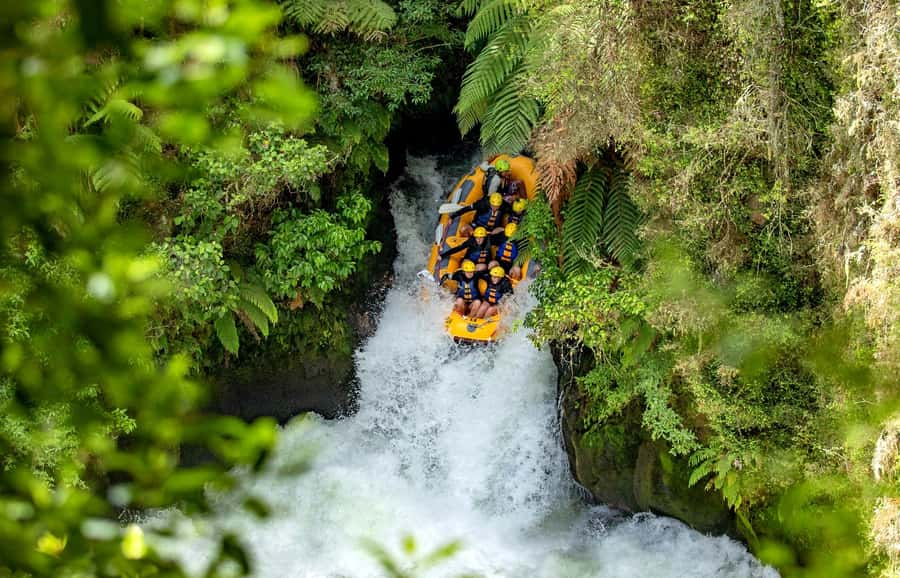
- Three waterfalls and 14 rapids: The route gives you a steady run of action rather than one isolated stunt.
- A 7-meter waterfall drop: This is the highest commercially rafted waterfall in the world.
- Beginner-friendly instruction: You do not need rafting experience, and non-swimmers can take part.
- More than paddling: Depending on conditions and the guide’s instructions, you may swim, jump, surf a rapid, and float with the current.
- A short trip from Rotorua: The rafting base is about 20 minutes from central Rotorua.
- Strong value at $59: Wetsuit, booties, helmet, life jacket, and instruction are included, while transport and photos cost extra.
Why the Kaituna River Is Such a Big Deal
The Kaituna is not a long wilderness expedition. It is a compact, highly active stretch of river that gives you a lot to do in a short time. You move through 14 rapids and three waterfalls, so there is little waiting around between the exciting sections.
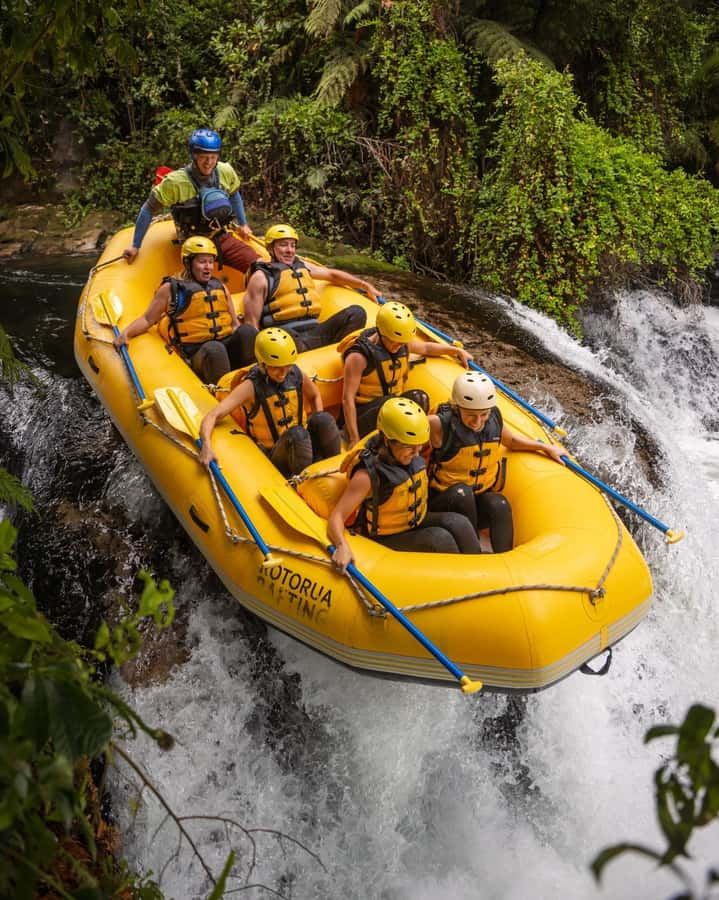
The star is Tutea Falls, a 7-meter waterfall. The raft tips forward, the guide gives the final commands, and the whole boat drops over the lip into the whitewater below. It sounds intimidating, and from the bank it can look that way. The useful thing is that your guide gives you a clear position and paddle instructions before you reach it.
You should expect an adrenaline rush, but this is not an expert-only trip. The guides run the activity for beginners and explain what to do before you reach the river. You will not be expected to arrive knowing rafting commands or river technique.
The river also gives the ride a scenic setting. Between the rapids, you pass through forest and clear water. In summer, the Kaituna can reach about 25 degrees Celsius, making it the warmest river in New Zealand. Conditions can still feel cool, particularly after swimming, which is why the supplied wetsuit matters.
More White Water Rafting in Rotorua
- Rotorua Rafting: Kaituna River White Water Rafting & Free Sauna
★ 5.0 · 1,952 reviews - White Water Rafting – Kaituna Cascades, The Originals
★ 5.0 · 1,274 reviews - Rotorua Rafting: Kaituna River White Water Experience
★ 4.9 · 840 reviews
Arriving at the Rotorua Rafting Base
You make your own way to the rafting base, about a 20-minute drive from central Rotorua. Hotel pickup is not included, but a shuttle from Rotorua can be arranged for $15 per person. That extra cost may be worthwhile if you do not have a car, especially since the base is outside the city.
At the base, you meet the team and change into a wetsuit, booties, helmet, and life jacket. Bring swimwear and a towel. You do not need to bring rafting equipment, and the safety gear is included in the $59 price.
The base is also where you receive the safety briefing. This is an important part of the experience, not a box-ticking exercise. You learn how to hold your paddle, respond to commands, stay in the raft, and handle the drops. Guides such as Josh and Nathan have been praised for explaining instructions clearly and helping nervous participants settle in.
The company uses English, German, Spanish, Japanese, and Korean for instruction. That gives mixed-language groups a better chance of understanding the essential commands, though the activity itself remains physical and fast-moving.
Crossing to the Kaituna River
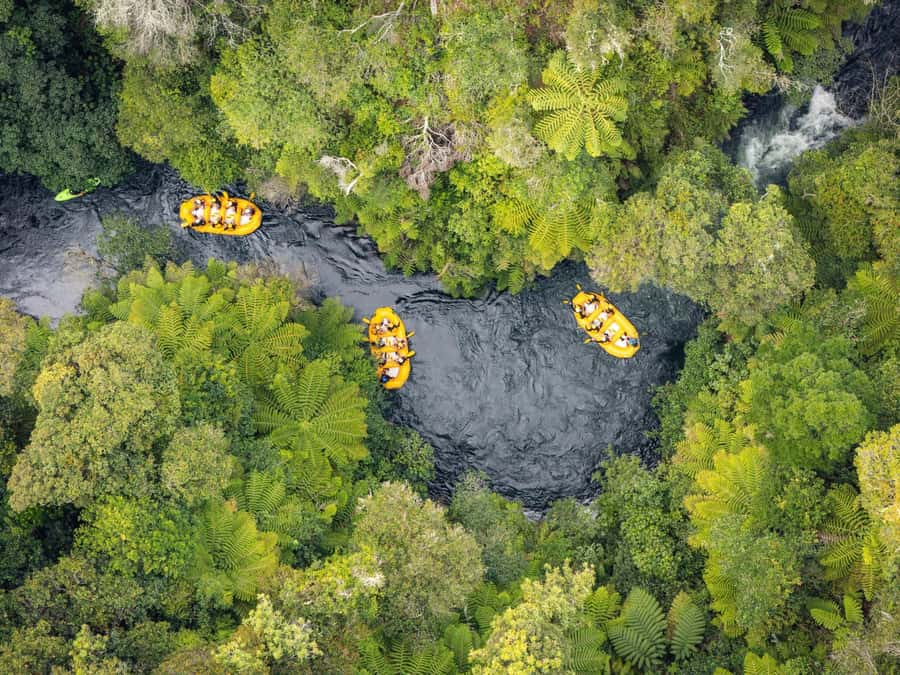
Once you are dressed, you make the short trip across the road to the river. The change from the base to the water is quick, so you do not lose much of your two-hour booking to transport.
Your guide sets the tone from the start. Peach has been singled out for combining humor with practical safety advice, while Cam has been praised for making solo participants feel included. This matters because rafting is a group activity. You need to paddle together, listen quickly, and trust the person steering the boat.
The guides also judge the group’s comfort level. If you want the full thrill, you can expect an energetic run. If you are nervous, the guide can offer gentler choices where possible. This does not remove the main demands of the trip, but it helps prevent the experience from feeling like a contest.
I would still take the risk disclosure seriously before booking. The river is exciting because it is genuinely active water, not a slow scenic float. You need to be comfortable following instructions under pressure and getting wet.
Fourteen Rapids in a Fast, Compact Run
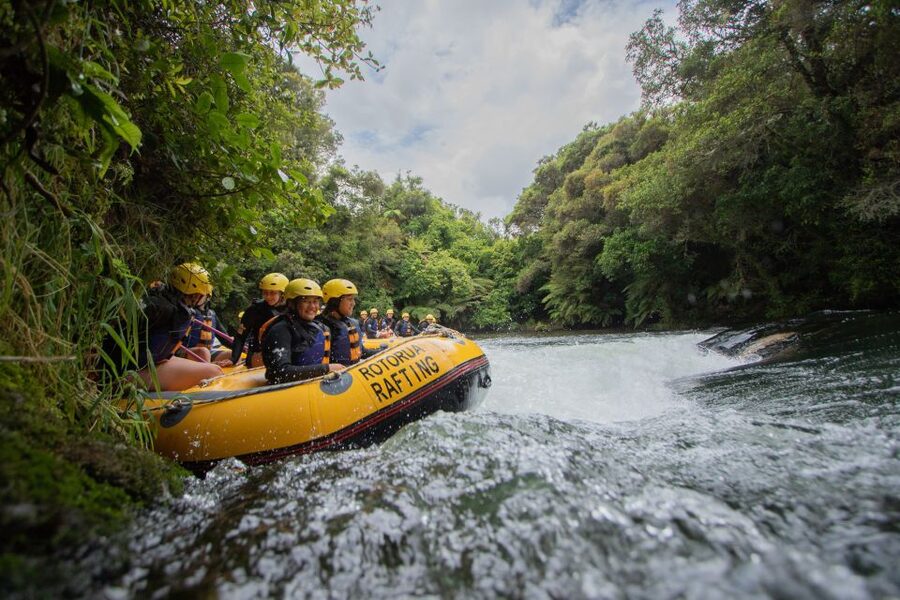
The rafting section lasts about 40 minutes to an hour, depending on the day and the pace of the group. That may sound short, but the river delivers action in quick succession. You paddle, brace, drop, recover, and prepare for the next feature.
The rapids are not all identical. Some give you a hard burst of whitewater, while others provide room for a bit of play. You may have the chance to swim, jump into the river, or surf a rapid under the guide’s direction. These options make the trip feel more varied than a simple run from start to finish.
Swimming in moving water can be one of the most surprising parts. The current is powerful, even though the activity is supervised. You need to follow the guide’s instructions exactly and keep your attention on the raft and the rest of the group.
The water has been described as clear and refreshingly cold, even in good weather. The wetsuit helps, but you should not assume you will stay dry or warm throughout. A towel and dry clothes for the return to the base are essential.
The forest along the river gives you a welcome pause between the drops. You get flashes of green forest, moving water, and the sound of the river pushing through the gorge. This is not a sightseeing cruise, so the views come in quick glimpses rather than long, quiet stops.
Same corner of the country, a very different day out:
- Rotorua Canopy Tours: 2.5Hour Native Forest Zipline Adventure
★ 5.0 · 4,563 reviews - Mitai Maori Village: Cultural Experience and Dinner Buffet
★ 4.7 · 3,575 reviews - Rotorua: Wai-O-Tapu Geothermal Park Entry Ticket
★ 4.6 · 2,601 reviews - Rotorua’s Ultimate Zipline: 6 ziplines, 400 m Tandem, Cliff Walk
★ 5.0 · 2,557 reviews
Taking on the Three Waterfalls
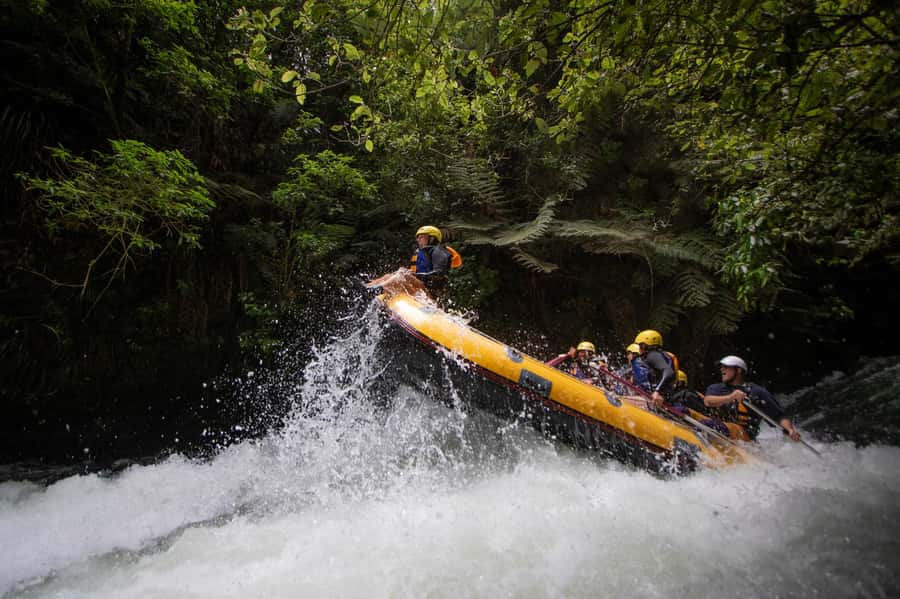
The three waterfalls provide the trip’s main rhythm. You build toward the largest drop, and the guide prepares the boat before each one. Listen closely at this stage. Paddling the wrong way or at the wrong time can affect the raft’s balance.
Several participants have described the 7-meter drop as the moment they remembered most. That is fair. It is the section that makes this activity different from a standard introductory rafting trip. You are not simply bouncing through small rapids. You are committing the whole raft to a proper waterfall descent.
The guides earn their keep here. Tom has been praised for reassuring a nervous group, while Mitch has been noted for explaining hazards clearly to families with teenagers. The staff’s job is to keep the ride exciting without turning safety commands into background noise.
A flip is possible. One family reported that their 13-year-old loved the trip even after the raft flipped. That does not mean you should expect a flip, or treat one as a goal. It does mean you should be ready for an active ride in which the raft may move suddenly and the water can surprise you.
At the end, you return to the base to change. Photos taken during the run are available to purchase. They can be worthwhile here because the best moments happen quickly, and you are unlikely to capture a waterfall drop while holding a paddle and gripping the raft.
How Safe and Beginner-Friendly Is It?
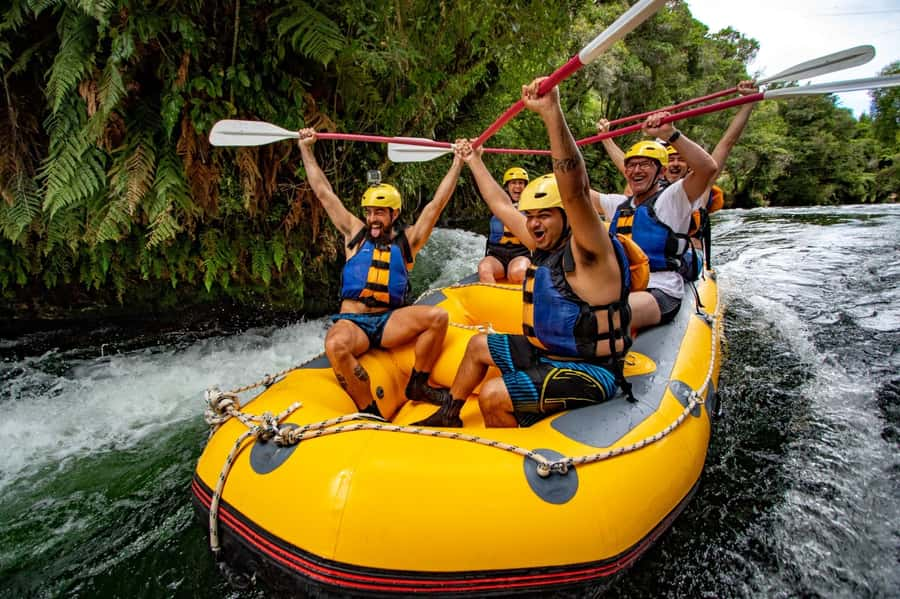
The strongest feature of this activity is the guide team. People who arrived nervous, including older or larger participants, have described feeling supported rather than judged. One 58-year-old participant was worried about slowing down the raft and still had a great time with Josh’s help.
That is useful context, but it should not be mistaken for a promise that the activity suits everyone. You need to meet the operator’s limits. Children under 10 cannot take part, pregnant women are not permitted, and the maximum weight is 287 pounds, or 130 kilograms.
Non-swimmers can raft, which widens the activity’s appeal. You still need to be ready for water contact and to follow instructions in a moving river. If you have serious doubts about water-based activity, read the full risk disclosure before paying.
Children aged 10 to 12 follow a modified plan. They raft the river below the grade 5 waterfall, then walk with the photographer to the halfway point and join the raft there. Contact the operator for the exact details before booking a child in this age range.
The guides’ tone also helps. The best staff members, including Peach, Nathan, Josh, and Cam, are described as funny, direct, and encouraging. That balance is valuable. Too much joking would weaken the safety briefing, while a stern approach could make a beginner tense before the first rapid.
What the $59 Price Really Includes
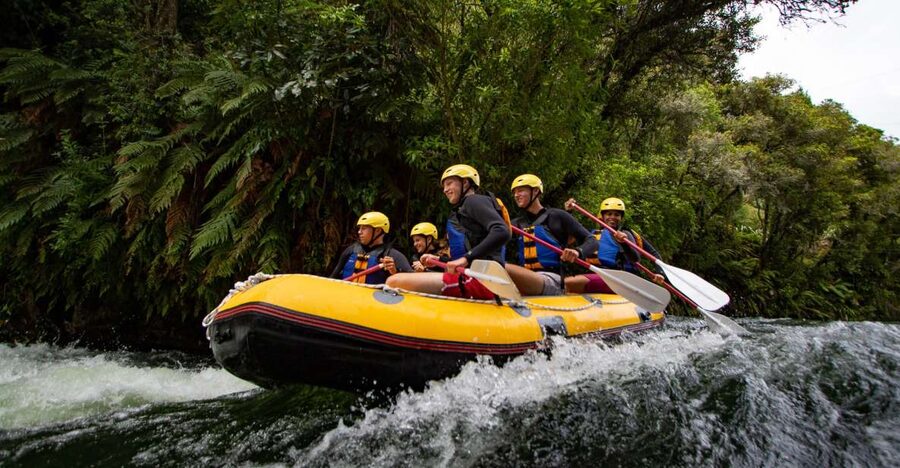
At $59 per person, this is a good-value Rotorua activity if you want a real adventure without committing half a day. The price includes the wetsuit, booties, safety equipment, instruction, and the rafting run itself.
The short duration is both a strength and a limitation. You can fit the trip around a geothermal park, a cultural evening, or another Rotorua activity. On the other hand, you are not paying for a long river journey. The water time is generally around 40 minutes to an hour, with changing, instruction, and preparation making up the rest of the two-hour visit.
You should budget for the $15 shuttle if you need transport from Rotorua. Photos are also optional and cost extra. I would decide about photos after the trip if possible, since you can judge whether the images capture the waterfall descent and group well.
The equipment included in the price keeps the cost from creeping up immediately. You only need swimwear and a towel, which makes this easier to add to a Rotorua schedule than an activity requiring specialist clothing.
Who Should Book This Experience?
I would recommend it to first-time rafters, active families with children over 10, couples, solo visitors, and anyone who wants a clear burst of adventure rather than a full-day expedition. It also works well for people who are nervous but curious, provided they meet the physical requirements and are willing to listen carefully.
It is particularly good for a mixed group. One person can arrive eager for the 7-meter drop, while another can be unsure about the water. The guide can help set the tone and offer less aggressive choices where available, though everyone still takes part in the river run.
Solo visitors are not left on the edge of the experience. You join a raft with other participants, and guides such as Cam have been praised for including people who arrive alone.
I would be more cautious if you dislike cold water, sudden movement, or group commands. This is not a relaxed float, and the water time is packed with physical action. You should also reconsider if you are close to the weight limit, since the stated maximum is firm.
Useful Tips Before You Go
Wear swimwear under the supplied wetsuit. Bring a towel and a complete change of clothes, even though only swimwear and a towel are formally listed.
Arrive ready to listen. The safety talk may be delivered with humor, but the commands matter once the raft reaches the rapids. If you are unsure, ask the guide to repeat an instruction before setting off.
Hold on firmly during the drops. Several participants specifically noted that the waterfalls look more daunting than they feel, but the raft still moves hard and fast. Keep your attention on the guide rather than the camera or the people on the bank.
If you want photos, leave room in your budget. The images can show expressions and moments you will not remember clearly after a fast run, but they are not part of the $59 booking.
Allow more than the actual river time in your schedule. The full activity lasts two hours, and the drive from central Rotorua takes about 20 minutes each way if you are driving yourself.
Should You Book the Kaituna Rafting Trip?
Yes, if you want one of Rotorua’s most exciting activities at a sensible price. The combination of 14 rapids, three waterfalls, and the 7-meter drop gives you a real adventure without requiring previous rafting experience.
I would book it for the guide support, the compact timing, and the chance to do more than paddle. You can swim, jump, and surf the river, while the staff keeps the trip organized and approachable.
Skip it if you want a quiet river outing, if you are pregnant, under 10, over 130 kilograms, or uncomfortable with active whitewater. For everyone else who can follow instructions and accept getting wet, this is a strong choice for a Rotorua day, and the $59 price leaves room in your budget for the city’s other sights.
FAQ
How long does the Kaituna River rafting experience last?
The full activity lasts about two hours. The active time on the river is usually around 40 minutes to an hour, with the rest used for changing, safety instruction, and preparation.
How much does the rafting experience cost?
The listed price is $59 per person. A Rotorua shuttle can be arranged for an additional $15 per person, and photos are optional extras.
Is previous rafting experience required?
No. The guide teaches you what you need to know before you reach the river, and the trip is designed for beginners.
Can non-swimmers take part?
Yes. Non-swimmers can take part, but you should be comfortable getting into the water and following the guide’s instructions.
What equipment is provided?
Wetsuits, booties, and safety equipment are included. Safety equipment includes the gear needed for the rafting activity, such as a helmet and life jacket.
What should I bring?
Bring swimwear and a towel. A change of clothes is also practical after the river section.
Can children join the rafting trip?
Children under 10 cannot take part. Children aged 10 to 12 raft below the grade 5 waterfall, walk with the photographer to the halfway point, and join the raft there. Contact the operator for details.
Is hotel pickup included?
No. You need to make your own way to the rafting base, which is about a 20-minute drive from central Rotorua. A shuttle can be arranged from Rotorua for $15 per person.
Just added around Rotorua
- TRIPLE DEAL Wai-O-Tapu, Redwood Forest & Blue Springs Ex Auckland★ 5.0 · 20 reviews
- Volcanic Rotorua Day Trip from Auckland★ 5.0 · 4 reviews
- Private Tour to Rotorua’s Natural wonders and Māori Arts & craft.★ 5.0 · 4 reviews
- Private Transfer From Auckland Airport To Rotorua★ 5.0 · 5 reviews
- Rotorua Highlights Tour inc. Te Puia Tour, Lunch & Cultural Show★ 4.5 · 53 reviews
- Private Tour – Rotorua Adventures Day Trip From Auckland★ 5.0 · 19 reviews
- Private Tour WaiOtapu & Huka Falls & Blue springs from Auckland★ 5.0 · 3 reviews
- Rotorua Full Day Private Tour from Auckland★ 5.0 · 3 reviews
White Water Rafting, compared.
Rotorua Rafting: Kaituna River White Water Rafting & Free Sauna
Read our review →
Waitomo Caves: Labyrinth Black Water Rafting Experience
Read our review →
White Water Rafting – Kaituna Cascades, The Originals
Read our review →
Rotorua Rafting: Kaituna River White Water Experience
Read our review →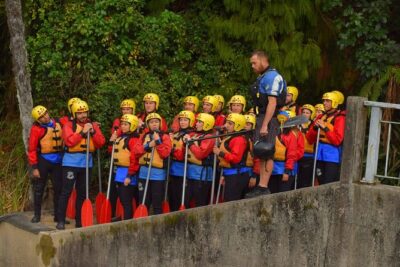
Rafting Rotorua Kaituna White Water Rafting | Kaitiaki Adventures
Read our review →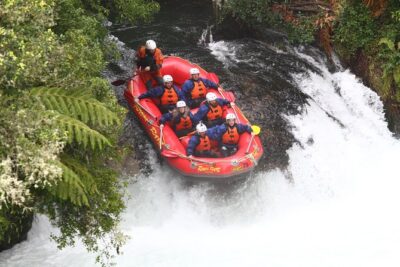
Black Water Rafting Experience Waitomo Caves Tour
Read our review →
Family Adventures Rafting and Sightseeing Trip in Queenstown
Read our review →Browse the lists this tour appears in