
Reviewed · SURF LESSONS
Auckland: Group Surfing Lesson with Muriwai Surf School
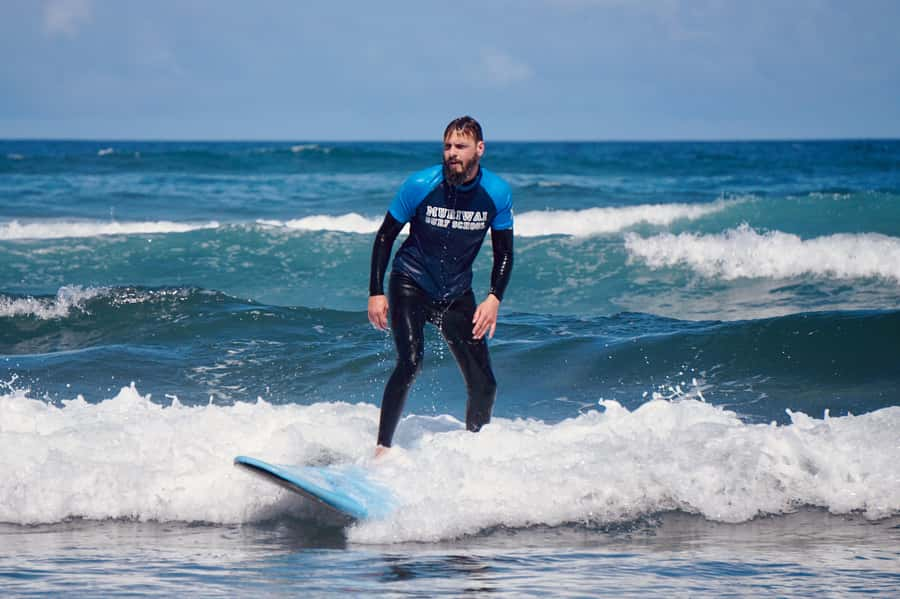
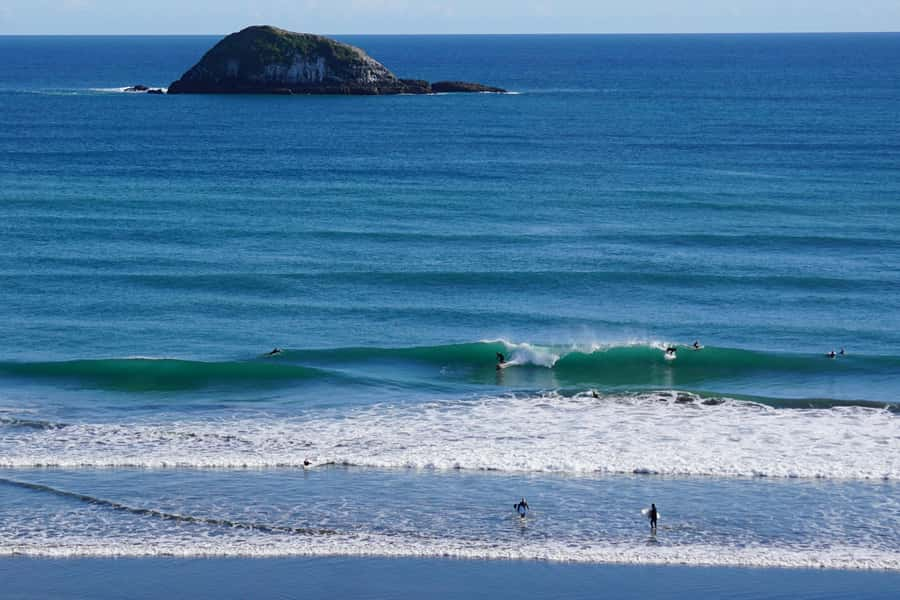
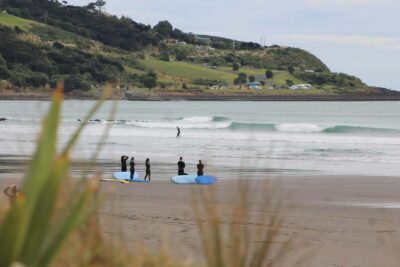
Muriwai Beach gives you a real west coast surf lesson without sending you far from Auckland. You start on the beach with the basics, then work toward catching a wave under the watch of a qualified instructor. The best part is the combination of all equipment included and a small group capped at 10, which keeps the lesson simple for first-timers.
I like the friendly, hands-on teaching and the steady encouragement in the water. I also like that the session covers safety before you paddle out, rather than treating surfing as only a matter of standing up. The main consideration is that this is an introductory group lesson, not a private coaching session, and non-swimmers or children under nine cannot take part.
Key points to know before you book

- Muriwai Beach setting: You surf on Auckland’s west coast, about 40 minutes from the city.
- Two hours in the water: The lesson includes equipment briefing, beach practice, safety guidance, and supported time in the waves.
- Beginner-friendly instruction: Qualified instructors explain how to stand, help you choose waves, and offer feedback as you practice.
- Equipment supplied: A surfboard and wetsuit are included, so you need only bring swimwear, a towel, sunscreen, and water.
- Small group size: With no more than 10 participants, you get more direct help than in a large class.
- Flexible booking: You can cancel up to 24 hours before the lesson for a full refund and reserve now while paying later.
Why Muriwai is a good place to learn surfing
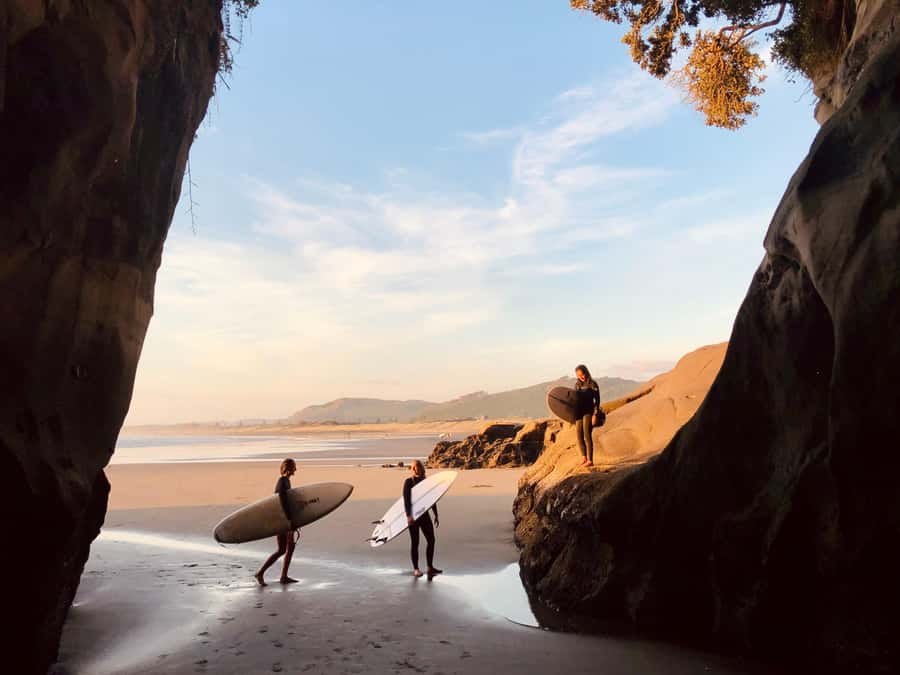
For a first surf lesson, location matters. Muriwai Beach puts you on Auckland’s beautiful west coast, around 40 minutes from Auckland City, so you can leave the urban area behind without giving up a full day to transport.
You do need to arrange your own way there. Transportation is not included, so check the route and allow time to arrive at least 15 minutes before the lesson. That early arrival gives you time to prepare rather than rushing into a wetsuit as the class begins.
The beach setting also gives the lesson a proper surf-school feel. You are not simply standing on a dry board in a studio or pool. You learn how to read the immediate conditions, move toward the water safely, and deal with the changing rhythm of waves.
I would keep your expectations practical. Muriwai is the setting for learning, not a guarantee of perfect waves or a long ride every time. Your instructor can help you select waves and improve your technique, but surfing still asks you to find your balance through practice. One recent participant put the basic truth neatly: an instructor can show you how, but you still have to work it out on the board.
More surf lessons near Auckland:
- 2 Hour Surf Lesson – Te Arai Beach
★ 5.0 · 119 reviews - Beginner Surf Lesson at Te Arai Beach
★ 5.0 · 6 reviews - Private 2 Hour Surf Lesson
★ 5.0 · 5 reviews
The first 30 minutes: board basics and standing up
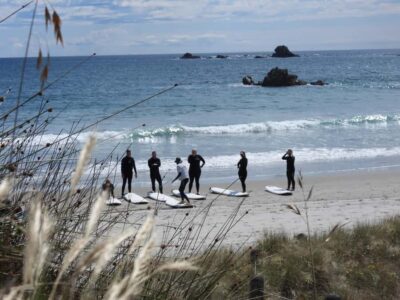
The class begins with an introduction to the equipment. You receive a surfboard and wetsuit, both included in the $41 price, and your instructor explains how they are used.
That matters more than it may sound. A beginner lesson can become confusing if you are handed a board and sent toward the water without knowing where to stand or how to position your body. Here, the opening section gives you a clear starting point before the waves add pressure.
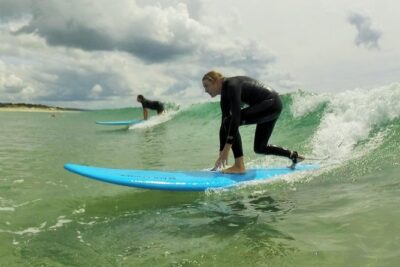
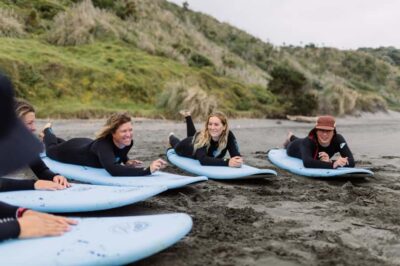
You practice the basic technique for standing on the board. The goal is not to master every part of surfing on land. It is to learn the movement in a controlled setting, so you have a better chance of repeating it once the board begins moving.
Your instructor also gives encouragement and correction throughout the lesson. That is particularly useful for beginners who cannot tell why one attempt works and the next one collapses. A small change in foot position or timing can make a noticeable difference, and quick feedback helps you test those changes immediately.
The group format is worth considering here. Ten people is the maximum, but the class may be smaller. One recent session had only five participants, giving the instructor plenty of room to help each person. The exact size depends on the booking, so do not assume every lesson will have five students, but the limit is still modest.
Safety first, then the walk to the waves
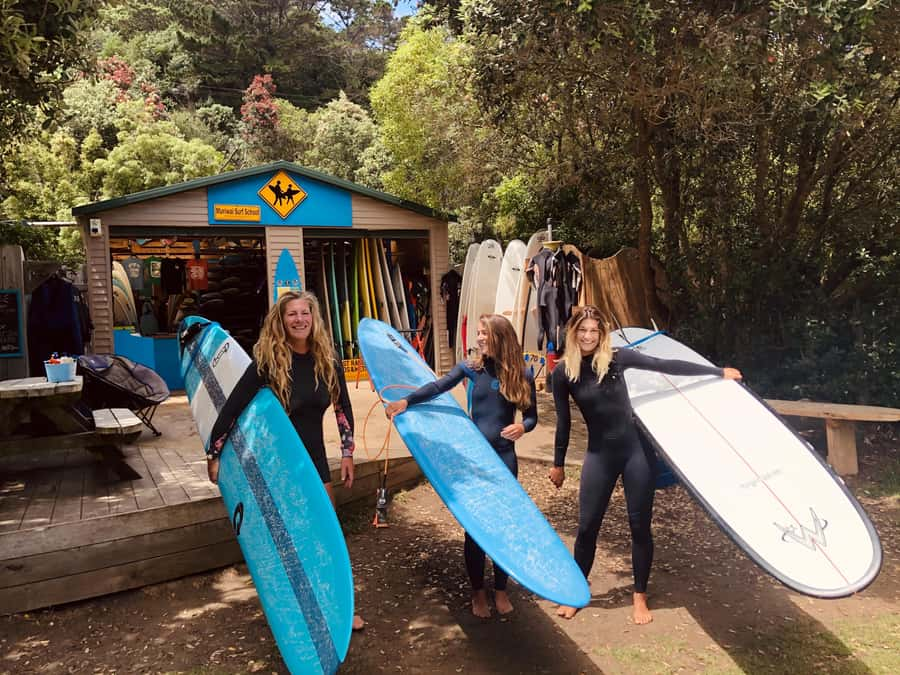
Before you enter the water, the instructor takes you to check the waves and explains how to get in safely. This is one of the most important parts of the lesson, even if it receives less attention than the exciting moment of standing up.
You learn to approach the water with some awareness of what is happening around you. The instructor can point out the right place to begin and explain the safety basics for the session. For a first-time surfer, that guidance removes some of the uncertainty that comes with facing an open beach.
This is also where the two-hour length begins to make sense. You are not paying only for a few rushed attempts. Time is set aside for equipment, technique, safety, and supported practice.
The school requires you to tell the instructor about any medical conditions beforehand. That is sensible, since surfing involves swimming and repeated physical effort. The lesson is not suitable for non-swimmers, and children under nine are not accepted.
Bring swimwear, a towel, sunscreen, and water. Food and drinks are not included, and personal expenses are your responsibility. Smoking, alcohol, and drugs are not allowed during the activity.
What help feels like once you are in the water
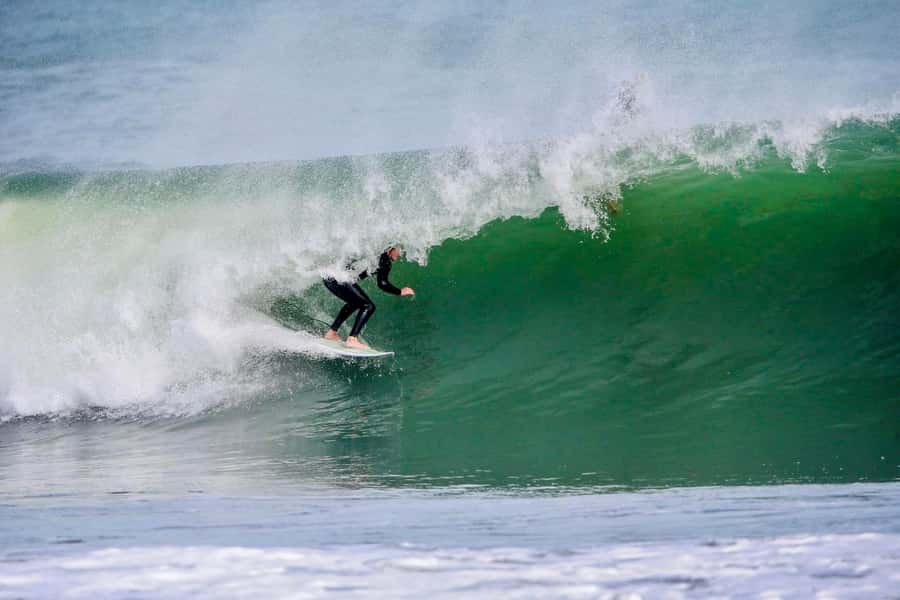
Once you enter the water, the instructor helps you pick and catch waves. You are not left to guess which wave to try or when to paddle. The instructor provides tips, watches your attempts, and gives feedback as you continue.
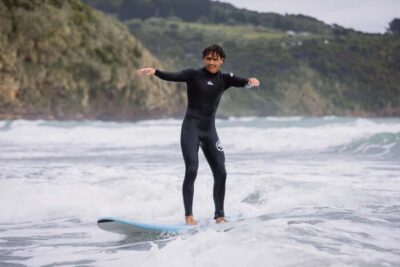
That support is the real value of a group lesson. You still need to balance, push yourself up, and adjust your body, but you have someone nearby who can tell you what to try next. When a ride goes well, the instructor celebrates it with you. That bit of shared excitement can make a difficult first session feel playful rather than frustrating.
The teaching style appears especially suited to people who have never surfed. Stephanie from the United States singled out Jacob for clear explanations and strong assistance during her first ever surf. Another participant described Jakob as helpful, kind, and patient while teaching the basics to a small group.
The names appear with slightly different spelling in the available feedback, but the useful point is clear: Jakob or Jacob is associated with patient beginner instruction. You may have a different instructor on your date, and the school provides qualified English-speaking teachers.
You should expect some failed attempts. Surfing does not become easy simply because the instructor explains it well. The lesson gives you the tools, the setting, and the support, but your first goal should be to understand the motion and enjoy the process. A long ride to the beach is a bonus, not something anyone can promise in advance.
A few more Auckland trips worth a look
- Auckland Dolphin and Whale Watching Eco-Safari Cruise
★ 4.5 · 1,790 reviews - Auckland Explorer: Sightseeing Hop-on Hop-off Tour
★ 4.0 · 1,180 reviews - Half-day Discover Auckland City Sightseeing Tour
★ 5.0 · 1,080 reviews - Auckland: Whale and Dolphin Watching Half-Day Eco Cruise
★ 4.5 · 1,072 reviews
How much value do you get for $41?
At $41 per person, this is a reasonable price for a two-hour beginner lesson that includes both a surfboard and wetsuit. You do not have to rent those items separately, and you receive instruction from a qualified surf teacher rather than trying to learn alone.
The price is strongest if you are new to surfing. Buying or bringing equipment would add work and cost, while an independent first attempt would leave you without guidance on safety, wave selection, or standing technique. The lesson bundles those pieces into one short session.
The value is less obvious if you already surf confidently. The class focuses on introductory skills, so experienced surfers may find the pace too basic. Even an improving surfer should consider the group format before booking. You receive support, but the instructor must divide attention among the participants.
Transportation is the main extra cost to remember. The school is about 40 minutes from Auckland City, but getting to Muriwai Beach is not part of the $41. You also need to provide your own food and drinks. Those details do not make the lesson poor value, but they affect the total cost of the outing.
A useful advantage is the flexible booking policy. You can cancel up to 24 hours before the lesson for a full refund, and the reserve-now, pay-later option lets you hold a place without paying immediately. Check the available starting times when booking, since the lesson schedule depends on availability.
The group size and the pace of the lesson
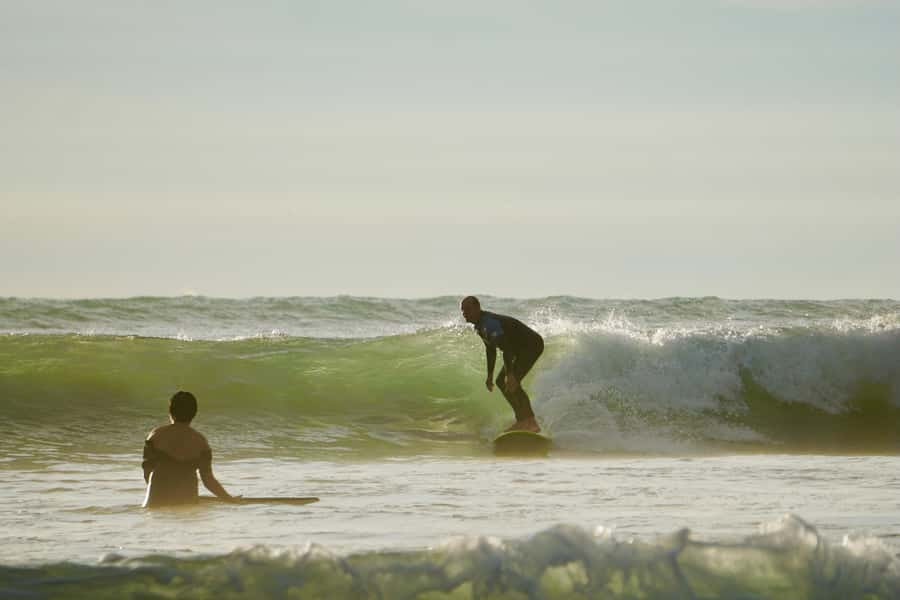
The maximum group size is 10 participants. That is small enough for direct instruction, while still giving the lesson a social feel.
I like this middle ground for beginners. A private lesson might provide more personal correction, but it usually costs more. A very large class can leave you waiting while the instructor works with other people. Ten is not intimate, but it gives the teacher a workable number of students to watch and encourage.
The pace will also depend on how quickly the group learns. Some people may stand on the first few attempts, while others need more time to get their feet under them. A patient instructor can keep the session moving without making slower learners feel rushed.
The available feedback points to a particularly pleasant small group of five in one session. That is a good sign for anyone who values personal help, though it is not a promise about your own class size.
You will hear English instruction throughout. If you are comfortable following spoken English, the lesson should be easy to follow. The core techniques are also demonstrated physically, which helps when you are wearing a wetsuit, handling a board, and trying to remember several new movements at once.
Who should book this Muriwai lesson?
This activity suits an Auckland visitor who wants to try surfing without committing to a full-day outing. It also works for a local looking for a structured first lesson at a west coast beach.
You are a good match if you:
- Have never surfed or have only tried once or twice
- Can swim and are comfortable taking part in a water-based activity
- Want equipment supplied
- Prefer encouragement and direct feedback
- Like the idea of a group class rather than private coaching
- Can arrange your own transport to Muriwai Beach
- Are at least nine years old
I would be more cautious if you want advanced technique, private attention, or a guaranteed number of successful rides. The school teaches the basics, and the group structure means the lesson is built for broad beginner progress rather than detailed individual coaching.
Non-swimmers should not book. The lesson takes place in the water, and the school specifically excludes non-swimmers and children under nine.
What to bring and how to prepare
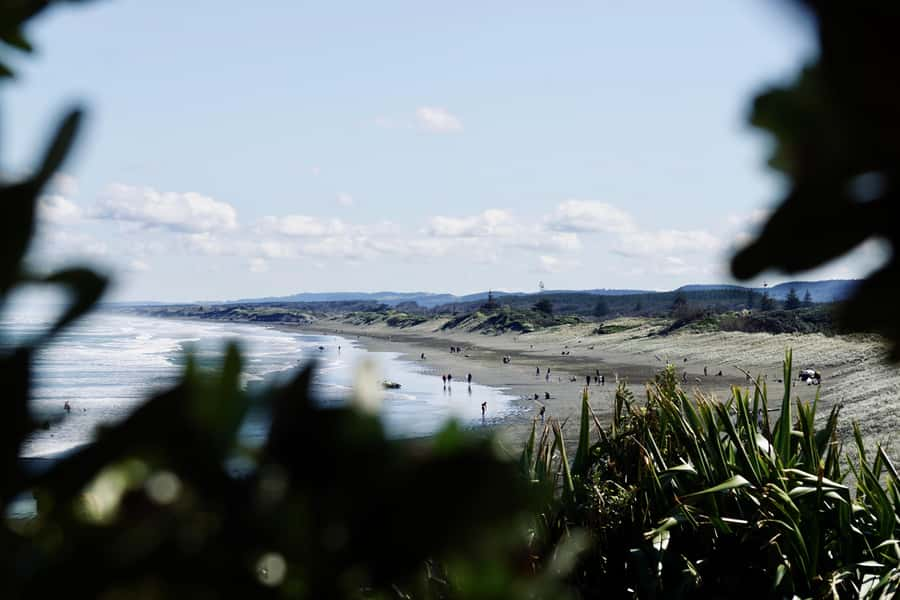
Arrive 15 minutes early. You will need time to get ready before the lesson starts, and arriving late could reduce the time you have for instruction and water practice.
Pack swimwear to wear under the wetsuit, plus a towel for afterward. Sunscreen and water are also listed as essentials. Muriwai may feel breezy or cool compared with Auckland City, so having the right basics makes the preparation easier, though the supplied wetsuit provides the main protection for the water.
Tell the instructor about any medical condition before the lesson begins. Be honest about your swimming ability as well. The school’s safety guidance works best when the instructor knows what support you need.
Do not bring alcohol or drugs, and smoking is not allowed. Food and drinks are not supplied, so plan ahead if you need something before or after the two-hour session.
My verdict on the Muriwai Surf School lesson

I would book this if you want a straightforward first taste of surfing near Auckland. The strongest reasons are the $41 all-in equipment price, the two-hour format, and the chance to learn with an instructor who can help you choose waves and correct your technique as you go.
The experience is not designed to turn you into a skilled surfer in one morning. It gives you the foundation: how to use the board, how to stand, how to approach the waves, and how to keep trying when your first attempts fail.
Choose it for practical beginner support and a beautiful west coast setting. Skip it if you cannot swim, need transport included, or want advanced one-to-one coaching. For everyone else, the small group, patient instruction, and flexible cancellation terms make this a sensible way to test whether surfing is for you.
FAQ
How long is the Muriwai Surf School lesson?
The group surfing lesson lasts two hours.
Where does the lesson take place?
The lesson takes place at Muriwai Beach on Auckland’s west coast, about 40 minutes from Auckland City.
Is a surfboard included?
Yes. The lesson includes a surfboard and a wetsuit.
Is transportation to Muriwai Beach included?
No. You must arrange your own transportation to and from the activity location.
Can non-swimmers join the lesson?
No. The activity is not suitable for non-swimmers.
What should I bring?
Bring swimwear, a towel, sunscreen, and water.
Can I cancel the booking for a refund?
Yes. You can cancel up to 24 hours before the lesson for a full refund.
Just added around Auckland
- Auckland’s Wild West Coast & Black Sand Beaches Tour inc Lunch★ 5.0 · 12 reviews
- Kumeu Wine Region Shuttle from Auckland★ 4.5 · 19 reviews
- Auckland Airport Private One-Way or Round-Trip Transfer★ 4.5 · 14 reviews
- West Coast Discovery – Piha Beach or Muriwai Beach from Auckland★ 3.5 · 6 reviews
- West Coast Discovery Tour★ 5.0 · 37 reviews
- Wētā Workshop Unleashed – Intro to Scars and Scrapes Workshop★ 5.0 · 5 reviews
- West Coast Discovery Piha Beach Private Tour★ 5.0 · 14 reviews
- Ultimate Auckland Experience Full Day Tour with Brewery Lunch★ 5.0 · 6 reviews
Surf Lessons, compared.

Browse the lists this tour appears in