
Reviewed · CANOES & KAYAKS
Whangamata: Donut Island Guided Kayaking Experience
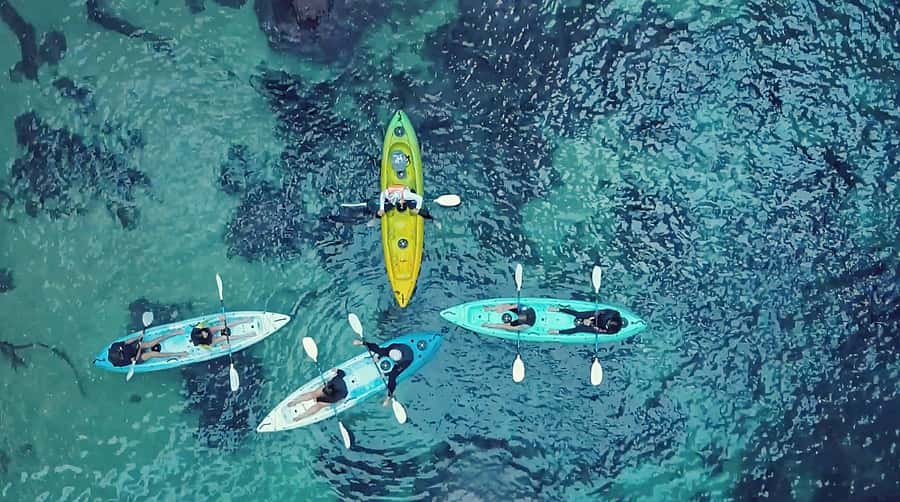
Donut Island is the star here: a narrow kayak-only entrance leads from the open sea into a calm turquoise lagoon ringed by volcanic rock and native bush. I like the short 600-metre paddle from Whangamata Beach and the chance to see a protected island without a long boat trip. The small groups, usually capped at eight, also give guides such as Dylan, Hannah, and Mauro room to help you properly.
I also like the local touch of stopping at another island beach for kawakawa tea when the route and weather permit. The catch is simple: Donut Island is not guaranteed. Wind, swell, tide, and waves can make the entrance unsafe, so you may get an alternative island stop instead.
Key points at a glance
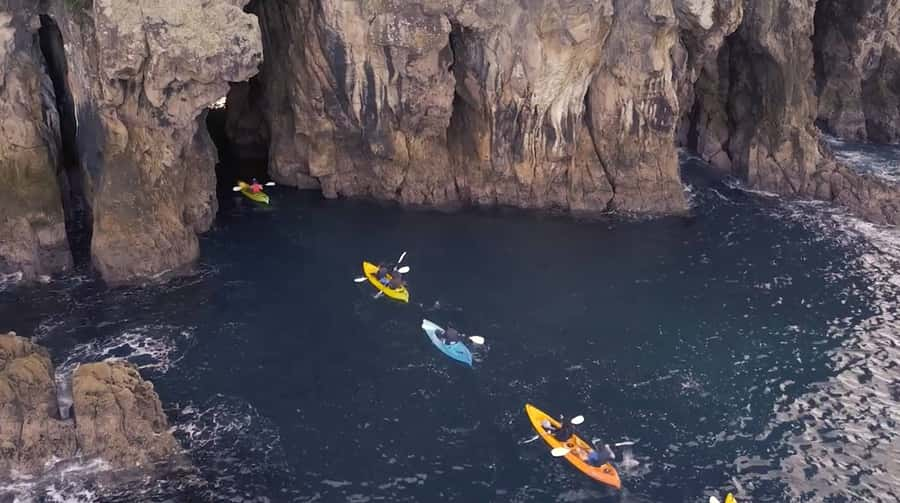
- Kayak 600 metres from Whangamata Beach to a wildlife sanctuary that feels far more remote than its short distance suggests.
- Paddle through a narrow opening into Donut Island’s lagoon when swell and wind conditions are safe.
- See volcanic cliffs, native bush, inlets, and seabirds while learning about local conservation and the history of Whenuakura.
- Stop for kawakawa tea and time on another island beach when Donut Island cannot be entered or when the route includes that extra stop.
- Small groups of up to eight people make this a more personal outing, with guides able to assist if you capsize or struggle.
- Beginner-friendly but not risk-free: you need to handle a kayak in deep water, waves, wind, and around rocks.
Why Donut Island is worth the paddle
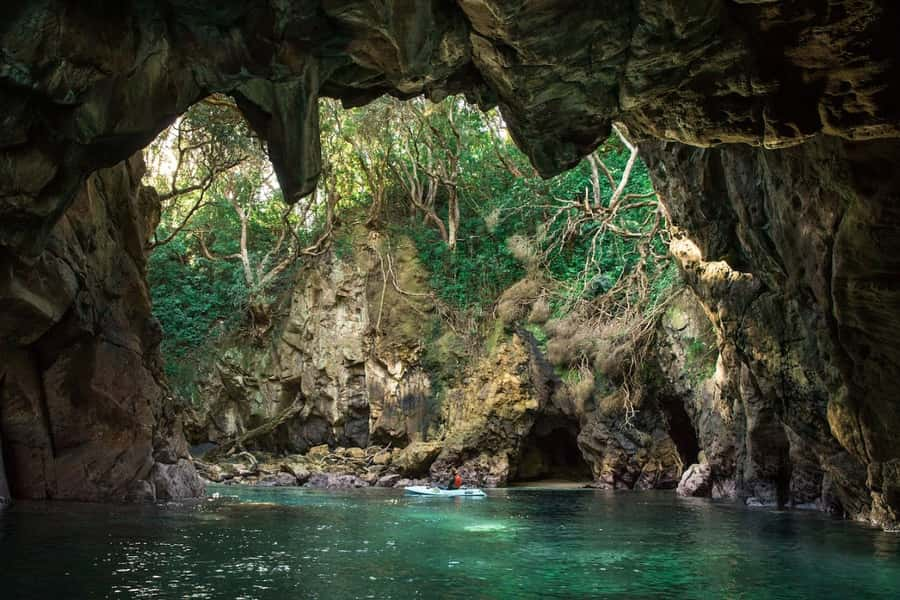
Donut Island, also known as Whenuakura, is one of several islands off Whangamata with wildlife sanctuary status. Its unusual shape gives the place its familiar name. From the water, the key feature is a small opening in the island. Kayaks and paddleboards can squeeze through when the sea is calm enough, revealing a lagoon enclosed by rock.
That entrance is what makes the trip special. You are not simply paddling along a beach and taking pictures of an offshore island. You are moving from open water into a sheltered space with a different feel, surrounded by dark volcanic rock, native plants, and birds.
The island’s sanctuary status also gives the outing a useful purpose beyond sightseeing. You are asked to treat the place carefully, which means keeping noise and contact with wildlife to a sensible minimum. The guides share conservation information and local stories, including the history connected with Whenuakura.
You should keep your expectations practical. The lagoon is beautiful, but it is not a large open area where you will spend hours wandering around. The entry can be narrow, and at low tide or in rougher conditions it may feel smaller and harder to access than photographs suggest.
More kayaking tours in Coromandel:
- Cathedral Cove Kayak Tour
★ 5.0 · 887 reviews - Twilight Glowworm Kayak Tour – Lake Karapiro
★ 5.0 · 493 reviews - Wildlife Sea Kayaking Tour – Kaikoura
★ 5.0 · 467 reviews
From Whangamata Beach to the island entrance
The tour meets at 100 Pipi Road in Whangamata. From there, you are fitted with a kayak, paddle, life jacket, wetsuit, and dry bag. Bring swimwear, a towel, sunscreen, drinking water, a hat, a change of clothes, and beach sandals.
The paddle from Whangamata Beach to Donut Island is about 600 metres. That is a manageable distance for many first-time kayakers, and the short route helps keep the two-hour outing focused. You get a taste of coastal kayaking without committing to a full-day expedition.
The open-water crossing is also the part where conditions matter most. Wind can make the paddle harder, and waves can push the kayak off course or cause it to rock. Some people have found the route very easy, while others have had a challenging session in strong wind.
Your guide stays with the group and gives practical help. Dylan, Dakota, Hannah, Mauro, Jim, Ben, Molly, G, Elliot, Bella, and Francois are among the guides who have led recent tours, though the guide on your departure will vary. The most useful quality is not a particular name. It is having someone who can keep the group together, explain what is happening, and help you regain confidence if you fall in.
The narrow passage into the turquoise lagoon
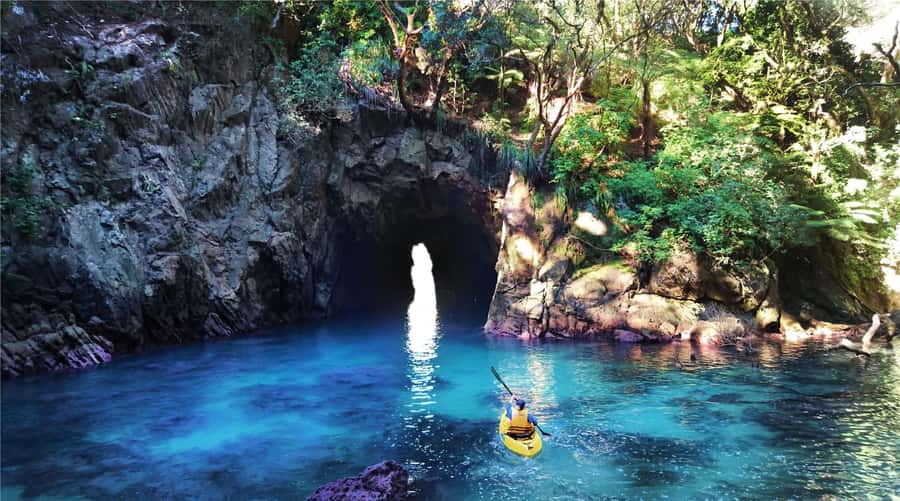
The island entrance is the make-or-break moment. Because of the island’s shape, access is limited by wind, swell, and tide. Only small craft such as kayaks and paddleboards can pass through the narrow opening, and even they cannot always do so safely.
When conditions cooperate, entering the lagoon is the high point of the trip. The water inside is calmer, and volcanic cliff rock rises around the sheltered space. Native vegetation adds a green frame, while the enclosed setting gives you a strong sense of being somewhere cut off from the nearby town.
I like this part because it rewards patience. You are not guaranteed a perfect entrance simply because you have booked a tour. The guides make the call based on the sea, not on a promise made at the time of booking. That is the right approach in a place where a mistake could mean hitting rock or capsizing in moving water.
Once inside, you can look around from the kayak and take photographs. Swimming is allowed whenever you choose, provided conditions and guide instructions make it sensible. Bring a towel and spare clothes because the water, spray, and kayak all make getting wet a real possibility.
One practical point: access may feel different depending on the tide. A visit at low tide can make the entrance rougher and less impressive, while high tide may give you a better chance to appreciate the lagoon’s shape. The tour operator still has the final say, since tide alone does not determine safety.
Volcanic rock, wildlife, and island stories
The rock formations here are not just a backdrop for photographs. The islands are volcanic in origin, and the cliffs show the rough, weathered shapes created by past volcanic activity and long exposure to the sea. From a kayak, you see the rock at water level, which gives the formations more scale than viewing them from shore.
The native bush and island setting also make this a wildlife outing. You may see seabirds and other native fauna, but this is not a zoo-style encounter with guaranteed sightings. The sanctuary status is important precisely because the islands provide protected habitat.
Blue penguins have been spotted in and around the cave area on some trips. That is a lucky moment rather than a scheduled part of the tour, so you should not book expecting a penguin sighting. Keep your eyes open, listen to the guide, and avoid treating wildlife as a photo prop.
The guides add context about the island, local ecology, and the history of Whenuakura. This is one reason the experience feels more worthwhile than hiring a kayak and paddling along the coast alone. You are given a better sense of why the island is protected and how to visit without damaging the place.
A few more Coromandel trips worth a look
- Glass Bottom Boat Whitianga Cathedral Cove Cruise
★ 5.0 · 937 reviews - Whitianga: 2-Hour Cathedral Cove and Volcanic Coast Cruise
★ 4.8 · 816 reviews - 2 Hour Cathedral Cove and Volcanic Coast Cruise with Shade Canopy
★ 5.0 · 393 reviews - One Hour Cathedral Cove Boat Tour in Hahei
★ 5.0 · 340 reviews
The extra island and kawakawa tea
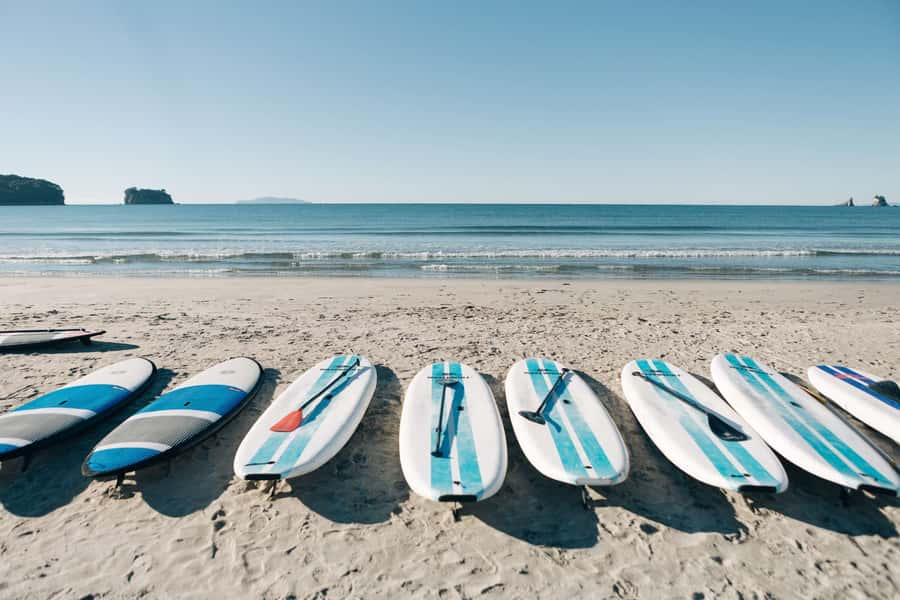
A second island or remote beach may form part of the outing, especially when Donut Island cannot be entered. This alternative is not merely a consolation prize. You may get time on a quiet beach, views back toward the coast, and a chance to hear more about the local area.
The kawakawa tea is a particularly good local touch. It uses native leaves and gives the stop a clear sense of place. You are not just pausing for a generic drink supplied from a cooler. You are being introduced to a plant with local cultural and practical importance.
If the sea is too rough for Donut Island, the alternative stop can rescue the morning. One outing reached another beach and included tea after conditions prevented entry to the cave. The guides also provided conservation information and local facts, turning a changed plan into a useful coastal visit.
Still, if you have set your heart on paddling inside the lagoon, an alternative will feel like a compromise. The best attitude is to treat Donut Island as weather-dependent and the second island as a valuable backup, not as a promised extra.
How difficult is the kayaking?
This is suitable for many beginners. Several first-time kayakers have found it manageable, and the guides provide support throughout. The kayaks have been described as easy to use and in good condition, and the small group size means the guide can pay attention to anyone who needs help.
That does not make it effortless. You must be comfortable on deep water and prepared for waves, wind, rocks, and the possibility of capsizing. A fall into the water is part of the stated risk, not an unusual event that the operator pretends cannot happen.
Your wetsuit helps if you get wet, but you should still bring dry clothes. Sandals are useful for the beach and rocky areas, while a dry bag protects small items. Keep your phone secured rather than loose in the kayak.
The activity is not suitable for pregnant women, wheelchair users, or people with visual impairments. It is also not suitable for anyone over 275 pounds, or 125 kilograms. Tell the operator about existing health problems before you arrive.
Two hours and the value of the $62 price
At $62 per person, the tour is fairly priced for a two-hour guided sea-kayaking experience. The cost includes the kayak, paddle, wetsuit, life jacket, dry bag, and English-speaking local guide. You are paying for equipment, instruction, safety oversight, and access to a place that is not always practical to visit independently.
The short duration is part of the value. If you have only a morning in Whangamata, you can fit the tour around the beach, town, or another Coromandel outing. You are not spending an entire day on the water, yet you still get the island crossing, volcanic scenery, and possibly the lagoon and tea stop.
The trade-off is that two hours leaves little spare time if conditions slow the group. You should not expect a long swim, extended time ashore, or a relaxed picnic. Food and drinks are not included, so bring water and eat before or after the trip.
The price makes the most sense if you want a guided introduction to the coast rather than simply renting equipment. It is less appealing if you are mainly looking for guaranteed time inside the lagoon, since weather can change the route.
Weather, tide, and the backup plan
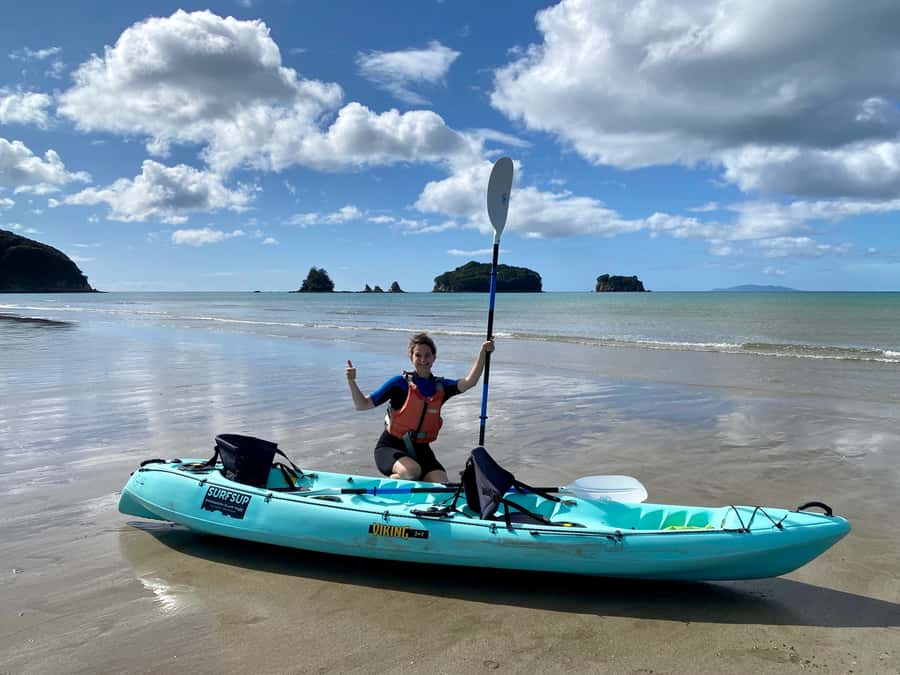
Weather is the biggest factor in deciding how good this outing will be. Conditions can shift during the day and may be different from the forecast you saw at breakfast. Wind and swell affect both the crossing and the narrow island entrance.
If the local operator cancels because of weather, the team will try to arrange another date or an alternative activity. If neither is possible, you receive a full refund. You can also cancel up to 24 hours before the start for a full refund, and the reserve-now, pay-later option can help if your schedule is still moving.
Call before arrival if the weather looks uncertain. This is especially sensible if you have only one day in Whangamata and cannot easily shift to another departure. The guides have already shown that they will advise against entering when the sea is unsafe, which is exactly what you want from a coastal operator.
The best booking strategy is to allow some flexibility. A calm, bright day can make the lagoon the unforgettable centre of the outing. A rough day may turn it into a more exposed paddle followed by a beach and tea stop.
Who should book this experience?
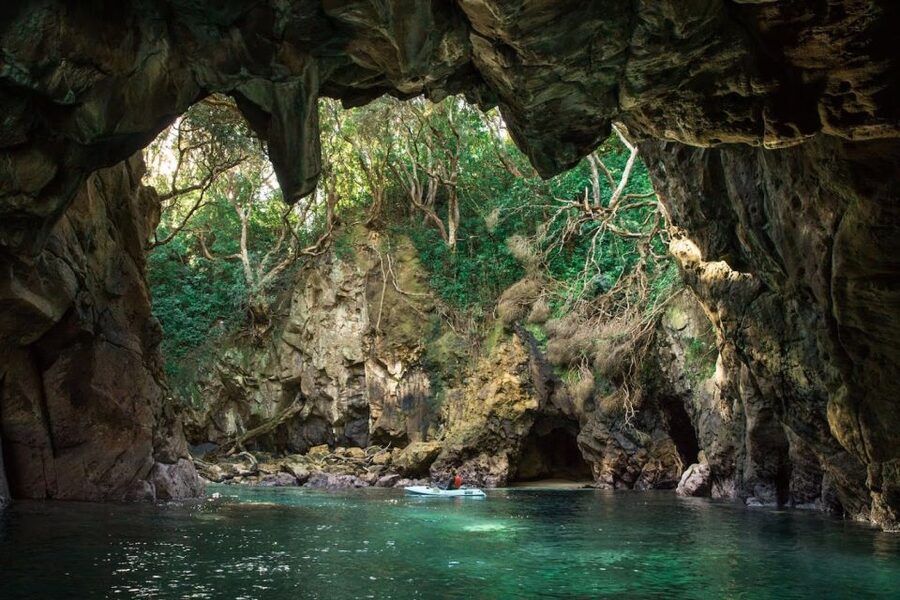
I would choose this tour if you want a compact outdoor activity with a strong sense of place. It suits couples, friends, and solo visitors who are happy to paddle in a small group and get wet if needed.
It is also a good choice for first-time kayakers who want instruction and support rather than an unguided rental. You should be reasonably comfortable with physical activity and open water, even if you have never handled a kayak before.
Photography is another strong reason to go. The volcanic cliffs, lagoon entrance, native bush, and secluded beach provide far more variety than a standard shoreline paddle. Just remember that you may be taking pictures from the kayak, not walking around the island at leisure.
I would hesitate if you need step-free access, have a health condition that makes capsizing risky, or cannot cope with a weather-related change of plan. I would also think twice if entering Donut Island is the only reason you are booking, since the operator cannot control the sea.
Should you book Donut Island kayaking?
Yes, if you want a short, well-supported coastal adventure and can keep your plans flexible. The combination of a 600-metre paddle, a wildlife sanctuary, volcanic rock, local stories, and possible kawakawa tea gives the outing more character than a basic kayak rental.
Book it with realistic expectations. The lagoon is the prize, but the sea decides whether you reach it. If you accept that, the alternative island and beach can still make the morning worthwhile, while a calm day may give you one of Whangamata’s most memorable views.
FAQ
Where does the kayaking tour meet?
The meeting point is 100 Pipi Road, Whangamata 3620, New Zealand.
How long is the experience?
The tour lasts two hours.
How far is Donut Island from Whangamata Beach?
Donut Island is about 600 metres from Whangamata Beach.
What equipment is included?
The price includes a kayak, paddle, life jacket, dry bag, wetsuit, and local guide.
Is the tour suitable for beginners?
Yes. The tour can suit first-time kayakers, but you must be prepared for deep water, waves, wind, rocks, and the risk of capsizing.
Can I swim during the tour?
Yes, you can swim whenever you choose, provided conditions and guide instructions allow it.
What should I bring?
Bring a hat, swimwear, sunscreen, water, a beach towel, a change of clothes, and beach sandals.
Is Donut Island always accessible?
No. Wind, swell, tide, and waves can prevent safe entry through the narrow opening. An alternative island or beach activity may be offered.
What happens if the operator cancels because of weather?
The operator will try to arrange another date or an alternative activity. If neither is possible, the total tour cost is refunded.
Who cannot join the tour?
The activity is not suitable for pregnant women, wheelchair users, visually impaired people, or people over 275 pounds, or 125 kilograms.
Just added around Coromandel
- Coromandel Adventure and Wildlife Boat Tour to Aldermen Islands★ 5.0 · 9 reviews
- Cathedral Cove 2 Hour Guided Tour Explore Marine Wonders★ 5.0 · 8 reviews
- Private Tour – Coromandel Beach, Caves & Forest★ 5.0 · 13 reviews
- Full Day Ebike Tour in Karangahake Gorge (ex Auckland)★ 5.0 · 14 reviews
- Cathedral Cove & Hot Water Beach with Lunch from Auckland★ 5.0 · 22 reviews
- Coromandel Peninsula Discovery – Private Tour From Auckland★ 5.0 · 3 reviews
- Coromandel Day Tour From Auckland★ 5.0 · 18 reviews
- [Stevong Travel] West Coromandel Day Tour★ 4.5 · 3 reviews
Canoes & Kayaks, compared.
Small-Group Kayak Adventure from Franz Josef Glacier
Read our review →
Dart River Canoe and Jet Boat Experience from Queenstown
Read our review →Browse the lists this tour appears in