

Reviewed · MUSEUMS
Skip the Line: Auckland Museum General Admission Ticket
Auckland Museum brings together Māori treasures, Pacific art, natural history, and New Zealand’s military story under one grand roof. The most powerful displays connect the country’s first Polynesian voyages with the cultures and communities shaping Auckland today. I like the three-floor layout, which lets you set your own pace, and the clear range of subjects, from volcanoes and artefacts to wartime memory.
I also like that you can spend a full morning or afternoon here without needing a guide. The main drawback is the skip-the-line claim: on quiet days, the regular queue may be short, and some people have waited at the counter while staff processed their voucher.
Key points to know before you go
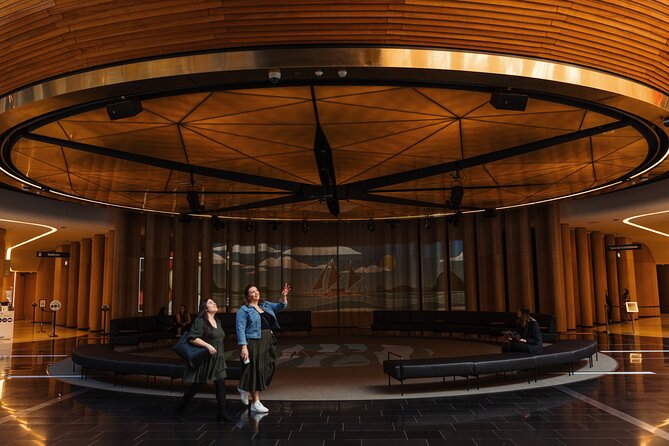
- Three floors cover New Zealand from Polynesian voyaging to modern communities, so allow three to four hours if you want more than a quick look.
- Māori and Pacific collections are the museum’s strongest draw, with major treasures and cultural displays that provide essential context for a visit to Auckland.
- Military galleries add a solemn side to the experience, presenting New Zealand’s wartime past alongside wider national history.
- The $16.76 general admission price covers the main museum, but special exhibitions, guided tours, and cultural performances cost extra.
- Skip-line access may save time on a busy day, but it is not always a major advantage when the museum is quiet.
- Paid tours and Māori cultural performances have separate schedules, so check the times before planning to do both.
Why Auckland Museum deserves a place in your day
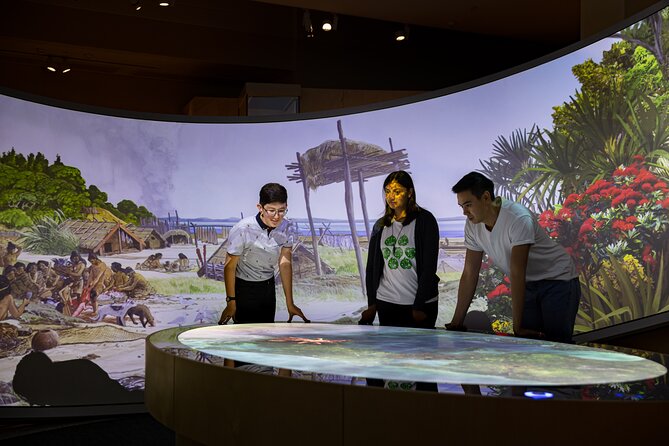
Auckland has plenty of outdoor attractions, but this museum gives you the background needed to understand the city and the country. It is housed in one of New Zealand’s finest heritage buildings, a fitting setting for collections that span centuries and many communities.
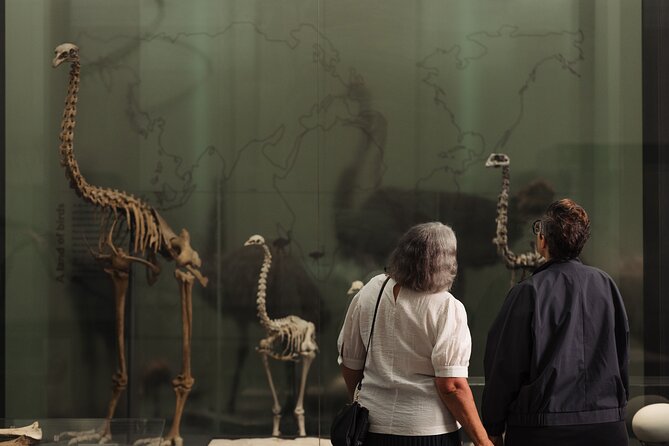
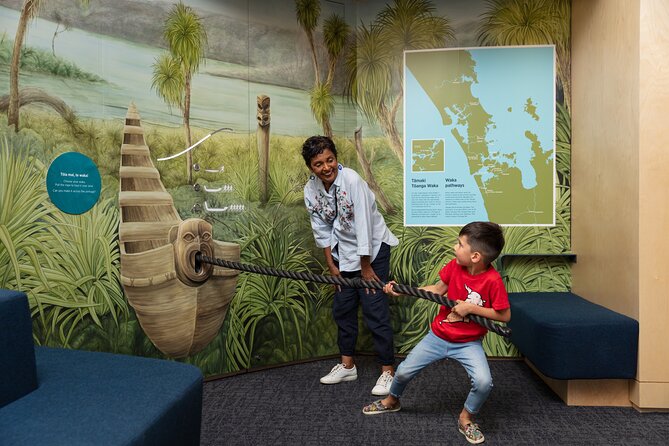
You can start with the story of the great Polynesian voyages that brought people to Aotearoa. From there, the displays move through Māori culture, Pacific communities, art, natural history, and New Zealand’s role in major wars. That broad scope makes the museum useful early in a trip, when you are still working out how the country’s stories fit together.
I would not treat this as a quick stop between other sights. The museum is large enough to occupy three or four hours, especially if you read labels and pause at the larger objects. You can shorten your visit, but doing so means choosing just one or two parts.
More museums and galleries in Auckland:
- Auckland War Memorial Museum Entry Ticket
★ 4.5 · 293 reviews - Māori Cultural Experience & Auckland Museum General Admission
★ 4.5 · 92 reviews - Auckland: Maritime Museum Entry Ticket
★ 4.6 · 29 reviews
Entering the three-floor museum
Your general admission ticket gives you access to the main museum collections across three floors. You are free to move at your own speed, which suits visitors who want to linger over Māori objects while moving quickly through displays that appeal less.
The building itself is part of the experience. Its heritage character gives the visit a sense of occasion before you reach the collections. It also makes the museum feel like more than a standard display hall. The setting helps frame the objects as part of a national story.
The entry process deserves a practical warning. This ticket is sold as skip-the-line access, but the benefit depends on the day. When the museum is busy, moving past a long general queue could be useful. When it is quiet, you may find little or no line to skip.
Some people have also had to wait at the redemption counter while staff located or processed the booking. I would keep your confirmation ready and allow a few extra minutes at the entrance. The ticket can still be convenient, but do not pay a premium expecting a guaranteed fast lane in all conditions.
Māori treasures and the story of Aotearoa
The Māori collections are likely to be the heart of your visit. You can see significant Māori treasures and learn how they relate to the people, places, and traditions of Aotearoa. This is not simply a display of attractive objects. The value comes from seeing culture presented as living and connected to the country today.
I especially like the way this section can give first-time visitors a starting point. If you know little about Māori culture, the museum helps you recognize that New Zealand’s story did not begin with European settlement. The first part of the national story is Polynesian, and the museum places that fact near the center of the visit.
Some displays may offer more explanation than others. One visitor found certain artefacts frustrating because there was little information nearby. If you want detailed interpretation for every object, a paid guided tour may suit you better than general admission alone.
The museum also presents difficult subjects directly. Its treatment of Māori culture and New Zealand’s past does not reduce everything to a polished tourist story. That frank approach gives the visit more weight and helps you think about identity, conflict, and national memory.
Pacific culture, art, and heritage
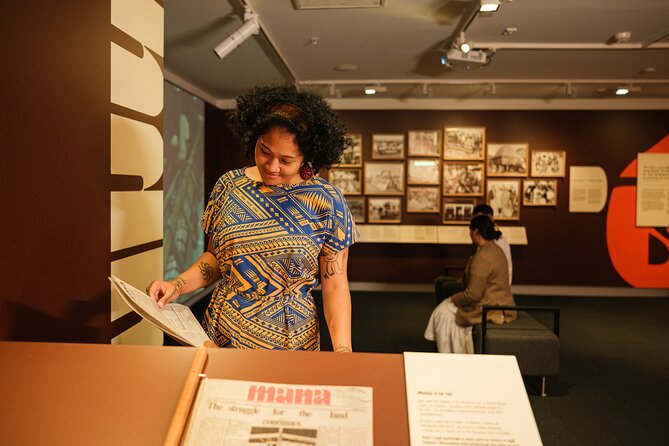
The Pacific collections broaden the picture beyond New Zealand itself. You can see how Auckland’s story connects with the wider Pacific, including the cultures and communities that now form part of the city.
This matters because Auckland is not presented as an isolated New Zealand city. Its identity is tied to Polynesian movement, Pacific relationships, and later migration. The museum gives you a way to see those links through art and cultural objects rather than only through dates and text.
One remarkable object mentioned by name is Te Rā, a treasured Māori item whose story made a strong impression on visitors. Its presence shows how the museum can turn a single object into a larger discussion about ownership, cultural return, and the treatment of Indigenous heritage.
You may also encounter information that raises questions rather than neatly settling them. That is a strength here. The museum can be moving and uncomfortable in the same room, which is fitting for a national institution dealing with contested history.
A few more Auckland trips worth a look
- Skip the Line: Franz Josef Wildlife Center Ticket with Optional Backstage Pass
★ 4.5 · 160 reviews - Skip the Line:WWI & WWII Combo Exhibitions at the Omaka Aviation Heritage Centre
★ 5.0 · 86 reviews - Skip the Line: Shantytown Heritage Park Experience Ticket
★ 4.0 · 59 reviews - Skip the Line: Dangerous Skies WWII Exhibition – Omaka Aviation Heritage Centre
★ 4.5 · 25 reviews
Natural history and New Zealand’s volcanic story
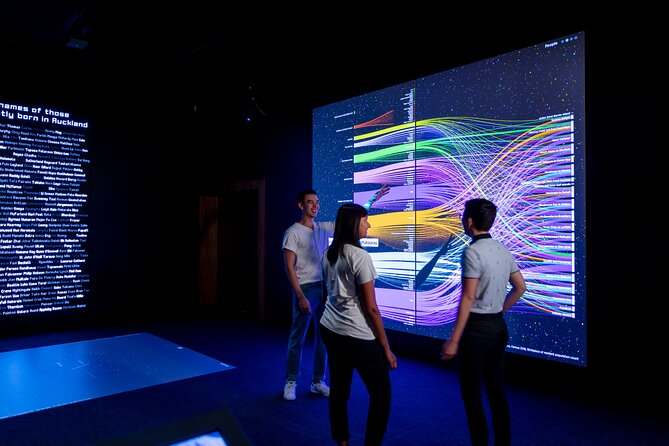
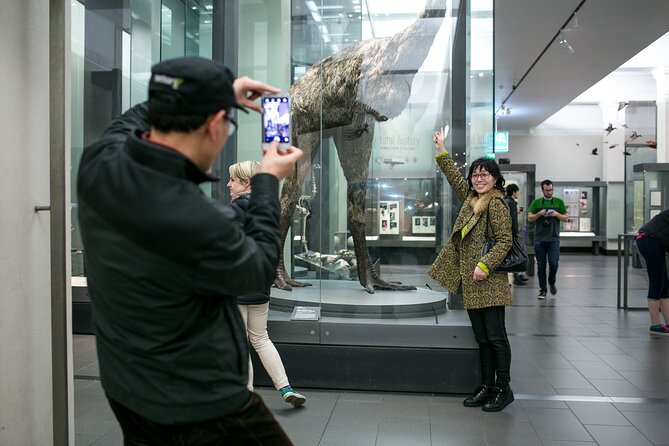
The museum is not only about people and politics. Its natural history displays add geology and the physical character of New Zealand to the visit.
The volcano material is especially useful because it connects two ways of understanding the country. Māori traditions give volcanoes spiritual meaning, while geology explains the forces that shaped them. Seeing those perspectives together makes the subject more complete than a purely scientific display would.
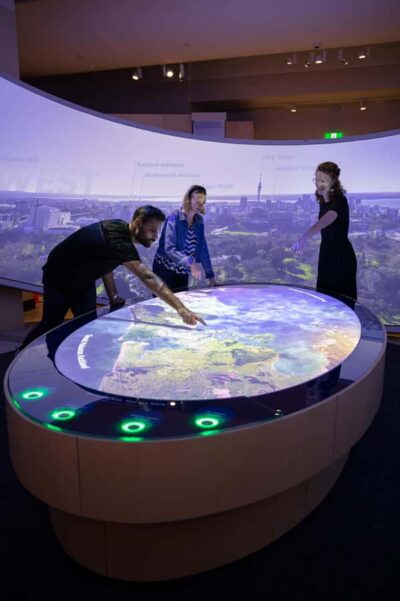
If you have already spent time exploring Auckland’s volcanic cones, this section adds background to what you have seen outdoors. If you have not, it gives you a reason to look more closely at the city’s terrain. The museum does not replace outdoor sightseeing, but it can make those sights easier to understand.
Natural history also provides a welcome change of pace after the cultural galleries. Families and mixed-interest groups may appreciate being able to move between subjects instead of spending the whole visit on one type of collection.
New Zealand’s military past, presented with care
The Auckland War Memorial Museum also serves as a solemn record of New Zealand’s military past. The war galleries add national memory to the cultural and natural displays, showing how conflict has shaped families and communities.
I like this part of the museum because it avoids making war feel like a simple adventure story. The experience is more reflective than celebratory. You can learn about New Zealand’s role in several world wars while also considering the human cost.
This section may be especially important if you are visiting the museum because of its full name, Auckland War Memorial Museum. It is not an extra corner added onto a culture museum. The military role is central to the institution, and the galleries sit alongside Māori, Pacific, and natural history collections.
The combination can feel broad, but that is also the point. New Zealand’s national story includes Indigenous culture, Pacific connections, the natural world, settlement, and war. You see those subjects in one place rather than treating each as a separate attraction.
How to use three to four hours well
I would allow at least three hours for a sensible visit and closer to four if you want to read carefully. The museum gives you enough material for a long stay, but you do not need to inspect every case.
A useful approach is to choose priorities before you enter:
- Start with the Māori and Pacific collections if culture is your main reason for coming.
- Add the natural history displays if you want context for Auckland’s volcanic setting.
- Leave time for the military galleries if New Zealand’s modern national story interests you.
- Return to any object or section that caught your attention instead of trying to cover every room evenly.
A family or mixed group can split up and regroup because the admission is self-guided. You are not tied to a tour leader or fixed route. That freedom is one of the better reasons to choose general admission.
The museum’s size can also work against you. If you arrive late in the day, you may feel rushed, particularly if you want to attend a separate performance or guided tour. Give yourself enough time to see the collections without turning the visit into a race.
Guided tours and Māori performances cost extra
General admission does not include guided tours. You can buy a tour on site, and this may be worthwhile if you want more explanation about objects that have limited labels.
A guided tour can also help you make sense of the museum’s wide subject range. Rather than choosing your own route, you receive a planned introduction to New Zealand history and culture. One guide, praised by name in the feedback as Pearl, was described as enthusiastic and a strong advocate for the museum and New Zealand history. The supplied information does not confirm which regular tours Pearl leads, so ask at the museum if you hope to join a particular guide.
Māori cultural performances are also separate from general admission. Available times listed in the supplied information include 11:15 AM and 1:45 PM, while selected guided tours are listed at 11 AM and 1 PM. These schedules can overlap depending on the day, so you may not be able to fit both into one visit.
The performance has been warmly received for its Māori dancing and cultural presentation, but the format may not suit everyone. One piece of feedback found the audience instructions at the beginning overly stern. Go for the cultural content, but remember that the performance is an additional purchase and a separate experience from the museum galleries.
Is $16.76 good value?
At $16.76 per person, general admission is reasonable if you plan to spend three or four hours inside. You are paying for access to three floors and a wide collection, not a short exhibit or a single themed room.
The value is strongest for first-time visitors to Auckland. You can learn about Māori culture, Pacific communities, New Zealand’s natural setting, and the country’s wartime past in one stop. That saves you from piecing together the story through several smaller attractions.
The value is less clear if you are buying mainly for skip-the-line access. Some days have little queue, and several people have found it just as easy to buy admission directly at the museum. In that case, the ticket’s main benefit is advance booking rather than a dramatic time saving.
Special exhibitions, guided tours, and cultural performances are not included. Budget for those separately if they are important to you. I would first decide how much time you have, then choose whether the basic ticket is enough.
Timing, transport, and practical details
The museum is near public transportation, making it a practical stop within an Auckland sightseeing day. The supplied information lists opening hours from 10 AM to 8:30 PM on Mondays for the stated operating period from November 1, 2025, through February 15, 2027. Check the operating day and hours for your date before setting out, since the information provided specifies Monday rather than a full weekly schedule.
Children must be accompanied by an adult. Service animals are allowed, and most people can take part in the general museum visit. The experience is not presented as a guided walking tour, so you can take breaks and choose how much ground to cover.
Free cancellation is available if you cancel at least 24 hours before the experience start time. Cancellations or changes made less than 24 hours ahead are not refunded or accepted.
Who should book this Auckland Museum ticket?
I would recommend it to anyone who wants a strong introduction to New Zealand culture and history without committing to a guided group. It also suits families and couples with different interests because the museum covers people, art, nature, and war in one place.
Book it if Māori and Pacific collections are high on your list, or if you want context before exploring more of Auckland and New Zealand. The museum is particularly worthwhile for visitors who normally skip museums, since the mix of subjects keeps the visit from feeling narrow.
I would think twice if you have only an hour, mainly want a guaranteed fast entrance, or are interested only in a special exhibition. Those extras are not part of this ticket, and the queue may not be long enough for skip-line access to matter.
For most first visits, though, the decision is simple: allow three hours, focus first on the Māori and Pacific displays, and treat the ticket as admission to one of Auckland’s best places for getting your bearings.
FAQ
What does the Auckland Museum general admission ticket include?
It includes general admission to Auckland Museum and access to the main collections across three floors.
Does the ticket include special exhibitions?
No. Special ticketed exhibitions are not included in general admission.
Are guided tours included?
No. Guided tours are available to purchase on site but are separate from the general admission ticket.
Are Māori cultural performances included?
No. Māori cultural performances are separate from general admission and require an additional purchase.
How long should I allow for the museum?
The estimated duration is three to four hours, though you can make a shorter visit by choosing only certain sections.
Does skip-the-line access always save time?
Not necessarily. The regular line may be short on quiet days, and ticket redemption can still take time at the counter.
What are the listed opening hours?
For the stated operating period from November 1, 2025, through February 15, 2027, the supplied information lists Monday hours of 10 AM to 8:30 PM.
Can children visit alone?
No. Children must be accompanied by an adult.
Can I cancel for a refund?
Yes, if you cancel at least 24 hours before the experience start time. Cancellations made less than 24 hours before the start time are not refunded.
Just added around Auckland
- Kumeu Wine Region Shuttle from Auckland★ 4.5 · 19 reviews
- Auckland Airport Private One-Way or Round-Trip Transfer★ 4.5 · 14 reviews
- Auckland’s Wild West Coast & Black Sand Beaches Tour inc Lunch★ 5.0 · 12 reviews
- West Coast Discovery – Piha Beach or Muriwai Beach from Auckland★ 3.5 · 6 reviews
- West Coast Discovery Tour★ 5.0 · 37 reviews
- Wētā Workshop Unleashed – Intro to Scars and Scrapes Workshop★ 5.0 · 5 reviews
- West Coast Discovery Piha Beach Private Tour★ 5.0 · 14 reviews
- Ultimate Auckland Experience Full Day Tour with Brewery Lunch★ 5.0 · 6 reviews
Museums, compared.
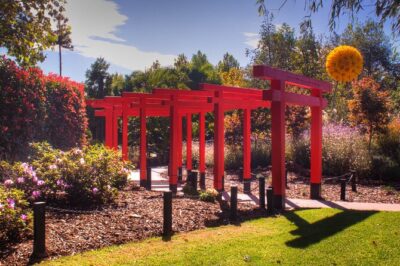
Explore gardens & galleries filled with incredible art, Matakana
Read our review →
Māori Cultural Experience & Auckland Museum General Admission
Read our review →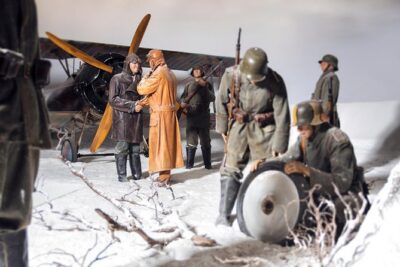
Skip the Line:WWI & WWII Combo Exhibitions at the Omaka Aviation Heritage Centre
Read our review →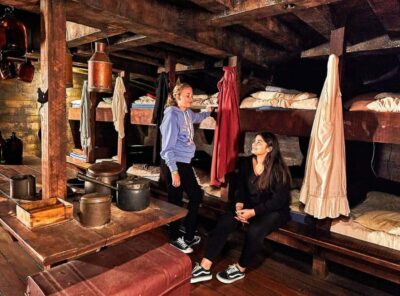
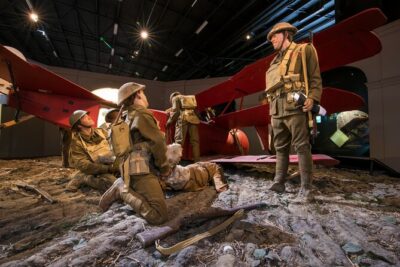
Knights of the Sky – The Great War Exhibition in Blenheim
Read our review →
Skip the Line: Dangerous Skies WWII Exhibition – Omaka Aviation Heritage Centre
Read our review →
Browse the lists this tour appears in