
Reviewed · WEST COAST TOURS
Okarito Nature Tour
Okarito gives you a side of West Coast New Zealand that the glacier crowds often miss. This tiny former gold-mining village has about 35 permanent residents, a broad lagoon, rugged beach, old buildings, and birdlife that can include the rare kotuku and royal spoonbill. I like the small-group setting and the chance to see the coast with guides such as Petra, Cliff, or Louis, who bring the plants, birds, and local stories into focus.
I also like that the outing combines a scenic drive, a gentle history stop, and a proper two-hour walk to Okarito Trig. The trade-off is weather: rain is common on the West Coast, and the tour runs in all conditions. You need moderate fitness, and you must bring your own water and lunch if you need either.
Key points at a glance
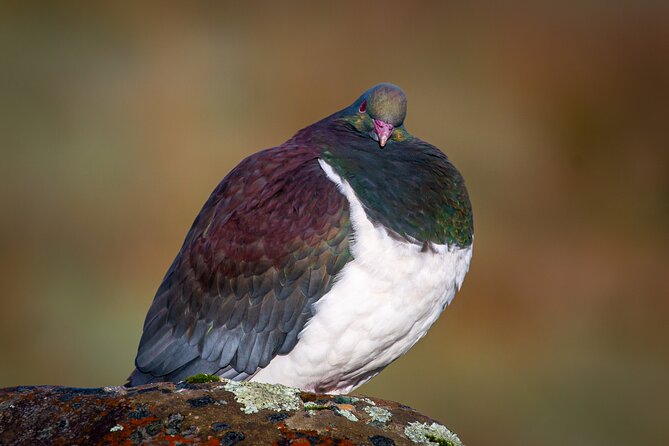
- Okarito has only about 35 permanent residents, giving the village a quiet, far-from-the-resort feel.
- Birdwatching is a major part of the outing, with chances to look for kotuku, royal spoonbills, rowi kiwi, banded dotterels, fernbirds, and other coastal and forest species.
- The two-hour Trig walk earns its views, with sights toward Okarito Lagoon, the Tasman Sea, Mount Cook, Mount Tasman, Westland Tai Poutini National Park, and Franz Josef Glacier.
- Small groups are limited to 10 people, which makes it easier to hear the guide and stop for birds or photographs.
- Rain gear and walking equipment are available, including wet-weather clothing, umbrellas, poles, and a limited number of walking boots by prior arrangement.
Why Okarito is worth your half-day
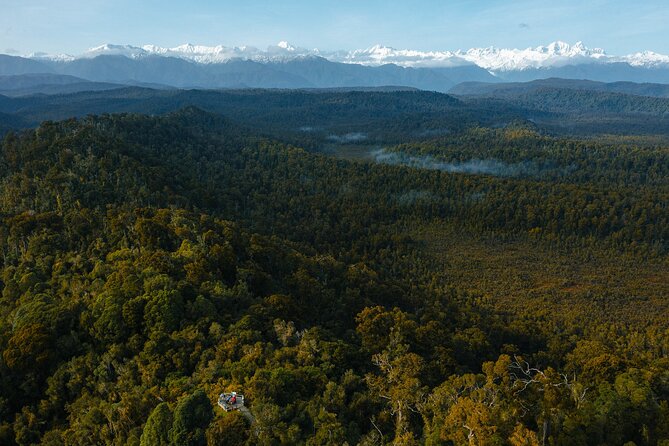
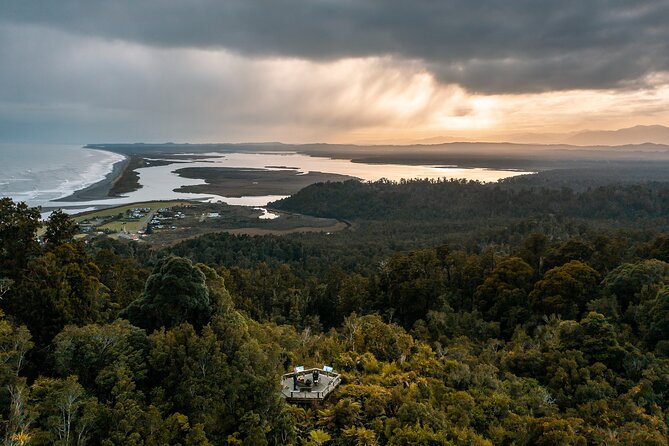
Franz Josef and Fox Glacier rightly draw attention, but the West Coast is not only about ice. Okarito offers a quieter mix of wetlands, coastal forest, mountain views, and human history. The village sits beside Okarito Lagoon, an expansive wetland area with habitat for around 75 sea and land bird species.
That setting changes the pace of your day. Instead of rushing from one viewpoint to another, you have time to notice bird calls, read the shape of the shoreline, and hear how glaciers, rivers, and the sea have formed this part of the coast. The tour also gives you a useful contrast to a glacier visit. You see the mountains from a coastal viewpoint rather than from an ice track.
At about $68.26 per person, the price is fair for a three to four-hour guided outing with transport from Franz Josef Village, a small group, local guiding, hot drinks, and equipment support. It is not a bargain if you only want a short village stop, but it offers good value if you want interpretation and a guided walk without booking a full-day excursion.
A few more Franz Josef and Fox Glacier trips worth a look
- 4-hour Lake Mapourika Kayak and Hike adventure, with Okarito Kiwi Sanctuary
★ 5.0 · 117 reviews - 2-Hour Scenic Cruise in Lake Mapourika
★ 5.0 · 105 reviews - TranzAlpine Train Journey: Christchurch to Greymouth
★ 4.5 · 312 reviews
The drive from Franz Josef to a former gold town
The experience begins at 10:30 am, with convenient pickup in Franz Josef Village. The drive to Okarito is part of the appeal. You get changing views of the West Coast and several chances to stop for photographs, rather than simply appearing at the village with no sense of its surroundings.
Okarito’s past as a 19th-century gold-mining town gives the visit some substance. Today, it is small and quiet, with historic buildings and a strong connection to the surrounding wetlands and coast. A stop at the local museum helps explain how people used to live and work here.
The historic wharf shed and lagoon are usually part of the village visit, along with Okarito Beach. This first section lasts about an hour and does not require an admission charge. It is a good fit for you if you enjoy places where the story is modest and local rather than polished for mass tourism.
Do not expect a large museum or a long list of formal exhibits. The attraction is the setting and the guide’s explanation. Cliff, Petra, and Louis have led walks here, and each brings attention to different details, from the village’s past to native plants and birds.
Birdwatching around Okarito Lagoon
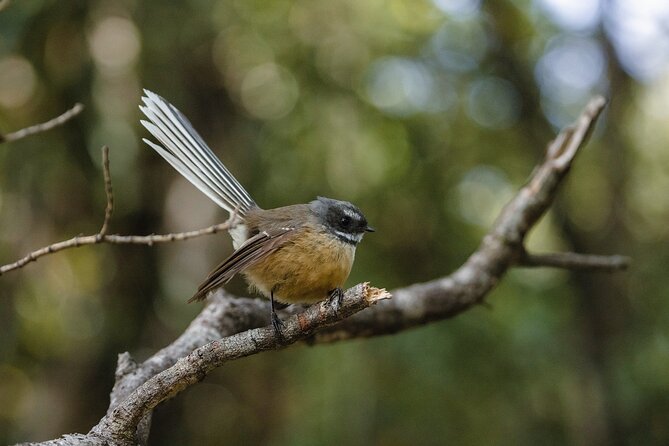
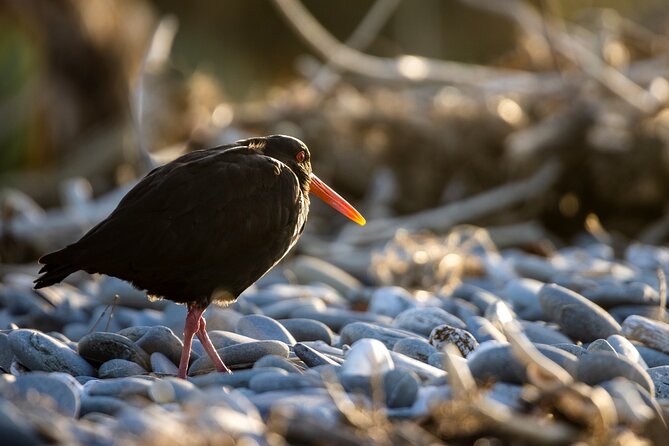
Okarito is especially appealing if you enjoy birds but do not want a tour built around technical equipment. You may see coastal birds near the beach and lagoon, then forest species as the walk moves inland. The possible list includes eastern bar-tailed godwits, banded dotterels, fernbirds, royal spoonbills, kotuku, and the rowi kiwi associated with Westland Tai Poutini National Park.
Sightings are never guaranteed, of course. Birds move, weather changes, and some species are far easier to hear than photograph. The point is not a checklist alone. A guide can help you understand why the lagoon matters and how the wetland, coast, and forest support different species.
The kotuku, or white heron, is one of the most exciting possibilities. The area is also linked with the rowi kiwi, New Zealand’s rarest kiwi species. That does not mean you should expect to see a kiwi during this daytime walk. You are visiting habitat connected with the species, not entering a guaranteed wildlife enclosure.
Bring binoculars if you have them, and keep your camera ready. One guide, Petra, is known for bringing strong bird knowledge and enthusiasm to the walk. Another guide, Louis, focuses closely on native flora and fauna. The outing can work well for beginners because you can simply ask what you are seeing instead of needing to identify birds on your own.
The Okarito Trig walk and its wide views
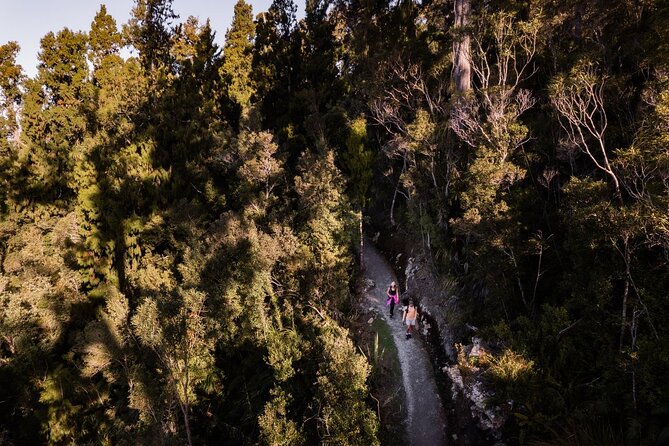
The main physical part of the experience is the guided walk to Okarito Trig. It takes about two hours and passes through West Coast bush, with native plants, mushrooms, and orchids along the way. The guide also explains how glaciers have shaped the area over time.
This is not just a walk to a lookout. The route gives you a closer look at the plant life and the changing ground beneath your feet. You may find the forest details more rewarding than the final view, especially on a damp day when mushrooms and moss become more noticeable.
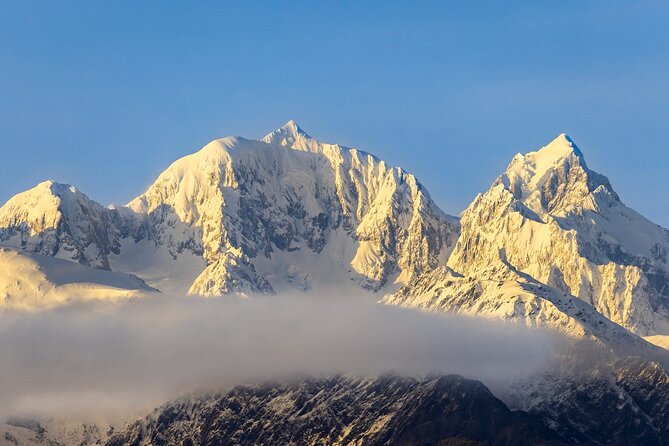
At the top, the reward is a broad 360-degree outlook. You can look toward Okarito village, Okarito Lagoon, 3 Mile Lagoon, the beach, and the coastline. On clearer days, the view reaches toward Mount Cook and Mount Tasman, New Zealand’s highest mountains, as well as Franz Josef Glacier.
The Tasman Sea appears on one side, with the Southern Alps and glacier country on the other. That contrast is what makes the viewpoint special. You are not seeing one dramatic feature in isolation. You are seeing how coast, wetland, bush, mountains, and ice fit together.
The walk requires moderate physical fitness. The tour is not described as a technical hike, but two hours on a bush track still calls for sensible shoes and steady mobility. Walking poles are available if required. Walking boots are also available in limited supply, but you need to call ahead to reserve them and give your size.
Same corner of the country, a very different day out:
- Franz Josef Glacier Heli-Hike
★ 4.5 · 618 reviews - Heli Hike Fox Glacier
★ 5.0 · 563 reviews - Small-Group Kayak Adventure from Franz Josef Glacier
★ 5.0 · 393 reviews - Pilot’s Choice: 2 Glaciers & Snow Landing – 35min
★ 5.0 · 336 reviews
Rain is part of the West Coast experience
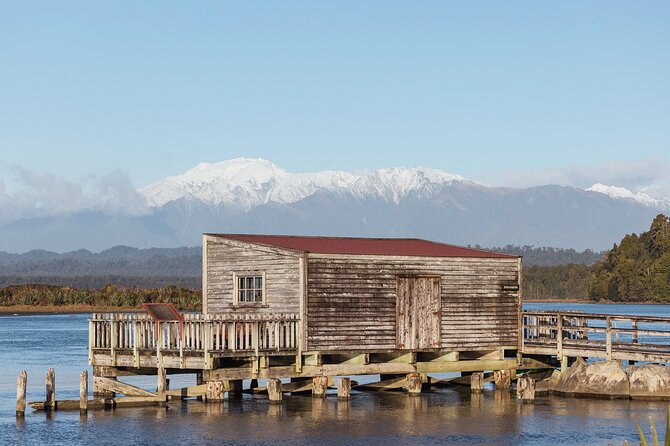
The West Coast can be wet, and this tour operates in all weather. That is not a minor footnote. Rain can change the character of the bush, reduce distant mountain views, and make the track slippery or less comfortable.
The good news is that wet-weather clothing and umbrellas are available. You need to call ahead to order clothing sizes. This support makes the tour more practical than an outing that simply tells you to bring a jacket and hopes for the best.
Still, supplied gear does not turn bad weather into sunshine. Wear suitable layers, and expect your day to feel outdoorsy. Bring water, since it is not included, and pack lunch if you want more than coffee or tea. The tour lasts three to four hours, so a snack is sensible even though lunch is not provided.
Rain can also reward patience. The forest may feel more atmospheric, and the wet conditions can make native plants, mushrooms, and orchids easier to notice. If your main goal is a sharp photograph of Mount Cook, you may prefer to choose the clearest available day. If your main goal is learning about Okarito, weather is less of a barrier.
Guides who make the walk more than a transfer
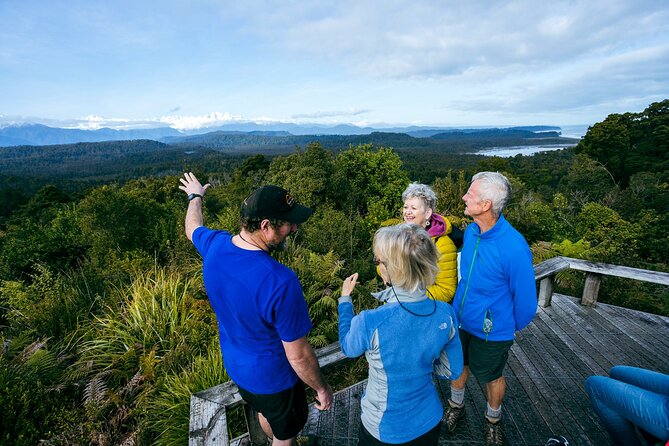
The guide is important here because Okarito’s appeal is easy to miss without context. A quick drive, a look at the beach, and a climb to the viewpoint would still be pleasant, but you would lose much of the meaning behind the birds, plants, and old settlement.
Cliff has led walks that combine local history with the Trig route. Petra brings strong interest in birdlife, and Louis focuses closely on the area’s flora and fauna. The guide names may vary, but the format remains personal, with a maximum of 10 people.
That group limit matters. You can ask questions without holding up a large procession, and the guide can pause when something catches your eye. It also helps with photography. Birds can vanish quickly, and a smaller group is less awkward when everyone wants a few quiet minutes at the same spot.
The experience is not designed as a private tour, so you should not expect a completely custom pace. The guide must keep the outing moving and suit people with different walking speeds. Even so, a group of 10 or fewer is much easier to manage than a large coach outing.
How the timing fits a glacier day
The 10:30 am start gives you a useful morning option. You can book the outing as your main half-day activity, or pair it with another West Coast experience if the timing works for your plans.
Some people have combined Okarito with a morning glacier visit, then spent the afternoon in the village and on the Trig track. That creates a full day outdoors, so be honest about your energy level before adding another hike. The Okarito walk is not a passive sightseeing stop.
The advertised duration is approximately three to four hours. The village section takes about one hour, and the guided Trig walk takes about two hours, with transport and stops filling out the rest. The activity ends back at the meeting point.
Because the tour depends on weather, road conditions, and a minimum number of people, keep a little flexibility in your schedule. If the minimum is not reached and the outing is canceled, you are offered another date or experience, or a full refund.
Who will get the most from this outing
I would choose this tour if you want a quieter counterpoint to Franz Josef Glacier. It suits you particularly well if you like birds, local history, photography, native plants, and walks that offer more than a single viewpoint.
It is also a good choice for people who prefer a small group and a guide who can explain what they are seeing. The walk has enough activity to feel worthwhile, but it is not presented as an extreme trek.
You may want to skip it if you have very limited time in the area and only want to see the glacier. You should also think twice if you dislike rain, cannot manage a two-hour bush walk, or do not want to carry your own water and food.
Families and mixed-age groups need to consider the moderate fitness requirement. The tour is not described as suitable for every mobility level, and no detailed accessibility information is provided. Ask the operator before booking if you have specific walking needs.
Booking, cancellation, and practical value
The tour includes coffee or tea, but not lunch or water. It includes walking poles when needed, plus wet-weather clothing and umbrellas. Walking boots are limited, so arrange those in advance rather than assuming a pair will be waiting.
Mobile tickets make the booking simple, and confirmation arrives at the time of booking. Free cancellation is available up to 24 hours before the local start time. Within 24 hours, cancellations and changes are not accepted for a refund.
The price works best when you use the full package: transport, a local guide, the village visit, bird and plant interpretation, the Trig walk, hot drinks, and access to weather gear. For a person who only wants to photograph the coast from a roadside stop, it may feel expensive. For you, if you want the place explained and prefer not to drive, it is a sensible half-day spend.
Should you book the Okarito Nature Tour?
Book it if you want to see the West Coast beyond its headline glaciers. Okarito offers a small settlement, wetland birdlife, old gold-town history, forest plants, and a viewpoint that ties the coast to the Southern Alps.
The strongest reasons to go are the small group, the guide’s close attention to birds and plants, and the 360-degree view from Okarito Trig. The main caution is weather. Bring water, dress for rain, and accept that distant mountains may disappear behind cloud.
For bird lovers, photographers, walkers, and anyone with an extra half-day near Franz Josef, this is a worthwhile choice. If you need guaranteed wildlife sightings or perfect mountain views, no outdoor tour can promise that. Okarito is better approached as a thoughtful, weather-shaped outing where the village and the walk matter as much as the final view.
FAQ
Where does the Okarito Nature Tour start?
The tour starts at 10:30 am, with convenient hotel pickup available in Franz Josef Village.
How long does the tour last?
The experience takes approximately three to four hours. The village visit lasts about one hour, and the guided walk to Okarito Trig takes about two hours.
What birds might I see?
Possible birds include the kotuku, royal spoonbill, eastern bar-tailed godwit, rowi kiwi, banded dotterel, and fernbird. Sightings are not guaranteed.
Is lunch included?
No. Lunch and water are not included, so you should bring your own if needed. Coffee and tea are included.
Does the tour run in the rain?
Yes. The tour operates in all weather conditions. Wet-weather clothing and umbrellas are available, but you should still dress appropriately.
Are walking boots available?
Walking boots are available in limited supply, but you need to call ahead to reserve them. Walking poles are available if required.
What is the cancellation policy?
You can cancel up to 24 hours before the local start time for a full refund. Cancellations or changes made less than 24 hours before departure are not accepted for a refund.
Just added around Franz Josef and Fox Glacier
- Tandem Skydive 10,000ft from Franz Josef★ 5.0 · 4 reviews
- Ultimate Discovery: 3 Glaciers & Snow Landing – 45min★ 5.0 · 112 reviews
- Tandem Skydive 13,000ft from Franz Josef★ 4.5 · 16 reviews
- Tandem Skydive 16,500ft from Franz Josef★ 5.0 · 19 reviews
- Tandem Skydive 18,000ft from Franz Josef★ 4.5 · 29 reviews
- Private Flight: 3 Glaciers with Snow Landing – 45mins★ 4.5 · 14 reviews
- Fox Glacier & Mount Cook 35-Minute Helicopter Flight★ 4.5 · 8 reviews
- 25mins Private Helicopter Flight in Franz Josef with Landing★ 5.0 · 13 reviews
West Coast Tours, compared.
TranzAlpine Train Journey: Christchurch to Greymouth
Read our review →
TranzAlpine Train Journey from Greymouth to Christchurch
Read our review →
4-hour Lake Mapourika Kayak and Hike adventure, with Okarito Kiwi Sanctuary
Read our review →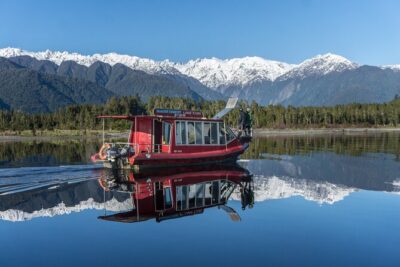

Hokitika: West Coast Treetop Walkway Entrance Ticket
Read our review →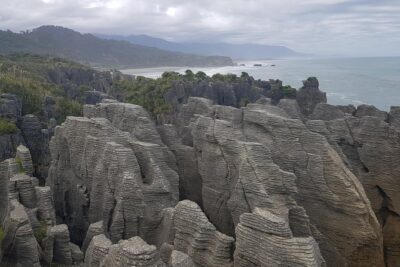
Punakaiki Blow Holes & Pancake Rocks Scenic Tour
Read our review →Browse the lists this tour appears in