

Reviewed · SELF-GUIDED TOURS
Discover Napier Earthquake: Self-Guided Audio Tour
Napier’s 1931 earthquake was not just a moment of destruction. It reshaped the city, erased important buildings, caused fires, and forced residents to rebuild almost from scratch. This self-guided walk helps you connect that disaster to the streets and buildings you see today, including the Municipal Theatre and Waiapu Anglican Cathedral.
I like the freedom to set your own pace and the fact that the tour costs $15.29, far less than many guided city walks. I also like that the GPS map and audio files let you explore independently, with no group to catch and no guide setting the rhythm.
The main drawback is practical: the app can feel a little clunky, and the route has limited physical signage and pictures. You should download everything before leaving the visitor centre and bring your own charged phone and headphones.
Key points at a glance
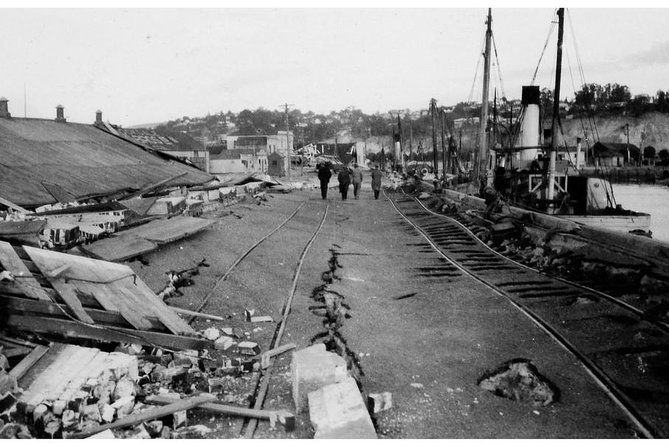
- The 1931 earthquake is the focus: Learn how the disaster damaged Napier and how the city recovered.
- Two important historic stops: Visit the rebuilt Municipal Theatre and Waiapu Anglican Cathedral.
- A flexible two-hour walk: Pause the audio for lunch, shopping, photos, or a break.
- GPS map included: Follow the route on your phone rather than joining a fixed group.
- English only: The audio guide is available only in English.
- Good value for independent walkers: The $15.29 price includes the audio files and map, but not food, transport, or an audio device.
Why Napier’s earthquake story works best on foot
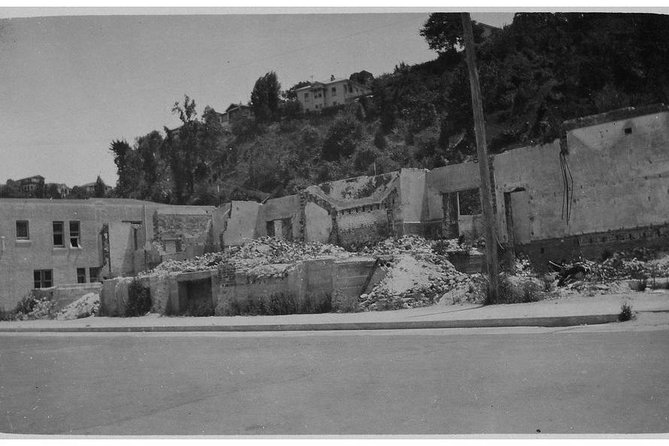
Napier is a city where the past is easy to miss if you only look for old buildings. The 1931 Hawke’s Bay earthquake destroyed much of the city centre, and the tour helps you read the rebuilt streets as evidence of what happened.
That makes this more than a basic sightseeing walk. You are not simply ticking off landmarks. You are learning why certain buildings had to be rebuilt, why older construction failed, and how a city changed after one of New Zealand’s great natural disasters.
The experience is self-guided, so you begin by downloading the audio files and opening the GPS map on your phone. The stated start time is 9:00 am at the Napier isite Visitor Information Centre on Marine Parade. From there, you walk at your own speed toward the historic points included in the route.
I would allow about two to three hours, even though the audio itself is described as taking about two hours. That extra time matters. You may want to stop for a coffee, look more closely at a building, browse shops, or pause the narration while crossing streets and finding your bearings.
The walking format is a strong fit for Napier because it allows you to notice the relationship between the city’s buildings and its earthquake story. You can stop when something catches your eye instead of passing it while trying to keep up with a group.
More self-guided routes in Napier:
- Great Escape Self-Guided Scenic Cycle Winery Tour from Napier
★ 4.5 · 75 reviews - Cape Winery Cycle Tour – 6 wineries, self-guided
★ 5.0 · 62 reviews - Hawke’s Bay: Self Guided Coast to Vineyards Cycle Tour
★ 4.9 · 29 reviews
Municipal Theatre: a building shaped by public pressure
The first named stop is the Napier Municipal Theatre. Its location has its own small civic story: the theatre was originally intended for Clive Square, but public petitions led to the present site.
That detail gives the stop more interest than a simple note about construction dates. It shows that Napier’s public spaces were shaped by local debate even before the earthquake changed the city.
The theatre was destroyed in the 1931 earthquake and rebuilt in 1938. The audio explains why so many buildings in central Napier suffered so badly. Much of the centre was made with brick, but the lime and mortar mix used at the time failed under the force of the quake.
This is where the tour’s format becomes useful. You can look at the theatre while hearing the explanation, then compare the present building with the destruction described in the narration. The point is not simply that the theatre was damaged. You begin to understand the building methods that helped make the damage so severe.
Admission to this stop is free, so there is no extra ticket to arrange. You will still need to manage the audio yourself, and it is worth checking that the narration is playing before you start walking away from the site.
The theatre is especially useful for visitors who want a clear link between physical architecture and earthquake history. It gives the disaster a visible location rather than leaving it as a date in a textbook.
Waiapu Anglican Cathedral and the human cost
The second named stop is Waiapu Anglican Cathedral. Its first stone was laid in 1886, and the building was completed in 1888 in a traditional English design.
The cathedral was being used for communion on February 3, 1931, when the earthquake destroyed it. One person was killed. That detail gives this stop a more serious tone than the theatre visit, because the building was not empty when the disaster struck.
For the next 25 years, a temporary wooden cathedral was used. The present structure was completed in 1965, and it now serves as a memorial to the people who rebuilt Napier after the earthquake.
I find this stop valuable because it shows that recovery was not quick. The gap between the destruction in 1931 and the completion of the present cathedral in 1965 covers more than three decades. Rebuilding was not just a matter of clearing rubble and putting up replacement walls. It took time, money, temporary arrangements, and sustained effort.
The cathedral also adds a personal and community dimension to the tour. The Municipal Theatre helps explain construction failure and civic rebuilding. Waiapu helps you think about worship, loss, memory, and the long process of restoring daily life.
Admission is free here as well. Since this is a self-guided route, you should listen respectfully and keep the volume low if services or other activity are taking place. The supplied information does not give a detailed schedule, so the safest approach is to treat the cathedral as a place where quiet attention matters.
The audio and GPS map: useful freedom, with a little preparation
The tour includes audio files and a GPS map. You do not get a physical guide, transportation, food, drinks, or an audio device, so the experience depends on your own phone.
That is both the appeal and the catch. You can start when convenient, stop whenever you like, and avoid a fixed group. At the same time, you need to handle the technical side yourself.
Download the audio before beginning. The instructions are provided in the Before You Go section of your ticket, and the tour specifically advises having the audio ready before you start. Do not leave this until you are standing outside with a weak signal or an empty battery.
A simple preparation checklist helps:
- Download the audio files in advance.
- Open the GPS map before setting out.
- Charge your phone.
- Bring headphones.
- Confirm that the narration plays correctly.
- Keep the ticket instructions available in case you need them.
One useful point from the feedback is that the app can be a little awkward at times. It is not necessarily a deal breaker, but you should allow a few minutes to sort it out before walking. The audio itself is described as easy to follow once the download is working.
The route also has limited signage and photographs. That means you should pay attention to the map rather than expecting every stop to be clearly marked on the street. If you prefer a polished app with lots of images and automatic prompts, this may feel basic.
If you are comfortable using a phone for directions and audio, the trade-off is reasonable. You get control over the pace and can revisit a section if you missed something.
A few more Napier trips worth a look
- Napier: Cape Kidnappers Gannet, Nature & Sightseeing Tour
★ 4.8 · 317 reviews - Top-Rated Hawke’s Bay Wine Tour – Small Group
★ 5.0 · 256 reviews - Shore Excursion: Scenic Rafting from Napier
★ 5.0 · 179 reviews - Guided 10am Morning Art Deco Walk From Napier Art Deco Trust
★ 4.5 · 167 reviews
A walk that leaves room for lunch and shopping

The tour takes about two hours, but you are not locked into that schedule. The audio can be paused when you need a break, which makes the experience easier to fit into a full day in Napier.
You can stop for food or shopping along the way. That is a genuine advantage over a tightly timed guided walk, especially if you are exploring the city without a clear plan for the morning.
The start is at the Napier isite Visitor Information Centre, 100 Marine Parade, Napier South. The end point is listed as Veronica Sunbay, 3 Tennyson Street, Napier South. Both points are in central Napier, and the activity is near public transportation.
The experience requires a moderate level of physical fitness. The supplied information does not give a precise distance or details about every surface, so you should be ready for a walking route through the city rather than treating it as a seated sightseeing activity.
I would wear comfortable shoes and avoid planning it immediately before a fixed booking. The advertised duration is an estimate, and your pace will depend on how often you pause, how quickly you move between points, and how much time you spend looking at the buildings.
Because the route begins at 9:00 am, an early start gives you plenty of room to finish without rushing. You can also pause the audio if you reach a café or shop that deserves your attention.
What the $15.29 price really buys you
At $15.29 per person, this is a modest-cost way to add structure to a walk around Napier. The price covers the downloadable audio files and GPS map, not a personal guide or transport.
That distinction matters. You are paying for the narration and route planning, while you provide the phone, headphones, and independence. If you already plan to walk around central Napier, the tour can add useful context without committing you to a larger excursion.
The value is strongest for people who like history but do not need a guide beside them. You can listen carefully at the major stops, pause when a detail interests you, and spend as much time as you want taking in the city.
The value is weaker if you expect a fully guided experience with rich visual material, frequent signs, or personal answers to questions. There is no physical guide included, and the audio is offered only in English.
The maximum group size is 15 people, but because this is self-paced, you are not necessarily moving as one group. That keeps the experience more independent than a standard walking tour.
For a couple or solo visitor, the fee is easy to justify if the earthquake story is one of your reasons for visiting Napier. For a family, the decision depends on how well everyone in your group handles walking and listening to historical narration on a phone.
Who will get the most from this experience
I would choose this tour if you enjoy learning the story behind a city while walking through it. It suits independent visitors who want a planned route but do not want to follow a guide holding a flag.
It is also a good choice for anyone with limited time in Napier. Two hours gives you a focused introduction to the earthquake and recovery story, while the flexible format lets you extend the outing with food or shopping.
History-minded visitors will find the two named stops especially useful. The theatre explains the failure of brick construction and the rebuilding of a major civic building. The cathedral brings in loss, temporary replacement, and the long work of restoring a community.
You may want to skip it if you strongly dislike phone-based tours, need narration in a language other than English, or want a guide who can answer questions on the spot. The limited signage and occasional app awkwardness also make this less suitable for someone who wants everything to be effortless.
Families and older walkers should note the moderate fitness requirement. The route is designed for discovery on foot, and the time estimate allows for pauses, but no transport is included.
Practical advice before you press play

Start with the technical details, not the history. Download the audio, test it, and open the map before you leave the Napier isite Visitor Information Centre.
Keep your phone accessible during the walk. You may need to check the GPS map, pause the narration, or replay a section. Headphones are not included, so bring your own.
The tour is available only in English. If you are comfortable listening in English, the audio offers a simple way to connect the city’s current streets with the 1931 disaster.
Leave room in your schedule. The core walk is about two hours, but the ability to stop for lunch, shopping, or a rest is one of the best parts of the format. You do not need to treat the audio as a race.
Cancellation is free if you cancel at least 24 hours before the 9:00 am start time. Changes or cancellations made less than 24 hours before the start are not refunded.
Should you book the Napier Earthquake audio walk?
Book it if you want an affordable, self-paced introduction to how the 1931 earthquake and subsequent fires affected Napier. The Municipal Theatre and Waiapu Anglican Cathedral give the story two useful angles: damaged civic architecture and a community rebuilding after great personal loss.
The best reason to choose it is flexibility. You can walk at your own speed, pause the narration, and fit in food or shopping. The main compromises are the English-only audio, the need to prepare your phone, and an app that may take a little patience.
For visitors who prefer independent sightseeing and want history tied to real places, $15.29 is fair value. For those wanting a polished guided tour with extensive signs, images, or live conversation, choose a different format.
FAQ
Where does the tour start?
The tour starts at the Napier isite Visitor Information Centre, 100 Marine Parade, Napier South, Napier 4110, New Zealand.
Where does the tour end?
The listed end point is Veronica Sunbay, 3 Tennyson Street, Napier South, Napier 4110, New Zealand.
What time does the tour start?
The stated start time is 9:00 am.
How long does the audio tour take?
The walk takes approximately two to three hours. The audio portion is described as taking about two hours, and you can pause it when needed.
What does the price include?
The $15.29 price includes the audio files and GPS map. The tour is self-paced.
Do I need to bring my own phone and headphones?
Yes. An audio device is not included, so you need to use your own phone and headphones. Download the audio before beginning.
Is the tour available in languages other than English?
No. The tour is available only in English.
Are admission fees included?
No admission fees are included, although the listed stops at the Municipal Theatre and Waiapu Anglican Cathedral have free admission.
Can I cancel for a refund?
Yes. You can receive a full refund if you cancel at least 24 hours before the experience start time. Cancellations or changes made less than 24 hours before the start are not refunded.
Just added around Napier
- Half Day Sightseeing and Taste Tour★ 5.0 · 35 reviews
- Small group – Napier Premium Winery , Beer & Cider + 5.5h to 6h.★ 5.0 · 43 reviews
- Wine Tour and Tastings in Hawkes Bay★ 5.0 · 67 reviews
- Taste Hawke’s Bay – A Sweet treat food Tour★ 5.0 · 3 reviews
- National Aquarium of New Zealand in Napier General Admission★ 4.0 · 41 reviews
- Napier and Hawkes Bay Scenic and Art Deco Tour by VW Kombi★ 5.0 · 21 reviews
- Shore excursion – Napier sight seeing/Art Deco Tour,★ 4.5 · 3 reviews
- Napier Gourmet Winery Luncheon + tastings at 3 Great Wineries★ 5.0 · 81 reviews
Self-Guided Tours, compared.

Queen Charlotte Track: Cruise & Self-Guided Hike from Picton
Read our review →
Self-Guided Wine Tours by Bike with Lorelle & Greg
Read our review →
Volcanic Valley Self Guided Walking and Hiking at Waimangu
Read our review →
Abel Tasman National Park: Sailing and Self-Guided Walk
Read our review →
Marlborough: Full-Day Self-Guided Biking Wine Tour
Read our review →
Self-Guided Biking Wine Tour (full day) in the Marlborough Region.
Read our review →

Browse the lists this tour appears in