
Reviewed · GEOTHERMAL TOURS
Mt. Tarawera Volcano Scenic Floatplane Tour from Rotorua
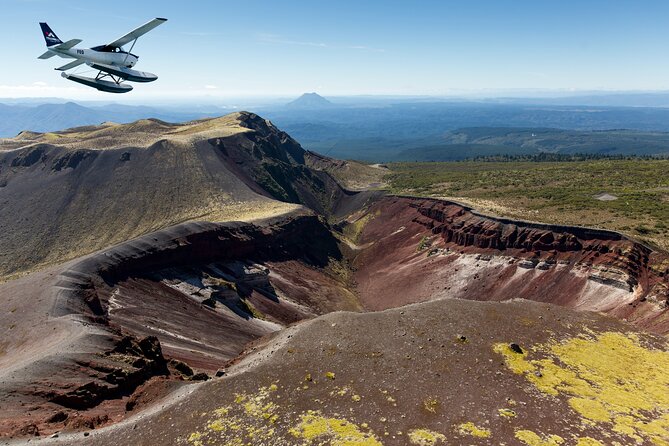
Mt. Tarawera is best understood from above. A water take-off on Lake Rotorua leads to a close look at the volcano’s jagged 8-kilometer rift, crater lakes, steaming cliffs, and nearby geothermal areas. You see in half an hour what would take far longer to connect by road and foot.
I like the small maximum group of 10 and the fact that your pilot also provides the commentary. I also like the route itself: it links Mt. Tarawera, Waimangu, the Blue and Green Lakes, and Whakarewarewa in one neat loop.
The main drawback is the short flight time. Bad weather can also force a postponement, and one booking was delayed by 24 hours before conditions still made the views less impressive. Clear skies matter here.
Key points about the Mt. Tarawera flight
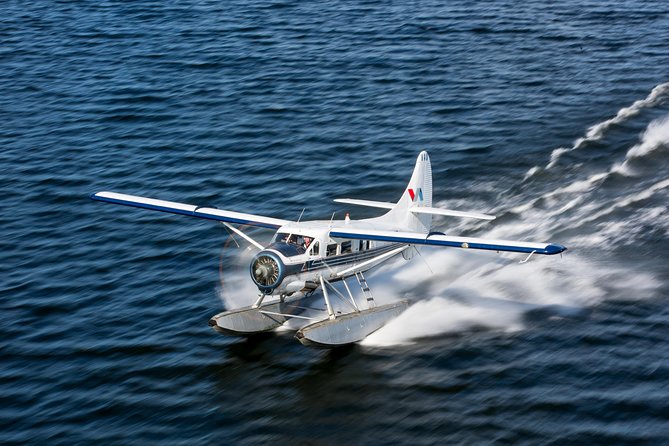
- Water take-off and landing: Begin and end on Lake Rotorua for a memorable part of the flight before the volcano views even start.
- A close look at Mt. Tarawera: Follow the 8-kilometer volcanic rift formed by the 1886 eruption, with jagged rock and crater lakes below.
- One compact aerial route: See Mokoia Island, the crater lakes, Waimangu Volcanic Valley, the Blue and Green Lakes, Whakarewarewa, and Sulphur Bay.
- Pilot-led commentary: Your pilot flies the route and explains the sights. Katie is one pilot specifically praised for her care and clear commentary.
- Small-group setting: The aircraft carries no more than 10 people, giving you a more personal flight than a large sightseeing operation.
- Weather-sensitive value: The trip is far better in good weather, so keep your schedule flexible if the forecast looks poor.
Why seeing Mt. Tarawera from the air changes the experience
From ground level, you can visit Rotorua’s volcanic sights one at a time. From a floatplane, you see how they fit together. Lake, crater, forest, steaming earth, and bright volcanic water become part of one broad view.
The flight also gives you a rare angle on Mt. Tarawera. The summit was split by the major 1886 eruption, leaving a long volcanic rift with broken rock and crater lakes. From the air, the scale and shape of that scar make sense in a way they cannot from a single lookout.
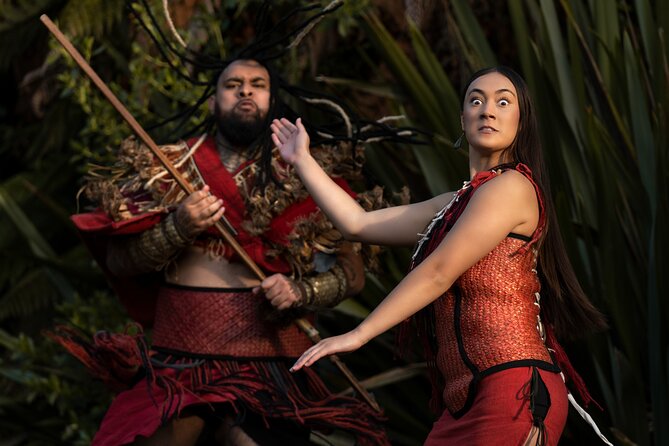
The volcano carries strong meaning in Māori tradition, and the pilot’s commentary adds context as you pass over it. The amount of narration will depend on the pilot and flight conditions, but the flight is designed as more than a silent scenic ride.
You should also expect a real aircraft experience, not just a quick scenic loop. The plane lifts from the water, climbs over Rotorua, follows the volcanic route, and returns for another splashdown. That combination gives the tour its appeal, especially if you have never flown in a floatplane.
More Geothermal Tours in Rotorua
- Rotorua: Wai-O-Tapu Geothermal Park Entry Ticket
★ 4.6 · 2,601 reviews - Rotorua: Hell’s Gate Outdoor Mud Spa & Guided Walk
★ 4.7 · 1,140 reviews - Hell’s Gate Mud Bath & Spas
★ 4.5 · 475 reviews
Starting at Lake Rotorua with Mokoia Island below
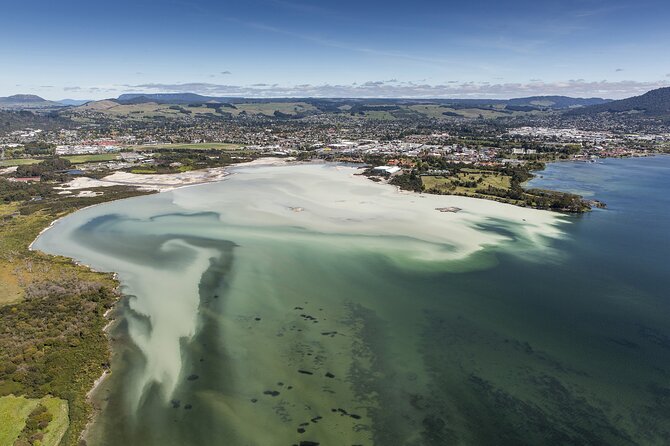
You meet the aircraft beside Lake Rotorua on Lakefront Drive in the Ohinemutu area. There is no hotel pickup or drop-off, so you need to make your own way to the waterfront. The meeting point is near public transportation, and the activity finishes at the same place.
The opening view is already worthwhile. The route heads from the city lakefront toward Mokoia Island, a well-known feature of Lake Rotorua, before moving toward the crater lakes and Mt. Tarawera. This first section helps you get a sense of Rotorua’s setting: a city surrounded by water, volcanic features, and geothermal activity.
The water departure is one of the strongest details of the trip. You feel the floatplane gather speed across the lake before it lifts into the air. It is a gentler and more unusual start than a normal runway departure, though people who dislike flying may still find the take-off exciting.
Black swans have been seen on the lake during a flight, adding a small local detail before the aircraft heads toward the volcano. You should not count on wildlife sightings, but keep looking down during the low-level sections.
Following the scar of the 1886 eruption
The central part of the flight is Mt. Tarawera. The aircraft follows the volcanic rift along the summit, giving you a top-down view of the jagged rocks and crater lakes left by the 1886 eruption.
This is where the flight earns its price. A ground visit can show you individual volcanic features, but the aircraft reveals the full line of the eruption and the broken shape of the mountain. You also spend less time on roads and walking routes, which matters if your Rotorua schedule is tight.
The view can look almost lunar, with hard volcanic rock and dark crater forms replacing the softer scenery around the lake. The contrast is part of the fun. In a few minutes, you move from a calm water surface to an area shaped by immense heat and force.
The aircraft’s small size helps here. With up to 10 people, the tour feels more personal than a large aircraft circuit. Still, you should not assume every seat has the same view at every moment. The plane turns and follows a set route, so looking out on both sides is useful.
The 30-minute duration is enough to cover a lot, but it leaves little room for lingering. This is not a slow aerial picnic or a long expedition over the mountain. It is a brisk circuit with a strong selection of sights.
Steaming Cliffs and Waimangu Volcanic Valley
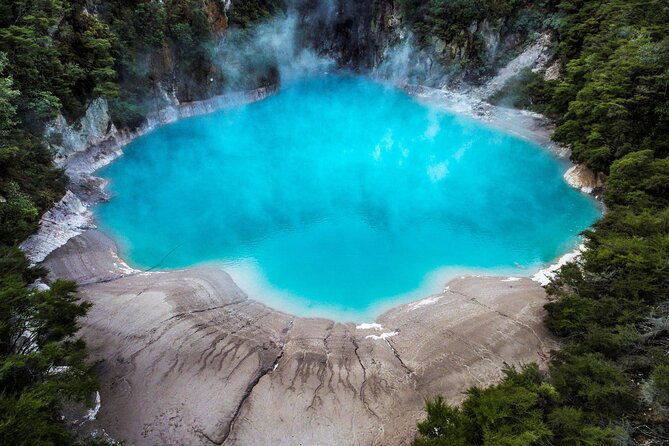
After Mt. Tarawera, the route heads toward the Steaming Cliffs and the hot lakes of Waimangu Volcanic Valley. This portion shows how volcanic activity continues to shape the area.
Waimangu is especially interesting from above because you can see the relationship between its steaming ground, colored water, and surrounding terrain. From the air, the volcanic features appear as part of a connected zone rather than isolated attractions.
The pilot’s explanation is useful here. Color and steam can be hard to interpret when you are looking down from a moving aircraft, so commentary helps you understand what you are seeing. The exact quality of the narration depends on the pilot, but the flight is built around a pilot-guide rather than a separate recording.
Weather has an outsized effect at this point. Mist, rain, and low cloud can soften the contrast of the hot lakes and cliffs. One flight was postponed because of rain, then still suffered from poor conditions the following day. If the forecast is unsettled, ask about moving to a clearer date rather than treating the flight as just another fixed appointment.
More Scenic Flights in Rotorua
- Whakaari – White Island Cultural and Flight Experience
★ 5.0 · 138 reviews - Rotorua: Scenic Flight over Mt Tarawera & Waimangu Valley
★ 4.9 · 25 reviews - 15-Minute Crater Lakes Flight by Floatplane from Rotorua
★ 4.5 · 11 reviews - Rotorua: Helicopter Flight and Guided Walk on Mt Tarawera
★ 5.0 · 10 reviews
Blue and Green Lakes, Whakarewarewa, and Sulphur Bay
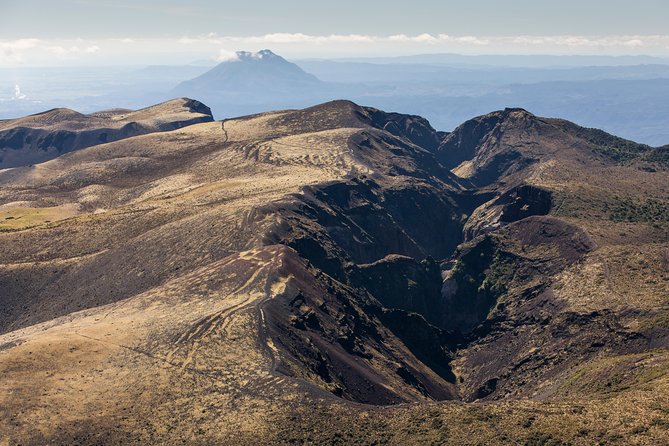
The return route passes over the Blue and Green Lakes before continuing toward Whakarewarewa Thermal Reserve and Sulphur Bay. This gives the tour a useful mix of volcanic scenery rather than repeating the same view for 30 minutes.
The Blue and Green Lakes are striking from above because their waters sit close together yet appear different in tone. From the aircraft, you get the broad setting and see how the lakes sit among the surrounding hills and forest.
Next comes Whakarewarewa, with its bubbling geysers and geothermal activity. The flight does not replace a ground visit if you want to walk near the pools or spend time learning about the area. What it does offer is scale: you see the thermal reserve in relation to Rotorua and the lake.
Sulphur Bay brings the route back toward the city and Lake Rotorua. The return is not simply dead time. It gives you another angle on the waterfront and helps tie the volcanic sights back to Rotorua itself.
You should keep your camera ready, but do not spend the entire flight staring through a screen. The scenery changes quickly, and glare or aircraft windows may affect photographs. The best value is in taking a few pictures, then watching the route unfold.
A pilot-guide who adds more than a flight
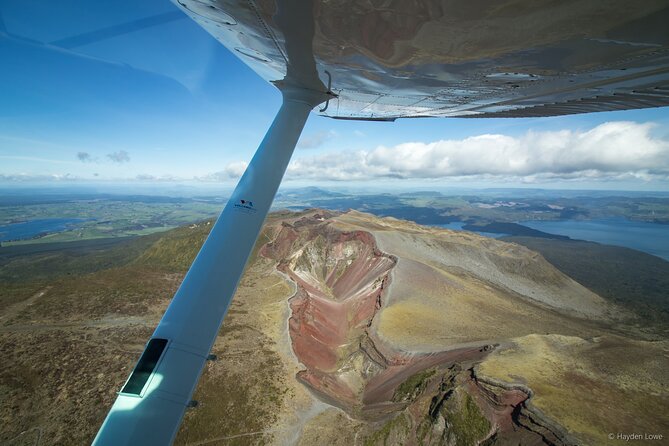
The pilot is an important part of this experience. You are not simply lifted into the air and left to identify crater lakes on your own. The pilot flies the route, points out major features, and provides commentary along the way.
Katie is one pilot who received specific praise for both her commentary and the care she gave a passenger with a back injury. That does not guarantee who will fly your trip, but it shows the kind of personal attention the small aircraft can allow.
Other feedback also highlights warm service, professional flying, and clear communication before the trip. That matters for a short activity because you do not have hours to recover from a confusing meeting point or poor organization.
At times, passengers have been upgraded to a helicopter flight at short notice. You should treat that as an occasional operational decision, not something included or promised with this booking. The listed experience is the floatplane flight.
Is $242.02 a fair price for 30 minutes?
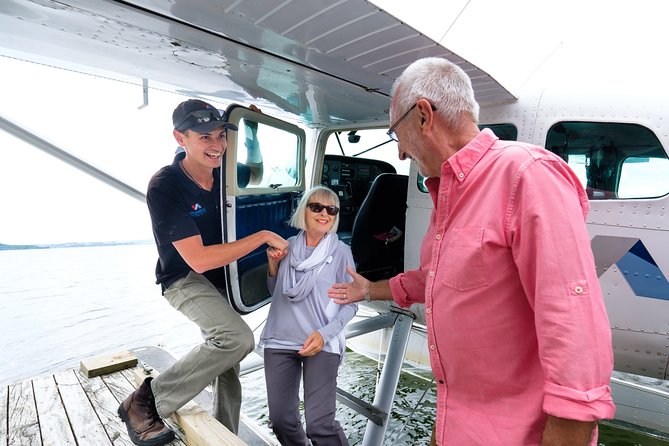
At $242.02 per person, this is not a budget sightseeing activity. You pay for an unusual aircraft, a water departure and landing, and a route that connects several volcanic areas in a short time.
The value depends on what you want from Rotorua. If you have only one day and want to see Mt. Tarawera, Waimangu, the lakes, and Whakarewarewa without arranging several separate outings, the price can make sense. You are paying for access to views that ground tours cannot easily provide.
If you prefer long walks, close-up geothermal features, or a slower cultural visit, the flight may feel expensive. A 30-minute tour gives you width rather than depth. You see many places, but you do not stop at any of them.
I would compare it with the cost and time of several separate activities, not with the price of a normal bus ride. It is a special-occasion outing, a photography flight, and a time-saving overview rolled into one.
The tour is often booked around 37 days ahead, which suggests you should not leave it until the last moment during a busy Rotorua visit. Morning and afternoon departures give you some choice, but the best time is the one that fits both your schedule and the weather.
Who will enjoy this flight most?
This tour suits you if you want a strong visual introduction to Rotorua’s volcanic region and enjoy the idea of flying in a small floatplane. It is also a good match if you have limited time but still want to see more than the city center and one geothermal park.
Photographers should find plenty to work with, especially around Mt. Tarawera, Waimangu, and the two lakes. Clear weather is more important than the time of day, so prioritize the forecast when possible.
The flight also suits couples, families, and small groups who want a shared experience rather than a long organized ground tour. Most people can participate, and the aircraft has a maximum passenger weight of 297 pounds, or 135 kilograms, per seat for comfort and balance.
It may not suit you if you dislike small aircraft, need a guaranteed departure in a tightly packed schedule, or want to spend substantial time on the ground. The minimum passenger requirement also means a confirmed booking can still be canceled if there are not enough people, with an alternative or full refund offered.
You can cancel for a full refund up to 24 hours before departure. Weather cancellations also lead to another date or a full refund, which is helpful given how much the views depend on clear conditions.
Should you book the Mt. Tarawera floatplane tour?
Book it if the water take-off, volcano views, and compact aerial route appeal to you more than a long ground visit. The trip gives you a rare view of Mt. Tarawera and connects major Rotorua sights in only 30 minutes.
I would choose it for a first visit when time is short, or as a special highlight after exploring Rotorua on foot. I would skip it if the forecast is poor, your budget is tight, or you want close contact with geothermal features rather than a quick view from above.
For the best chance of a rewarding flight, reserve ahead, keep your schedule flexible, and choose the clearest available weather window. That is the difference between simply taking a flight and getting the full volcanic panorama.
FAQ
How long is the Mt. Tarawera floatplane tour?
The flight lasts approximately 30 minutes.
Where does the floatplane tour start?
The tour starts at Lakefront Drive, Ohinemutu, Rotorua 3010, New Zealand.
Where does the tour finish?
The flight ends back at the same meeting point beside Lake Rotorua.
Does the floatplane take off and land on water?
Yes. The experience includes a water take-off and a water landing on Lake Rotorua.
What sights does the flight cover?
The route includes Mokoia Island, the crater lakes, Mt. Tarawera, Waimangu Volcanic Valley, the Blue and Green Lakes, Whakarewarewa, Sulphur Bay, and Rotorua’s lakefront.
Is commentary included?
Yes. Your pilot acts as an aerial guide and provides commentary during the flight.
How many people can join the tour?
The maximum group size is 10 people.
Is there a passenger weight limit?
Yes. The maximum per-seat limit is 297 pounds, or 135 kilograms, for aircraft comfort and balance.
Are hotel transfers included?
No. Hotel pickup and drop-off are not included. You need to reach the Lake Rotorua meeting point yourself.
What happens if bad weather cancels the flight?
You will be offered another date or a full refund if the flight is canceled because of poor weather.
Just added around Rotorua
- TRIPLE DEAL Wai-O-Tapu, Redwood Forest & Blue Springs Ex Auckland★ 5.0 · 20 reviews
- Volcanic Rotorua Day Trip from Auckland★ 5.0 · 4 reviews
- Private Tour to Rotorua’s Natural wonders and Māori Arts & craft.★ 5.0 · 4 reviews
- Private Transfer From Auckland Airport To Rotorua★ 5.0 · 5 reviews
- Rotorua Highlights Tour inc. Te Puia Tour, Lunch & Cultural Show★ 4.5 · 53 reviews
- Private Tour – Rotorua Adventures Day Trip From Auckland★ 5.0 · 19 reviews
- Private Tour WaiOtapu & Huka Falls & Blue springs from Auckland★ 5.0 · 3 reviews
- Rotorua Full Day Private Tour from Auckland★ 5.0 · 3 reviews
Geothermal Tours, compared.
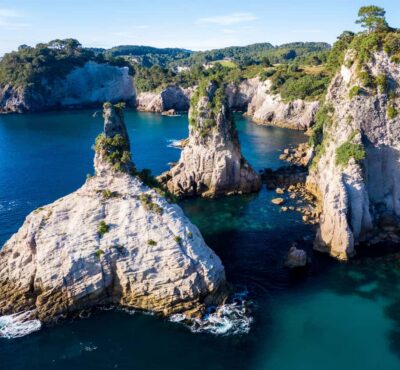
2-Hour Cathedral Cove and Volcanic Coast Cruise
Read our review →
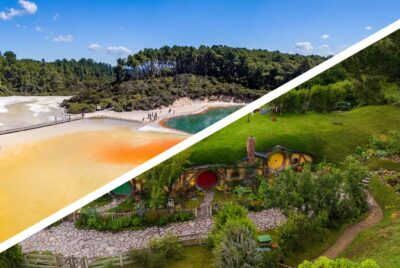
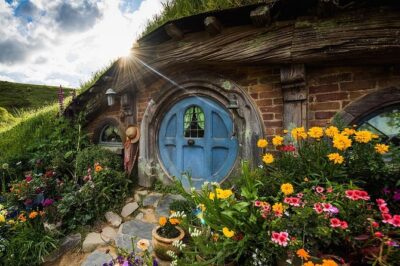
Hobbiton & Rotorua including Wai-O-Tapu – Small Group Tour from Auckland
Read our review →
2 Hour Cathedral Cove and Volcanic Coast Cruise with Shade Canopy
Read our review →Browse the lists this tour appears in