
Reviewed · SURF LESSONS
Beginner Surf Lesson at Te Arai Beach
The best part of this lesson is its beginner-friendly approach. You start on the sand with safety, board handling, paddling, and pop-up practice before taking your board into the water. With no more than 12 people, instructors can give you useful corrections instead of shouting general tips from shore.
I like the tide-timed lesson and the fact that boards and wetsuits are included. I also like the calm, patient teaching linked with instructors such as Locke, Lydia, and Kirsty, especially for children and adults who feel nervous about their first attempt. One practical point needs checking: the meeting address is at Te Arai, while the description also refers to Omaha Beach, so confirm where you will actually surf before setting out.
Key points at a glance
- Small groups of up to 12: You get a better chance of personal help than in a large beach class.
- A proper beach lesson first: Safety, equipment use, paddling, and pop-up skills come before the ocean session.
- Tide-based timing: The lesson schedule is set around changing sea conditions.
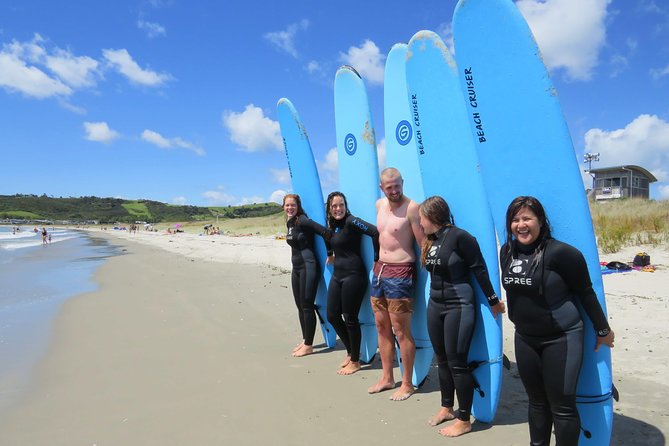
- Equipment included: Your surfboard and wetsuit are supplied.
- Patient instructors: Locke, Lydia, and Kirsty are praised for helping nervous beginners and children.
- Photos and videos included: You receive souvenir images of the lesson after your time in the water.
Why this Auckland surf lesson works for first-timers
Surfing looks simple from the beach. Lie on the board, paddle, stand up, glide. In practice, the timing and body position can feel strange at first. This lesson sensibly breaks the process into small jobs, so you are not expected to solve everything at once.
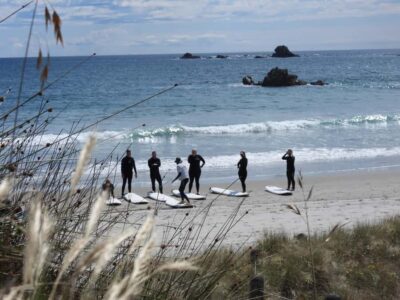
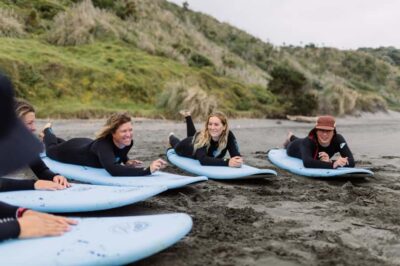
You begin with beach-based instruction. That matters because you can learn how to carry and position the board, how to lie on it, and how to move from paddling into the pop-up before waves add pressure. You also cover water and beach safety, which gives the lesson a useful foundation rather than treating surfing as only a chase for one exciting ride.
The class is designed for beginners, not for people polishing advanced turns or wave selection. The stated focus is on effective technique for your ability and fitness. That should make the lesson a good fit for a first attempt, a family outing, or anyone who has tried once and wants clearer instruction.
More Beach Tours in Auckland
- Afternoon Piha Beach and Rainforest Tour from Auckland
★ 5.0 · 807 reviews - Auckland City Highlights, Afternoon Piha Beach & Rainforest Tour
★ 5.0 · 134 reviews - 2 Hour Surf Lesson – Te Arai Beach
★ 5.0 · 119 reviews
Meeting at Te Arai, with Omaha Beach details to confirm
The listed meeting point is 708 Te Arai Point Road, Te Arai 0975, north of Auckland. The activity lasts about two hours and returns to the meeting point at the end. You arrange your own transport, so this is best treated as a self-drive day trip from Auckland rather than a hotel pickup tour.
The supplied description also names Omaha Beach as the surf location. Omaha is described as a clean, white-sand beach with clear water and a beginner-friendly wave. That sounds appealing, but the difference between the Te Arai meeting address and the Omaha references is important. Before leaving Auckland, confirm whether you meet at Te Arai and transfer from there, or whether the actual lesson takes place at Omaha Beach.
This is not a minor detail. You need the right driving plan, enough time to find the meeting point, and suitable arrangements for anyone joining you. The activity is near public transportation, but transport to the lesson is not included.
What happens during the two-hour lesson
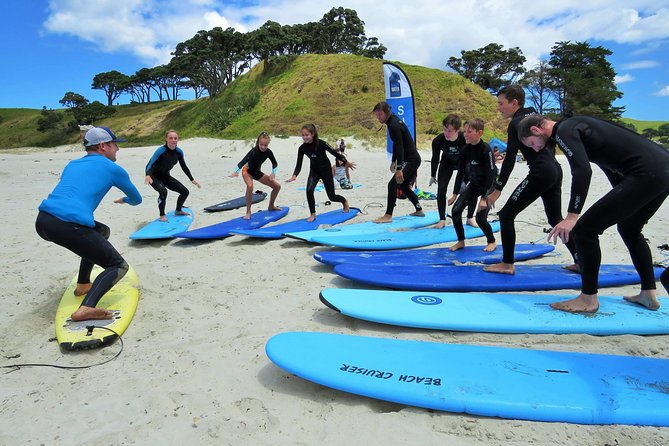
The lesson begins with an introduction to the equipment and the setting. Your instructor covers beach and water safety, then explains how to use the board correctly. This part can seem basic, but it is where you learn the habits that help you stay calm once you are in the water.
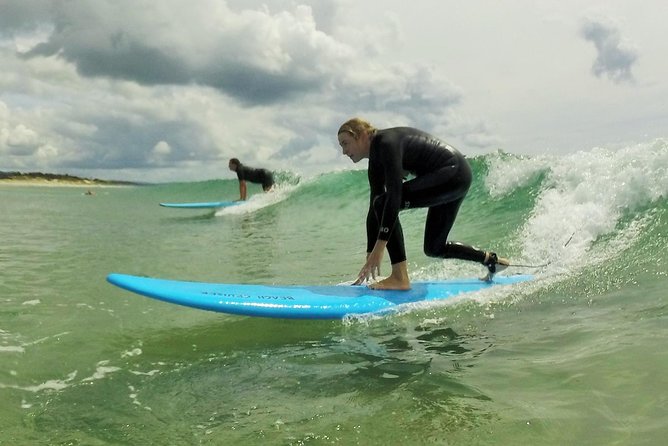
Next comes paddling. Good paddling is not simply a matter of waving your arms. Your position on the board affects balance, speed, and how easily you can catch a small wave. The instructors work on the basic body position and the timing needed to move with the wave rather than fight it.
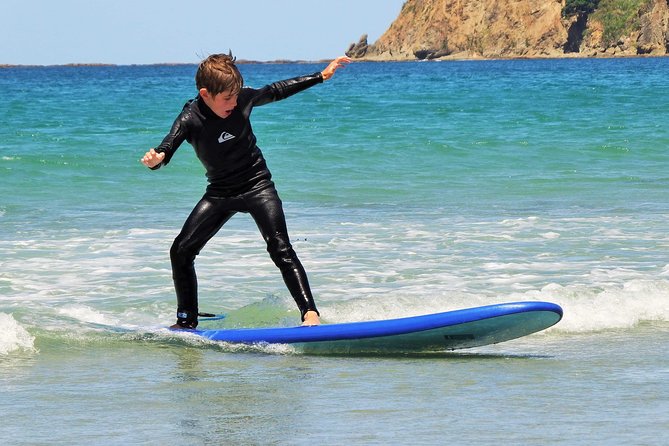
The pop-up is the key movement. You learn how to move from lying on the board to standing in one quick, controlled action. Expect to repeat this on the beach before trying it in the ocean. That practice gives you a chance to fix foot placement and balance without a wave pushing the board around.
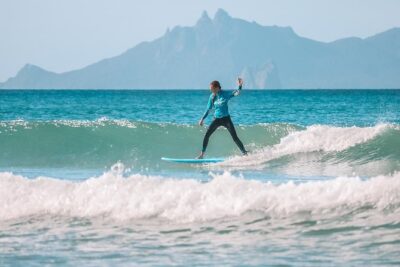
Once the beach work is done, you take the board into the water. The aim is to put the earlier skills together and catch a manageable wave. Your instructor can adjust the advice to suit your ability and fitness, which is useful because a strong, confident adult and a cautious child may need different guidance.
Do not measure the lesson only by how many times you stand. A first surf class is also about learning how to handle the board, paddle safely, read basic water movement, and understand the sequence of a successful ride. If you leave knowing what to practice next time, the lesson has done its job.
The beach and the beginner wave
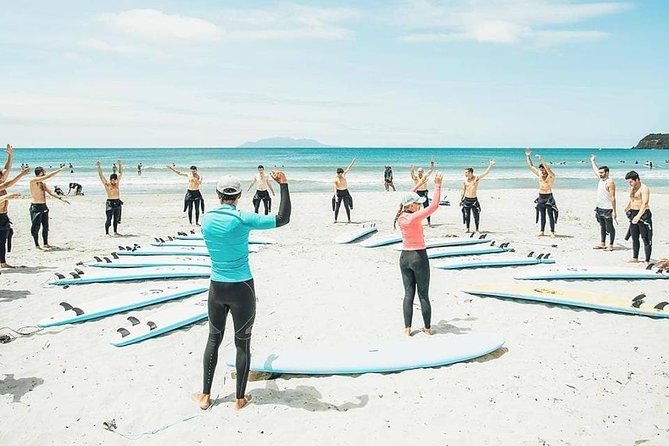
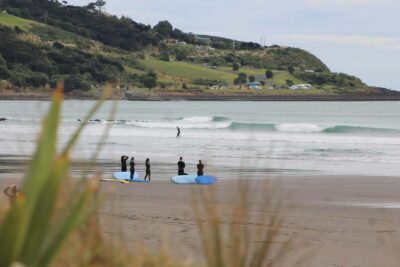
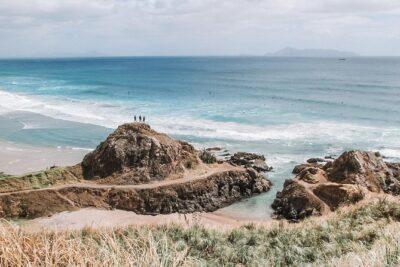
Omaha Beach is presented as one of the area’s better places for new surfers. Its broad white sand and clear water give the lesson an attractive setting, and the beach is described as clean and suitable for beginners.
A beginner wave is valuable because it lets you work on balance without needing advanced surf skills. You still need patience. The first few attempts may involve paddling too early, missing the wave, or standing before the board has enough speed. That is normal, and the class structure is meant to help you understand why.
The lesson is timed around the tides. This is a real benefit, not just a scheduling detail. Tide levels affect the shape and strength of waves, as well as the feel of the water near shore. Since the class is planned around the conditions, you are not simply arriving at a random hour and hoping for a useful wave.
Weather remains a factor. The lesson requires good weather and can be moved or refunded if poor conditions lead to cancellation. That flexibility is helpful, though it means you should keep some room in your Auckland plans if surfing is a priority.
More surf lessons near Auckland:
- Auckland: Group Surfing Lesson with Muriwai Surf School
★ 4.9 · 34 reviews - Private 2 Hour Surf Lesson
★ 5.0 · 5 reviews - Raglan: Group Surf Lesson
★ 5.0 · 79 reviews - Queenstown: White Water Surfing Along the Kawarau River
★ 4.6 · 30 reviews
Instructors who make nervous beginners feel at ease
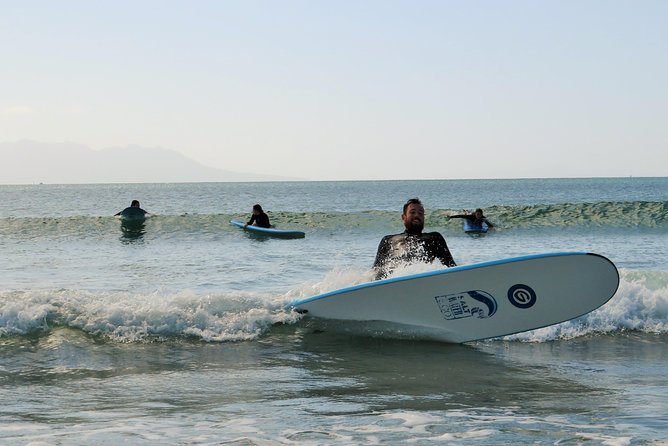
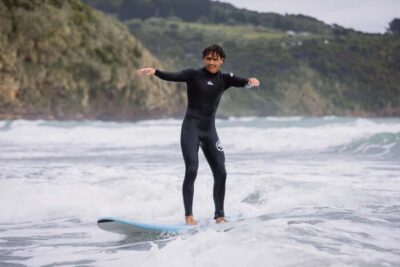
The most consistent strength connected with this lesson is the teaching style. Locke is singled out for patience with beginners and for helping a child get up on the board quickly. That is the kind of support parents want when a child is excited but unsure how the first session will feel.
Lydia is also associated with a friendly, targeted approach. Her lessons include a women-focused Girls on Curls format, and she is praised for helping participants build skills while keeping the atmosphere relaxed. Kirsty is also described as patient and calm.
You should not assume you will be assigned a particular instructor. Names can change with the schedule, and the information does not promise a specific teacher. Still, the teaching approach is clear: practical instruction, encouragement, and patience for people who may feel intimidated by the ocean.
That makes this a better choice for beginners who want guidance rather than a simple board rental. You are paying for the coaching, not only the equipment.
Why the small group size matters

The maximum group size is 12 people. That is not the same as a private lesson, but it is small enough to make individual help possible. A good instructor can spot problems such as lying too far forward, placing your feet poorly, or trying to stand before the board has caught the wave.
Small groups also help with confidence. You can see the sequence demonstrated, try it yourself, and learn from the same correction given to someone nearby. For families, the limit makes it easier to keep track of children and to share the session as a group.
The trade-off is that 12 is still a group. You will have moments when the instructor is helping someone else, and the amount of ocean time per person will not match a private class. If personal coaching is your main goal, ask about group size on your chosen date and consider whether a private option is available.
Equipment, photos, and the value of the price
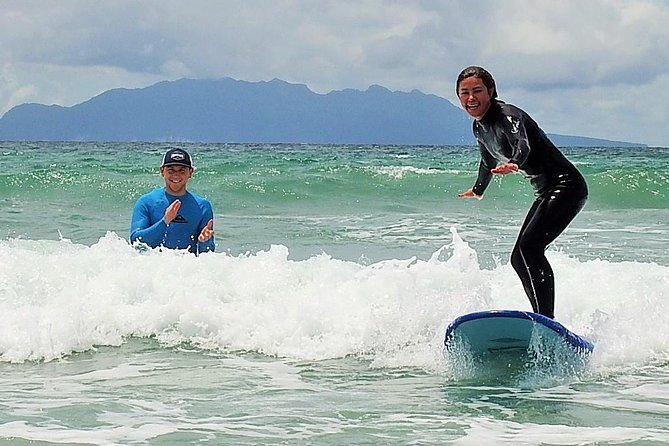
At about $49.03 per person, the lesson includes a surfboard and wetsuit. That makes the price easier to justify than a class where you must rent equipment separately. You also receive souvenir photos and videos of the lesson, which add a pleasant record of the day and may help you see what your technique looked like.
A wetsuit is especially useful for a lesson where you spend time waiting, practicing, and trying again. Beginners do not always catch a wave on the first attempt, so staying comfortable in the water can affect how much energy you have left for instruction.
The real value comes from combining equipment, a two-hour lesson, tide-based timing, and coaching. If you only want to stand on a board for a few minutes, the price may feel less attractive. If you want to learn a skill you can practice again, the package offers more than a casual beach activity.
You should also budget for your own transport to Te Arai or the confirmed surf beach. That cost is not included. The lesson is therefore strongest in value for people already planning a day trip north of Auckland or sharing driving costs with family and friends.
Who should book this lesson
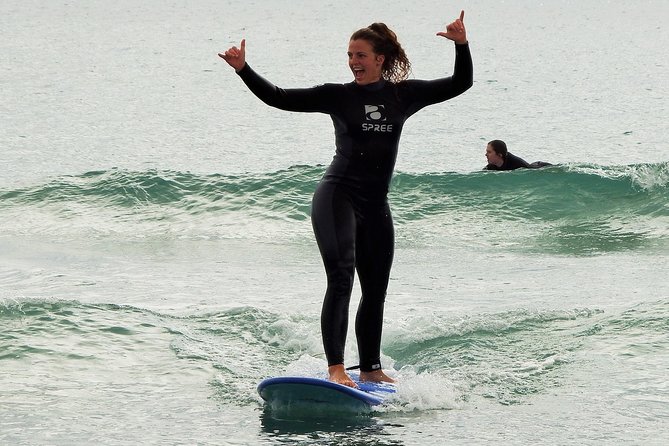
This class suits adults and children who are new to surfing. The supplied information specifically includes children aged 10 and 12 in successful beginner lessons, while the general description presents surfing as a family activity. Most people can participate, though the activity is still physical and takes place in the ocean.
I would also recommend it to anyone who feels nervous about learning alone. The teaching style is aimed at making the first session feel manageable, and the beach practice gives you a clear routine before you enter the water.
It is less suitable if you want an advanced surf clinic, a guaranteed private instructor, or a long session focused only on riding waves. The class teaches the basics over roughly two hours. You may catch your first wave, but the deeper value is learning how to repeat the process.
The lesson could also be a good addition to an Auckland itinerary for people who want time outside the city. Just allow for your own transport and confirm the exact beach before booking.
Booking timing, weather, and cancellation
The activity is commonly booked about 27 days ahead, so it is sensible to reserve early if your Auckland dates are fixed. The listed operating window runs from September 25, 2019, through November 26, 2026, with sessions shown from 11:00 a.m. to 1:00 p.m. Monday through Sunday.
You can cancel for a full refund up to 24 hours before the start time. Changes or cancellations inside that 24-hour window are not accepted for a refund. If poor weather causes Saltwater Eco to cancel, you are offered another date or a full refund.
Confirmation is provided when you book, and the ticket is mobile. Group discounts are available, which may improve the price for families or friends booking together. Check the final booking terms for your date, especially if you are coordinating transport or connecting this lesson with another activity.
Should you book Saltwater Eco?
Book this lesson if you want a structured first step into surfing near Auckland, with equipment included and instructors who focus on patience, safety, and basic technique. The small group limit, tide-based timing, and included photos make it more useful than simply hiring a board and hoping for the best.
I would be most comfortable booking it for a family, a nervous first-timer, or a small group of friends who want to learn together. Before paying, confirm the Te Arai and Omaha Beach details. If the location works for your plans and the weather is suitable, this looks like a well-priced way to chase your first wave without making the day complicated.
FAQ
How long does the beginner surf lesson last?
The lesson lasts approximately two hours, with the listed session time from 11:00 a.m. to 1:00 p.m.
Where does the lesson meet?
The listed meeting point is 708 Te Arai Point Road, Te Arai 0975, New Zealand. The activity ends back at the meeting point.
Is the surfboard included?
Yes. The lesson includes use of a surfboard and wetsuit.
How many people can join the lesson?
The activity has a maximum group size of 12 participants.
Is transport to the lesson included?
No. You are responsible for getting to the lesson location. The activity is described as being near public transportation.
What happens if the weather is poor?
The experience requires good weather. If it is canceled because of poor weather, you can choose another date or receive a full refund.
Just added around Auckland
- Auckland’s Wild West Coast & Black Sand Beaches Tour inc Lunch★ 5.0 · 12 reviews
- Kumeu Wine Region Shuttle from Auckland★ 4.5 · 19 reviews
- Auckland Airport Private One-Way or Round-Trip Transfer★ 4.5 · 14 reviews
- Wētā Workshop Unleashed – Intro to Scars and Scrapes Workshop★ 5.0 · 5 reviews
- West Coast Discovery – Piha Beach or Muriwai Beach from Auckland★ 3.5 · 6 reviews
- West Coast Discovery Tour★ 5.0 · 37 reviews
- West Coast Discovery Piha Beach Private Tour★ 5.0 · 14 reviews
- Ultimate Auckland Experience Full Day Tour with Brewery Lunch★ 5.0 · 6 reviews
Surf Lessons, compared.
Browse the lists this tour appears in