
Reviewed · GLOWWORM CAVE TOURS
Waitomo Caves: Ruakuri Cave 1.5 Hour Guided Tour
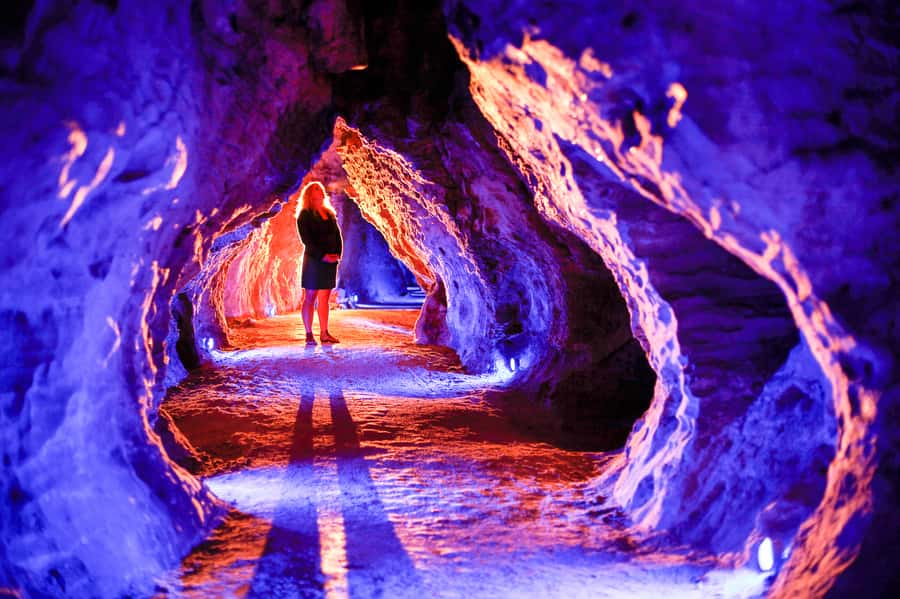
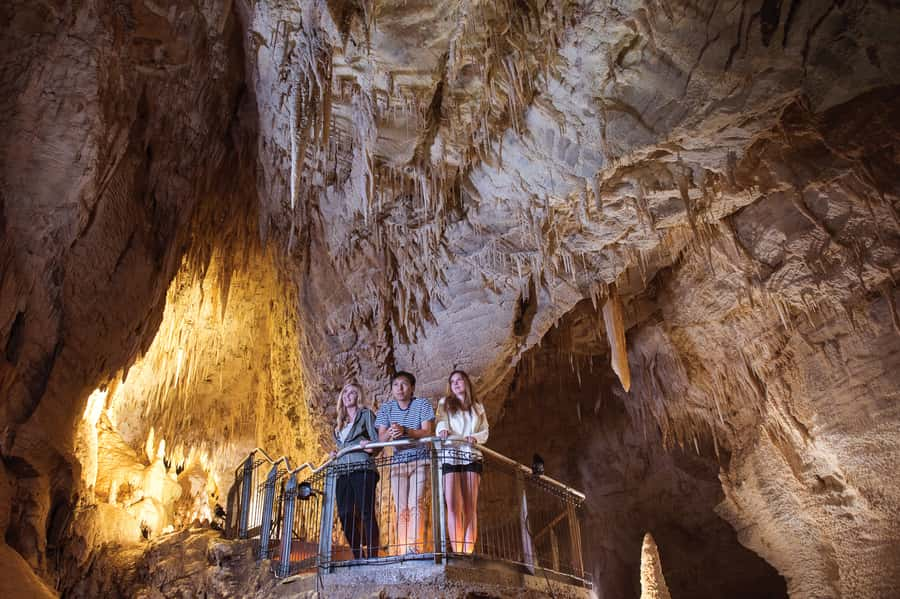
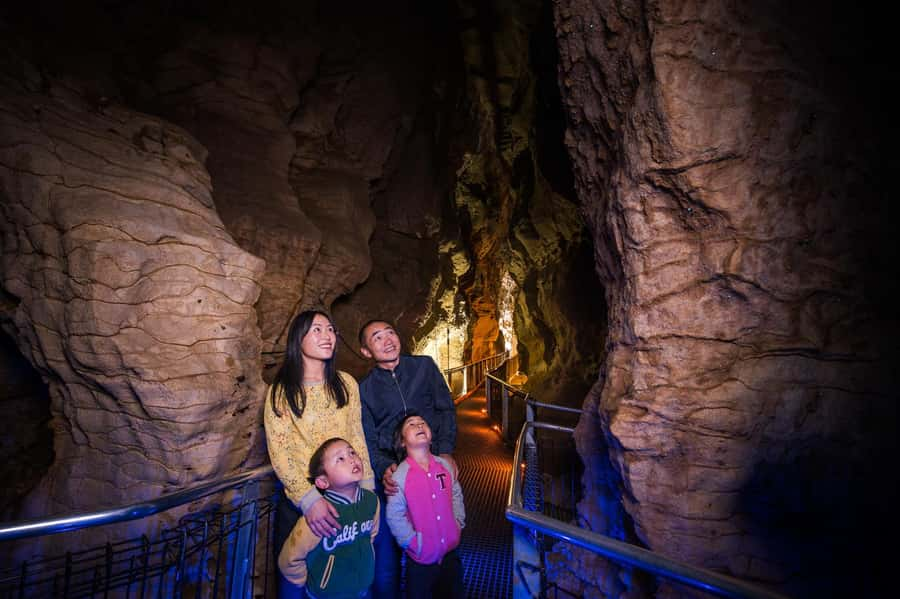
Ruakuri Cave is less about one big underground spectacle than a steady series of surprises: a spiral entrance, folded limestone, distant waterfalls, glowworms, and passages with names such as Holdens Cavern and The Drum Passage. You move through a living geological story, not just a dark room with lights on the ceiling.
I like the small-group feel and the guides’ personal connection to the caves. Guides such as Ellen, Wi, Aria, Mee, and Evie have been praised for clear explanations, humor, and patient answers. I also like that photography is allowed, and that the walkways and lighting make the route feel secure.
The main thing to consider is the glowworm promise. You can see glowworms, sometimes close up, but this is primarily a cave walking tour, not a dedicated glowworm viewing trip. Some people have found the display smaller than expected, so book this for the whole cave experience.
Key points to know before booking
- A 90-minute underground walk: Ruakuri Cave gives you time to see formations, water, glowworms, and named passages without rushing through.
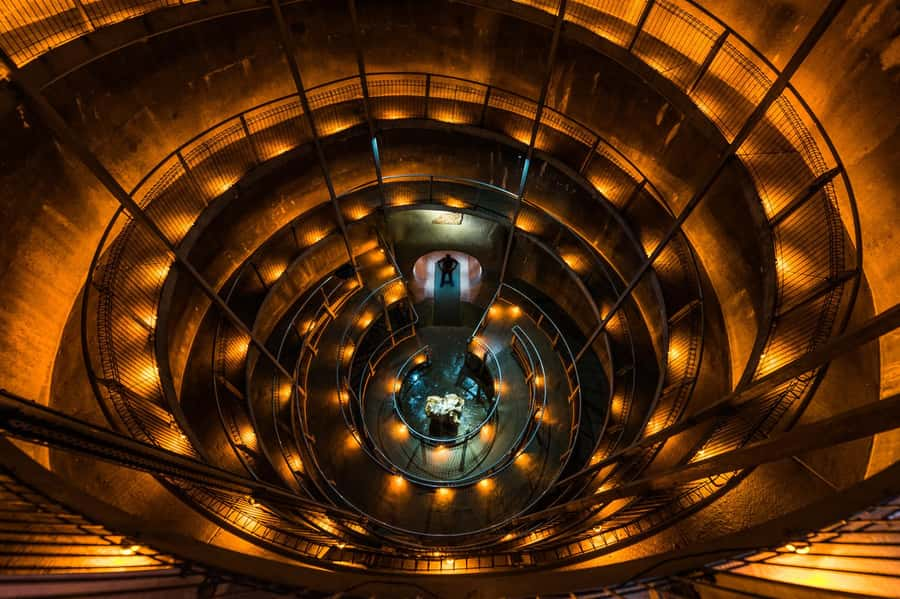
- A striking spiral entrance: The tour begins high in the cave, with lights coming on as you enter the chamber. People uneasy with heights or darkness should prepare for this.
- Small groups help: A smaller party makes it easier to hear the guide, ask questions, and stop for photographs.
- Glowworms are part of the tour: You may see them up close, but the amount can vary, and the visit is not solely a glowworm presentation.
- Local storytelling matters: Guides often connect the cave’s geology and legends with local family ties and generations of guiding.
- Easy to reach by car: Ruakuri Cave is about a 10-minute drive beyond the main Waitomo Glowworm Caves visitor center, with free outdoor parking at the Ruakuri Information Centre.
What makes Ruakuri Cave different
Waitomo is famous for glowworms, but Ruakuri Cave earns its place for a broader reason. It combines a proper cave walk with underground water, unusual limestone forms, local stories, and a chance to see glowworms without making them the only point of the visit.
This is the longest guided underground walking tour in Waitomo. The route lasts 90 minutes, long enough for the guide to explain what you are seeing instead of simply leading you from one photo stop to the next. I value that pace. Cave formations can look like grey rock if nobody points out the details.
Ruakuri also feels more varied than a single large cavern. The route includes Holdens Cavern, named after James Holden, who first opened the cave to the public, along with The Drum Passage, The Pretties, and The Ghost Passage. The names add a sense of place, while the changing rock shapes keep the walk from becoming repetitive.
The cave has been shaped over millions of years. Water has carved passages through the limestone, leaving stalactites, stalagmites, soft folds, and thin mineral formations that resemble draped fabric. You will also hear about subterranean rivers and waterfalls, even if the water is not always the most visible feature of the route.
More glowworm cave tours in Waitomo:
- Waitomo Caves: Labyrinth Black Water Rafting Experience
★ 4.9 · 1,673 reviews - Waitomo Glowworm Caves Guided Tour
★ 4.5 · 1,027 reviews - Waitomo Caves & Rotorua – Te Puia Small-Group Tour from Auckland
★ 4.5 · 681 reviews
Starting with the spiral entrance
The opening of the tour is memorable, but it is also the part that deserves the clearest warning. You begin at the top of a cavern in darkness, then lights are switched on as the group gets settled. That sudden change can be thrilling, but anyone uncomfortable with heights, enclosed spaces, or dark drop-offs should know in advance.
The entrance descends through a large spiral structure. It gives you a dramatic first view of the cave and quickly makes clear that this is not a flat museum walk. There are stairs and walkways, though the route has been described as secure and well lit for moving through the cave.
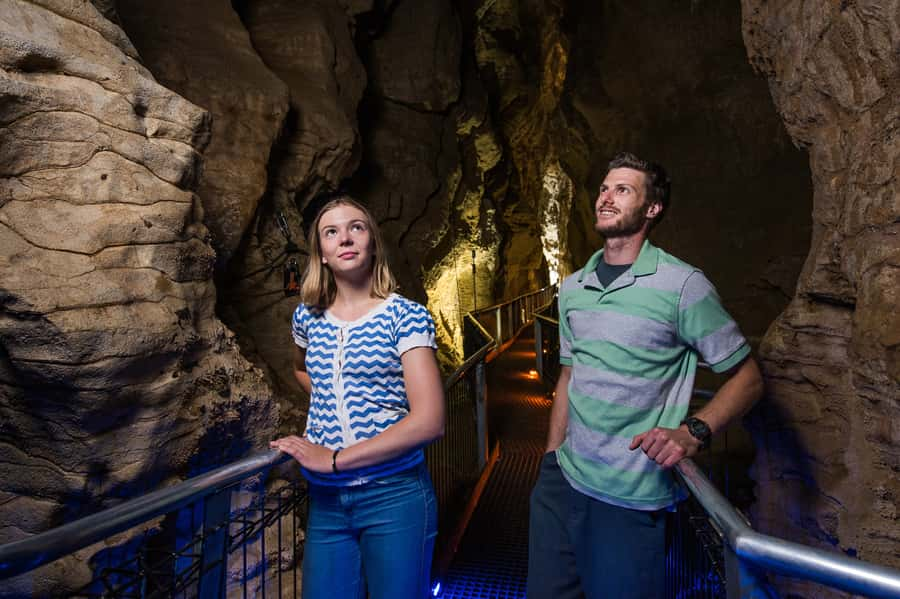
Once you are inside, the guide sets the rhythm. You will stop to look at formations, hear explanations, and move through passages rather than march continuously for 90 minutes. A good guide makes a real difference here. Clear speech matters underground, and several guides have been praised for speaking at a useful pace and keeping the group involved.
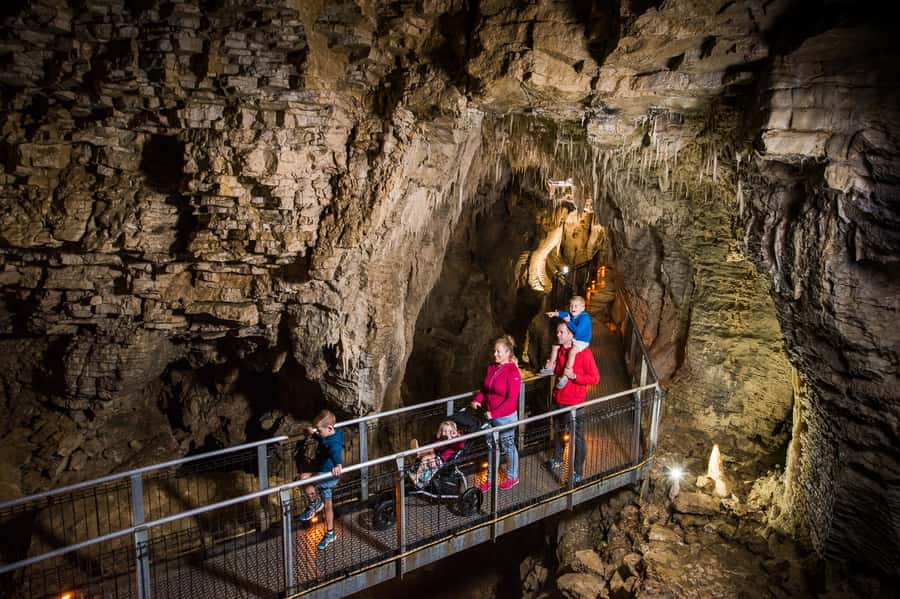
If you have trouble walking, take the stated accessibility seriously but still ask the operator for current advice before booking. Ruakuri Cave has full wheelchair and pushchair access, which is unusual and useful. At the same time, the route includes a spiral entrance and underground walkways, so your own mobility needs should guide your decision.
Holdens Cavern and the cave’s human story
Holdens Cavern gives the walk a human starting point. It is named for James Holden, linked with opening the cave to the public, so the cave is not presented only as a natural object. You hear how people found, used, and shared this underground place.
This is where local guides can add something a signboard cannot. Some guides come from families whose parents and grandparents guided in the caves. If your guide has that connection, you may hear a more personal account of the area and its traditions.
The strongest guides combine facts with a light touch. Ellen has been praised for being cheerful and professional, while Wi and Aria have been singled out for energy, humor, and clear explanations. That does not mean every departure will have one of those guides, but it gives you a fair idea of the tone to expect: educational, friendly, and not overly formal.
I would use the early part of the walk to ask questions. Smaller groups make that easier, and the guide can point out details you might otherwise pass without noticing. If you are interested in cave geology, local history, or how underground rivers shape rock, this is where the tour earns much of its value.
The limestone formations are the main event
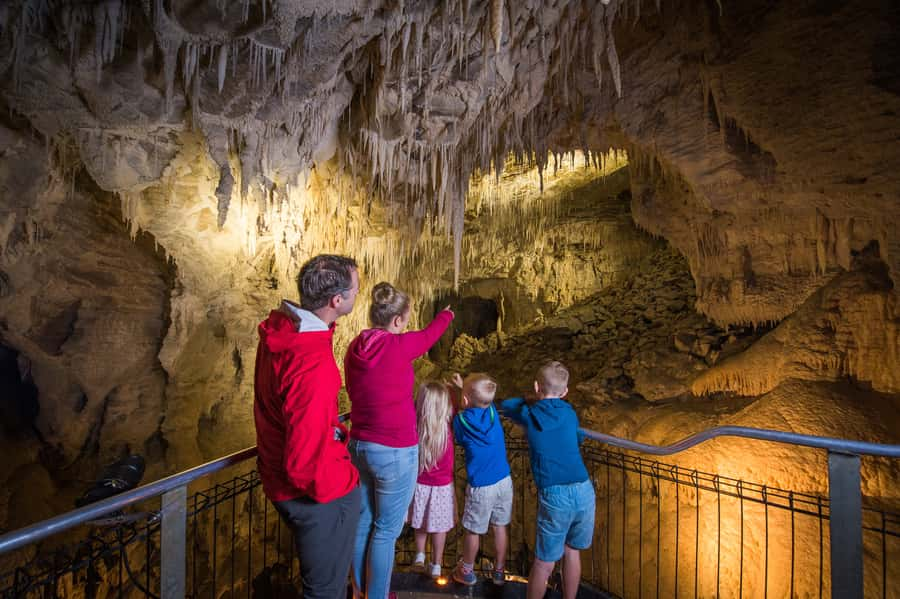
The formations change as you move through the cave. Look for stalactites hanging from the roof and stalagmites rising from the floor, but do not stop at the familiar names. Ruakuri is also known for softly folded shawl-like limestone and crystal-like mineral surfaces.
The Pretties is a natural pause in the route. The name is simple, but the attraction is the variety of textures and shapes. Under the cave lighting, thin deposits and folds can appear almost delicate. You will get more from this section if you slow down and let your eyes adjust rather than relying only on a quick photograph.
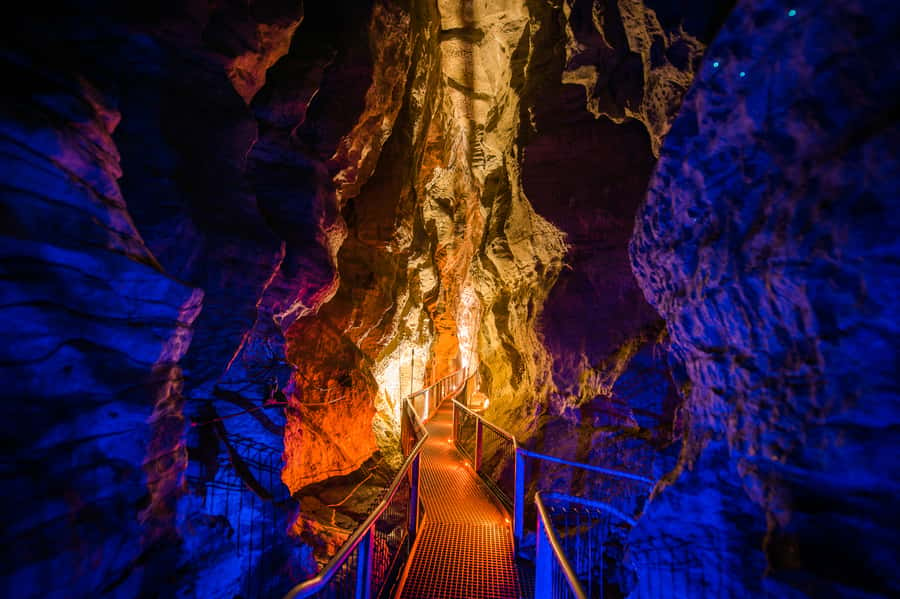
The Drum Passage brings another change in mood. Named cave sections help you understand the route as a sequence of distinct spaces, each with its own character. The lighting is useful for safety and photographs, though it also means this is a managed visitor experience rather than a completely raw, unlit cave trip.
That distinction is worth keeping in mind. Ruakuri is accessible, guided, and carefully lit. I see that as a strength for most people, especially families and anyone who wants to learn while walking. If you want a rough adventure with crawling, squeezing, or black-water activity, choose a different Waitomo experience.
A few more Waitomo trips worth a look
- Waitomo’s Hidden Gem: Small-Group Off the Beaten Track Tour
★ 5.0 · 431 reviews - Black Water Rafting Experience Waitomo Caves Tour
★ 5.0 · 362 reviews - Waitomo: Guided Eco-Cave Tour
★ 5.0 · 278 reviews - Waitomo Caves Black Abyss Ultimate Caving Experience
★ 4.9 · 257 reviews
Glowworms, with realistic expectations
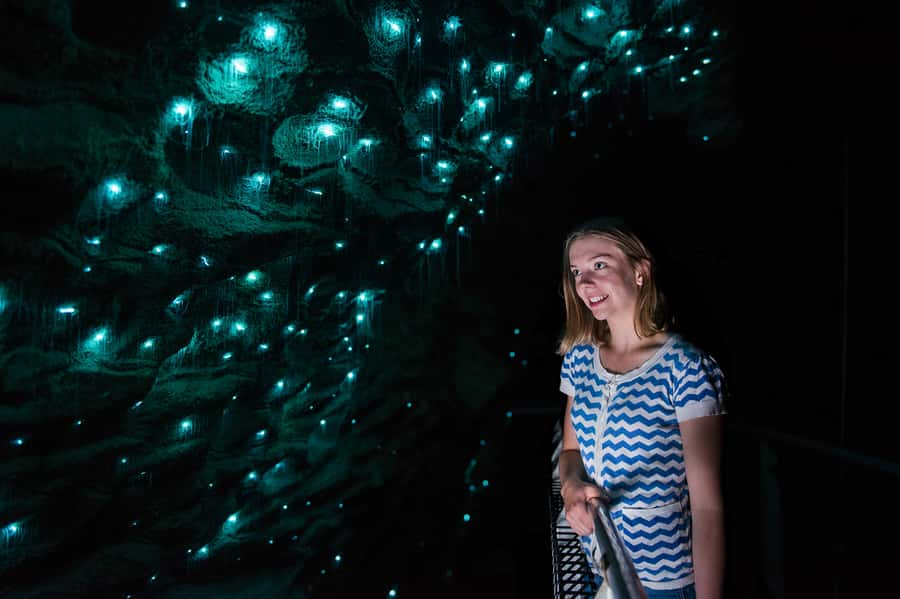
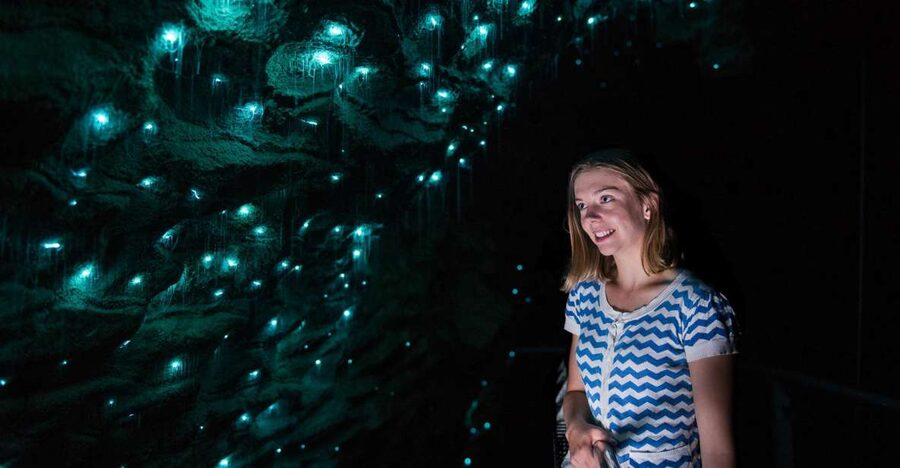
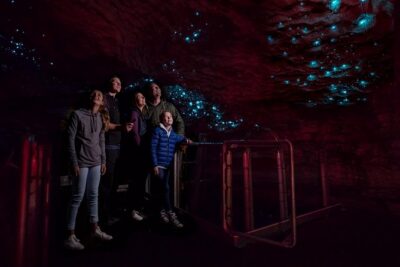
The glowworms are a highlight, but they should not be the only reason you book. You can see glowworms in Ruakuri Cave, and the route may bring you close enough to notice their fine sticky fishing lines. In darker areas, they can appear as small lights scattered across the roof.
That close view is especially interesting because it shows how the creatures feed, not just how they look from a distance. The glowworms are part of the cave’s natural system, alongside water, damp rock, and the quiet conditions underground.
Still, the number and concentration can vary. Some people have found the glowworm display smaller than the tour images suggested, and a few have felt disappointed because they expected a dedicated glowworm show. The honest way to frame Ruakuri is this: you get a substantial cave walk that includes glowworms.
If your top priority is seeing a large field of glowing points, compare this with a tour designed mainly around glowworms. If you want glowworms as one part of a longer, more varied underground visit, Ruakuri is the better match.
The guides also help here. They can explain what you are looking at and give you time to adjust to the darkness. Keep your own light and conversation under control when asked, since the dark sections are part of what makes the glow visible.
Water, sound, and the Ghost Passage
Ruakuri is not only about rock. Subterranean rivers run through the cave, and you may hear the distant thunder of waterfalls before you see the water itself. Sound carries differently underground, so a far-off rush can make the cave feel much larger than the chamber around you.
The Ghost Passage adds another atmospheric section to the route. The name hints at the mood, but the real appeal is the changing shape of the tunnel and the way the guide connects each section to the cave’s story.
The combination of water and limestone explains why this cave feels active rather than frozen in time. The formations may have taken millions of years to form, but underground water continues to influence the space. I like tours that help you make that connection, because the cave becomes more than a collection of attractive rocks.
Expect some pauses for explanations and photographs. One useful point from the practical feedback is that the tour generally allows time for pictures, especially when the group is small. If you use walking sticks or move slowly, though, you may find that the guide has already gone on to the next section. Tell the guide early so the pace can be managed where possible.
Guide quality shapes the whole visit
A cave tour can be technically good and still feel flat if the guide speaks too softly or rushes the story. Here, guide quality appears to be one of Ruakuri’s greatest strengths. Visitors have praised guides for humor, clear directions, strong cave knowledge, and the ability to answer questions without turning the walk into a lecture.
Names that have received especially warm attention include Ellen, Wi, Aria, Evie, Mee, Jayden, Rosie, Lochie, Zach, and Sammi. A trainee guide has also led a successful tour with help from a mentor. That suggests the operation puts real weight on training and presentation.
Your guide may point out features you would miss, explain why formations look the way they do, and connect the cave to local stories. The best moments are often small: a pause under an unusual fold, a quick explanation of glowworm fishing lines, or a funny remark that keeps everyone alert in a dark passage.
The small-group format is important. In a large crowd, you can lose the guide’s voice and spend the walk watching the backs of other people’s heads. Here, you have a better chance to hear, ask, and take photographs without blocking the route.
Price, timing, and getting there
The cost is $66 per person for the 90-minute tour. That is not a budget attraction, especially if you are paying for a family, and some people have considered the price high. The value depends on what you want from Waitomo.
For a short glowworm stop alone, the price may feel steep. For a guided walk with local interpretation, maintained access, lighting, named cave sections, geological features, underground water, and glowworms, the cost is easier to justify. You are paying for a structured experience that would be difficult and unsafe to arrange independently.
Ruakuri Cave is in Ruakuri Scenic Reserve. It sits just over two hours south of Auckland, about one hour south of Hamilton, and roughly two hours west of Rotorua. You need your own transport. From the main Waitomo Glowworm Caves visitor center, allow another 10-minute drive to Ruakuri Cave.
Free outdoor parking is available at the Ruakuri Information Centre. Tours are usually offered in the morning, afternoon, and evening, so you can fit the visit around a wider Waitomo day. Arrive early. If you are late or miss your scheduled time, the ticket is forfeited and a new booking costs the full amount, subject to availability.
Wear comfortable shoes and bring a jacket. Underground temperatures can feel cool even when the weather outside is warm. Backpacks are not allowed, so carry only what you need in a way that does not interfere with the walk.
Add the free Ruakuri Bush Walk
Leave time for the Ruakuri Bush Walk near the visitor center. It is free and gives you a useful above-ground view of the same natural setting. The walk includes forest, a large cavern, a river, and waterfalls, making it a smart addition before or after the guided cave visit.
I especially like the idea of pairing the two. Inside the cave, you learn to look at limestone, water, and darkness from below. Outside, the bush walk helps you see how the river enters and leaves the rock, with holes, caves, and tunnels shaping the surroundings.
The bush walk is not included in the $66 tour, and it is not a substitute for the guided cave route. Think of it as a low-cost companion that adds context. If your schedule allows, it can make the visit feel more connected to the reserve rather than limited to the ticketed attraction.
Who will enjoy this tour most
Ruakuri Cave suits you if you want a guided geological experience with a strong local voice. It works well for families, older visitors who prefer a managed route, photographers, and anyone curious about how cave systems form.
The walk is also a good choice if you want something more substantial than a short glowworm viewing session. Ninety minutes gives you time to settle into the underground setting and see several different sections.
You should think carefully before booking if you mainly want a huge glowworm display. You will see glowworms, but not necessarily in the numbers shown in promotional images. The tour is strongest when you value the entire cave, with glowworms as one memorable part.
People uneasy with heights or darkness should also prepare for the opening. The staff have been understanding when someone could not continue, but it is better to know the layout before you arrive. Photography is allowed, which helps if you want a record of the formations, but you will still need to keep up with the group.
Should you book the Ruakuri Cave tour?
I would book this tour if I wanted a calm, informative way to experience Waitomo underground without committing to a physical adventure such as black-water rafting. The cave has variety, the 90-minute length feels worthwhile, and the small groups let the guide’s personality come through.
Book it for the formations, water, local stories, and overall cave journey. Treat the glowworms as an important bonus, not the whole product. Add the free Ruakuri Bush Walk if you have time, and arrive early with comfortable shoes, a jacket, and no backpack.
If your only goal is the largest possible glowworm display, compare other Waitomo options first. If you want a well-run cave walk with a local guide and a good mix of nature, geology, and storytelling, Ruakuri Cave is a strong North Island choice.
FAQ
How long is the Ruakuri Cave guided tour?
The guided walking tour lasts 90 minutes, or one and a half hours.
How much does the Ruakuri Cave tour cost?
The listed price is $66 per person.
Are glowworms included in the Ruakuri Cave tour?
Yes. The cave has glowworms, and the tour includes opportunities to see them up close. The tour also focuses on limestone formations, underground rivers, waterfalls, and cave history.
Is Ruakuri Cave only a glowworm tour?
No. Ruakuri Cave is a broader guided cave walk. Glowworms are one feature among many, and the amount visible can vary.
Where does the tour meet?
The meeting point is Ruakuri Cave in the Ruakuri Scenic Reserve, Waitomo. Free outdoor parking is available at the Ruakuri Information Centre.
Do I need my own transport?
Yes. Transportation is not included. Ruakuri Cave is about a 10-minute drive from the main Waitomo Glowworm Caves visitor center.
Is Ruakuri Cave wheelchair accessible?
Yes. Ruakuri Cave has full wheelchair and pushchair access.
Can I take photographs inside Ruakuri Cave?
Yes. Photography is permitted inside the cave.
What should I bring, and what is not allowed?
Bring comfortable shoes and a jacket. Backpacks are not allowed inside the cave.
Just added around Waitomo
- WAITOMO – Twin Caves Discovery – Private Day Tour from Auckland★ 5.0 · 3 reviews
- Waitomo Glowworm & Ruakuri Twin Cave Small Group Tour Ex-Auckland★ 5.0 · 25 reviews
- Waitomo Glow Worm Caves & Te Puia – Rotorua’s Geothermal Valley★ 5.0 · 9 reviews
- Waitomo Glow Worm Caves★ 4.5 · 45 reviews
- Waitomo Glowworm Caves In a Private Small Group Tour-Auckland.★ 5.0 · 18 reviews
- Waitomo Caves Private Tour from Auckland★ 3.5 · 3 reviews
- Small Group Waitomo and Rotorua including Te Puia Tour★ 5.0 · 4 reviews
- Rotorua and Waitomo Caves Day Trip from Auckland -Smaller Groups★ 4.5 · 79 reviews
Glowworm Cave Tours, compared.
Hobbiton & Waitomo Caves Guided Day Trip from Auckland incl lunch
Read our review →
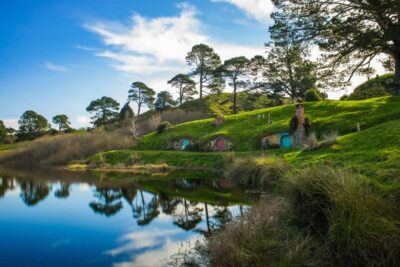
Hobbiton & Waitomo Caves Day Trip with Lunch
Read our review →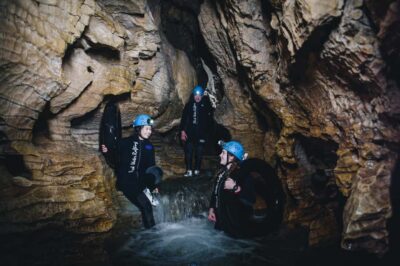
Waitomo Caves: Labyrinth Black Water Rafting Experience
Read our review →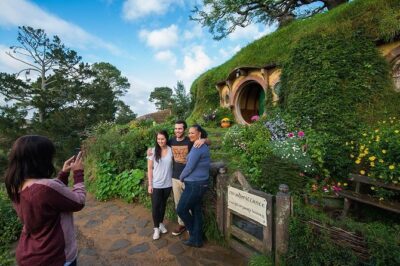
Hobbiton & Waitomo Caves Small-Group Tour W Lunch from Auckland
Read our review →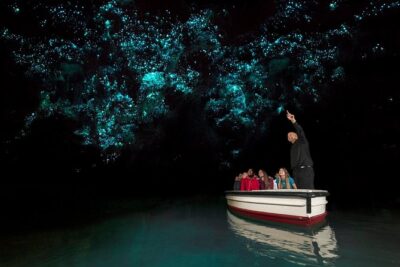
Hobbiton & Waitomo Caves Guided Tour from Auckland with Lunch
Read our review →Browse the lists this tour appears in